An amusing, chatty exploration of prog rock, but don’t except to learn much new if you’re a fan.
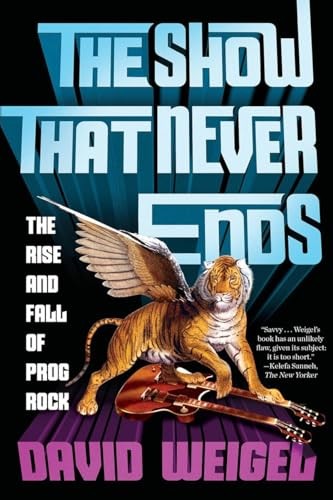
The Show that Never Ends: The Rise and Fall of Prog Rock
David Weigel
346 pages including index
Published in 2017
David Weigel is a Slate journalist who mostly covers American politics, from what I remember of his work, not too badly for a Slate journalist. One of his hidden passions however is progressive rock, which he also got to write about for Slate, leading to this book. As Weigel calls it, “this is a narrative history of progressive rock, as told by the people who made it“. Much of it is told in extracts from contemporary interviews with the various artists involved, Weigel providing the connective tissue between them.
Most of the bands and people involved will be familiar even to prog rock haters: Yes, Genesis, Emerson, Lake & Palmer, King Crimson & Robert Fripp. These are the focus of Weigel’s book, their careers the red thread tying his narrative together. This is both sensible and slightly disappointing. Sensible, because it makes it easier to illustrate the history of prog rock without drowning in a sea of names and dates; disappointing because it inevitably gives short shift to some areas of the genre I’m personally more interested in. The whole Canterbury scene for example gets a look in every now and then, but there was so much interesting music being made there that it really deserves its own back, when here it’s just a side note.
But the most noticeable omission here is that of Pink Floyd, whose career is largely glossed over here in favour of the earlier mentioned focus on ELP, Genesis, Fripp and Yes. I’m not sure why this is, as Pink Floyd is pretty much the archetypical big name prog rock band, of a similar status to any of the bands Weigel does follow. Might just be a question of personal taste. It also might be that Pink Floyd doesn’t quite fit in with the others, having always had a little bit more credibility even after the collapse of prog rock than the other bands had.
These limitations aside, it is interesting to read a sort of ‘first draft’ history of the genre. Even if the focus is on well known bands, the details of what e,.g Robert Fripp was up to post King Crimson and what he thought he was doing were fascinating. It made me want to dive into his solo work and collaborations with Eno and others, which I had mostly ignored until then. Weigel spends as much time on the “fall” as he does on the “rise” of prog rock and honestly reading about the post-fall careers of these bands was actually more interesting than the more well known story of their rise to fame.
In general, The Show that Never Ends stays within familiar territory, not really offering new insights to anybody already a prog rock fan, but that it does so through the artists own words make it worthwhile even to hardcore fans. For people new to the genre it’s a good introduction, even if it doesn’t quite capture the breadth of the genre because of its relentless focus on the big name bands.
No Comments