Artmic is a name you should know if you at all like 80s OVAs. This zine is a good introduction.
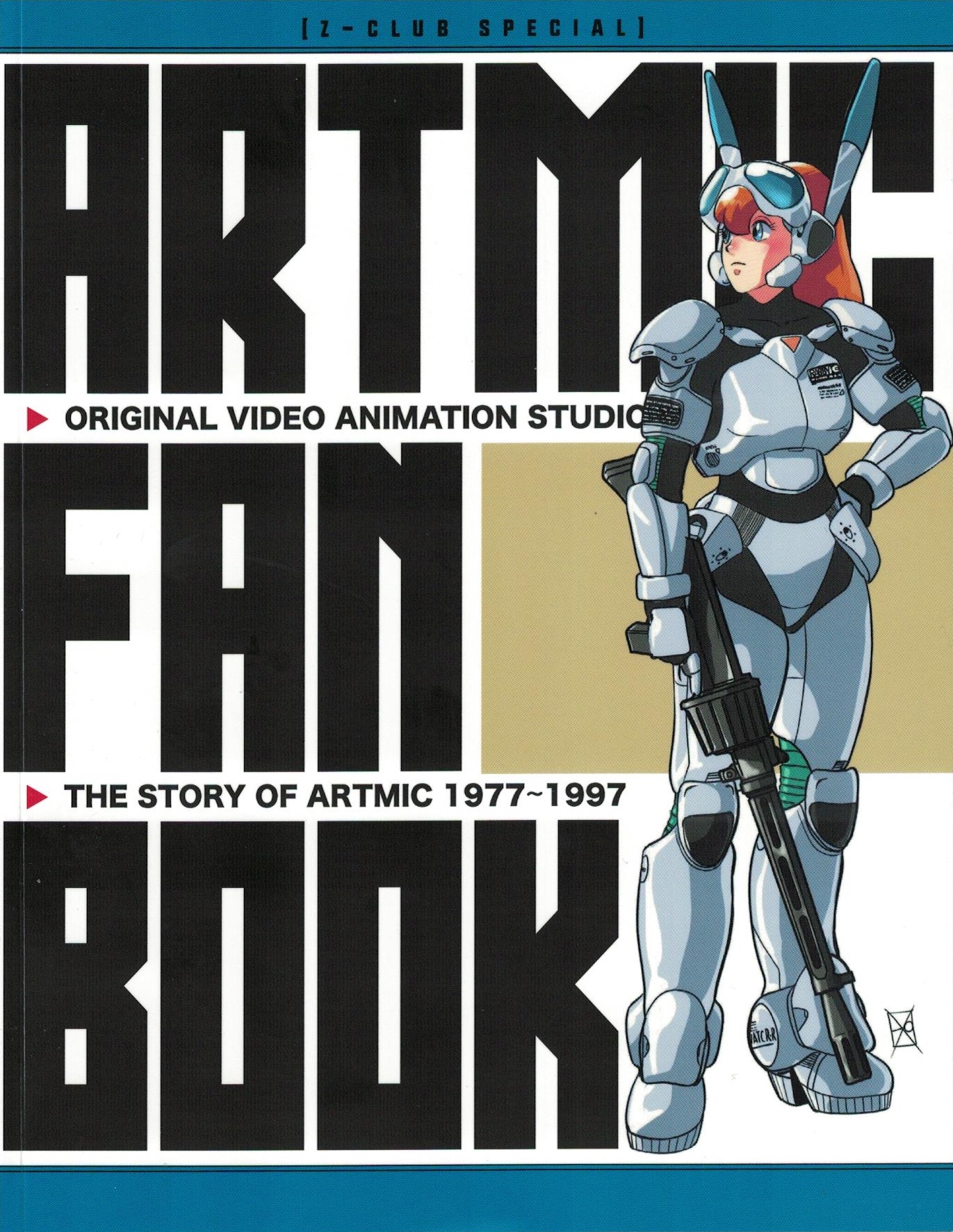
Artmic Fan Book: The Story of Artmic 1977-1997
Sean O’Mara
56 pages
published in 2025
Sometime in 1989 or 1990 I got that first videotape of Bubblegum Crisis from my local videostore; I must’ve gone looking for something sci-fi I hadn’t seen yet, not even necessarily an anime video. The moment I put that tape in the VHS player and Konya wa Hurricane started I knew that I was watching something special. Here was something new, something I couldn’t get from Hollywood, something that matched the energy of the cyberpunk I was reading. This and Akira had me watching every anime (or as it was called then, “manga” (sic)) tape the store carried. Which means I’m pretty much the target audience for a zine about Artmic, the company behind Bubblegum Crisis, who not only put their stamp on my personal anime history, but were arguably one of the most important companies shaping the OVA boom of the eighties.
Sean O’Mara is the person behind Zimmerit.moe, the now ten year old website that’s a celebration of fandom in its (relative) infancy, of forgotten fads and trends, and the idea that fans can create their own cool shit, too. The fandom that refers to is specifically that of eighties otakudom, from before being an otaku got codified, when the line between pro and fan was not as sharp as it is now. Zimmerit is of course the anti-magnetic paste the Germans put on their tanks during World War II, which accurately shows off the vibe of the site and the corners of fandom it focuses on. The Artmic Fan Book is the logical outflow from this, the latest in a range of zines Sean has published through his site, of which more later.
At only 56 pages, this doesn’t pretend to be any kind of history of Artmic, rather it attempts to give an impression of what Artmic was like, a guided tour taking you past its greatest works if you will. Of which there are quite a few. Bubblegum Crisis is perhaps the best known, but there’s also the science fiction classic Megazone 23, one of the biggest selling products of the OVA era, Genesis Climber Mospaeda, later reworked into part of Robotech, the American action movie-esque Riding Bean, the very Moebius looking Dragon Heaven, the Gall ForceOVA series, Metal Skin Panic MAdox-01 etc. etc. For the best part of a decade Artmic created some of the best looking, interesting OVAs before the end of Japan’s Bubble Economy put an end to it.
The Artmic Fan Book looks at all these shows in roughly chronological order, from the founding of the company in 1977 to its end two decades later. Artmic’s first true production was Techno Police 21C, developed as a television series, which was cancelled before launch so the intended first two episodes were instead made into a movie. Mospeada a year later was more successful in that it did get to air, but at only half the intended run length. (Artmic Fan Book mentions it ran for just a cour, but at 25 episodes it actually managed a full season if not the year Artmic wanted). Their next project, the one that put them on the map was Megazone 23, another failed tv series reworked into a very successful OVA, at a time the OVA market was just getting established, the first real OVA, Dallos having come out just two years before. Everything else Artmic did animewise would be an OVA.
What Artmic Fan Book mainly interests in all this is how Artmic’s relatively small group of key creative personnel like mech designers Shinji Aramaki, Kimitoshi Yamane and Hideki Kakinuma, mangaka and character designer Kenichi Sonoda and producer Satoshi Koizumi meant that most of its output had a similar style and vibe. Most noticeably those (transforming) motorcycles seen in e.g Bubblegum Crisis and Megazone 23. There’s a bit of repetition in the various chapters, as the same people keep getting reintroduced, but this is a minor niggle.
One thing I would’ve liked to have seen some mention of is Artmic’s involvement with The Hakkenden, based on a 106 volume (!) historical novel, set in the Muromachi period. As a historical fantasy it’s very much outside’s Artmic’s normal wheelhouse of hardcore science fiction. It would’ve been interesting to see Sean’s thoughts on this, even if it doesn’t quite fit his or Artmic’s vibe.
I bought the Artmic Fan Book alongside every other zine available from Zimmerit. Hobby Shopping: Japanese Model Shop Ads 1980-89 as its title suggests is a collection of ads for model shops, with added commentary by Sean, the ads focusing on mecha and other sfnal models. Gainazine, “the Secret History of Studio Gainax, looks at that studio’s earlier pre-Evangelion history, focusing on proto-Gainax work for the Daicon science fiction conventions, Gainax’s garage kit producing arm General Products as well as obscure projects related to Gainax most prominent release before Evangelion, Royal Space Force. Koba-Kondoh Document is a look at two mech designers involved with 1980s Gundam series, Makoto Kobayashi & Kazuhisa Kondoh, especially their model figure work, even including a guide on how to kitbash mecha in their style.
The final zine published by Zimmerit is the only one not written by Sean O’Mara, but by Renzo Adler and is also the only one not involved with mecha and model kits one way or the other: Demon Zine Shinjuku, a look at the more outre Japanese horror creations of the Bubble Economy Age. Horror OVAs were of course the second leg of the western anime boom of the late eighties/early nineties, so it’s great to have a zine celebrating them too.
All zines are available from Garagekit Club.
No Comments