It’s September 11, which means it’s the 53rd anniversary of the brutal Pinochet coup that would plunge Chile into two decades of military dictatorship in which thousands of people would be tortured, raped and murdered. One of the coup’s earliest victims was folk singer Victor Jara, whow as taken to the Chilean national football stadium and when recognised had his wrists broken, then was mockingly ordered to play guitar before he was tortured further and killed on September 16th. The song Pete Seeger sings below was the one Jara wrote on the day of his murder.
By design or coincidence Shinzo Ningen Casshan episode nine, from November 1973, might be a response to this horror.
Casshan is a human turned cyborg fighting against the robotic hordes of Braiking Boss, a creation of his father which driven mad by a lightning strike in the first episode and now wants to rule the world. Casshan, with his robot dog Friender (who is capable of turning into a plane, boat or car because seventies anime series) stand in his way. Each episode has Braiking hatch a new plot which Casshan has to foil. So far then Casshan looks similar to series like Mazinger Z andGatchaman (both from 1972). Where Casshan differs is in the way the conflict and the violence it entails is shown.
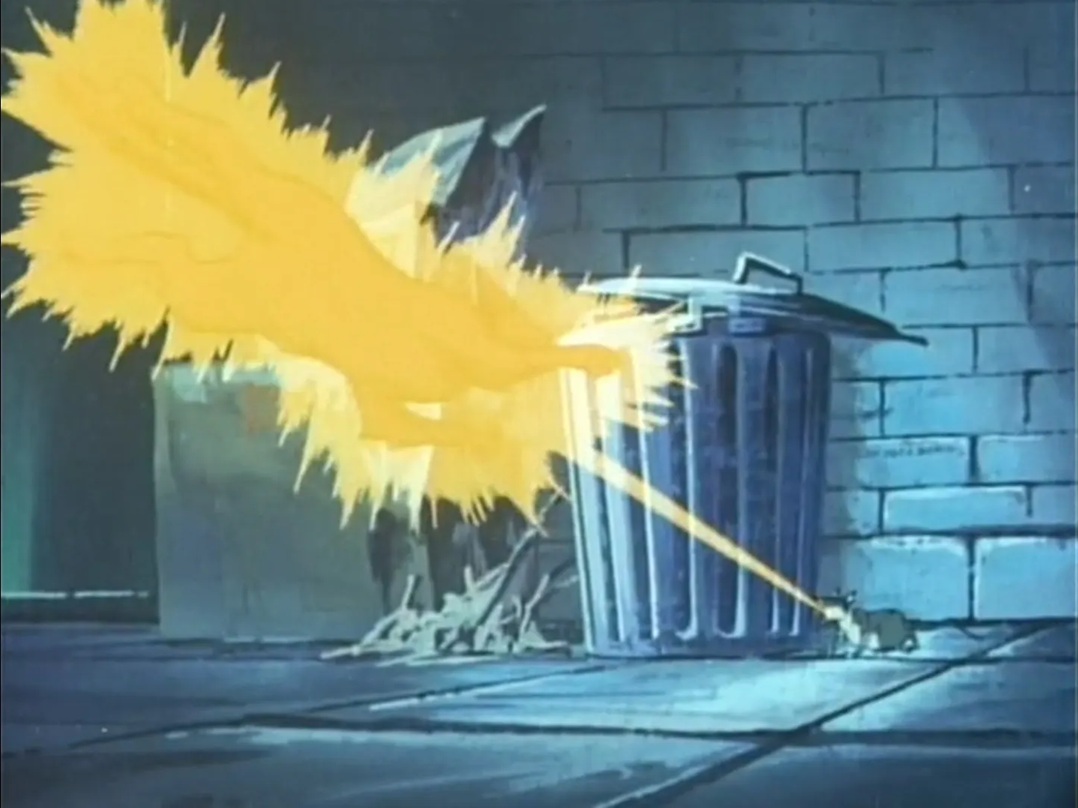
Take that scene above, a cat burned alive by a robot mouse, which does the same to the two cops showing up to investigate the noise. That’s not something you’d see much of in Mazinger Z, whose violence is much more abstract: cities are destroyed and building collapsed but you see no bodies. And the fights are strictly between Mazinger Z and the monster of the week, whereas in Casshan the villain does wage war on the entire planet. A conflict in which people are killed even when Casshan wins the battle.
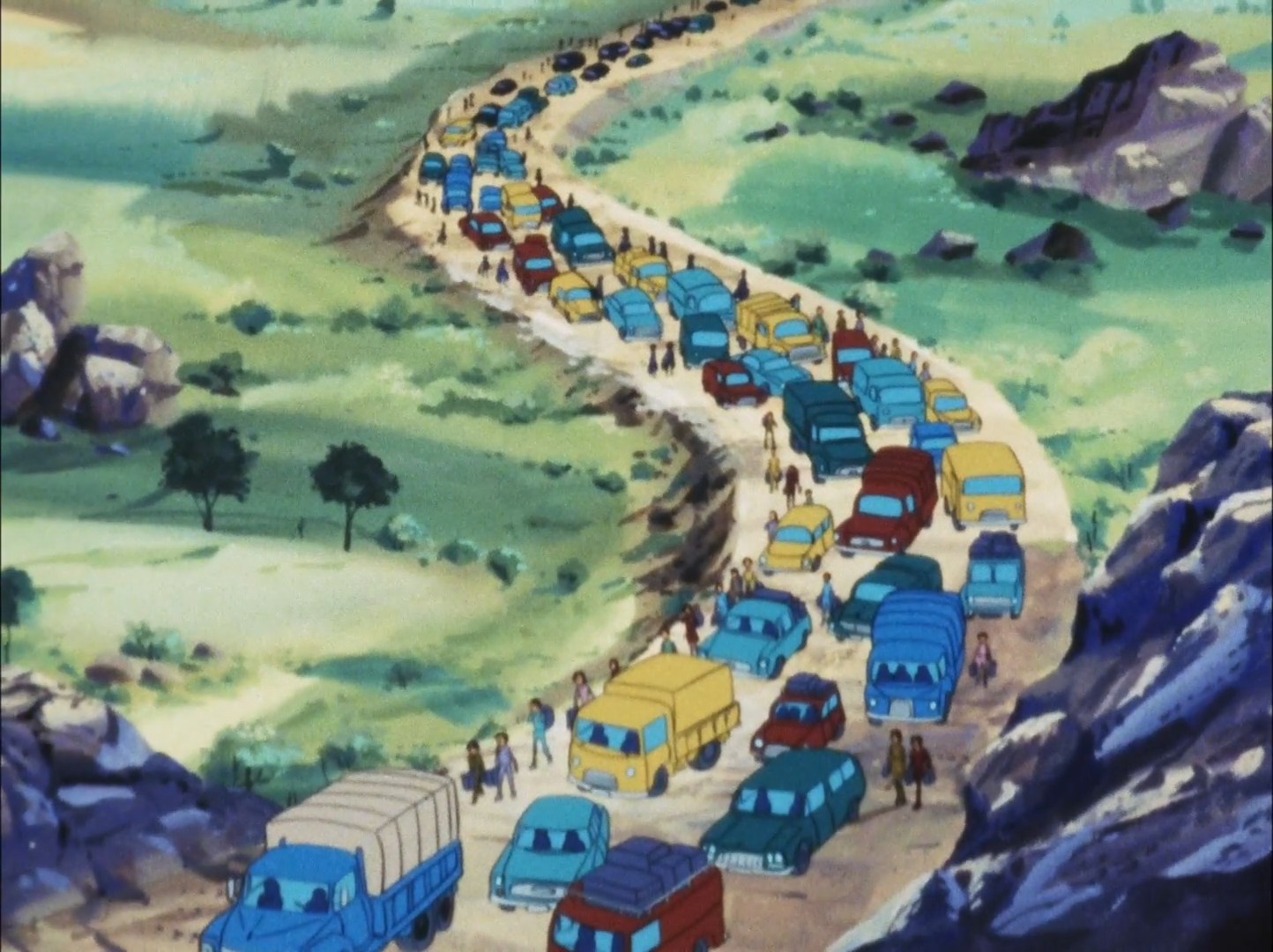
Episode nine, “Concerto in the Flames of War”, scripted by Tadashi Fukui and directed by Seitarō Hara, shows this brilliantly. It opens with a city being bombarded by flying robot missiles as a narrator explains that this has forced people worldwide to flee their homes. In the next scene we follow one such column, escaping from Queen City, the Android Army’s next target. They flee in vain as the entire column is attacked by the same robot missiles we saw before. A hell of a way to open a show.
Casshan and his comrades, Friendster and Luna, his childhood friend whose father was killed by the Android Army, of course also arrive in Queen City to prepare for the robots to lay waste to it. Expecting to find the city empty they are astonished to hear music coming from the main concert hall. Turns out not everybody left the city. Famed for its music, several musicians and their fans have opted to remain. Others return after having fled first, enough so to put on a concert (Tchaikovsky’s Piano Concerto No.1)., in the face of Boss Braiking’s marching troops. That contrast of the mechincal, fascist march on the city and this performance held in defiance of it is a rebuke to Jara’s murderers.
Fascism always wants to stamp out art, stamp out music, destroy the human spirit but even on the day he died, after he was tortured and had his wrists broken, Jara could still write that poem, still was able to make the truth know to the world. I doubt that this last, heroic act was known to the animators two months later, but that defiant stance of a music loving city and its citizen against the literal metal boot of robot fascists is still a fitting rejection of a fascism that was very much alive again in 1973, less than thirty years after the last great war against it ended.
No Comments