In 1986 Marvel Comics as a celebration of twentyfive years of the Marvel Universe, under then editor in chief Jim Shooter launched his dream project: The New Universe. This was an attempt at creating a more realistic, sci-fi superhero universe, with none of the fantastical stuff that 25 years of continuity had ‘lumbered’ the Marvel Universe with. No gods, no Atlantis or Lemuria, none of that pulp crap. A clean slate set in “the world outside your window”. It was such a success that half its titles were gone after a year, no series lasted more than 32 issues and they got John Byrne to blow it all up, who took great delight in torturing Shooter’s self insert, Starbrand. Shooter himself got fired in 1986 and would go on to found Valiant a few years later.
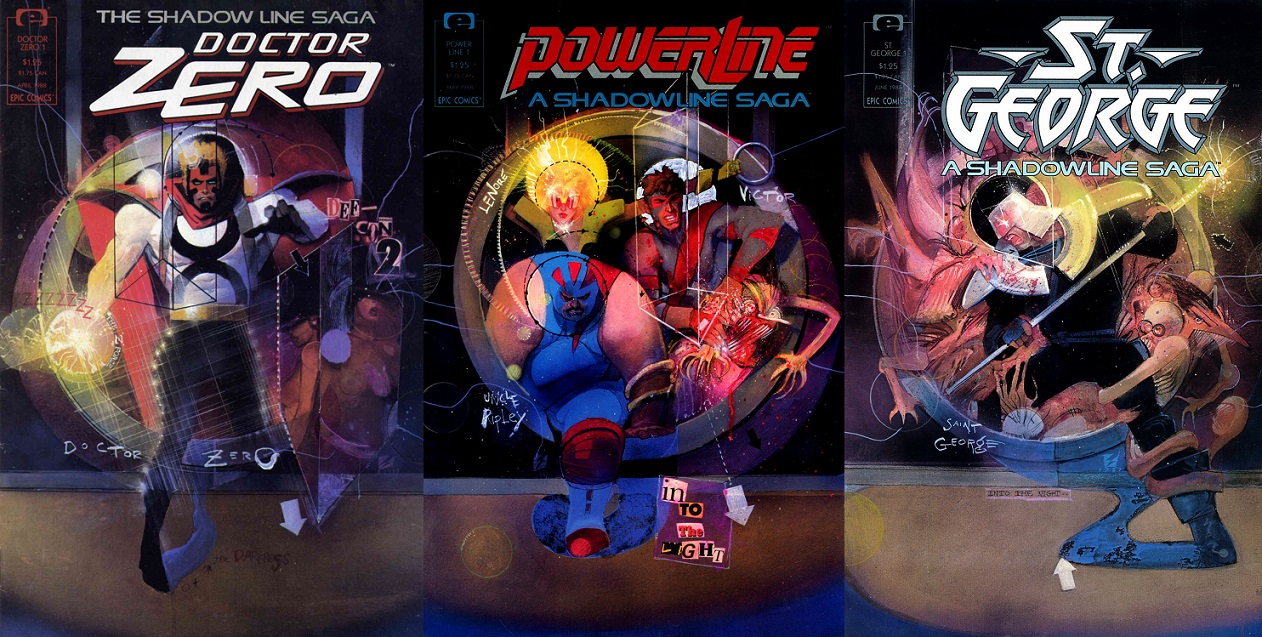
So with all that history of failure behind them, why then did Marvel repeat this experiments two years later with the Epic Shadowline?
It was even less successful than the previous attempt, with the three titles cancelled after issue eight, but it was much a much better effort. The New Universe series, for all that Shooter wanted to do with them, just read like any other Marvel title, using the same creators but now without the possibility of an X-Men crossover. It also failed from the start in keeping things real, with one of the launch titles being the Iron Man like Spitfire. Shadowline had a much simpler concept and stuck to it: there’s a race of hidden superhumans, the Shadow Dwellers, ageless and near immortal, who form the base of many of humanity’s myths and legends. The story starts when one of the Shadow Dwellers, for his own reasons, decides to masquerade as a superhero, bringing the existence of superhumans to the public’s awareness.
All three series: Doctor Zero (the pretend superhero), Powerline (brother and sister Shadow Dwellers turned actual superheroes) and St George (the saint who fought the Dragon and the dragon is Doctor Zero) were conceived by Archie Goodwin, D. G. Chichester and Margaret Clark and written by the latter two. This is very much a post-Watchmen universe, with no truly good or evil characters and lots of cynicism about the role of a superhero. The painted covers, especially on the first issues as done by Bill Sienkiewicz, reflect that too, as does the interior artwork by somewhat atypical Marvel artists like Denys Cowan and Klaus Janson. It all started strong but even by the later issues you got fill-in writers like Chuck Dixon and artists like Gary Kwapisz (as well as early work by Jim Lee) so even in only eight issues per title you could see it going downhill.
The whole line got cancelled just as the first official crossover event between the three would start, so these issues were retooled in a seven issue Prestige Format miniseries Critical Mass in 1990 and that was the last of the Shadowline. Except that D. G. Chichester a few years later, when Marvel was in its nineties expansive, let’s publish 200 titles a month phase, would manage to smuggle in one of his old St George villains as Terror Inc, part of the mini line of revamped horror comics of that time.
Now I on;y got into these comics years later, buying them from back issue bins in the nineties and have managed to almost complete my collection:
- Doctor Zero, 8 issues Complete
- Powerline 8 issues Complete
- St George 8 issues Missing issue 5
- Critical Mass 7 issues Missing issue 1, 6 and 7
Four issues then to complete the set, plus another thirteen of Terror Inc and a dozen or so guest appearances if I feel the need to get these, but Chichester himself considered them to be separate characters.
No Comments