It takes a ten minute video for professional John Lennon crossed with Sasquatch impersonator/Youtube anime critic Digibro to grope towards the same idea as Damon Knight managed to express in one simple sentence: “science fiction is what we point to when we say it”. In other words, that on a certain level the quality of a given anime is determined by the sum of opinions about said anime and that as opinions shift, the critical consensus about this anime will also shift. Not the most stunning of insights, but anime criticsm is indeed roughly on a par with science fiction criticism fifty years ago.
Anime
Farewell Flying Witch
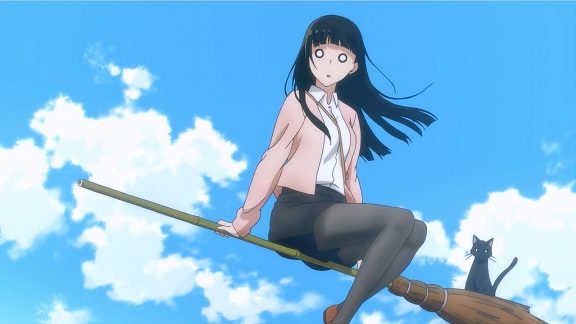
Flying Witch went out on a double bill last weekend, having kept up its high quality throughout its run. This was a show that if I had my way, would’ve run forever, the perfect way to start a lazy Sunday morning. Especially since one of my favourite gags from the manga hasn’t been used in the anime yet. It’s been funny, it’s been relaxing, a real balm to start the week with, as engaging in its everyday life scenes as in its more supernatural aspects.
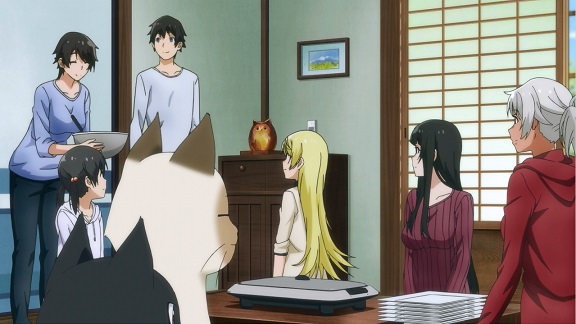
What I especially like about Flying Witch is the sense of family it has. You can see that five out of the six people in that screenshot above are related. Akane (extreme right) and her aunt (extreme left) have the same sticky out bits of hair, while they and the titular flying witch, Makoto, share a *ahem* similar build. Kei too, to the right of his mother, shares her hair style, while Chinatsu looks more like Makoto again. When they’re in motion these similarities are even greater and it helps set the series apart. Their interactions which each other too are natural in a way that you don’t see often in anime. Chinatsu is the most believable little sister/niece character I’ve seen in a long time in how she acts around her brother Kei and her two cousins Makoto and Akane. I hope we get a second season, or at least an OVA of it.
Macross Delta 11: grief and remembrance
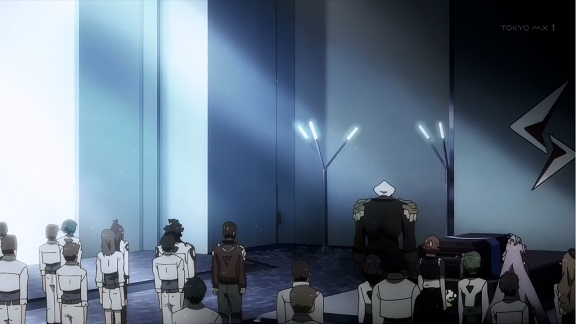
After the battle, the mourning. We open on Messer’s homecoming as his team mates and Walkure crew salute his coffin. It sets the tone for the rest of this episode. Walkure and Delta Squadron have been dealt a heavy blow. Apart from the loss of a comrade and friend, there’s the simple fact that their best pilot was brought down with a single shot through the heart. Despite their conquests Windermere until now hadn’t yet directly attacked Walkure, but rather skirmished with them. This was the first time they could bring their full power to bear and they managed to not only kill their enemy’s ace pilot but also to overpower Walkure itself through the song of the Wind Singer. It’s no wonder we see Windermere plot further attacks, while everybody in Walkure & the Delta squadron wonders what they could’ve done to prevent Messer’s death.
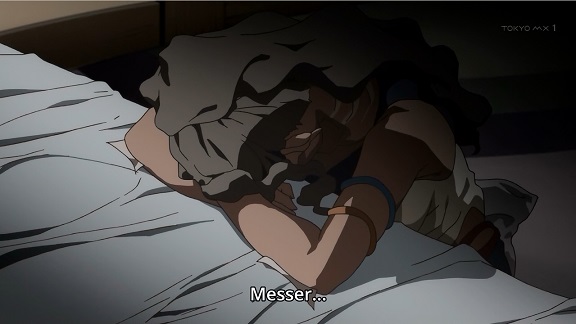
Much of the emotion in this episode is understated, controlled, but not the grief that waitress from episode four feels. It’s interesting that she’s the only one grieving openingly when his old flame Kaname remains stoic, though perhaps only on the outside. But of course Kaname is military as well as an idol, not a civilian like our waitress. She still has a job to do. And as the occassional cutaways to Windermere show, that job is only to get harder from here on.
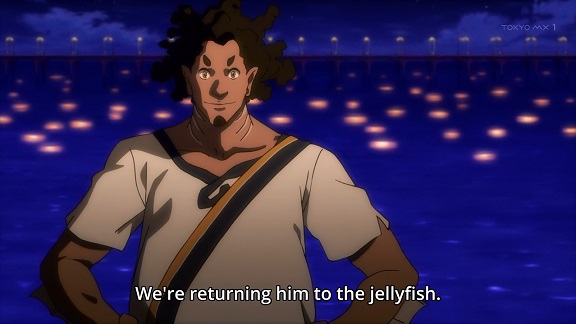
What I like about this series of Macross is how it has attempted to give Ragnar a distinct culture, as also seen in the previous episode’s jellyfish festival. Floating people out to sea for their final voyage is an old tradition among many seafaring peoples so it makes sense that the Ragnarians have something like it as well. Though here it’s symbolic, as the Nyannyan kids created a model of Messer’s Valkyrie to float out. It’s an emotional scene as the entire crew of Walkure and Delta Squadron, as well as the Nyannyan staff say their farewells.
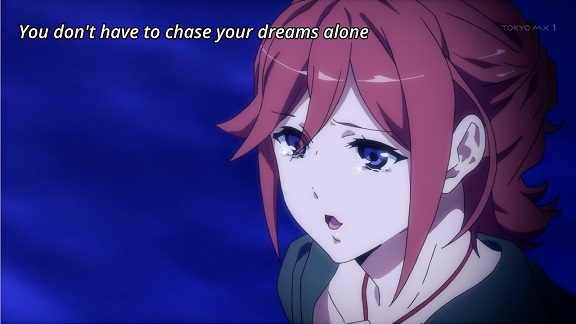
And of course it’s only right and proper to have the fallen warrior be sent off by Walkures singing a final song to him
Kiznaiver: “science did it”
Nick Creamer’s view on Kiznaiver here is something I think that’s shared by many of its viewers, myself included:
Learning the reason for Sonozaki and Katsuhira’s emotional issues was definitely a bit of a letdown; instead of their issues being reflective of their characters in some meaningful way, it was simply “the science stuff made bad times for everybody.”
[…]
“Why is Sonozaki so distant but emotionally curious?” “Because science did it.”
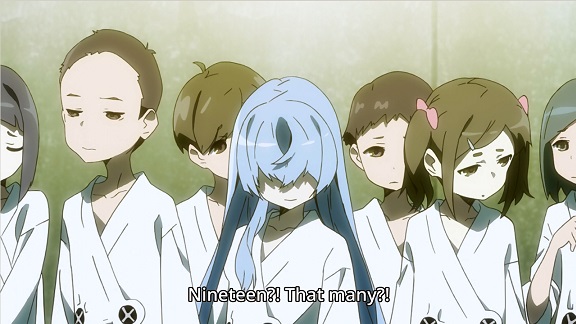
But science didn’t do it. Science didn’t take, operate on and torture children in service of some dubious programme to link emotions: scientists did. What’s missing in Kiznaiver and what makes the premisse too light to bear the emotional weight of the characters is the moral dimension. Apart from the two teachers, who were only low level caretakers in the original project and Sonozaki, we never get to see any of the people involved; even the thugs involved in the current iteration are faceless, hiding behind the costume of the city mascot. There’s no sense in episode nine or ten that the project was immoral, not tragic, that what was done to Sonozaki, Katsuhira and the seventeen other children involved twelve years ago wasn’t an unfortunate accident but a deliberate crime. These were people who were given unnecessary, unconsented to medical treatment and who were tortured as a result; worse, these were at best five year old children who could never hope to comprehend what was done to them.
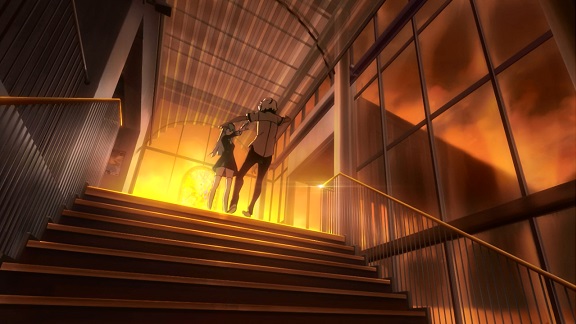
But the show isn’t really interested in exploring this moral dimension; key to this is its treatment of Sonozaki. A victim of the first Kizuna Project, she’s the instigator of its second incarnation, its driving force, with the tenth episode being her crisis point as the experiment is over and the powers behind it want to withdraw funding, which leads to a suicide attempt on her part. It’s clear that we’re supposed to be at least somewhat sympathetic to her, to see her as a tragic figure rather than as a villain. That she pushes her fellow victim Katsuhira down the stairs to test the Kizuna system on their first meeting, after having kidnapped and operated on six new Kiznaivers without consent, then follows it up with both physical and mental torture through the expedient of repeatedly shocking Katsuhira every time somebody answers a question “wrong” –all in the first two episodes– is largely swept under the rug. She doesn’t have to atone for her actions, instead the conflict is the struggle to re-establish the emotional connection between her and Katsuhira, with the worst consequence she’s had to suffer so far being Katsuhira’s disappointment in episode six.
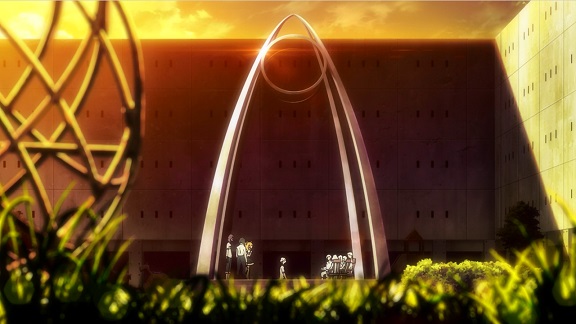
This seeming refusal to even start considering the moral consequences of the Kizuna project is what makes it into little more than a macguffin, a plot device without weight or merit. To me it’s a flaw, something that unbalances the show as it attempts to explain the history behind the project without acknowledging the responsibility of the people behind the project. There cannot be an emotional payoff with this backstory if the show can only answer that “science did it”.
Macross Delta 10: Best Couple Overload

After a pre-opening scene of Windermerians scheming, the meat of the episode takes place at the jellyfish festival on Ragnar, as almost the entire Walkure crew is roped in to sell jellyfish buns for Nyannyan — the pub/hostel the men are staying at. Freyja and best Couple, together with the Nyannyan kids do a little promotional song which of course immediately made me think of that other famous promo song. It’s incredibly cute and what better life advice than eat, drink, have kids, then bite the dust?

Meanwhile, as in battle, Hayate and Mirage were stuck in a supporting role, grilling the actual jellyfish, as Hayate wonders why there are so many couples at the festival. I like the interplay between the two this entire episode. Unlike with Freyja, who wears her heart of her sleeve, Mirage is guarded in what she says, but the way she and Hayate act around each other speaks of a familiarity and trust that they lacked in the first few episodes. It’s gratifying to see that sort of subtle character growth, that the series trust its viewers enough to not over explain things.

As for why there are so many pairs at the festival, Best Couple knows (of course): tonight, everybody’s wearing matching underpants. Or rather, the jelly fish festivals is meant for couples, as confessing your love underneath the rising jellyfish means it will last forever. Best Couple were very much on form the first half of this episode, pointing out one of the secondary love triangles to the Oblivious Main Trio. Messer loves Kaname, but Kaname likes Arad, the commander of the Delta Squadron. And Messer is leaving for a new assignment. Which is why Best Couple invites both him and Kaname over to the festival, to make some good memories before he leaves. So nice of the lesbian couple to get the straight kids hooked up too.

Oh Messer, poor Messer. After his secret weakness finally came out last episode, after it turned out the model fighter pilot had legs of clay, there was no way he could continue in Delta Squadron. So it’s off to a training squadron for him, never to fight again. Before he goes though, he has to tell Kaname what she means to him, how she saved him, in the process sending death flags up left, right and centre. His death at the end of the episode therefore isn’t a surprise, but fits. The best pilot in the squadron, coming back to save it when it finds itself in a pinch, only to die at the hands of his rival, not quite good enough in the end despite Kaname seeing for him, keeping the Var syndrome in check. A turning point for the series, as Windermere’s true strength is finally revealed and Walkure/Delta Squadron is left lacking. And with that Messer’s part in the story has ended.

Which brings us back to Mirage. As a pilot she superficially resembles Messer as opposed to Hayate’s more instinctive approach, but perhaps without Messer innate talent. In the very first episode we already got a hint that she, for all her drive to succeed, might be actually the worst pilot in the squadron. And as we saw a few episodes afterwards, coming as she does from a long line of badass fighter pilots, the pressure and expectations heaped upon her must be huge. If you compare her to either Hayate or Freyja, she doesn’t have a goal or ambition of her own, but rather seems to be driven by what is expected of her rather than what she wants to do herself. Storywise, either she or Hayate now has to step up to fill Messer’s shoes; normally it would be the male lead who’d do so, but wouldn’t it be interesting to have Mirage do it instead, finding her own role despite not actually having the same sort of passion as Hayate has?