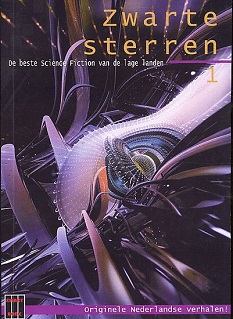
Zwarte Sterren — Roelof Goudriaan (editor)

Cover of Zwarte Sterren


Zwarte Sterren
Roelof Goudriaan (editor)
209 pages
published in 2005

Growing up in the Netherlands I of course read a lot of science fiction in Dutch, but never read much Dutch science fiction, if only because there wasn’t that much in the first place. Plenty of young adult science fiction, with Thea Beckman and the Euro 5 series being particular favourites of mine, but not many writers of grownup science fiction. Most sf publishers rather translated cheaper British or American science fiction than gamble on a Dutch or Belgian author. Better get some more Van Vogt instead.

And to a certain extend, especially once I started reading English good, there was the cultural cringe. It all seemed a bit less interesting, a bit more naff when written in Dutch. It just doesn’t have the grandiosity or bombast of English and attempts to achieve the same effects usually end up sounding corny or fake. So while there were a couple of authors I liked, Wim Gijssen and especially Belgian author Eddy C. Bertin, I haven’t attempted to keep up with Dutch science fiction at all.
Until the recent Worldcon that is.

Books read August

August has been a milestone month for me; not only did I turn forty, I also went to my first Worldcon. I had wanted to go to the Glasgow Worldcon nine years ago, but what with having been unemployed the year before and buying a house with Sandra, there just wasn’t either the money or the time to go there. Never mind eh, the 2014 Worldcon was a brilliant one to have as your first, though it did put a bit of strain on my reading. Only seven books finished as compared to nine last month, two fantasy, five science fiction, all women. Didn’t set out to read only female writers this month, but it just turned out that way.

Moving Target — Elizabeth Moon
The second installment in the Vatta’s War series, this was braincandy. I got it and read it in a day.

Sister Mine — Nalo Hopkinson
Urban fantasy about two not quite human sisters in Toronto as they struggle to come to terms with their relationship in the shadow of the voodoo-esque gods they serve.

Spin — Nina Allan
This short novel is inspired by the legend of Arachne and Athena and mixes fantasy and science fiction and is incredibly well written.

On a Red Station, Drifting — Aliette de Bodard
A disgraced magistrate in the Dai Viet Empire flees to the not quite pristene space station her distant family rules; things get complicated.

The Adventures of Alyx — Joanna Russ
I’d already read Picnic on Paradise a decade or so ago, but it was interesting to read it again in the context of the other Alyx stories, which you could call feminist fantasy parables.

The Steerswoman — Rosemary Kirstein
Bought this as an ebook on the strength of James Nicoll’s review; bought the whole series in fact. One of those books you have to lay down now and again to savour the writing and not have it end too soon.

Witch World — Andre Norton
The first novel in Norton’s best known and most successful series, about a man from our world who just after WWII is transported to another world where magic and high technology seem to exist hand in hand, to fight against an evil looming over the people who adopted him.

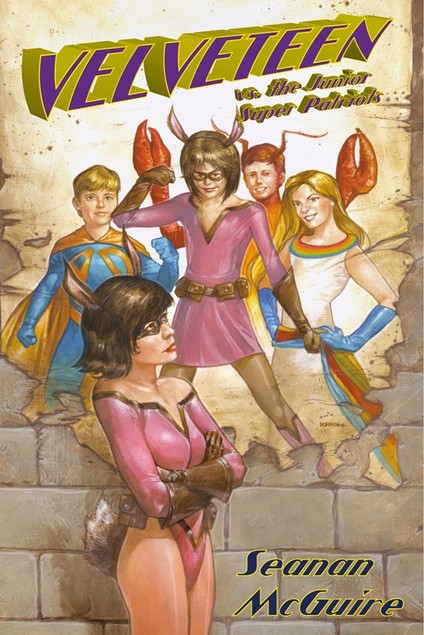
Velveteen vs the Junior Super Patriots/Multiverse — Seanan McGuire

Cover of Velveteen vs the Junior Super Patriots


Velveteen vs the Junior Super Patriots/Multiverse
Seanan McGuire
312 pages
published in 2012, 2013

I had been following Seanan McGuire on her Livejournal for donkey ages, but I only got around to reading her Velveteen stories when they were linked from MetaFilter. Bad Martin. No biccie. Of course I then inhaled all the linked posts in less than an afternoon (not at work of course, nooo) and found I had to buy the actual ebooks, if only to be able to burble about them here.

I haven’t read anything else of Seanan McGuire/Mira Grant yet, so it may seem strange that this got such a hold on me, but it just perfectly fit the story crack receptors in my brain. Well told, short superhero stories done with flair and invention, lots of drama and emotional rollercoasters, no fear of consequences or of looking silly. Velveteen is a young superheroine just let go of the most famous superhero team in the world, the Junior Super Patriots, looking to start a new life without superheroing as long as the sinister marketing company behind 90 percent of superheroes lets her. Greatly lacking in self confidence and trust in her powers — which consists of being able to bring to life and manipulate toys — she thinks herself barely qualified to cope with real life, let alone the challenges walking away from the Junior Super Patriots have brought her.

Read more…

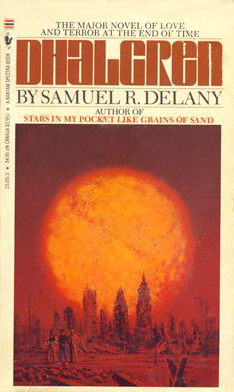
Dhalgren — Samuel R. Delany

Cover of Dhalgren


Dhalgren
Samuel R. Delany
879 pages
published in 1975

Question: what are the two places man will never reach? Answer: the heart of the sun and page 100 of Dhalgren.

A corny old joke, with a kernel of truth because Dhalgren is not an easy book to read. Almost 900 pages long it’s a monster of a book, even more so when you remember it was published at a time when any science fiction novels over 200 pages was a bit on the long side. And unlike certain modern novels of that length, Dhalgren demands your attention on every page; you can’t get through it on the autopilot. It’s therefore no wonder that it took me most of February to read it, with no time for other books. But it was worth it as even almost forty years later this still is one of the most ambitious and challenging science fiction novels ever written.

Some people think it’s the symbol of everything that went wrong with science fiction. That “joke” I opened is less a joke than a sneer, repeated by people still mad at what the New Wave did to science fiction though they were born long after it. According to them Dhalgren is dense, impenetrable and unreadable, elitist fodder for literary snobs. What really sticks in their craw though is that Dhalgren was one of the biggest science fiction bestsellers of the seventies, going through fifteen printings between 1975 and 1980. Somebody must’ve liked it; in fact, like Dune or Stranger in A Strange Land, much more palatable bestsellers to these embittered fans, it must’ve appealed to people outside science fiction’s core readership.

Read more:

Books read July

Because I decided to go to Loncon as you may have noticed, this month my reading was dominated by Hugo related works, but I still managed to fit three more novels than last month in:

Hurricane Fever — Tobias Buckell
A fast moving near future thriller set in a Caribbean menaced by almost constant hurricanes. Read because Tobias Buckell was kind enough to provide a review copy.

The Lives of Tao — Wesley Chu
Wesley Chu is one of the candidates for the Campbell Best New Writer award this year and this provided as part of the voting package. A decent adventure read, but nothing special.

A Stranger in Olondria — Sofia Samatar
Another candidate for the Campbell, Sofia Samatar got my vote on the strength of this novel, a fantasy travelogue set in a world that’s not your average medievaloid setting.

Three Parts Dead — Max Gladstone
Another candidate, this was a great secondary world/urban fantasy story about a chartered accountant (more or less) investigating the death of a god.

Moon over Soho — Ben Aaronovitch
An urban fantasy murder mystery set in contemporary London; part of a series.

Six Gun Snow White — Catherynne M. Valente
My vote for the Best Novella Hugo, this retelling of the Snow White fairytale set in the Wild West, was published as a short novel. (And would’ve been a normal length novel forty years or so.)

Deep Wizardry — Diane Duane
Second in the Young Wizards series. This almost made me cry. Almost.