Sensawunda

China Miéville on what weird fiction means to him:

I’ve been thinking about this a lot recently. I’m teaching a course in Weird Fiction at the University of Warwick, so this has come up a lot. Obviously it’s kind of impossible to come to anything like a final answer, so I approach this in a Beckettian way – try to define/understand it, fail, try again, fail again, fail better…I think the whole “sense of cosmic awe” thing that we hear a lot about in the Weird tradition is to do with the sense of the numinous, whether in a horrific iteration (or, more occasionally, a kind of joyous one), as being completely embedded in the everyday, rather than an intrusion. To that extent the Weird to me is about the sense that reality is always Weird.

Sounds a lot like that old, much derided sfnal concept of sense of wonder, that moment of conceptual breakthrough you get when you’re shown what the universe is really like. In its most mundane form it’s achieved by plopping a Big Dumb Object in front of the reader (Ringworld frex), at its best it’s a literary thrill that no other genre can offer. Weird fiction is one of those genres that’s even less definable than science fiction, but it does have the same sensawunda, if in a more horrorific sense. The best example is H. P. Lovecraft with his dread and revulsion about the scale of the universe and the insignificance of mankind, the anti-science fiction writer.


Incidently, for a personal sort of horror, the opening sentence fragment, “China Miéville (1972 – )”, has it. Two years older than me and look how much more he has accomplished. Moments like that I appreciate where Michel Vuijlsteke is coming from when he talks about how much he had wanted to leave some sort of legacy behind. Work is alright but just work, at best an interesting and challenging way to make money, but not something people will remember you for or all that important in the scheme of things, while unlike Michel I also don’t see myself ever having kids and leaving my mark on the world in that way. There must be more to life than work and entertainment.

Grand Slam!

Welsh grand slam

I don’t quite know why I started watching the 2008 England v Wales Six Nations match that one Saturday, but I became hooked immediately. Since no decent person can root for England in any sport, I chose the Welsh to cheer on, which turned out to be a good choice as they won the Grand Slam that year, winning all five their matches, conceding only two tries. Since that high point Wales has been a bit disappointing until today, as they won another Grand Slam. It wasn’t as magnificent as 2008, but it has been incredibly tense these past weeks, as no Welsh win was won easily.

I’ve come to enjoying spectator sports only lately, partially as distraction from you know what and Six Nations rugby has always been good. It’s even better when your chosen team wins…

Five comfort reads

Five comics I can always turn to when I’m feeling down or unwell.

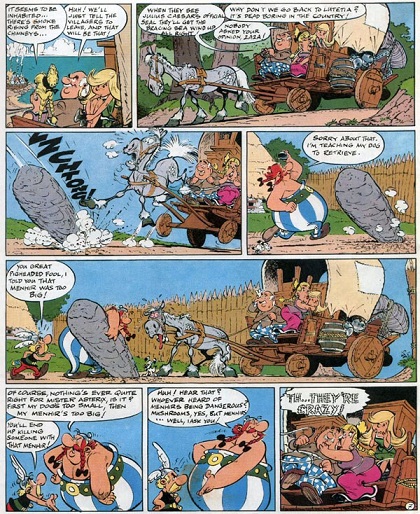
Asterix

1. Asterix. Humour, adventure, incredibly lame puns and it takes the side of the barbarian resistance against the empire. What’s not too like?

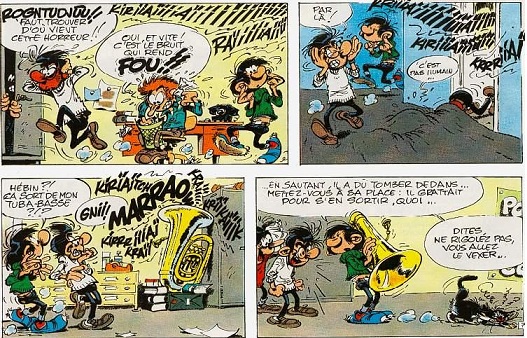
Gaston Lagaffe

2. Gaston Lagaffe. The world’s worst office boy, who spends his entire day avoiding work, experimenting with new, horrible recipes (sardines in apricot jam being one favourite) feeding his equally horrible seagull, inventing new Heath Robinsonesque machines to do things for him he’s too lazy to do himself, or playing battleship with Jules-from-Smith’s-across-the-street over the phone, when Jules is in New York with his boss…. It’s no wonder Gaston never made it in the US, a country where people keep working even if they’re no longer paid.

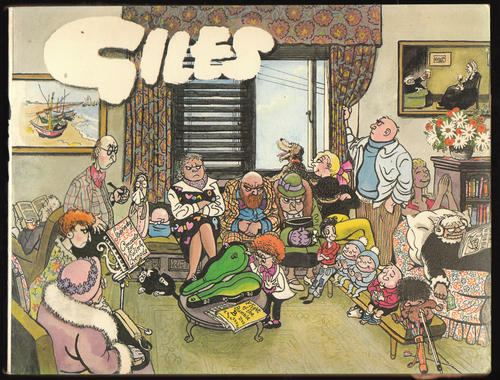
Giles

3. Giles annuals. A year’s worth of gentle satire about the issues of the day, as seen through an unforgettable cast of horrible grans, put-upon fathers, stoic mothers and way too clever kids, with walk-on parts for whichever celebrity that was in the news just then.

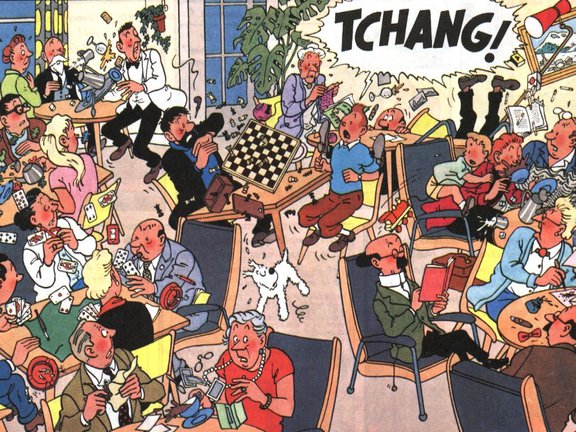
Tintin

4. Tintin. The world’s most viriginial boy reporter and his much more interesting friends going on adventures around the world. Tintin makes the world cozy and orderly.

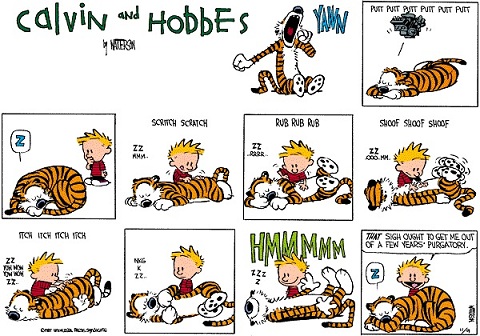
5. Calvin and Hobbes. It’s a magical world. Let’s go exploring.

Pérez — accent on the first é


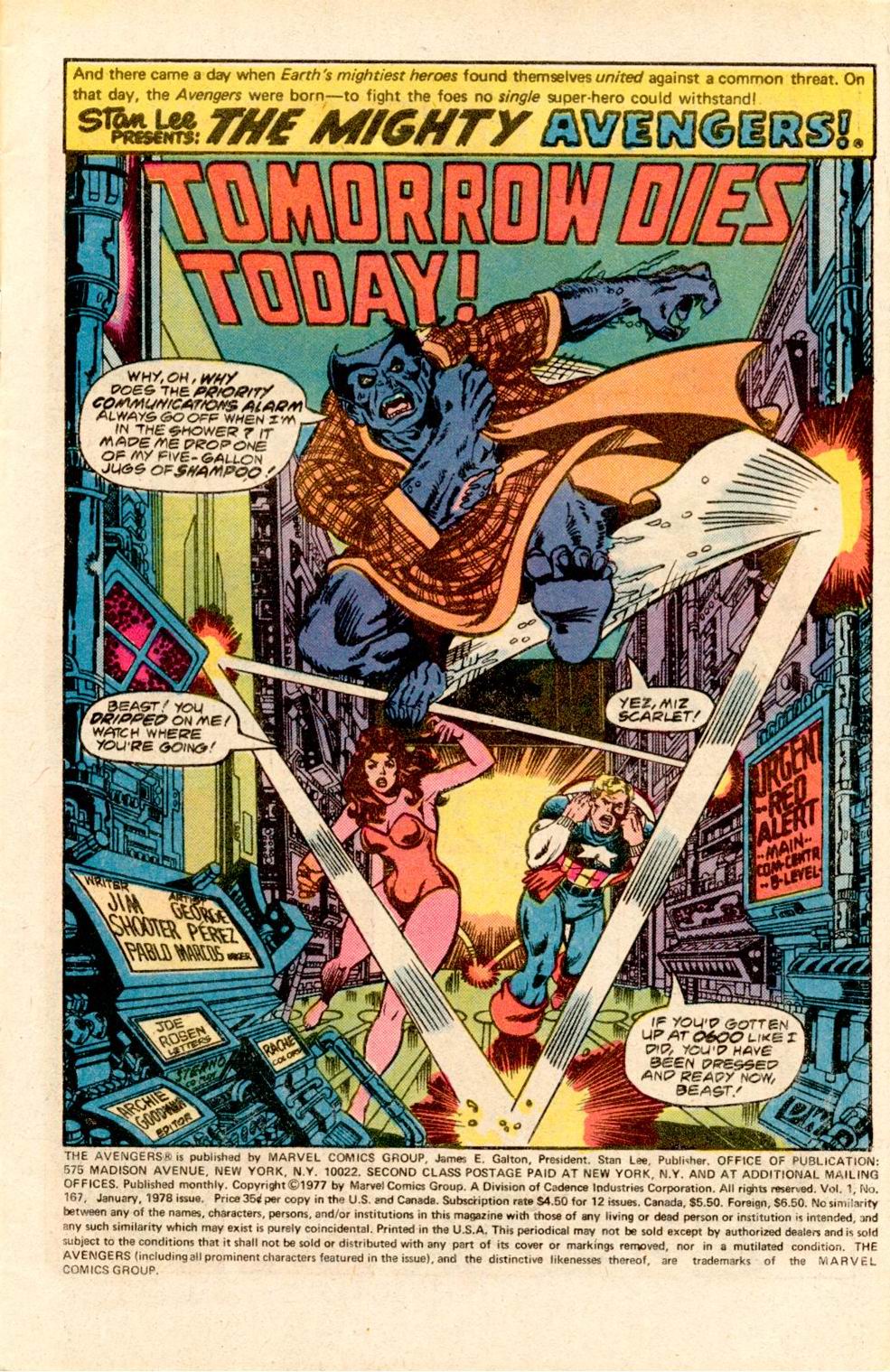
George Pérez splash page from Avengers 167

Tom Spurgeon linked to Diversions of the Groovy Kind‘s series of George Pérez Avengers splash pages (part 2, part 1), amongst which was the one shown above, for Avengers #167. The reason that one stood out for me was because that was the first ever George Pérez artwork I’d ever seen, the first Avengers comic I’d ever read and darn nearly the first superhero comic I’d ever read. For those without an encyclopedic knowledge of seventies Avengers stories, that issue started Jim Shooter’s Korvac Saga and even then Pérez must’ve been known for his willingness to draw huge crowd scenes, for apart from a dozen or so Avengers, it also starts the Guardians of the Galaxy, whose immense time traveling spaceship threatens to lodge the then SHIELD space station out of its orbit. Cue the Avengers, the inevitable misunderstanding/fight between superheroes as Beast is taken for a space monkey by two of the Guardians and the as inevitable flashbacks/shoutouts to earlier adventures as both sets of heroes tell each other what they know about them.

It is the quintessential Bronze Age superhero comic, published at a time and place when the Marvel Universe was still relatively young and not so difficult to comprehend that a few pages of recap couldn’t put readers straight. Continuity between titles had already grown almost as complex as any given titles own continuity, but was still manageable and gave a coherent feel to the Marvel Universe, something that’s summed up in a sequence in the next issue, as Starhawk goes after Korvac and their fight is felt by several of Marvel’s more psi-sensitive characters: Captain Marvel feels something through his cosmic awareness, the Surfer too, while Dr Strange’s meditiation is interrupted and Spider-Man’s spider sense is tingling. It’s only one page with no real impact on the story other than putting it in the context of a wider, shared universe.

That’s the sort of comic I grew up with and this was the comic that planted the seed for me to become a superhero fan. It also made me a Pérez fan, still to me the definitive superhero cartoonist.