Erased is neither a time travel nor a mystery story


It seems nobody remembers Quantum Leap anymore, because otherwise fewer people would’ve complained about the time travel in Boku Dake Ga Inai Machi/Erased. The time travel mechanism isn’t important to the story it wanted to tell, it doesn’t matter how it works or where it came from; just as in Quantum Leap you might as well explain it as an act of god. The world needed to be put right hence Satoru travelled back in time. A tool, not a theme.

Similarly, the more I think about, the less I think that this was ever meant as a real mystery. Again, the serial killer aspect and the need to prevent his mother from being murdered is a tool to get to the real meat of the story, which is that Sataru gets to do over his life not only so that he can save his class mates and mother, but especially so he doesn’t end up in his mid-twenties as a failed mangaka. He learns to make friends, learns to trust people and learns to accept their help when before he tried to do everything on his own. That’s why the thriller aspects of the plot are the weakest and the heart of the story lies in how he learns to get along with his friends, not to mention his relationship with his mother.

Delta stands for love triangle

Macross Delta: this time the love triangle is two girls and one guy

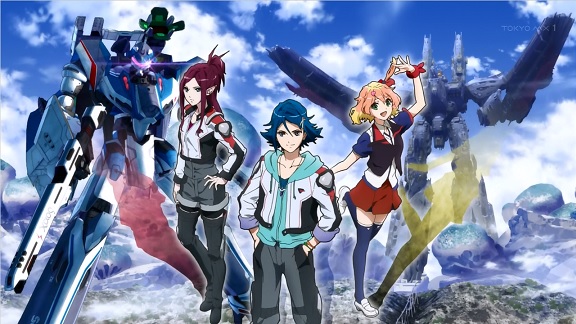
The opening of Macross Delta ends with the most important element of every iteration of Macross: the love triangle. This time it’s two pilots and an idol, as opposed to a pilot, a bridge bunny and an idol (Macrosss) or a pilot, an idol and a pilot/idol and all around jackass (Macross 7) or even two idols and a pilot (Frontier). We’ve had two pilots fighting over an idol before in Macross Plus but then they were both male and the idol was actually the understudy for the AI superstar she was the manager off. So straight off the bat Macross Delta offers something new. Also new: the male lead character is not a massive tool, though the female pilot is mildly tsundere. But then she’s a Farina Jenius, so it’s no more than expected. Gotta have one of those in there of course or it’s not Macross.

Macross Delta: Draken in spaace

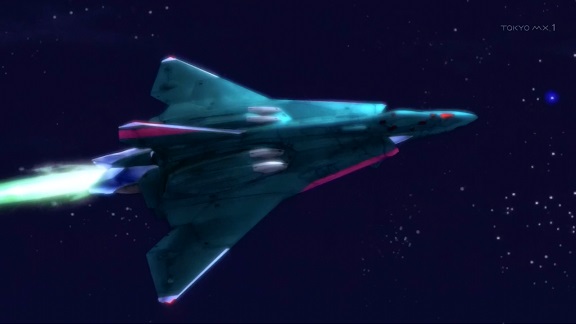
The two main elements of any Macross show are love triangles and mecha, with Delta not lacking in the latter. The good guys are flying the usual variations on what once started out as F-14s that could transform into giant robots, but the bad guys (relatively) for once have the cooler planes, a double delta inspired by the Swedish Saab Draken Cold War fighter plane. It looks absolutely gorgeous in the dog fights. The Viggen would’ve been even better though.

Macross Delta: love songs can change the world

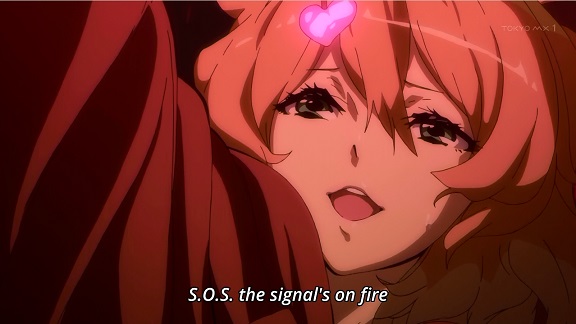
The three main elements of any Macross show are love triangles, mecha and music being able to stop wars. Or in this case, cure people possessed by Var Syndrome which makes them hyper violent and supernormally strong. The Walkure combined idol group/fighter squadron uses the power of love songs to fight the syndrome and our second heroine, Freyja Wion, wants to join them, proving her mettle during the first episode’s main battle and the second episode’s test.

Macross Delta: Hayate Immelman is not as obnoxious as most Macross leads

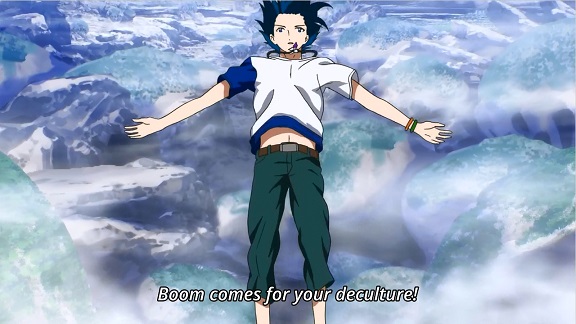
Among main elements of any Macross show are love triangles, mecha, music being able to stop wars and cocky, obnoxious male leads. Hayate Immelman is rare in that he’s not a total douche, though he is somewhat confident in himself, shall we say? But he helps Freyja escape the police in the first episode, then rescues her from the enemy’s attack doing the time honoured “jump into a conveniently abandoned mecha and grab the girl in its hands, then blast off” Macross manoeuvre and for the most part is more a tease than a blowhard. There is some drama with Mirage Farina Jenius, especially since he lusts after her plane, starting the second love triangle of the series, but nothing on the level of Basara’s attitude in Macross 7, to name the worst example.

Anime Japan doesn’t have Child Protection Services

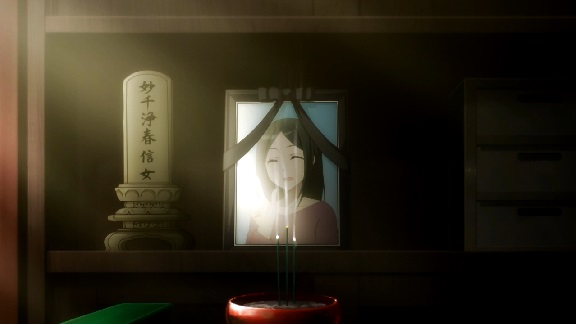
well that is a cheery start

As you can tell from the opening shot, Shounen Maid is a comedy. it’s just that Chihiro’s mum has to die with no childcare agent in sight to take care of an elementary school kid just bereft of his only parent, so that he can be taken in by his uncle who suddenly pops up.

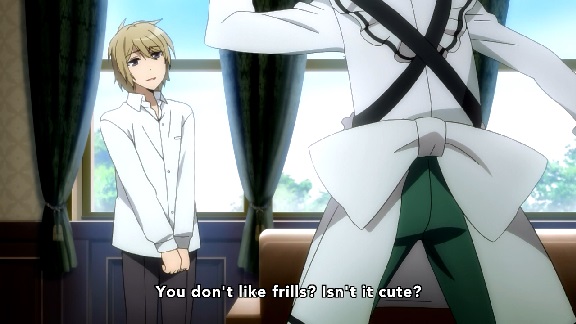
frilly frilly uniform

Said uncle turns out to be from a very rich family and Chihiro’s mother hadn’t been entirely truthful when she told him she had no relatives; it’s just that she was estranged from her family when she had Chihiro. So obviously he rejects his uncle’s offer because he doesn’t want handouts if his mother never took any either. The good news is, uncle has a solution: use Chihiro’s innate talents to work as a housekeeper in return from room and board. The bad news is, his uncle has made him a maids outfit. The worse news is, it’s very frilly.

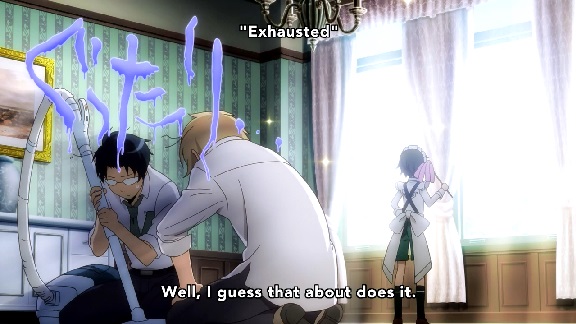
cleaning is hard work

This looked godawful from the description and I wasn’t going to bother with it, but this comment convinced me to give it a chance. As long as it doesn’t stray into problematic yaoi material (seeing as the protag is in elementary school and his uncle is … not) i’ll keep watching.

Flying Witch

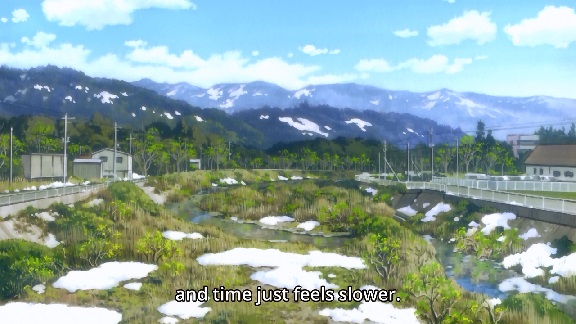
the countryside is boring

Trust me, having grown up in the countryside, time going slow is not an unadulterated joy. In anime form it is indeed relaxing to look at. Relaxing is the keyword for Flying Witch. Not so much Kiki’s Delivery Service as Non Non Biyori.

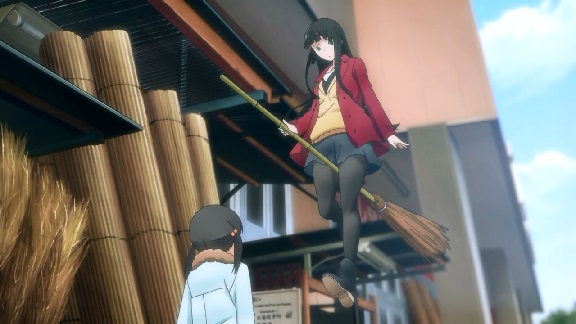
trying out brooms at the DIY store

It takes ten minutes for the Flying Witch to actually fly. This is a very slow anime. But not a dull anime. it just takes its time with everything. Nothing much happens other than that the titular witch moves to the country to live with relatives, goes to her new school and gets to meet the childhood friend of her cousin.

trying out brooms at the DIY store

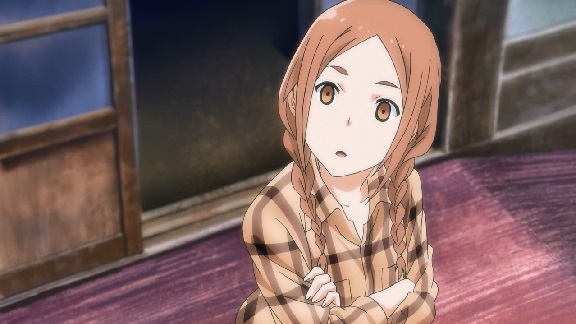
Anime is not often subtle with showing emotions and expressions. What makes the reaction shots to seeing our witch fly so funny is how understated they are, as well as how slow the childhood friend — and earlier, the cousin’s younger sister — are to react. And how low key and natural the responses are.

Twin Star Exorcists is not very good at this romance thing

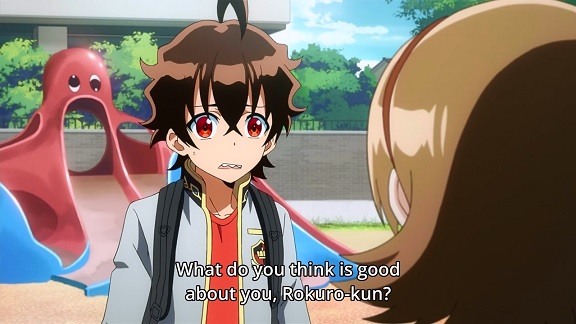
There is nothing good about Rokuro Enmado from Sousei no Onmyouji

Twin Star Exorcists‘ Rokuro Enmado is your typical battle shounen protagonist: hot blooded and stupid with at first glance nothing good about him, which doesn’t stop him confessing to semi-strangers regularly only to be shot down just as regularly. Only his crazy shark like teeth set him apart from dozens of other bland, brown haired protagonists with tragic pasts. Because of course that’s the reason for his current uselessness: a deep seated trauma, something that happened two years ago and which he hasn’t been able to process. He used to be a hugely powerful exorcist until this happened but now refuses to have anything to do with it.
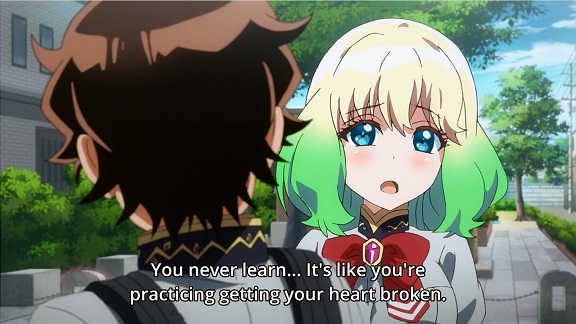
Doomed childhood friend Otomi Mayura from Sousei no Onmyouji

Otomi Mayura is his childhood friend. Beautiful, smart and outgoing, she seems everything Rokuro isn’t, so why does she hang around him so much? Because of course being a childhood friend, she both feels a bit responsible for him and loves him. She knows something about his trauma as well as his real character, which is why she sticks by him and tries to somewhat take care of him, though this last isn’t as pronounced as with some childhood friends. More than anything else she wants to keep Rokuro safe and for him to love her as much as she does him.
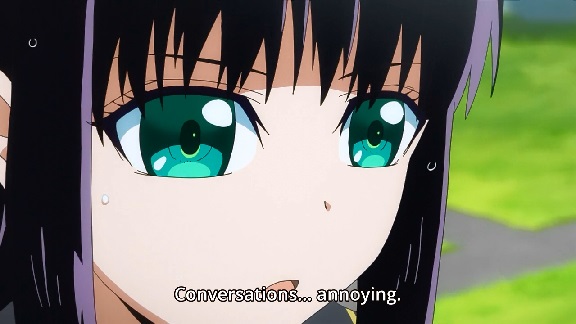
Benio Adashino from Sousei no Onmyouji

But Otomi is doomed to fail in getting Rokuro to love her because of this girl, Benio Adashino, superstar exorcist, completely devoted to her quest and almost emotionless outside it. She and Rokuro don’t quite hit it off, she seeing him as a slacker, he seeing her as the naive fool he was before his trauma, but of course this is only temporary. As much as they at first dislike each other, there’s also a mutual attraction as each starts to recognise the other’s virtues. Specifically, it’s Rokuro’s willingness to protect and fight for her that appeals to Benio, not so much his actual personality. Again, typical battle shounen behaviour.
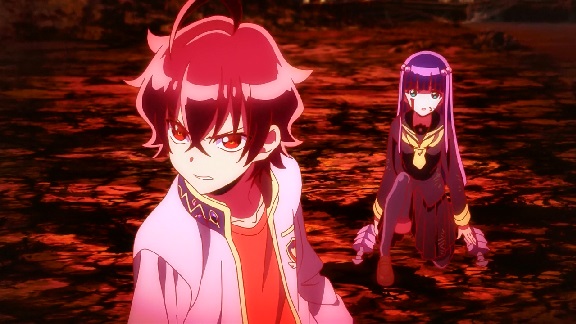
Rokuro shielding Benio - from Sousei no Onmyouji

Twin Star Exorcists is rather generic in its characterisation and plot, if well executed, and it’s this genericness that makes it easier to spot the problems with how its depiction of romance it has in common with many other battle shounen manga. Romance in these series is a matter of grand gestures, extravagant promises made by the male protagonist to the heroine, often as it is here, done before he knows anything about her. She meanwhile falls in love almost against her will, despite her initial impressions of him being less than favourable. Indeed, often the male lead remains a loser in everyday life, no matter how many demons or impurities he slays. He may not realise that she has fallen in love, but continues treating her (and everybody else in a skirt if it’s a battle harem series) the same as before; she certainly won’t tell him until she’s absolutely sure of him and her feelings both.
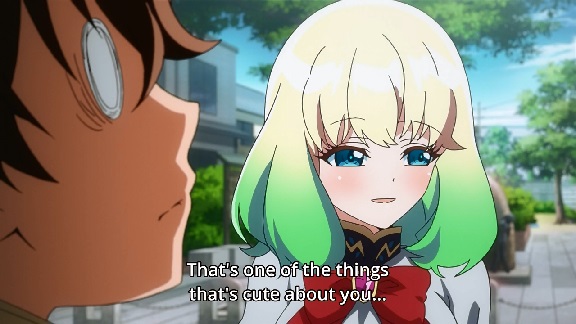
Mayura and Rokuro - from Sousei no Onmyouji

The poor old childhood friend meanwhile has seen the boy she loves confess to every girl he ever met, save her, while she stood there on the sidelines patching up his ego after the inevitable rejection, taking care of his domestic needs or helping him cope with his dark and troubled past. Either she lacks the courage to confess because she’s afraid of rejection, or the stupid fucker she loves is too dense to realise why she’s so friendly and kind. Superficially the childhood friend looks like a gender flipped Nice Guy, but in the end it’s still a very blokey fantasy to have a beautiful girl fuzz over you and do all the domestic chores for you without you having to invest anything in the relationship. No emotional labour necessary and you can’t fool me into thinking those dense protagonists don’t think of the childhood friend as the emergency backup girlfriend candidate.
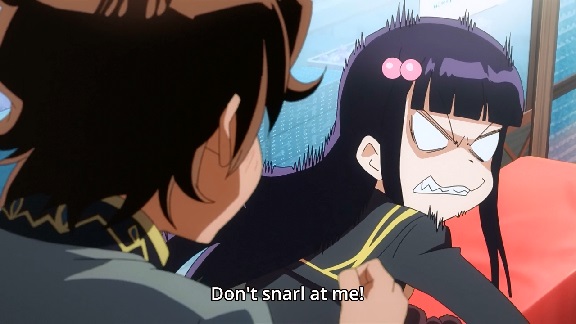
Benio and Rokuro - from Sousei no Onmyouji

The main heroine of course doesn’t have to engage in all that emotional labour. She’s free to be aloof or antagonistic, bad at household work, a dangerous cook, as long as she’s beautiful and almost but not quite as good as the protagonist at the demon slaying. She’s the unobtainable ideal up until the point that our hero either surpasses her through his innate talent at whatever magic thingy she needed years to train for (said innate talent manifesting itself mainly through LOTS OF SHOUTING) or because he’s the first man who wanted to protect her and sees her as a real girl. Because boy, gender roles are not very enlightened in manga/anime Japan and no matter how badass she is, secretly she wants to be a proper girly girl. Again though, the point is that our hero doesn’t have to invest all that much in the relationship; none of the tedious work required that a real relationship would entail

And all of that is perfectly acceptable in fiction, if it wasn’t so omnipresent in manga and anime stories (and to be fair, in a lot of western media too). If almost every story you read says it’s alright to not make an effort to be attractive and you can still get all the girls even if you’re a loser and a slob, just as long as you make the right noises about wanting to protect them, that’s not going to do wonders for your interactions with real women.