In-jokes in anime, like in any other medium, usually vary from the tired and tedious to the funny if you get it, but rarely add much to the story. But there are exceptions, as in Saenai Heroine no Sodatekata (Saekano or: How To Raise a Boring Girlfriend), where the performance of the Tengen Toppa Gurren Lagann opening theme is a truly heartwarming and awesome moment. It works because the scene makes sense in the context of the story while Sorairo Days, the song itself, with all its baggage and memories for longtime anime fans, perfectly fits the mood of audacity and cheekiness that underlies the scene — yours is the drill that will pierce the heavens and all that. At the same time, it makes perfect sense for an anime song band of which the lead singer was unaware it was an anime song band until five minutes before their first performance, that their intro song would be this, something that’s a perfectly good rock song even outside its own context. Not to mention that it will definitely make an otaku audience pumped up.
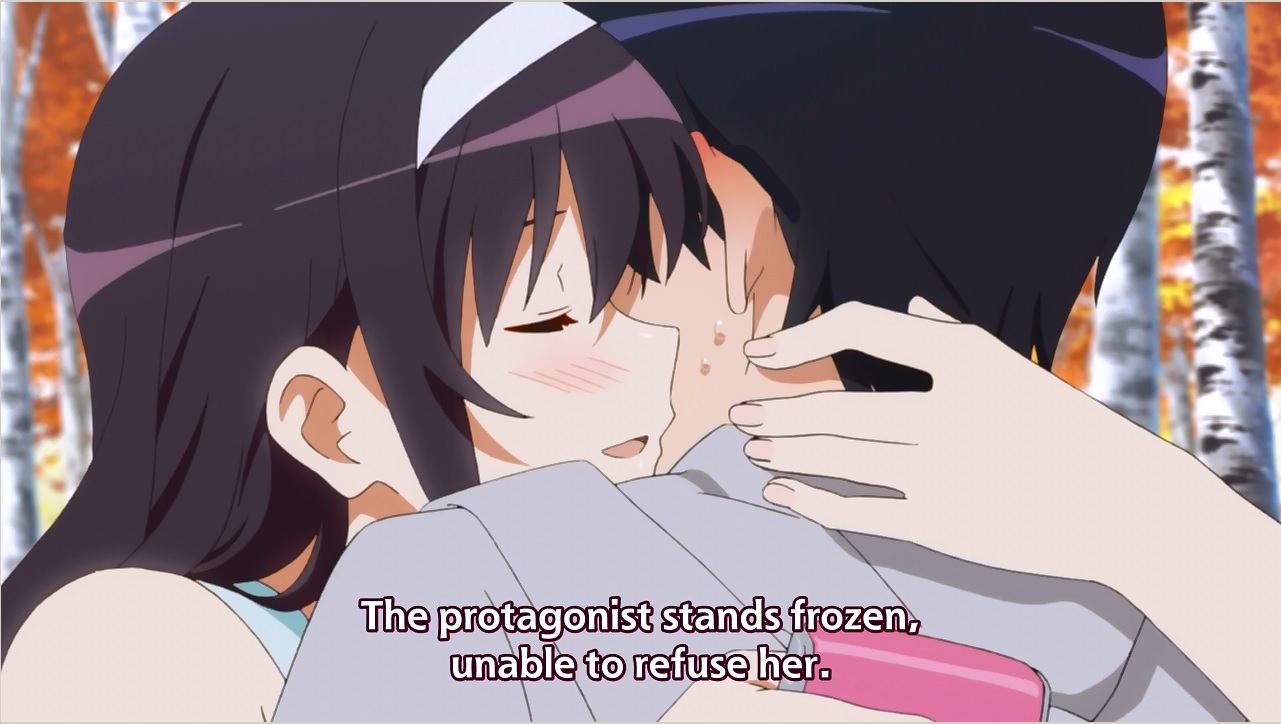
It’s one of the moments when Saekano gets everything right, a celebration of otaku culture that’s neither gross nor self congratulatory, in a series that’s rather ambivalent about otaku culture. At first this looks like a typical otaku centered harem comedy, especially if you start with episode 0, which is both a prologue and takes place six months after the rest of the series because that’s an episode that’s entirely about showing your standard blandly handsome but nerdy (glasses!) protagonist getting flirted at by a collection of stereotypes without noticing as they nominally are scouting locations for their visual novel game. Meanwhile, in voice over, the characters snark at the conventions of harem comedies like the one they’re in — such meta.
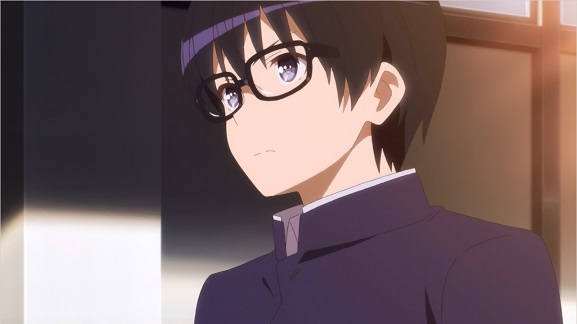
The biggest handicap for the series is its protagonist, Tomoya Aki, who as noted is the otaku variant on the bland everyman hero and who is a bit on the obnoxious side, to say the least. He’s the sort of otaku who is very serious about his otaku nerdhood despite not actually doing anything creative but just watching anime, reading light novels and playing erotic games, then fangirling about them — not that there’s anything wrong with that. He has a lot of opinions about what a heroine for a erotic game should be like and when one morning he has an encounter straight out of a visual novel, the mystery girl he sees inspires him to create The Ultimate Visual Novel. And to do so he ropes in his twin tailed tsundere childhood friend who coincidently is also an accomplished doujinshi artist as well as his black haired cool beauty upperclassman, who of course is a best selling light novel author. They of course both like him, not so much each other; he’s of course oblivious and yes, there will be other girls joining his team in the course of the series, including that singer mentioned above, who naturally is his energetic and (sexually) aggressive cousin. Throughout he remains insufferable in his opinions and density with regards to picking up any clue that all these successfull, much more accomplished women might actually like him. to be fair, why exactly they do the series tries to answer but doesn’t quite succeed in explaining.
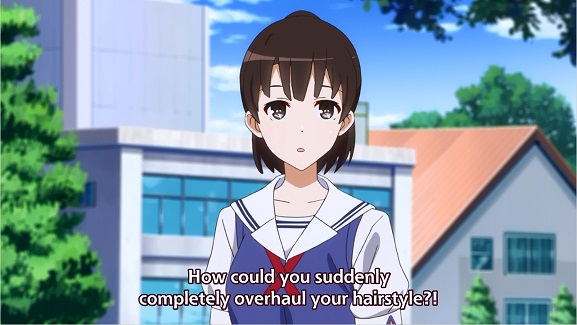
So far, so generic. What saves the show is the main heroine, Megumi Kato, Tomoya’s inspiration, who by sheer coincidence, turns out to be his very ordinary, very non-otaku class mate with none of the qualities a true heroine should have. Her character isn’t developed at all, but waffles all over the place, she doesn’t have clearly distinct emotions, she doesn’t stand out at all, she just lacks presence and has no clue whatsoever on how to behave, as Tomoya takes great patience in explaining to her again and again. She’s also an incredible troll, the smartest person in the show and completely unimpressed by the bullshit the others throw at each other, neither being seduced nor revolted by otaku culture but able to pick out those things that interest her and disregard the rest. Her presence completely undercuts all of Tomoya’s lectures as well as all the usual anime shenanigans the show engages in. It’s hinted at but not quite confirmed that she too likes Tomoya, but it would be equally valid to argue that she’s only going along with his plans because it entertains her at first, while later she genuinely gets interested in game development. She’s the only one of the girls that doesn’t get jealous of the others when they hang around Tomoya too much.
With Megumi Saekano has a character that cannot only troll the rest of the cast, but the show’s viewers as well, as she absolutely refuses to behave as expected of her. She sees through all the stupidity in otaku culture but is kind enough to leave the others their illusions even as she teases them for it, though neither Tomoya nor the other girls seem to notice her doing so until she hits them over the head with it. It’s through her the show manages to both criticise and celebrate otaku culture, acknowledging that it has its problematic parts the same time it wallows in it. In short, she is what makes tSaekano not just watchable but great: boring she isn’t.