Pantera’s Phil Anselmo engaged in his usual tired racist provocation, Robb Flynn calls him out on it, as well as the larger metal community for allowing it. It’s no secret that metal has a bit of a racism problem, so it’s good to see people be outspoken about it and not trying to sweep it under the carpet.
The Black Cat teaches judo (12)

Killing goblins is hard work
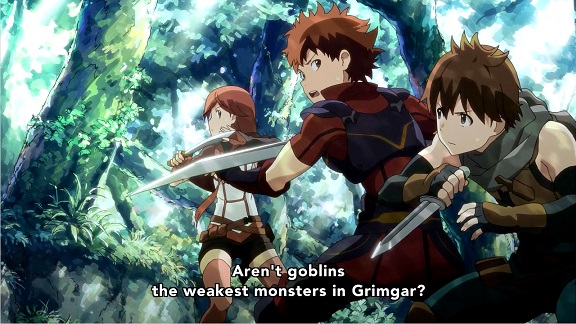
Hai to Gensou no Grimgar starts with what looks like your standard D&D party attempting to ambush two goblins, who quickly turn the tables on them; only luck allows them to get away. It sets the tone for the series and made me sit and take notice. Even more so when we went into flashback and got to know why our six protagonists ended up fighting goblins in the first place and it turned out that this is yet another “trapped in a fantasy video game world” show, ala Sword Arts Online or Log Horizon, but stripped off its wish fulfilment elements. The protagonists suffer amnesia, have no clue about the world they’ve found themselves in, barely have the skills to survive and the only job open to them is being a monster hunter, getting paid for killing goblins and stuff.
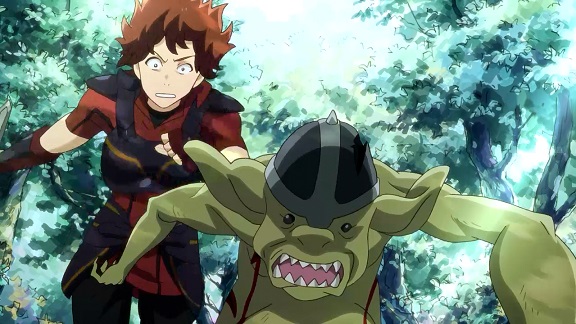
And in episode two we are shown the reality of killing a goblin: it’s messy and horrible and horrifying and you feel sorry for the goblin, who’s just there minding his own business getting water before he’s straight up murdered. Fast, violent and chaotic, it’s a scene that has the more impact for the fact that embedded in what’s essentially a slice of fantasy life show. Our heroes are basically working class stiffs being paid to ethnically cleanse the forest they live next to, something that is underscored in the third episode, when they’re scouting an old human city that had been overrun by goblins some years before. It hints that there’s some sort of “race war” going on between goblins and humans, something more than just the usual good vs evil struggle we expect from a fantasy video game world.
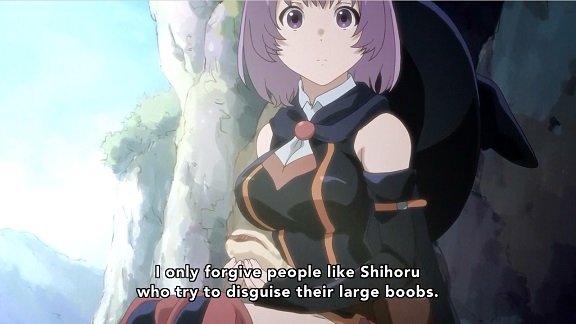
The other theme in the show is fanservice. There’s a lot of focus on the two girl’s chests and asses, an incredibly obnoxious sequence in the first episode discussing their tits and then in episode two the obligatory peeping on the girls bathing scene sort of happens. We never see anything, just the fallout of the attempt as at least one of the girls is traumatised by it. Normally with this sort of thing it’s played for comedy and without consequences, so it was refreshing to see this. The series seems to be quietly subverting the obligatory anime fanservice nonsense, even though the camera still loves focusing on the girls’ assets.
Combined with the gorgeous artwork, especially the pastel backgrounds, these two elements makes Hai to Gensou no Grimgar more interesting than your average light novel adaptation.
I’m not a Trump supporter!
Madoka Vs Yuki Yona: perspective matters
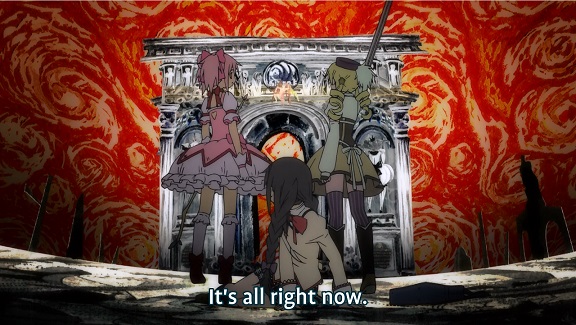
So over the holidays I had the pleasure of watching Puella Magi Madoka Magica for the first time, though it’s been on my watch list for years; ever since it first came out in fact. It’s the series that arguably made studio Shaft’s reputation, a deconstruction of the Magical Girl/Mahou Shoujo story, with its elementary or middle school heroines getting magical powers from dubious alien mascots to fight ill defined evils — after first having gone through a lengthy transformation sequence of course. Call it the genre’s Watchmen, if you’re looking for a lazy comparison. Because it’s best watched without knowing quite what you’re in for, I won’t talk about the plot here, but I found it interesting to compare Madoka to another Mahou Shoujo series, one that came out a few years after it. There will be some spoilers once we get to the nitty gritty.
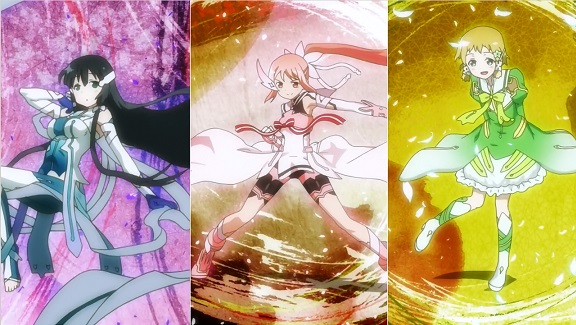
That series is Yuki Yuna wa Yusha de Aru (Yuki Yuna is a hero), which came out in 2014 and which is very much a post-Madoka Mahou Shoujo series. Like Madoka, it looks like a regular Mahou Shoujo series at first, but continually drops hints that not everything is what it seems, feeding the mistrust and suspicion of the viewer expecting a similar twist as Madoka delivered, a mistrust that only builds when the twist refuses to come (as witnessed in the relevant TV Tropes thread). Yuki Yuna remains cheerfully optimistic even as the true scale ot the threat its middle school heroines have to face becomes clear, ultimately arriving at a true happy ending.
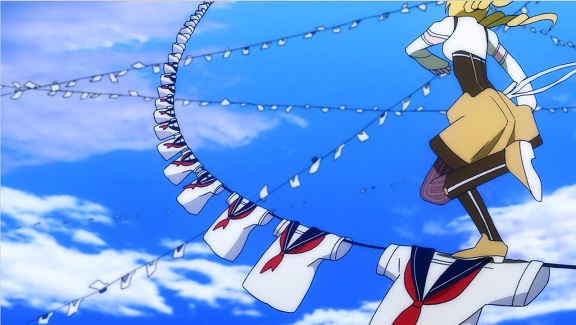
What I wondered was, if you could call Puella Magi Madoka Magica a deconstruction of the Mahou Shoujo genre, because it took a long hard look at its core premisses and asked what it would look like set in a more “realistic” world, would that make Yuki Yuna wa Yusha de Aru a reconstruction? Something similar to Astro City perhaps, which took into account the effects Watchmen had had on the superhero genre, then create a more hopeful take on it, repudiating its worldview. But mulling over it further, I thought that wasn’t quite right. Rather, it was a matter of perspective.
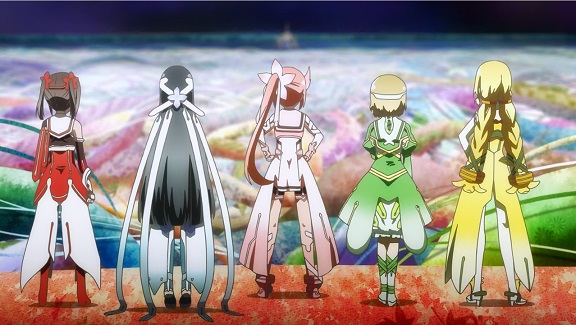
Because when it comes down to it, Madoka and Yuki Yuna tell the same story, just from a different perspective. Both take the central conciet of the Mahou Shoujo genre, of giving young girls unlimited magical powers and pointing them in the direction of a nebulous evil to fight and give it a good kicking. In both there’s a price to pay for that power, that is only revealed once it’s too late. In both the evil the girls are recruited to fight, the reason for their fight as well as the world itself are revealed to be very different from what they believed it was, with the truth being far worse than they could’ve imagined before. Both in the end even have something of a happy ending.
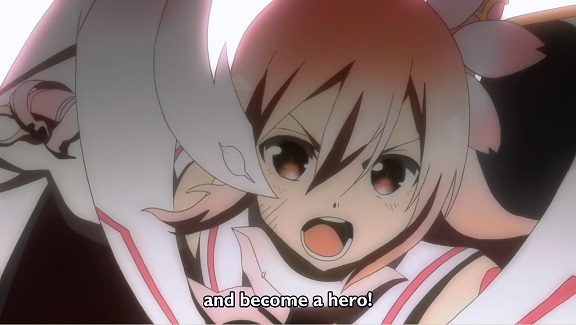
The difference is whereas Madoka quickly breaks through the angst barrier and delights in letting its characters suffer (in the best possible way), when the same happens in Yuki Yuna the characters may suffer, but their sense of optimism even in the face of overwhelming despair remains. It’s a matter of perspective; Madoka emphasised the bleakness at the heart of its story, Yuki Yuna chose to focus on the hope. Both are valid. Which one you prefer depends on your own tastes; myself I liked both.