“I am trying to imagine a reader who wants to read this book”

Alexandra Petri is not happy at the Sebastian Faulks written authorised Jeeves & Woster sequel:

If you want to read a story about Bertie and Jeeves where people deal with World War I and everything changes, go to the Indeed, Sir fanfiction archive where there is plenty of that, much of it better written. If you want to read a story about a young Wodehouse male who falls in love and gets into scrapes, read the “Indiscretions Of Archie.”

[…]

By the eighth page I was emitting a stricken woofle like a bulldog that has been denied cake. There had been the introduction of a girl with “chocolate eyes” and a kind heart who is far more beautiful than anyone Bertie Wooster has ever dated. Anyone who has read fanfiction will note the tell-tale sign of a Mary Sue, but I thought, surely not. Not in a first outing.

Course, anybody with any sense who isn’t paid to read this book, would have dropped it at “the new Sebastian Faulks Jeeves and Wooster novel” because from that you can predict with a saddening certainty that it will be a cloying pastiche that may, at best, get some of the surface elements right, written by a smug, sad wanker far too pleased with his own writing talents to recognise how mediocre they are.

The Normans — Marjorie Chibnall

Cover of The Normans


The Normans
Marjorie Chibnall
191 pages including index
published in 2000

So the Normans eh? Bunch of Vikings who plundered the English and French coasts for a while, before the king of France made an offer they couldn’t refuse and they settled in what became Normandy, named after them, to defend France against, well, other Vikings. Traditionally this is supposed to have happened in 911 CE. unlike other Scandinavian invaders attempting to set up stock in the countries they raided, these Vikings not only survived but thrived, creating essential a new people, the Normans and a new country, Normandy, in the process. Not only did Normandy become a powerful duchy, more or less indepdent from the kingdom of France, from there on William the Conqueror went on to take over England and Wales and invade Ireland, while other Normans went on to the Mediterranean and found kingdoms in Sicily and Antioch.

What the Normans managed to do looks a whole lot like what earlier “barbarian” invaders like the Goths did to the Roman empire, grabbing a piece of it and settle there in return for protection against other “barbarians”. But, as Marjorie Chibnall explains in her book, the Normans were “a product, not of blood, but of history”, not so much a people on the move as in the “classic” — and quite likely never to have happened in that form — people movements of Late Antiquity. Instead, it was a tightly knit group of warriors loyal to a specific ruler which took over and created Normandy, mixing with and ruling over the original populations. It was similar ties between ruler and noblemen that would later enable William the Conqueror to win the English kingdom.

Read more…

Nick Cardy

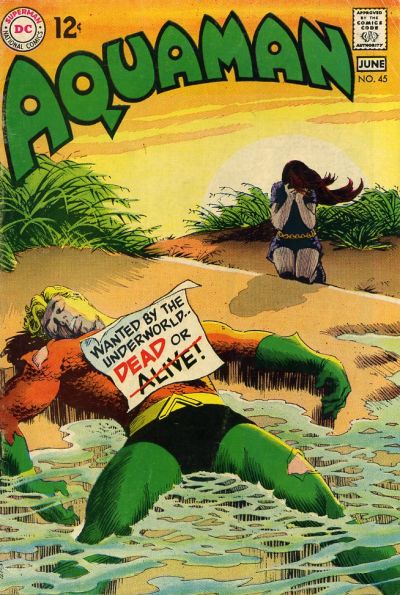
Nick Cardy cover of Aquaman 45

Damn. Comics Beat just reported Nick Cardy had passed away; at age 93 or 94 not quite surprising but still upsetting. Twentyfive years or so agao when I started out collecting comics, it was his Aquaman covers that drew me to collect the Dutch reprints of that series, even before I knew who drew them. Just look at the one shown above. That’s a great image but also a brilliant hook, something that makes you want to read the story that it suggests. Almost all his Aquaman covers, especially the later ones, are like that.

Nick Cardy cover of Aquaman 45

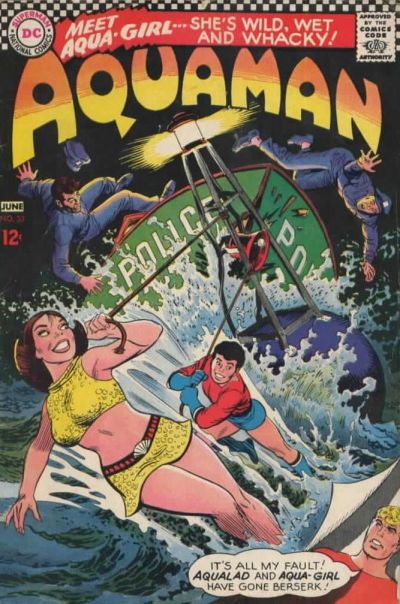
What I also like about him were his women, like Aquagirl here, pretty, but like his men with bodies that looked tough and capable of doing all the stunts a superhero life requires. His women had actual muscles.

Books read October

I finally picked up the pace somewhat this month, with seven books read.

Fledgling — Sharon Lee & Steve Miller
Another free novel set in their Liaden universe, this is a classic coming of age science fiction novel, amusing but perhaps better read when you’re twelve.

1938 Hitler’s Gamble — Giles MacDonogh
A very useful overview of the political and military events that shaped the last year of peace before World War II, showing how opportunistic Hitler’s policies were.

Filthy English — Peter Silverton
An amusing overview of bad language of all kinds.

Vast — Linda Nagata
Hard science fiction of a subgenre that also includes Alastair Reynolds’ revelation Space and Paul McAuley’s Eternal Light: humantiy stumbles over the remains of a millions of years old war and is hunted to extinction by the left over killing machines of the war. I hadn’t read anything by Nagata yet, save for perhaps some short stories but on the strength of this she’s a writer I need to read more off.

The Battle for the Rhine 1944 — Robin Neillands
An overview of the campaign in western Europe from Normandy up until the Battle of the Bugle and very concerned with putting the record straight with regards to Montgomery’s part in the war.

The Eye with Which the Universe Beholds Itself — Ian Sales
Second chapbook in the Apollo Quartet, this is alternate history hard science fiction about a slightly more ambitious Apollo programme.

Child of the Grove — Tanya Huff
I like her military science fiction so I thought I’d check out her fantasy work as well. A decent but weirdly paced novel.