Charlemagne — Rosamond McKitterick

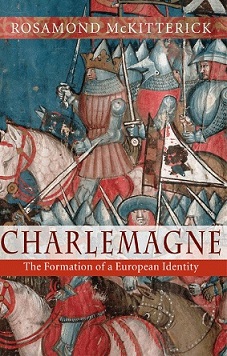
Cover of Charlemagne


Charlemagne: the Formation of a European Identity
Rosamond McKitterick
460 pages including index
published in 2008

I knew Rosamond McKitterick from the volume in the Short Oxford History of Europe series she edited, which is why I picked up Charlemagne: the Formation of a European Identity from the library. Charlemagne himself has only relatively recently picked my interest, mostly through having read Emperor of the West a few years back. Interest in Charlemagne in general has rather picked up in the past decade, as the search for a common pan-European identity has taken on obvious political significance, what with the EU and all.

Which is where this comes in, as Rosamond McKitterick attempts to get back to contemporary sources to re-evaluate Charlemagne and his reign, without the interpretations later historians have given them. Her goal is to in this way provide a new critical understanding of what these sources tell us about the development of the Carolingian empire, its political identity and how these changed during Charlemagne’s reign. It makes Charlemagne a heavily text orientated history, as McKitterick examines the narrative representations of Charlemagne produced during his lifetime and shortly after. To be honest, at times this made it heavy going, especially when I read most of it during the morning and afternoon commute.
Read more…

Five comfort reads

Five comics I can always turn to when I’m feeling down or unwell.

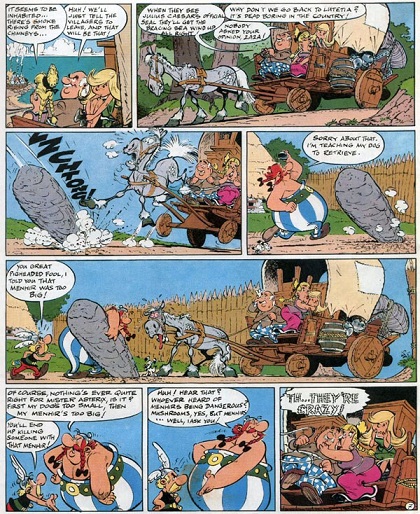
Asterix

1. Asterix. Humour, adventure, incredibly lame puns and it takes the side of the barbarian resistance against the empire. What’s not too like?

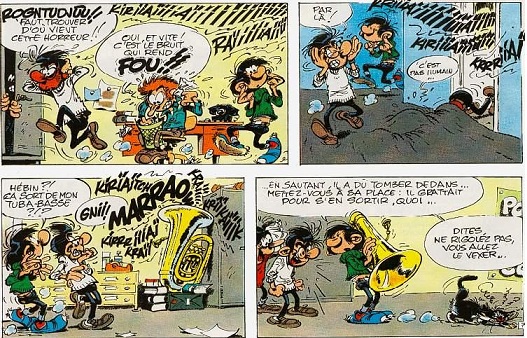
Gaston Lagaffe

2. Gaston Lagaffe. The world’s worst office boy, who spends his entire day avoiding work, experimenting with new, horrible recipes (sardines in apricot jam being one favourite) feeding his equally horrible seagull, inventing new Heath Robinsonesque machines to do things for him he’s too lazy to do himself, or playing battleship with Jules-from-Smith’s-across-the-street over the phone, when Jules is in New York with his boss…. It’s no wonder Gaston never made it in the US, a country where people keep working even if they’re no longer paid.

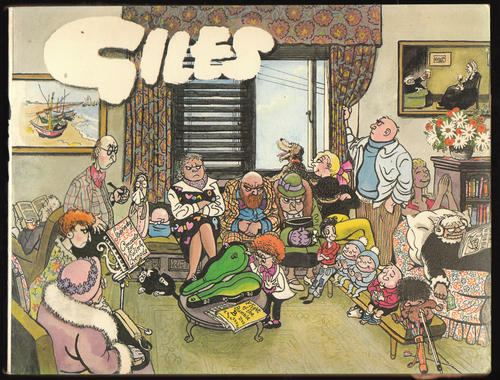
Giles

3. Giles annuals. A year’s worth of gentle satire about the issues of the day, as seen through an unforgettable cast of horrible grans, put-upon fathers, stoic mothers and way too clever kids, with walk-on parts for whichever celebrity that was in the news just then.

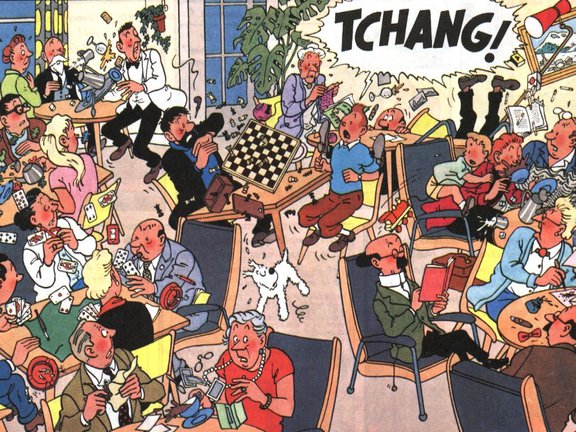
Tintin

4. Tintin. The world’s most viriginial boy reporter and his much more interesting friends going on adventures around the world. Tintin makes the world cozy and orderly.

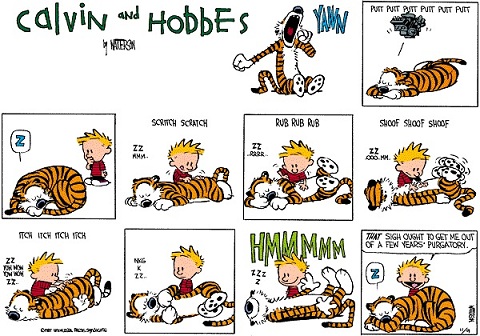
5. Calvin and Hobbes. It’s a magical world. Let’s go exploring.

Moebius


Jean “Moebius” Giraud died today, not entirely unexpected as he was seventytwo years old and was apparantly suffering from cancer, but it’s still a blow to anybody who likes comics. His influence on French comics cannot be underestimated. Together with Jean-Michel Charlier he first created arguably the best western comic ever, Blueberry, which spawned hordes of imitators and kept the western comic genre alive and relevant in Europe when it was dying in America. Then there was his science fiction work, both in comics and as a storyboard artist for various movies, including Alien. He was one of the people (together with Jean Claude Forest, Paul Gillon and of course Jean-Claude Mézières) that from the sixties onward has shaped our vision of what the future should look like.


It’s almost impossible to do proper homage to such a creative genius, so instead I’ve found some videos showing off his drawing skills, with bonus appearances by Joe Kubert and Neal Adams in the top one. All are — unsurprisingly — in French.


Pérez — accent on the first é


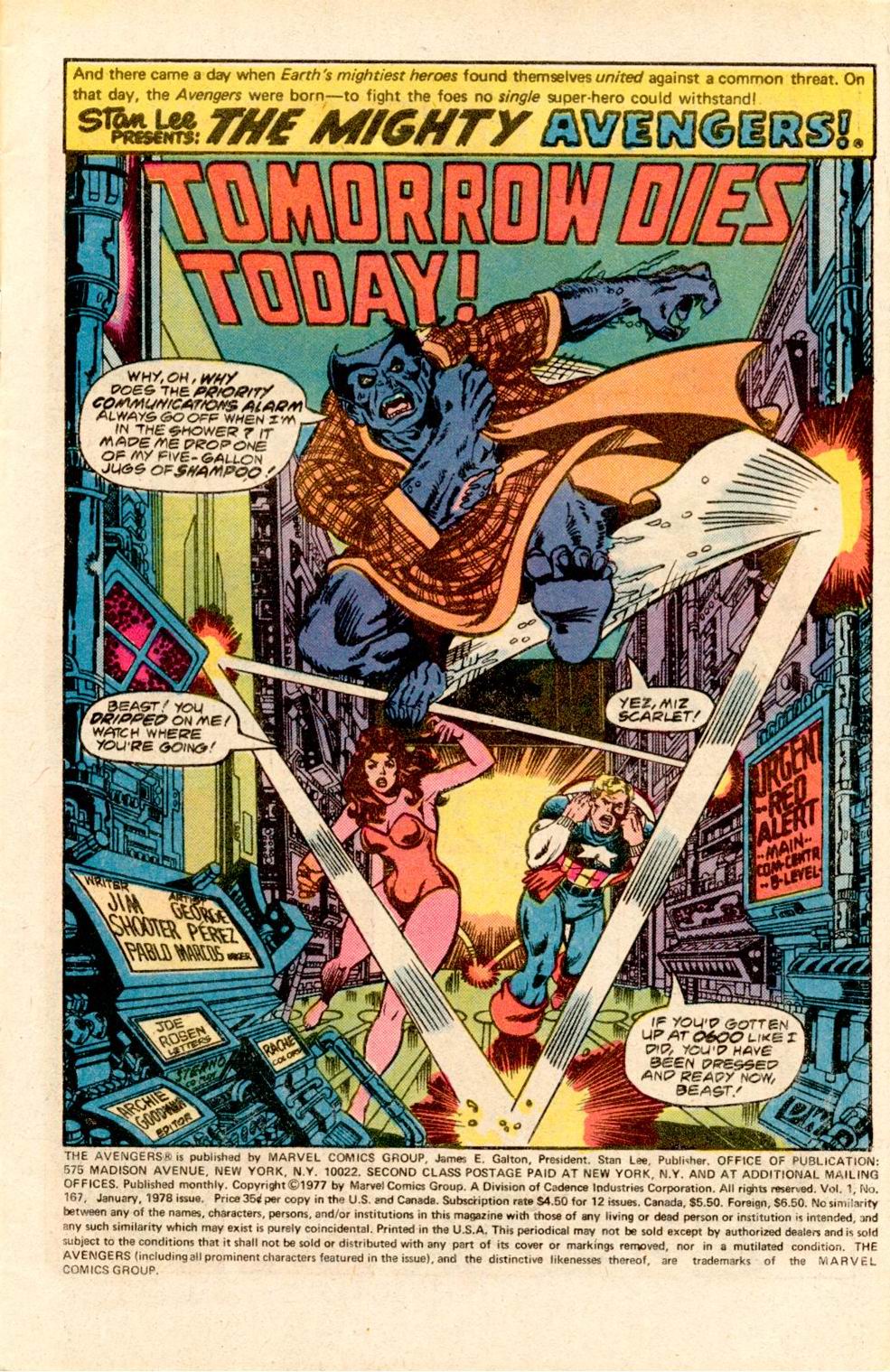
George Pérez splash page from Avengers 167

Tom Spurgeon linked to Diversions of the Groovy Kind‘s series of George Pérez Avengers splash pages (part 2, part 1), amongst which was the one shown above, for Avengers #167. The reason that one stood out for me was because that was the first ever George Pérez artwork I’d ever seen, the first Avengers comic I’d ever read and darn nearly the first superhero comic I’d ever read. For those without an encyclopedic knowledge of seventies Avengers stories, that issue started Jim Shooter’s Korvac Saga and even then Pérez must’ve been known for his willingness to draw huge crowd scenes, for apart from a dozen or so Avengers, it also starts the Guardians of the Galaxy, whose immense time traveling spaceship threatens to lodge the then SHIELD space station out of its orbit. Cue the Avengers, the inevitable misunderstanding/fight between superheroes as Beast is taken for a space monkey by two of the Guardians and the as inevitable flashbacks/shoutouts to earlier adventures as both sets of heroes tell each other what they know about them.

It is the quintessential Bronze Age superhero comic, published at a time and place when the Marvel Universe was still relatively young and not so difficult to comprehend that a few pages of recap couldn’t put readers straight. Continuity between titles had already grown almost as complex as any given titles own continuity, but was still manageable and gave a coherent feel to the Marvel Universe, something that’s summed up in a sequence in the next issue, as Starhawk goes after Korvac and their fight is felt by several of Marvel’s more psi-sensitive characters: Captain Marvel feels something through his cosmic awareness, the Surfer too, while Dr Strange’s meditiation is interrupted and Spider-Man’s spider sense is tingling. It’s only one page with no real impact on the story other than putting it in the context of a wider, shared universe.

That’s the sort of comic I grew up with and this was the comic that planted the seed for me to become a superhero fan. It also made me a Pérez fan, still to me the definitive superhero cartoonist.