Sandra Culley 20-10-1959 – 07-11-2011

Sandra died last night, as she was holding her son’s hand, as peacefully as could be expected under the circumstances. I had seen her myself only a few hours before when she still looked as if she could last a couple more days at least. She had said to me she wished it would be all over soon, but I don’t expect she thought it would be over this soon…

I’m glad she’s no longer in pain but I wish things could’ve gone differently.

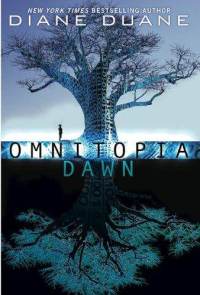
Omnitopia Dawn — Diane Duane

Cover of Omnitopia Dawn


Omnitopia Dawn
Diane Duane
360 pages
published in 2010

Omnitopia Dawn revolves around the upcoming launch of a new extension to the world’s most popular online RPG, Omnitopia, the deadline of which is just days away. Omnitopia is so popular because it’s not just one game, but it’s like something you’d get if you’d roll World and Warcraft, City of Heroes, Second Life and every other current online game into one gigantic universum, held together by the Ring, the one place where you can move from world to world directly. It’s the brainchild of Dev Logan, the CEO and principle inventor of Omnitopia and all around nice guy, who is more interested in creating wonderful new gaming experiences than the bottom line. Which is why he split up with his old buddy Phil Sorensen, who was more interested in making money than in endlessly fiddling with the game and who is now Logan’s most bitter rival and is doing his best to ruin him.

What this reminded me of were Arthur Hailey’s business novels, like Hotel, Airport and Wheels, all of which revolved around an iconic American business in crisis and its heroic executives trying to turn it around, as well as a cast of dozens of other characters going around their daily doings. Omnitopia Dawn has the exact same plot, only this being the twentyfirst century the business in crisis is the world largest and most popular online roleplaying game. It is barely science fiction, only set a couple of years in the future (2018 if I remember correctly), with the world still recognisably our own. A bit of technological improvement, but the most futuristic gadget on display is a bog standard virtual reality system. What instead gives it a sfnal flavour are the parts of the novel set in Omnitopia itself.

Read more…

The science fiction helps


Sandra is not doing well, as is to be expected, but while she’s getting weaker, there still is the possibility that she can hang on a while longer, as her stubborn body fights her will to die… Not a nice position to be in. Sadly, there isn’t much we can do to help her, other than be there.

For myself, it’s all right as long as I don’t have to think too much.

Update: forgot to mention what also helps a lot is the well wishes and sympathy you all have shown over this. Thank you.

#$@&! Negroponte

Nicholas Negroponte used to annoy me back in the nineties when I still took Wired seriously (we were all young once) when he’d bleat about his simplistic solutions to real problems in their backpages. These days he’s involved in doing crappy computers for third world countries, with the business plan there being something like

  1. create a new rugged tablet pc and drop them in Africa
  2. ????
  3. A whole continent achieves its true potential and becomes a free market paradise.

Jamie has the mindset behind this down pat:

Why do you want to do this? Because it’s a laptop. It will promote learning! How? Because its information technology with information in it. The child just switches on the laptop and gets the information out of it. Then it will be educated.They’ll just use it to play games. No they won’t, because it will be a special computer which won’t be able to play games. How are you going to make that work? because its new technology and new technology is flexible. Anyway, How can you deny a child a shiny new laptop, with a software package kindly provided to us by the manufacturers at only a third more than the normal retail price. What kind of progressive are you, anyway?

This is a vanity project to salve the conscience of guilty liberals, a solution in search of a problem, undertaken by people who don’t want to believe the problems their pet project is trying to solve are hard. It’s magic thinking.

Beeldverhaal: new Dutch tv documentary series about comics


Though the Dutch public broadcasters do occasionally pay attention to comics, any sustained interest in them has been lacking for a long time. This changed last Saturday, with the premiere of the new documentary series Beeldverhaal. It’s intended as an introduction to the wonderful world of comics, each of the eight episodes looking at a different aspect. The episodes themselves are only thirty minutes long, but judging from the first episode the creators manage to fit a lot of information in, without overlaoding the viewer. Much of the credit for this must go to the presenter Jean-Marc van Tol, one part of the team behind the hugely succesful Fokke & Sukke cartoon, who turns out to be a natural interviewer with whom other cartoonists feel comfortable.

But the way the programme is structured is also important. In the first episode the subject was (auto)biographical comics, both a genre that has become huge in the Netherlands in the past decade and a genre that’s easy to get for non-comics readers. The programme started by interviewing Jan Kruis, a cartoonist many people would know from his decades long weekly family strip in Libelle magazine, Jan, Jans en de Kinderen. Jean-Marc van Tol talks with him on how he used his own family as inspiration for the strip, even if the family in the strip is never intended to be his own. From there the programme moves on to Gerrit de Jager, creator of the slightly more edgy but almost as long running Familie Doorzon. This from the start was a comic that was more willing and able to talk about sex and drugs and sausage rolls, though still is a classic gag comic, again partially inspired by de Jager’s own life.

From there on it’s a small step to the autobiographical strip proper, as various creators talk to Jean-Marc about how much of their comics is their own life and how much their representation in the strip has become a separate character. Especially interesting was the interview with Maaike Hartjes, who often uses her partner Mark Hendriks in her comics. Hendriks himself is also a cartoonist and tells how this does not bother him, as he knows the difference between himself and the character “Mark Hendriks”. The only time he really had a problem with the way he was portrayed was when Maaike Hartjes did a radio interview and everything that looked innocent in the strip suddenly seemed very personal when he heard it on the radio…

All in all, a good first episode that promised much for the whole series. Future episodes will tackle superheroes, Dutch comics classic Ollie B. Bommel, Tintin, manga, the underground, Suske & Wiske and the Belgian comics scene and finally the modern newspaper strip. The only problem I’ve had with it so far is that the series is broadcasted late on Saturday night, just when the football is on….