Run, run, run

Just came back from the Making Light meetup, which was fun, if totally bib or tucker free. Before that I spent the whole day on a training course, so I haven’t had any time to read the interwebs, let alone come up with something to post about. Instead, have a video of a seventies rock band now only remembered for one song, one of the countless bands that put out some records, had some limited success, then vanished, never to even make it to cult favourite. Jo Jo Gunne managed four albums before they had to quit, had only one hit, never got much of a presence on the AOR channels either, didn’t do much other bands didn’t do earlier or better, but they still had a certain charm.


The point of seventies rock like this is not that it’s original or innovative, but exactly that you get what you thought you would get.

The internet has not been kind to me today

First up, can we please stop it with the 9/11 hysteria already. Yes, it’s the tenth anniversary, yes it’s an important turning point in recent world history and a raw wound for a great many people still, but can’t it all be done a little bit more dignified and restrained? Every television channel seems the need to come up with its own unique 9/11 spin and it’s getting sick making. I can’t imagine how bad the family and friends of those who died that day must feel right now, having this shoved in their faces 24/7 this week…

Second, this is the week that Michael S. Hart died. Who he? Just the founder of Project Gutenberg, who had a simple vision: make public domain books freely available on the internet. For all your Google Books or Internet Archives, Hart thought of it first, back in 1971. He was an avatar of the old skool, not for profit internet, seeing it as something that would enrich people’s lives, not something to make himself rich. He’ll be missed.

Superman in his new costume

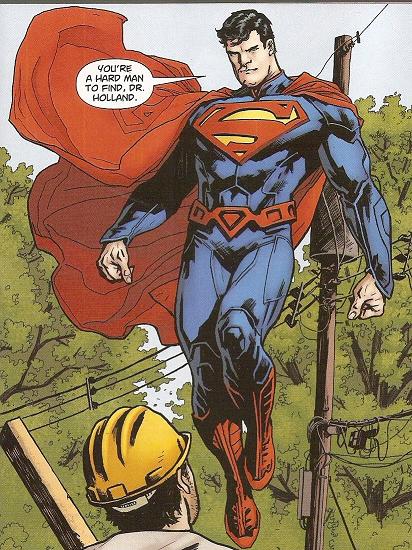
Third, you should never tug on Superman’s cape, but that hasn’t stopped Jim Lee and DC comics from “improving” it. It’s not just that it now looks like a thirteen year old’s idea of what a cool costume should look like, but that it looks like what a thirteen year old twenty years ago would think was cool. All it misses is some goddamn ankle pouches. DC should know better than to try for the hip, edgy look: it’s constitutionally incapable of doing so. Superman’s costume is a design classic, something that has been able to stay iconic and classy for decades with only little tweaks. It doesn’t need to be chucked just because some nerd can’t live with the underpants over his trousers jokes anymore.

Fourth, well, this:

Horatio brought him his sword. “Laertes is looking for you,” he said.
“I don’t have time for Laertes. He must know I didn’t mean to kill his father,” Hamlet said.
“It’s not his father,” said Horatio. “It’s his sister.”
“Ophelia? I didn’t touch her.”
“She killed herself. Walked out into the sea, dressed in her heaviest gown. A funeral gown. Two soldiers went in after her, and a boat was launched, but when they brought her body back, she was dead.”
“And for that he wants to kill me?”

Orson Scott Card “improves” Hamlet and makes it all about teh gay menace. The homophobia is expected and you can feel some pity for Card being so messed up in the head by his church, as by now it should be quite clear that he himself is the biggest old queer to ever force himself into the closet, but the sheer arrogance of wanting to adapt Shakespeare for our times? Ugh. Have some antidote:


That’s better.

Courtiers in royal flattery shock

In the most surprising development ever, a group of twenty rightwing economics claimed that the poor starving masses of the UK superrich are paying too much tax and will throw their toys out of the pram and move to Switzerland if this doesn’t change. Serious journalists call this news, sensible people the inevitable result of not having strung up some of the more cheeky bankers and foolish economists way back when the crisis first started. The crisis never really scared the rich once it became clear public anger would limit itself to angry muttering, but their courtiers in the media had been a bit more circumspect for a few years. That they’re now back in force means they think it’s business as usual again.

They’ll be surprised.

Books read August

Bit late again this month with the list. Nine books read, six of which were science fiction.

The Last Valley — Martin Windrow
A very thorough history of the battle of Dien Bien Phu, which meant the end of any serious French attempts to defeat the Vietmin and keep control of Vietnam.

Golden Witchbreed — Mary Gentle
Another book read in my Year of Reading Women project, this was as good as I remembered it as.

A Sporting Chance — Elizabeth Moon
Another lightweight Elizabeth Moon space adventure, entertaining as everything else I read of her recently.

At All Costs — David Weber
More Honor Harrington read as ebook on my Android phone.

An Investigation of Murder — Maj Sjowall & Per Wahloo
A BBC4 documentary on Nordic Noir mentioned the Sjowall and Wahloo novels which made me want to read them. This was the only one we had on our shelves. A terrible, terrible translation, done by somebody who has only a limited grasp on either English or Swedish, or perhaps both. The written equivalent of one of those text to speech translators.

Mission of Honor — David Weber
And even more Honor Harrington. Weber is by all objective measures not a very good writer, but these books are like chewing gum, more enjoyable than not reading them in those circumstances where any other book would be difficult.

The Wars of the Roses — Christine Carpenter
Full subtitle: Politics and the Constitution in England, c. 1437-1509, which gives you a flavour of the focus of this book. I don’t know that much about the War of the Roses and this isn’t really a proper introduction to the period, but it worked for me.

The Deep State — Walter John Williams
Sequel to This Is Not a Game, about bringing down the military junta in Turkey through the power of the internet and alternate reality games.

Old Man’s War — John Scalzi
Scalzi’s breakthrough novel, very Heinleinian in its structure, plot and concerns but without Heinlein’s more annoying habits.

Rambling on about Sim (with a side order of Dick)

Cerebus

Tim O’Neil continues his exploration of Dave Sim and Cerebus with a summing up of essential facts you need to know about Dave Sim:

Dave Sim does not see the world the same way that you or I do.

This fact is a consequence of the first three. Sim rejects modernity on an almost wholesale basis, an abjuration that extends all the way to having a disinclination for computers (his internet presence often takes the form of transcripts uploaded from his electric typewriter). His religious turn – a turn which was preceded by and followed perhaps as an inevitable consequence of his conservative turn – recasts almost the entirety of modern existence in negative terms. He dislikes Picasso and dislikes Freud and dislikes Marx and (although I can’t remember specifically if it’s come up) probably dislikes Nietzsche as well.

What this means in practice is that he explicitly rejects the language and collective metaphors that we – many of us, at least, of the leftist, liberal or conservative persuasions – use to discuss the contemporary world. Although he has little patience for narrow-minded congregationalists, he has cast his rhetorical lot in with the forces of anti-modernity who insist on using the language of scripture to diagnose the sins of the present. He outright dismisses the language of contemporary (and by “contemporary” in this instance I mean at least the last 250-300 years) philosophy and social theory as meaningless “bafflegab.”

You know who that reminded me off? Philip K. Dick, another autodidact with an idiosyncratic personal religious worldview very much out of step with modern society, whose work is inseparable from these beliefs, especially his later novels. Both reject contemporary America as wrong and false, both make for uncomfortable reading to the point where you are tempted to question their sanity.

Where they differ, if Tim is right in his assumptions, is that whereas Dick has only become more popular since his death in 1982, has been embraced by the literary mainstream as well as remained popular by his original genre audience, Sim’s magnus opus may die unmourned and unloved with him, save for those in academia who will read Cerebus out of intellectual curiosity or as an artifact of a specific period in the evolution of the American comics artform. Certainly the critical and reader attention Cerebus gets right now is considerably less than you’d expect from a comic that was for decades one of the automatic standard bearers of the idea that comics = art, so it’s quite possible Tim is right.
Cerebus

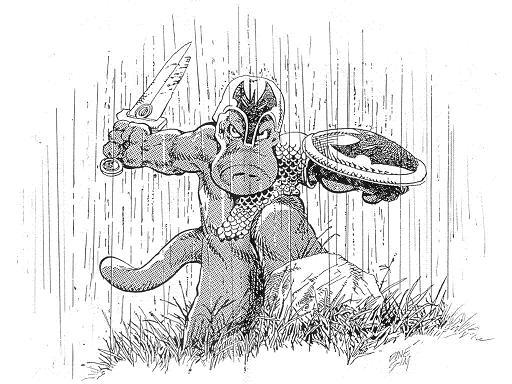
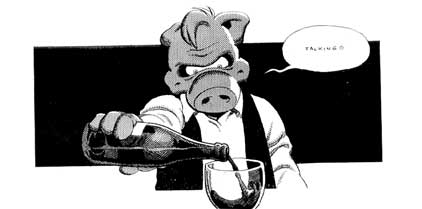
What Tim has not yet looked at is whether or not the idea that few if any people will ever tackle the whole of Cerebus ever again is a bad thing. In other words, how much of Cerebus is worth reading for somebody who isn’t an academic or critic looking for dissertation material. Perhaps only the “good parts” version of Cerebus — High Society, Church and State, maybe Jaka’s Story — deserves to be read. There’s too much focus in comics criticism on complete runs of a given series or creator anyway, as e.g. the recent Hooded Utilitarian comics poll showed, where of the top ten entries, only two were for discrete stories, the rest for full runs of iconic comics. Which is cheating, as even in the best run there are weaker and stronger issues, stories worthy of inclusion on a Top 115 list and stories that aren’t. It’s also lazy, as you don’t have to think or argue for what Fantastic Four story to include…. The whole of Cerebus is not worth reading, but parts of it are excellent.

But there is a larger problem with Cerebus, as commenter moose n squirrel argues:

You reduce Sim’s views to a highly idiosyncratic and eccentric religious conservatism, and just shrug them off, as if he’s a harmless old crank because nobody’s going to slog through “Chasing YHWH” and convert to his one-man version of Gnosticism.

But the core of Sim’s worldview is not mere “religious conservatism” – it’s hatred of women, which is hardly eccentric or idiosyncratic. Indeed, Sim’s ideas about women are all too sadly common – again, I ask you to look at the numbers of women who are subject to domestic and sexual violence in the United States, at the percentage of women who’ve been raped, at the number of women who, once raped, don’t bother reporting that rape because they see such an action as futile. Hatred of women is not some sad curiosity limited to one obscure Canadian cartoonist. And as much as Sim attempts to dress his hatred of women up with a bunch of bullshit religious cosmology, the core of his message is the same vicious misogynistic bullshit women have been getting from assholes like him for the last six thousand years.

Again: if Sim’s target was black people instead of women, if people from Africa were the soul-sucking voids that corrupted pure, rational white men, would it be so easy to dismiss? If he built a vast cosmology explaining how white men of Northern European descent have all been enslaved by Jews, would we be hearing any arguments about how “well, obviously he’s a little crazy, but you’ve really got to appreciate what he did with his lettering”? And if not, what makes the hatred and oppression of women more acceptable than the hatred and oppression of these other groups?

It’s a bit too pat to say that you should separate the art from the artist’s politics. With some you can, but with Dave Sim this is of course impossible as his worldview informs everything he did with Cerebus. I can well understand people who want to stay clear of this, or who do not want to support such views by buying Sim’s books. On the other hand, to take Sim to tasks for all the oppression women have suffered and do suffer in the world is a bit too much. In the end Sim is a harmless old crank, with disgusting views but neither in a position of power to enforce those views nor likely to seduce anybody to his side through his artwork. Enjoying his art while rejecting his politics is much easier to do than it is even with somebody like Jack Chick, whose worldview is of a similar nastiness yet whose comics have been studied and even enjoyed by the very same people his pamphlets condemn to hell.