Climate change denial hits Dutch government

Government party VVD wants to stop funding the KNMI, the Royal Meteorological Institute because it actually takes climate change seriously. According to member of parliament René Leegte the KNMI is a partisan organisation that listens too much to the IPCC (Dutch). What’s more, according to him twenty percent of the KNMI’s researchers work for the IPCC and are therefore certainly not to be trusted.

A shocking display of truthiness, roundly mocked in the Dutch media, but these accusations are done in the context of a debate about the possible privatisation of the KNMI. By throwing doubts about its independence and realibility Leegte attempts to make it easier to sell the idea of getting rid of it to parliament and the voter. It’s done very clumsily, but that it’s done at all is worrisome. More and more our rightwing parties are using Republican tactics to force through their ideologically driven policies.
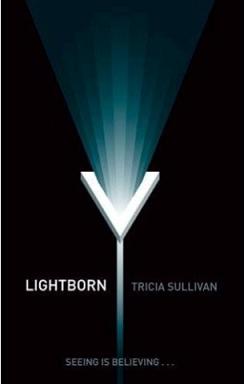
Lightborn — Tricia Sullivan

Lightborn


Lightborn
Tricia Sullivan
438 pages
published in 2010

Late last year Tricia Sullivan decried the fact that of the ten Clarke Award winners in the last decade, only one had been a woman, which in turned triggered a long discussion about women in sf in general much of it indexed at Torque Control. For me personally this discussion triggered a resolve to read more sf and fantasy written by women, as they had been woefully underrepresented until then. It was through the same discussions I learned about Tricia Sullivan herself, who as a writer had been completely unknown to me until then. Not only did she trigger the debate, her novel Maul ended second in the top ten Future Classics poll that Torque Control ran. So I kept an eye out for it at the local library, but they didn’t have it.

What they had instead was Lightborn, her latest novel. It’s a classic coming of age story, set in the city of Los Sombres in a somewhat alternate America, where instead of computers they have Feynmans and people use a special sort of light, Shine to program their own brains, as well as communicate with their version of the ‘net, the field, which is also inhabitated by the lightborn of the title, artificial intelligences, both benign and rogue. There are safeguards build/created in the field to keep the lightborn tame and Shine under control, but of course these fail at the start of the novel –otherwise there’d be no story after all. It leaves almost all the adults in Los Sombres permanently Shined and useless and kids like Roksana and Xavier, our heroes, scrabbling to survive in the aftermath.

Read more…

Jennifer Pournelle’s The Mote in God’s Eye sequel actually looks interesting

Sequels written to well loved science fiction classics by the children of the original writer never turn out right therefore you can safely ignore them. It’s a rule that saved me a lot of frustration, but I think I might break it for Jennifer Pournelle’s Outies, a sequel to her father’s and Larry Niven’s The Mote in God’s Eye. If the novel is as interesting and intelligent as this article makes it out to be, this could be a very good book:

What do you want the reader to get out of your novel?

JP: That monolithic viewpoints tend to drown out available options. That “first contact” is not a singular event. That urban sustainability depends upon ecological sustainability. That local people are not necessarily incompetent. That religion is as much about organizing principles as about belief systems. That the “hard science” in science fiction isn’t (or should not be) limited to physics and rocketry – to genuinely do “hard science,” you need to get your biology, geology, archaeology, anthropology, etc. right too.

Pournelle herself is an archaeologist and here she’s hitting a lot of my buttons — science fiction with a genuine grasp of the complexity of human history is rare and even in modern sf a lot of planets still feel no bigger than a small island…

A novel to look out for. Thanks James.

Crowpoek

jackdaws snacking on kroepoek

A somewhat blurry picture of us feeding the jackdaws at the hospital. They’re snacking on kroepoek, an Indonesian shrimp based crisp like snack, de riguer when you’re getting a Indo-Chinese takeaway, popular with crows as well as people so it seems.

And yes, that means S. is still in hospital, after three unsuccesful attempts to get back home earlier in the year. It’s still unknown when she can try again, but she’s waiting to undergo yet another operation, to cure yet another problem caused by interactions between the various medications she’s on. I’ll spare y’all the details, but it’s a long story full of medical mistakes and accidents that are more the product of the whole medical process as a whole than the fault of any one individual. It’s all getting her down, as you can imagine, so if you want to cheer her up a bit…

Her facts are all wrong, but does she get the spirit of the thing!

While Sarah Newton gets everything, but everything wrong about hard science fiction to rage against a problem with it that does not exist, she inadvertedly gets the spirit of it spot on in her introduction:

ow, a hundred or so years ago, it was widely regarded that all the known laws of physics had been discovered, and that theoretical physics was a “completed” science, with nothing more to do other than cross a few t’s and dot a few i’s. It was also believed that if you travelled more than 15 miles per hour in an automobile you’d probably suffocate…

Can you see what’s wrong with that? That’s right, “a hundred or so years ago” gets you to 1911, after the Wright Brothers, when the automobile was well on its way to become more than just a rich man’s toy and when steam locomotives had been travelling at speeds greater than fifteen miles an hour with no reports of suffocation for donkeys ages. Worse, 1911 was smack dab in the middle of the Einsteinian revolution, six years after Einstein’s Annus Mirabilis in which he introduced the special theory of relativity, his observations about the photoelectric effect that helped get quantum mechanics started, not to mention that whole E=MC squared thingie.

In this small paragraph Sarah gets her facts wrong, doesn’t think through when “a hundred years ago” was and ignores actual history and science for comforting myths about Progress — sounds remarkable like most hard science fiction to me.

(It doesn’t get much better in the rest of the post. Thanks James.)