What gets translated and what doesn’t — Martin’s increasingly petty rules about translation

An interesting sentence from Shoushimin Series episode 4, at least from a translation point of view:

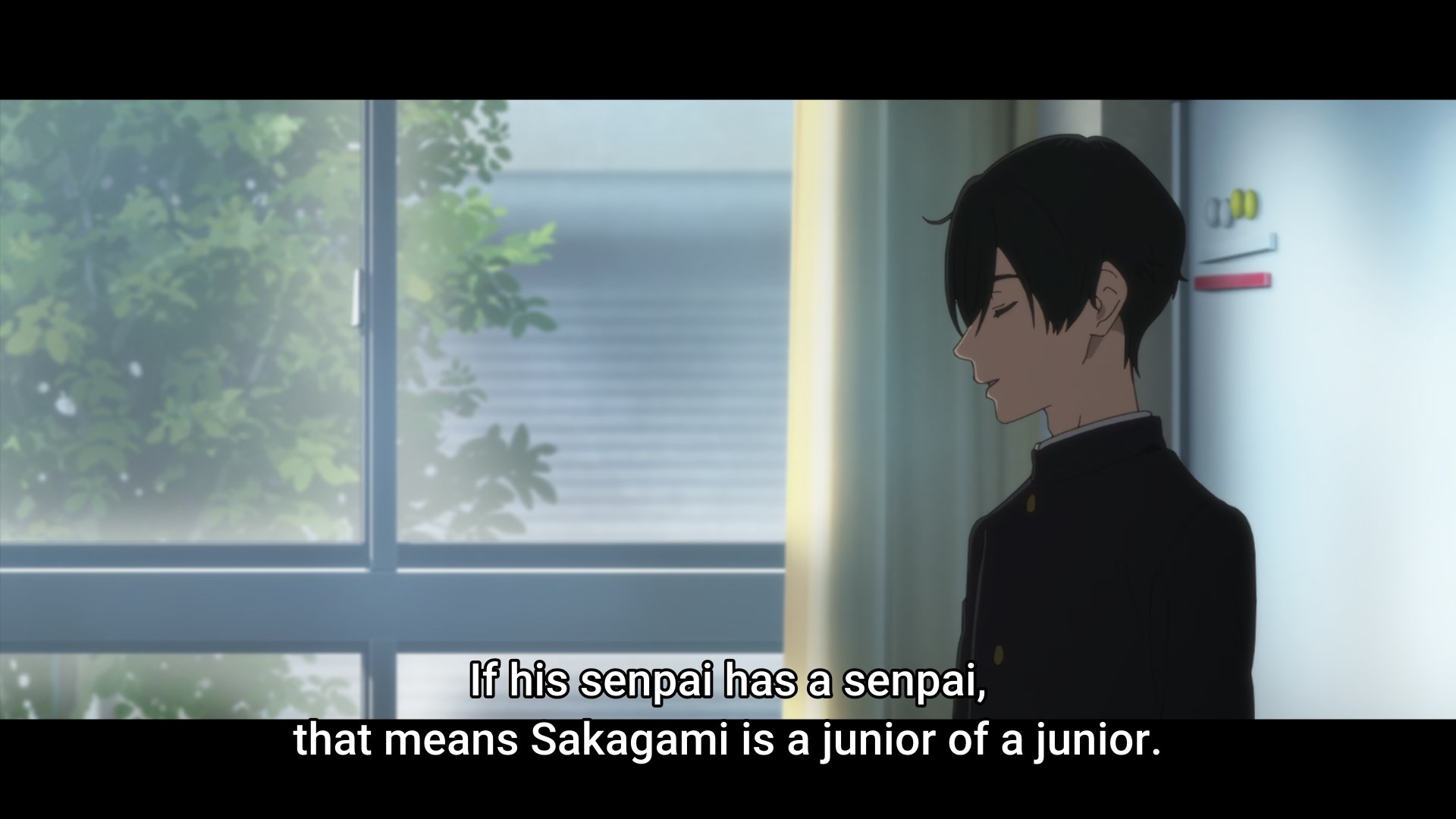
If his senpai has a senpai, that means Sakagami is a junior of a junior.

Why does senpai gets to be used untranslated, but kouhai gets translated to junior? You could make the case that it’s just that much less known than senpai that it still needs to, but for a series like this I’d expect the audience to already know it. This isn’t Pokemon after all, but a very dialogue heavy mystery show, one that’s not shy about using proper honorifics or the correct, Japanese name order either. A strange choice either way when you’d normally expect both terms to be translated or kept intact as a pair.

It raises the question of what you translate and what not, what the expectations are for things that English doesn’t really have an equivalent for, like the whole idea of senpai/kouhai, or the use of honorifics to refer to people. I was reminded of what writer/translator Zack Davisson said on the subject of food names two years ago:

One of my Translation Rules: Thou Shall not Translate Food Names. Food names, as a general language rule in the modern era, are kept in their native language. We collectively learned to say pho. We learned to say pasta primavera. We can say onigiri. Time to retire “rice balls.”

Onigiri and rice balls are in a sort of similar tension to senpai/kouhai and senior/junior in that the English terms are perfectly adequate translations for most uses, but don’t quite have the same meaning as the Japanese terms. Partially, as Zack goes into in his thread, it’s of course a question of familiarity: onigiri like senpai is well known enough on its own that it doesn’t need translation anymore in most cases. There is no one correct answer even if I prefer this sort of thing stays in Japanese.

Having an idea does not make you a creator

Roy Thomas wants to claim credit for the creation of Wolverine and it has upset quite a lot of people:

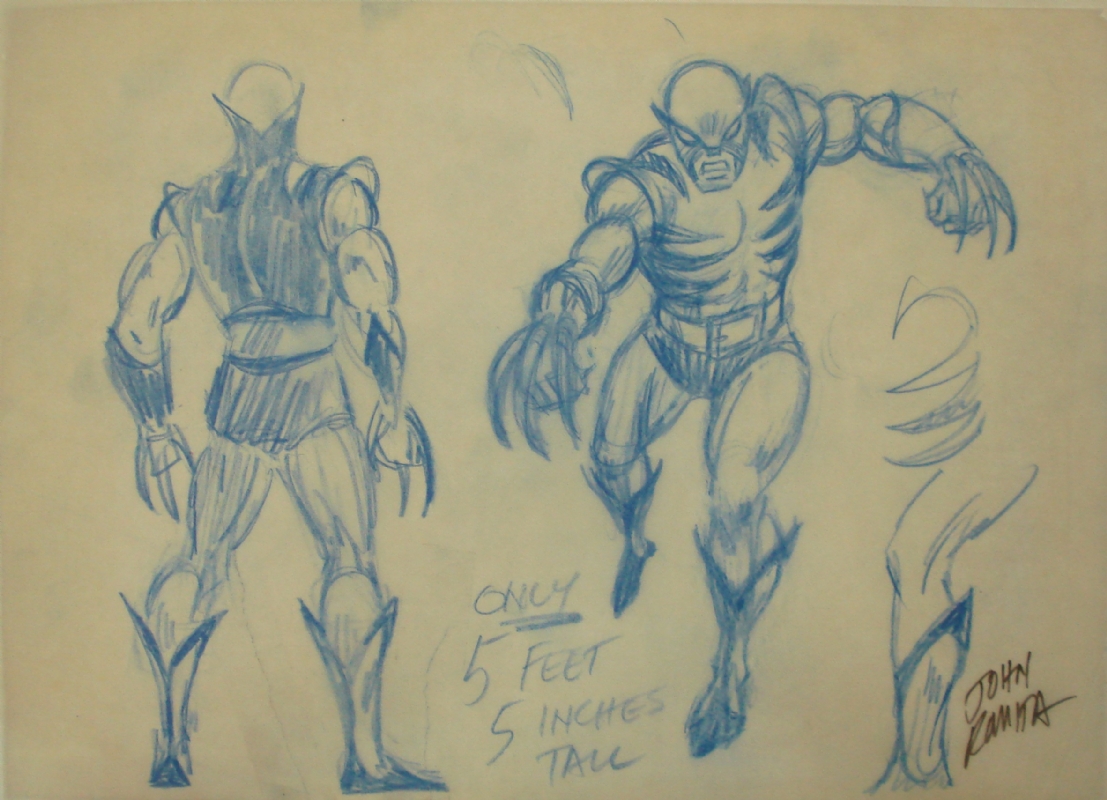
John Romita's original sketches for the Wolverine

But 2024 is not 1974 or 1994, and in the wake of more high-profile attention on the neglected past generations of comics creators, it has become increasingly de rigueur for writers and artists associated with comics-based movies and tv shows to see at least a nominal reward for their contributions. There is money at stake, to say nothing of glory, such as it is.
Which is why it managed to generate a fair amount of attention – and a fair number of raised eyebrows – when it came to light at the beginning of April that former Marvel editor Roy Thomas would be receiving credit as a co-creator of Wolverine in the credits for the upcoming Deadpool & Wolverine film, coinciding with the character’s 50th anniversary.

Apparently he’s doing so, according to the Zach Rabiroff article I’m quoting here based on the fact that he proposed the character originally, after which Len Wein and John Romita designed him together, with Wein and Herb Trimpe then using him in Incredible Hulk #180-181. Wolverine of course would only become popular a while later, when Wein included him in the roster of the new X-Men a year later and especially after Chris Claremont, John Byrne and Frank Miller got their hands on him. There was a hell of a lot of work done after that first appearance by at least a good half dozen creators, those mentioned above just the most prominent, before he became such a household character that Hollywood blockbusters could be made about him. But none of that, according to Thomas, matters as much as him having the idea for a having a little scrappy Canadian superhero guest star in those two issues:

Note that there are three points here to Thomas’s recollection about his role in Wolverine’s genesis. In his account, he proposed that there be: a) a Canadian character; b) named Wolverine; who was c) “a little like Wildcat or the Atom.”

Personally I think it’s bollocks. Even if this is the exact truth, having the idea for a character does not make you its creator. It’s Wein and Romita as the people who designed the character from that idea, together with Trimpe who first put him in action who deserve that credit far more. In a just world Roy Thomas’ name would be nowhere near it. Rabiroff’s article as a whole makes for fascinating reading, showing how complex establsihing creator credits can be for any character with a fifty year history even when obvious grifters are not trying to insert themselves in it.

Mayonaka Punch in the Feels — First Impressions

Mayonaka Punch, just like Na Nare Hana Nare, is another original series done by P.A. Works airing this season. Starring Masaki, a once popular streamer who fell from grace after she punched one of her co-hosts and friends live on air. The first episode saw her stumble across an actual vampire when she went back to the abandoned hospital where she and her friends had recorded their first viral video. Said vampire thought she was the woman of her dreams (having just literally woken up from a twenty year long erotic dream starring a girl that indeed looked a lot like Masaki) so agrees to help her get a million subscribers to her new channel if she can suck her blood afterwards. The first three episodes were mostly about Masaki and her desire to make a quick success of her new vampire friends, while we got to know them as well, but it’s the forth episode I want to talk about.

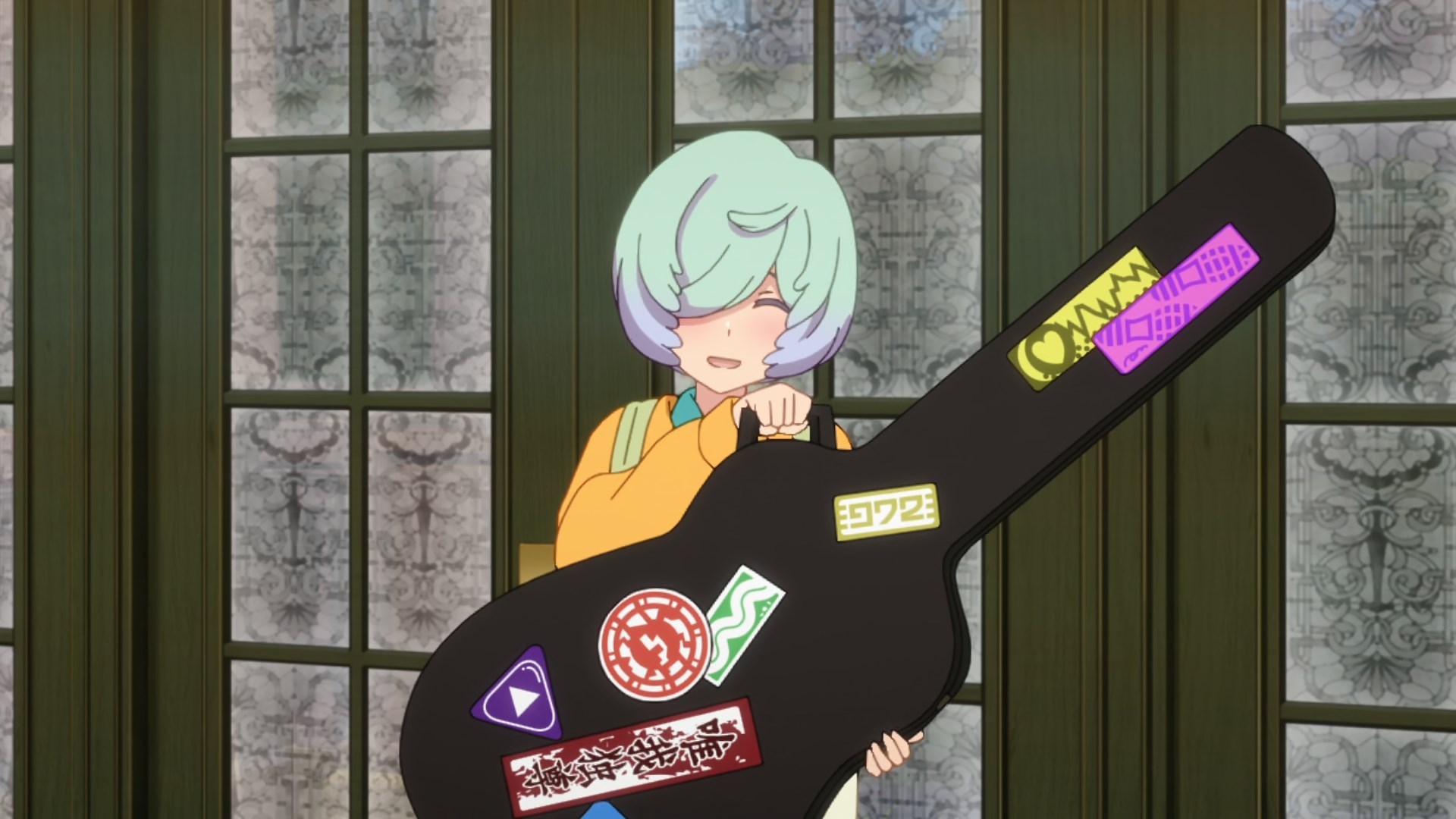
Fuu with the guitar case of her old friend Aya

This episode stars Fu, the shy, green haired vampire girl who hides behind her bangs. She had been in the background until this episode as the other four, much more manic vampires took the spotlight. Masaki, still desparate for a hook to establish her new channel on, discovers that Fuu is actually a good singer when she listens to a decades old cassette tape of her. When she tries to get Fuu to sing for her videos, Fuu refuses and gets angry, saying she doesn’t deserve to sing anymore. Through flashbacks at the start of the episode we know that she used to have a friend called Aya, with whom she would sing and record songs together. Aya wanted to go pro but of course Fuu being a vampire, this wasn’t possible for her. Once Masaki leanrs of this, she and the others attempt to track Aya down and learn that the last time she was seen was two years ago, in New York. Fuu immediately sets out there to find her, but as you may have guessed, the news is not good…

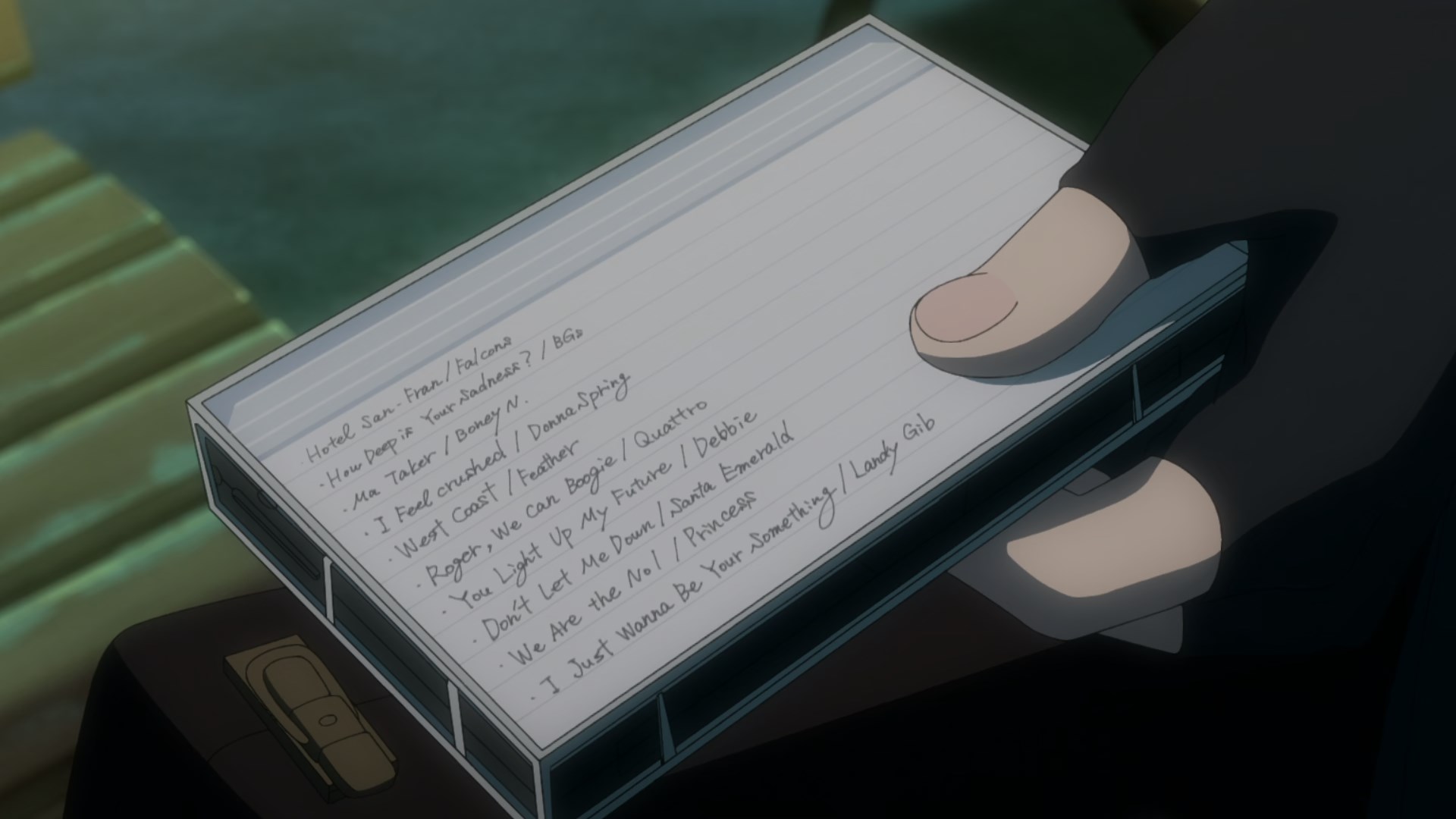
A mixtape with pastiche titles of clearly recognisable seventies hits

With the first three episodes having been firmly on the comedic side of things, with a large dose of slapstick thrown in, this far more serious episode hit like a brick. The pastiche titles on the mixtape Aya gave her at the start firmly show that the flashback took place somewhere in 1979 or 1980, so Aya being a teenager then meant she should be in her early sixties now. What exactly happened to her isn’t told, but this isn’t a case of the mortal friend of the immortal vampire just dying of old age. A real bittersweet episode as Fuu finds closure on the biggest regret of her life, enabling to move on and start singing again, but still with that knowledge that if only…

Hyouka at Home — Shoushimin — First Impressions

If, like me, you remember the 2012 Kyoto Animation series Hyouka with great fondness as one of the best series they ever did, than this season’s Shoushimin is for you. Based on a series of mystery novels by the same author as the original Hyouka novels, Yonezawa Honobu. Like his other series, this one too features a too smart for his own good protagonist with a dark past, now wanting to be nothing more than ordinary Sadly for Kobato Jogoro, having a rule about not turning down requests from people you barely know even if they drag you into some bizarre investigation and leads you to postpone the plans you already made with your actual friend to buy some exclusive cakes? Not something ordinary people do.
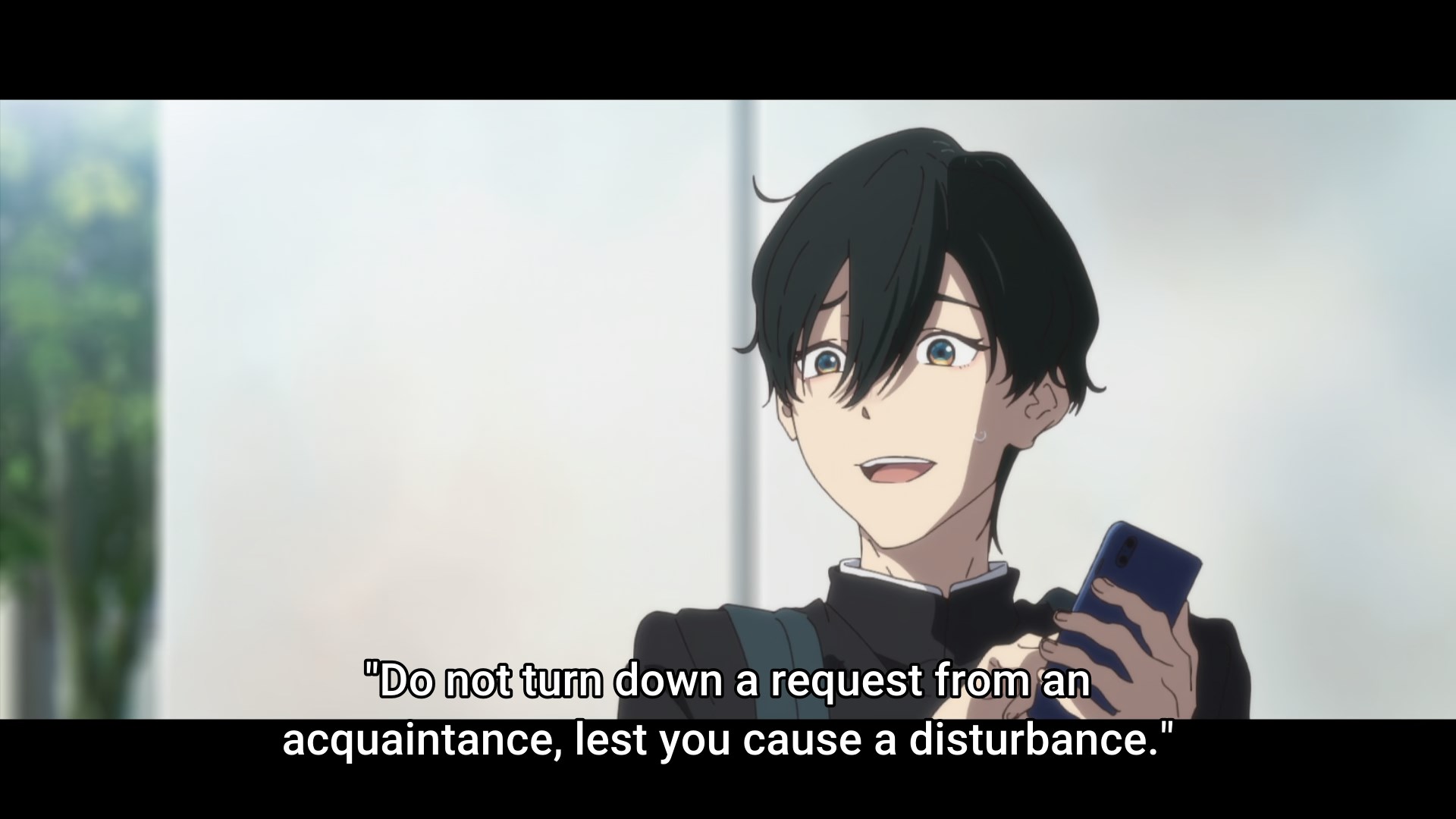
Do not turn down a request from an acquaintance, lest you cause a disturbance.

To be honest, that whole first episode annoyed me a lot and Shoushimin really only clicked with its second episode for me. Jogoro’s actions made no sense to me, especially as we barely knew anything about him or Osanai Yuki, the shy girl with whom he formed that pact to become ordinary together. Him leaving her to wait while he goes running at the request of Kengo, somebody he knew from elementary school and only met again when they were all accepted to the same high school frustrated me. It all seemed forced. Jogoro has to be involved in solving the mystery Kengo needed him for, so that they would be delayed long enough to at the end of the episode set in motion a certain chain of events necessary for the larger story. The mystery itself is mundane and uninteresting, slightly artifical. A girl’s purse has been stolen or misplaced and Kengo has dragged Jotoro and some other random class mates in to search for it; Jotoro is reluctant to use his ‘powers’ but in the end solves its disappearance through deduction. In the end it turns out it would’ve mattered: had he and Kengo done nothing, the purse would’ve turned up again the next day.
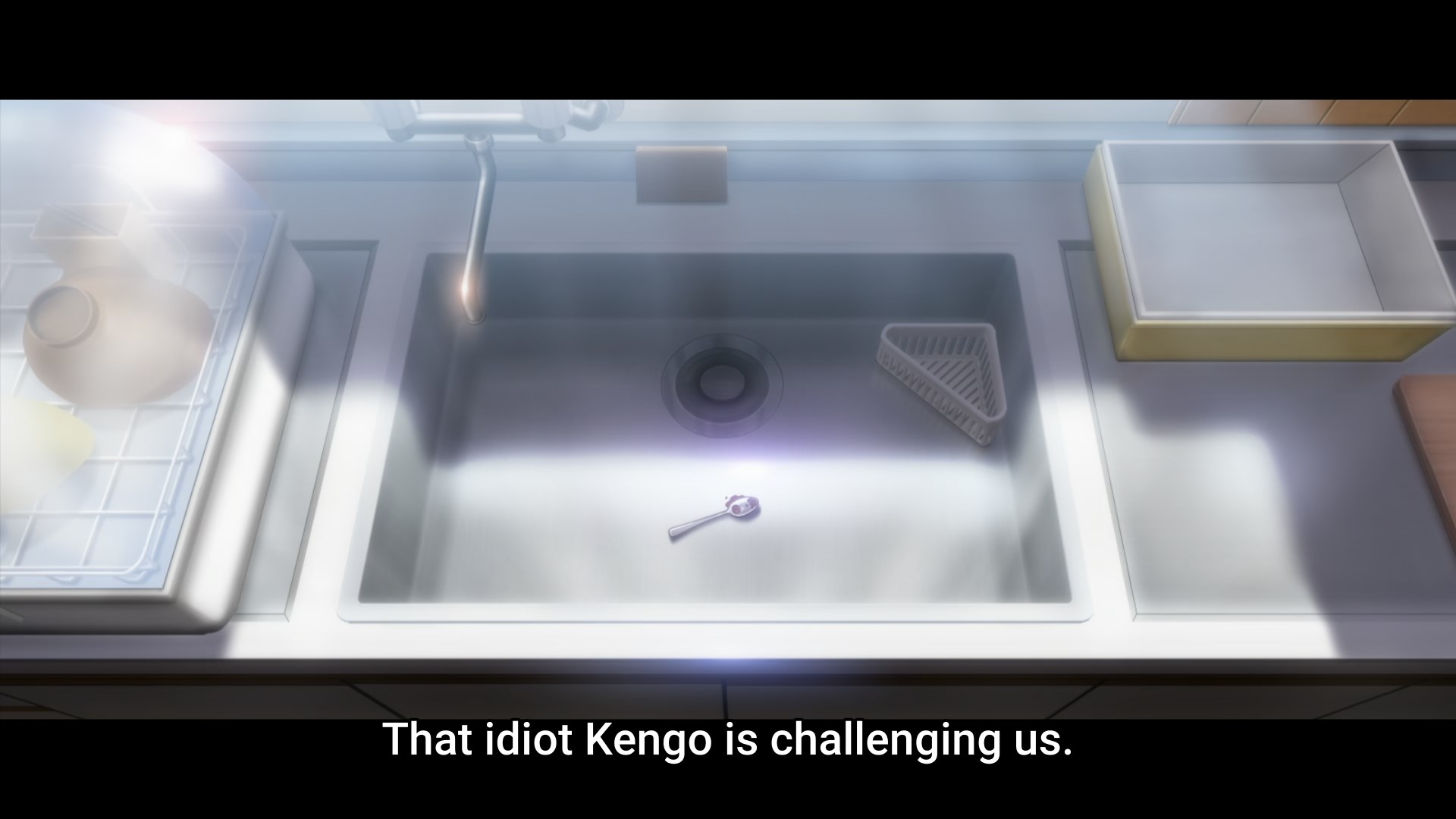
That idiot Kengo is challenging us. A small spoon is lying in a dry sink

This sort of Sherlock Holmes like deductive reasoning can be incredibly irritating when it’s clear the author has put his thumb on the scale to make it all work, as was the case here. By contrast, the mystery to be solved in the second episode is even more mundane yet much more interesting. How was Kengo able to make three mugs of good cocoa while only using a small spoon to stir it with but no extra cup to heat the milk up with? That’s what his sister is trying to figure out when Jogoro and Osanai are visiting him. Kengo was very proud of his cocoa making and explained how to make good cocoa, so it wasn’t just a question of slopping the cocoa powder and milk in some cups and microwave them. Resolving how he did it takes up most of the episode’s runtime butunlike the first episode’s mystery, it is all highly entertaining as successive hypotheses are proposed and shot down in turn. Jogoro has to work for his answer. Having him work through his deductions as he’s solving the puzzle, working together with the other two is much more satisfying than him giving the answer after he had already done so as in the first episode.
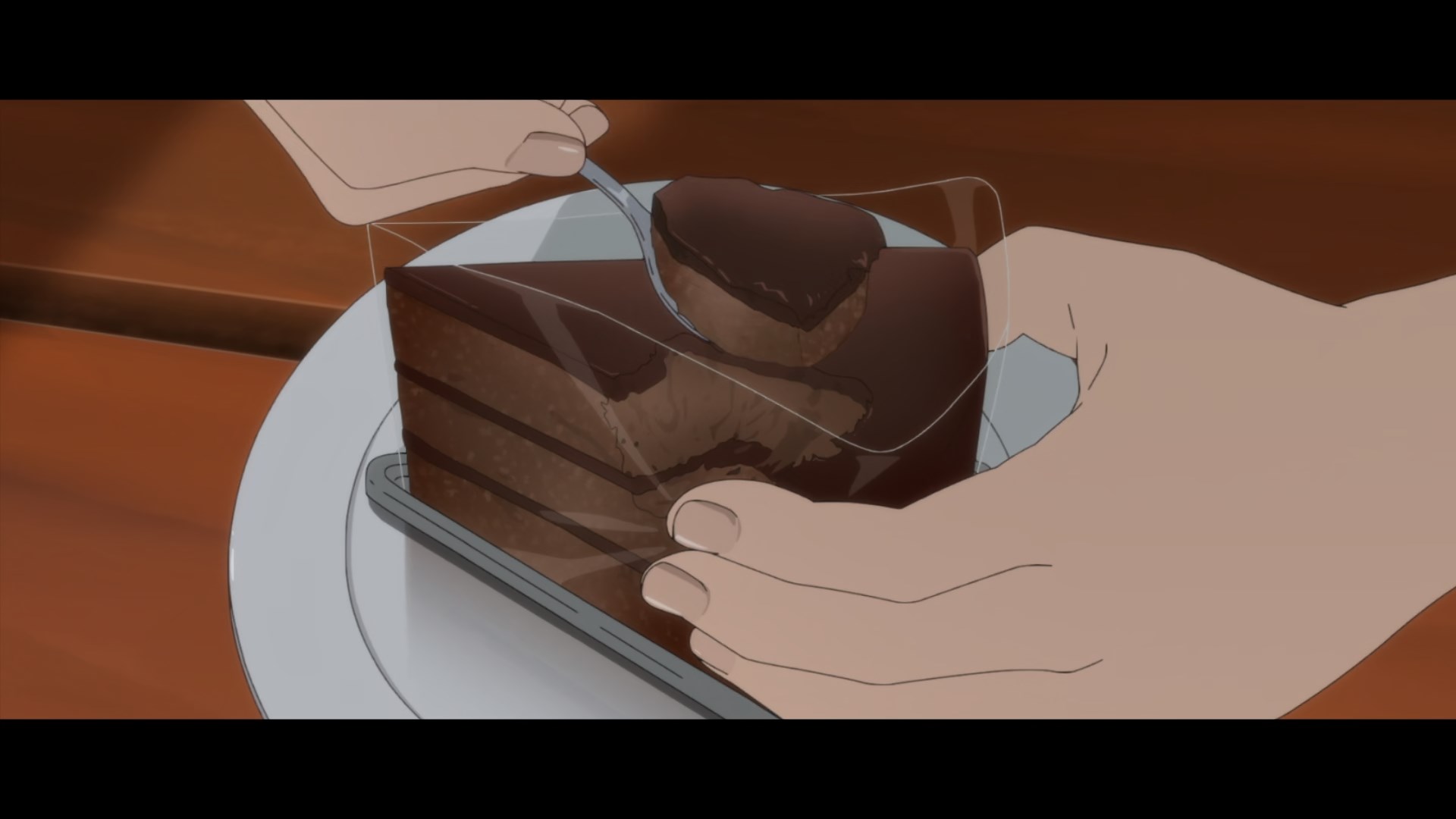
Who eats a slice of cake by leaving the plastic on around it and taking a bit from the middle?

What the answer is will surprise you, but it is in keeping with somebody psychotic enough to eat his slice of cake with the plastic still on, who begins by taking a bit from the middle. Kengo is not very ordinary either….

The pretentious letterboxing aside, this is a gorgeous series, full of little Shafterian tricks to keep what might have otherwise been slightly dull dialogue scenes snappy and interesting. I do like this sort of series, Hyouka, Bunny Senpai, even Monogatari, with protagonists being dragged into weird situations while pretending they want to be just normal. Shoushimin looks to be a good addition.
Seeing far beyond his time — John Berger’s Way of Seeing (1972)

If you have two hours to spare, spend them watching Ways of Seeing, a four part documentary by John Berger from 1972, ostensibly on how photography has changed the way in which we see art, but moving beyond that to examining the European tradition of oil painting, what its purpose was and how it’s reflected in modern day publicity.

For something itself now fiftytwo years old, from a time when colour television was still a novelty and no such thing as personal computers let alone mobile phones and social media existed, it’s still incredibly relevant. Just that first episode alone, looking at how a painting was changed from a still, silent image rooted to one unique location to something that can be chopped up, moved about, re-contextualised through the ability to photograph and reproduce it, is a revelation. Then in the second episode he takes a punt at how nudes, female nudes, are represented in oil painting: how these are not naked, truthful images of the women they supposedly portray but passive pictures to be consumed by the male owner of the painting. The female figure as a possession to be displayed. And then, echoing what he said in the first episode, that he too uses these painting to send his own messages, he acknowledges the absurdity of his the sole voice on the subject and hands over to a round table of women to discuss this further.

Episode three than looks at the real purpose of the oil painting as a medium, not the lofty ideals ascribed to it, and argues that it is about showing off your possessions as the owner/displayer. That in turn leads to the fourth episode where it juxtapositions publicity and advertisements with the oil painting tradition as a sort of mirror image. If paintings shows the things you already own and you in control of them, ads feed the dream of owning them, the aspiration.

A very heady mix of ideas here and no wonder it had such an impact. It is an interesting rebuttal to the far more traditional view of Kenneth Clark’s Civilisation (1969), to which this was in response. Art as a mystical, uplifting activity versus art as a capitalist tool that needs democratisation as much as any other such tool. In this context, the most interesting idea of all may have come from the end of the first episode, after he has argued that images are like words, but:

The images may be like words but there is no dialogue yet. You cannot reply to me. FOR THAT TO BECOME POSSIBLE IN THE MODERN MEDIA OF COMMUNICATION ACCESS TO TELEVISION MUST BE EXTENDED BEYOND IT’S PRESENT NARROW LIMITS.

Fifty years on we got this through social media; now we know that this democratizing dialogue has broken our modern elites’ minds.