Metal Monday: crossing the T

From feast to famine… Too many bands starting with an “S” to feature them all, but when it comes to “T” it’s another cup of it altogether. Two possibilites, Testament and Therapy?, though undoubtly fine bands both I’ve never really gotten into, even if they’re probably the best known metal bands of the lot. There’s also Thin Lizzy, though I’m not sure I would classify that as hard rock, let alone heavy metal, as the BNR Metal pages have done. Still it gives me an excuse to feature one of my favourite sing along to the stereo turned up to eleven songs:


Moving on to a slightly more embarassing band to like: NWOBHM influenced hair band Twisted Sister:


Brainiac begs to differ — You can stop rock ‘n roll — with a caravan!


After that particular brand of naffness, let’s go for something a bit darker. We all thought we were oh so edgy for liking Type O Negative, not just for its anti-Christianity and slight aura of e-ville but also because they supposedly broke the ultimate taboo of using nazi symbols….


Christian Woman:


And in remembrance of lead singer Peter Steele, who died this april — Everything Dies:


The Battle of Kursk – David M. Glantz & Jonathan M. House

The Battle of Kursk


The Battle of Kursk
David M. Glantz & Jonathan M. House
472 pages including index and notes
published in 1999

Kursk is a name most people probably only know from that Russian submarine that sank some years ago. Much fewer people know what that submarine was named after: one of the bloodiest and most important battles of World War II. The Battle of Kursk was fought in 1943, the largest tank battle of the war and was the last battle in which the Germans had the strategic initiative. After Kursk it was the Russians who held the upper hand and the Germans who had to defend. What’s more it was the first battle in which the Russian forces managed to stop the German blitzkrieg
It’s also a battle loved by war nerds, as it got the German panzer army at its peak taking on endless waves of Russian T-34s and Su-76s on the endless steppes and is so much more interesting than the infantry slog of Stalingrad…

However much of what we used to know about Kursk has come from German sources, as Soviet archives have only come available since the end of the USSR. So it has always been about the heroic deeds of the panzer commanders against the endless Slavic hordes so to speak. The emphasis has largely been on the Germans plans for the battle, on what went wrong for them and especially in the memoirs of those particpated, how it was not their fault that the battle was lost but Hitler’s. The Battle of Kursk is one of the first books on the battle to make full use of Soviet archives as well as German ones, giving a much more complete picture of the battle.

Read more

Dust in the Wind


Caught this on one of the five thousand or so interchangable music channels our cable company thinks we need. So rare to find a Dutch language song that’s actually interesting and good enough to show the world. Most Dutch artists either go for local succes or pastiche rock.

Gr’unn!

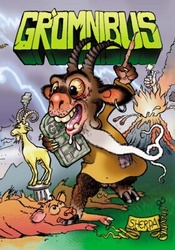
cover of Gromnibus

A can’t miss bargain to be had at De Slegte in Amsterdam right now: copies of Gr’omnibus, a treasure trove of sequential art from Groningen, the Athens of the North; an invaluable treasure now yours for only two euro fifty! Why you should bother? Because you get to sample some 40 odd (some very odd) Dutch (as well as the occasional furreign) cartoon talents, culled from the pages of one of the most consistent of Dutch underground comix zines, G’runn.

Most foreigners might be forgiven for believing there’s not much more to the Netherlands than Amsterdam, Den Haag and perhaps some pittoresque village like (ugh) Volendam, with Zeeland thrown in for free for our German friends who tend to encamp on the beaches there each summer in a more benign re-enactment of the Maydays of 1940, but there are other interesting cities in the rest of the Netherlands as well, even up North. Groningen (Gr’unn in the local dialect) is one of them, a university town big enough not to be overwhelmed by it with a decent local art scene and nightlife, a city in which over the years a thriving alt-comix scene has been established.

In 1996 a few of them started Gr’unn, which since then has published a lot of up and coming cartoonists. People like Barbara Stok, Mark Hendriks, Amoebe, the Lamelos collective, Marcel Ruijters, Reinder Dijkhuis, Berend Vonk, all had strips in Gr’unn. And as such it helped establish, together with Zone 5300 and more amateur zines like Impuls or Iris, the first generation of cartoonists neither interested in going the traditional comics route of magazines or newspapers, nor in consciously rebelling against this, but who just went their own way.

Any anthology of a comix zine celebrating its ten years anniversary will always be uneven and of course Gr’omnibus is this as well. Some of the cartoonists are better or more interesting than others, while there’s a huge mix of styles and subjects represented as well. But there is common ground as well. Autobiographical or fantasy, stick figures or obsessive crosshatching, what most of the stories and artists present have in common is a prediliction for the light ironic and the cynical, short gag stories but with a twist of bitterness and not too much emotional investment. It’s a style of writing I quite like, though it can be a bit wearing in large doses. No real masterpieces here, but still more gems than dross and no real bad stories either.

So if you’re in Amsterdam and you want a cheap way to sample a huge chunk of the contemporary Dutch comix scene, go get Gr’omnibus from de Slegte. It’s in the middle of Kalverstraat so even tourists should be able to find it.

Carnegie was no saint either

Good news everybody! Forty modern day robber barons have decided they can miss fifty percent of their vast wealth:

The world of philanthropy got a huge financial boost today as more than 30 American billionaires pledged to give away at least half of their fortunes to charitable causes, signing up to a campaign launched by Warren Buffett and Bill Gates.

In an unprecedented mass commitment, top figures including New York’s mayor Michael Bloomberg, the hotel heir Barron Hilton, CNN media mogul Ted Turner, and the Star Wars director George Lucas lent their names to the “giving pledge”, an initiative founded last month to encourage America’s richest families to commit money to “society’s most pressing problems”.

The pledge is not a legally binding contract but is described as a moral commitment. Buffett, the legendary Nebraska-based financier known as the “sage of Omaha”, welcomed the influx of support: “At its core, the giving pledge is about asking wealthy families to have important conversations about their wealth and how it will be used. We’re delighted that so many people are doing that.”

He added that many of those involved were committing sums far greater than the 50% minimum. Buffett himself is handing the vast bulk of his $47bn fortune to the Bill and Melinda Gates Foundation, which is largely orientated towards tackling disease in developing countries.

Nick Mamatas, talking about something else entirely:

So when I hear of an organization that’s very unsavory, but that certainly hands out some money to nice very savory people, and sends out limos for them to ride in just like successful people supposedly do, and really only recruits a teeeensy bit, and didn’t didn’t the association just a few years ago rejig its corporate holdings to separate its limo-riding parties and legitimate business from that less savory stuff…call me unmoved. It’s still a mob sausage and pepper sandwich in your hand, even if the guy who handed it to you didn’t say, “If you take a bite, that means you love the Bonnano crime family!” You’re still chilling with mobsters even if you’re not there with your fist in the air, chanting, “Lou! Lou! Lou!” as some of your neighbors are when the guy you knew as the pizzeria man takes the stage, says a few lines in a dialect you don’t understand, and is suddenly and inexplicably very popular.

That some billionaires and multimillionaires decided to play philantrope does not excuse their wealth, nor the way they amassed it. That some lucky causes will get millions showered on them is great, but it’s still fundamentally undemocratic and wrong that a small group of people can decide which problems are sexy enough to deserve their support. Their charity does not change the system under which most people live lives of quiet desperation so a few lucky people can grandstand. Of course, had their wealth been taxed appropriately we wouldn’t have this problem, but on the other hand I don’t trust the US government not to buy more wartoys for that money….