The Gone-Away World – Nick Harkaway

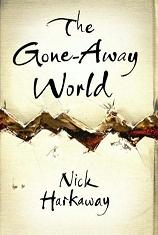
Cover of The Gone-Away World


The Gone-Away World
Nick Harkaway
532 pages
published in 2008

Whoa.

Now I understand why The Gone-Away World was one of last year’s most discussed science fiction books. I’d noticed the fuzz but not gotten my hands on a copy until yesterday when I checked it out of the library for beach reading, but once I got it home it gripped me and didn’t let me go until I’d finished it late at night after everybody else had gone to bed. Books like that are rare and you always finish them with a hint of regret that a pleasurable journey is over. And The Gone-Away World is very much a journey type of book, with plenty of amusing diversions along the way asnd in no hurry to reach its destination.

In fact, most of The Gone-Away World after the first chapter is a hugely extended flashback, only catching up to the present three fifths of the way through the story. Some may find this annoying enough to argue that the book would’ve been better off without that teaser. Personally I disagree, I think this structure was necessary. The “teaser” is there to get you interested in the world Harkaway has created, while the extended flashback explains both the personal history of the narrator and the world he lives in and how it came to be. When you rejoin the action after the flashback this added and detailed history gives added weight and poignancy to what happens next. It wouldn’t have worked if it had been in strict chronological order.

Read more…

Green revolution or greenback revolution?

Are the Iranian protests just another colour revolution:

You see, it looks very much like a “color revolution” scenario: the US-favored candidate contests election results, claims victory, and his supporters riot till the government caves in. But then, couldn’t the incumbent actually steal the election knowing full well that he can paint the resulting opposition protests as a CIA/NED coup attempt, whether that is actually true or not?

Only a fool would rule out US meddling in Iran, but that does not remove the genuine grievances of the protestors. These protests would not have as much support as they do if there weren’t hundreds of thousands or even millions of people feeling that the elections were stolen, whether or not they were. Iranian elections may have been reasonably fair in the past, but there has been a history of government meddling in the past, through e.g. pre-election selection of “acceptable” candidates, that the idea of a much more blatant vote rigging is clearly not absurd to a large part of the Iranian electorate. That still doesn’t mean vote rigging has happened, no matter what Juan Cole believes, but it is a distinct possibility.

A colour revolution is a mock revolution, where the genuine wish for change on part of a given country’s population is channeled into a safe, US and EU approved direction. It works best against an autocratic but not dictatorial regime, which may be comfortable with busting heads and the occasional disappearance of an opposition member, but which still seeks the apparant approval of the population and which isn’t too bright or media savy. In contrast the opposition will be young and media friendly, aiming their campaign as much at western journalists as at their own people. They will have American money and American advisers to help the campaign and it will be put in media friendly terms, presented as a fight between reformists and conservatives, young vs old, Coke vs Pepsi. It’s fake, but driven by a genuine desire and although leftists should not be fooled by them, there’s still the need to engage that underlying wish. (In as far as we can do something, of course.)

On the one hand, you can’t just uncritically support the opposition as many liberals and conservatives are doing, as exchanging Ahmadinajad for Mousavi is like driving the devil out with Beelzebub. This is not a case of freedom versus oppression and anybody who believes it is will be disappointed, both in and outside Iran.

On the other hand, ignoring the situation won’t make it go away. A large part of the Iranian population wants more personal freedom, wants to have at least some of the things we take for granted in America or the EU, how horribly consumerist they and how horribly middleclass the protestors might be. We need to make sure that when we are critical of how our media reports about these events or about how liberal Mousavi actually is, that we don’t throw away the baby with the bathwater. Iran is an oppresive regime and that needs changing and it’s the Iranian people that need to do it. We can only stand on the sidelines and argue our own (imperfect) understanding of the situation; we shouldn’t presume too much that we can actually give any meaningful advice.

But what we can do is push back against too triumphalistic a view of this revolution, the idea that this is a vindication for truth, justice and the American way, as long as we do it without denigrating the genuine desires of the Iranians themselves.
Want: the massive new Alec collection

As I think I’ve mentioned here before, Eddie Campbell is one of my favourite cartoonists, perhaps the best one currently working in comics. He may be best known for his work on Alan Moore’s massive From Hell project, but for me it’s a toss-up between Bacchus and Alec as to what is his best work. Today it’s Alec, as I’ve just heard about the massive new collection that’s going to come out this September. I’ve always felt that the series hasn’t been as widely appreciated as it should be, as there hasn’t been a good collection of it available for a long time, just short pieces in various anthology comics and long out of print “graphic novels” by long defunct publishers. As Campbell explains in this interview with Tom Spurgeon from late last year, the new collection will have everything and in chronological order:

TOM SPURGEON: I don’t think it fully registered with me before, but you have a massive collection of your autobiographical work coming out in 2009. I always thought that this was a natural for a book at some point and I look forward to it with a not insignificant smile on my face. Is there a reason this seemed attractive to you right now?

EDDIE CAMPBELL: The evolution of our medium has made this the right time. If you think back, at first we’d publish serial comics because that was what the economics permitted (all those “mini” and “maxi” series). Then we would gather the material into a book. The medium developed to the stage where a publisher could pay an author an advance to take himself away and make the whole book before showing any of it. We now find ourselves at an even more advanced stage, where several of a veteran author’s books are gathered into a huge compendium. Thus Will Eisner’s Life in Pictures, which collected his various books that had an autobiographical element, Gaiman’s Absolute Sandman, Gilbert Hernandez’ Palomar, etc.

SPURGEON: How did plans for this particular format come together?

CAMPBELL: Chris Staros at Top Shelf has been wanting to do the book for several years, since those others I just mentioned started appearing. In the meantime I’ve been gradually making digital scans of the pages for the French editions, knowing that all the time I was building toward using these in my own big collection. It is a lot of work after all, scanning 640 pages, especially with all the zip-a-tones, trying to avoid and eliminate moiré patterns. I’m probably now the expert on doing that stuff.

SPURGEON: When did new comics become a part of those plans?

CAMPBELL: The funny thing is that the way I started putting it all together isn’t quite the way it’s ended up. I had the six books (the King Canute Crowd, Graffiti Kitchen, How to Be an Artist, Little Italy, The Dance of Lifey Death, and After the Snooter,) arranged in a chronology that follows actual time rather than the order in which the books were drawn, and then I had a large 80-page section at the end which rounded up a lot of short pieces and some unfinished works which are still worth reading as they stand. But the more I looked at the pages I started seeing an epic sweep in which characters grow older, with a real sense of time passing. It’s ironic that in the comic book medium terminality has come to be seen as a holy grail, the notion of a thing being complete in itself (as in a “novel”), when the true essence of the comic strip is the very opposite, the concept of the eternal present. The greatest daily comic strips had no end. Conceptually, allowing for no interference by extramural forces, a strip may run forever (Like Gasoline Alley). Of course nowadays that quality has been usurped by the television soap opera. Given the dumbassed nature of comic books, the highest measure of commitment to quality, or terminality, that a writer can have is the determination to show characters being killed.

But I’ve wandered off the point. I saw this shape within the book and I shifted a few of the essential short things into their chronological positions and threw the rest out, then I saw the chance to complete the implied sequence by adding another book that brings things up to date. So we now have an all-new 35-page book at the end titled “The Years Have Pants”, which has also become the title for the whole compendium, since it fits so well. But the new book is in no way a conclusion, for it introduces a bunch of new developments that point to resolution outside of the text. I’ll also mention that there are half a dozen other unpublished pages included in the compendium.

The Kingdom of the Hittites – Trevor Bryce

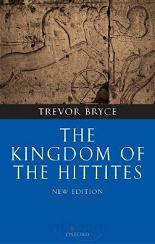
Cover of The Kingdom of the Hittites


The Kingdom of the Hittites
Trevor Bryce
554 pages including index
published in 2005

The nice thing about history is that there’s so much of it, and so much still barely known. The Hittites are a case in point. Their existence was largely unsuspected until the late nineteenth century, when the first of their sites were uncovered in what is now Turkey and Syria. Here was a major Late Bronze Age civilisation and Near East superpower, an empire on par with Ancient Egypt or Assyria that lasted almost fivehundred years and nobody had a clue it existed. The sole cluess to their existence then known were some vague references in the Old Testament, from which they gotten their name as well as some mentions in the official correspondence of their rivals in Egypt, Assyria and Babylon but these were still largely untranslated when the first Hittite sites were found. The rediscovery of the Hittites is but one example of how much more complex ancient history is compared to the caricature we get of it in pop culture, which largely goes Sumeria > Egypt > Greece > Rome, with a sidestep to Israel.

What’s also nice about history is how fluid it is. We think we know the history of given region or country until a chance archeological discovery turns everything upside down again. Especially with subjects as far removed in time from us as the Hittite Empire, which existed roughly from 1650 BCE until about 1200 BCE, our views of it can change surprisingly quickly, as can be seen in The Kingdom of the Hittites. Originally published in 1998, the second, 2005 edition has been thoroughly revised with sections of every chapter having been rewritten, based on new discoveries and other advances since the original publication. If less than a decade of progress can make such a difference in a textbook like this it’s no wonder its author, Trevor Bryce, stresses that this is still only a preliminary history of the Hittites, subject to further revision.

As a textbook The Kingdom of the Hittites is firmly of the “kings and battles” school of history writing, with a companion volume dealing with society and daily life of the Hittites. Sadly the Amsterdam library didn’t seem to have that in its stacks. No matter, this was enough to be going on with on its own as well. The book is set up in chronological order, it starts with the origins of the Hittites and an overview of the history of Anatolia just before the Hittite kingdom was established and ends with the last known Hittite king. The reign of each known Hittite king is looked at, but as Bryce makes clear throughout, of some kings much less is known than others. Indeed, for several kings not even the approximate dates of their reigns are known. Two appendixes, on the chronology of Hittite history and the sources available to historians, make this problem even more clear.

Read more…