Bugger the e-mail scandal

This is much more important:

Police have carried out what is thought to be the biggest pre-emptive raid on environmental campaigners in UK history, arresting 114 people believed to be planning direct action at a coal-fired power station.

The arrests – for conspiracy to commit criminal damage and aggravated trespass – come amid growing concern among campaigners about increased police surveillance and groups being infiltrated by informers.

Nottinghamshire police said the raid on a school in Nottingham was made just after midnight this morning. The force said it seized “specialist equipment” thought to be linked to a planned protest at nearby Ratcliffe-on-Soar power station, a coal plant owned by the utility company E.On.

No group has claimed responsibility for the alleged demonstration.

Experienced campaigners said no group had claimed responsibility for the alleged demonstration because they could face charges of conspiracy and a possible jail sentence.

Activists said emails setting out planned action could be used by police to prove conspiracy to commit aggravated trespass and criminal damage, as could any equipment or documentation found during the arrests, or other evidence of coordinated preparations.

This is yet another politically motivated police action aimed at undermining dissent and delegitimising protest. It looks and smells like similar arrests of activists in the past, like that of the supposed anarchists in Plymouth just before the G-20 protests, or that of high profile anti-terrorist raids like those in Forest Gate a few years back, none of which amounted to much in the end but each of which sent a clear message. Keeping in mind the context in which these arrests happened, just after the police got embarassed by the killing of Ian Tomlinson and while one senior police official already having warned about “a summer of rage”. The police fears and is prepared for a year of increasing social unrest as the economic crisis begins to bite and they are attempting to head it off at the pass through actions like this mass arrest.

Yet this story’s buried under the avalanche of manufactured outrage about e-mail gate.
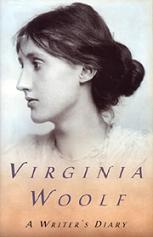
A Writer’s Diary – Virginia Woolf

Cover of A Writer's Diary


A Writer’s Diary
Virginia Woolf
350 pages including index
published in 1953

A Writer’s Diary is an extract of her personal diaries put together by her husband and widower Leonard Woolf a decade or so after her death. It’s been edited to keep out the more personal entries as well as to slim down the original twentysix handwritten volumes to a more managable size. What remains is a volume of entries detailing Virginia Woolf’s writing process, enlivened by sprinklings of literary gossip and the occasional entry talking about the general state of the world. The diary starts in 1918 and ends in march of 1941, not long before her death. Although the only other Virginia Woolf book I’ve read was A Room of One’s Own some four years ago, this didn’t really matter; you don’t need to know her other work to find meaning in this, nor is it spoiled by reading about the process by which it was created first.

Virginia Woolf was not the happiest of writers. Throughout her life she suffered from nervous breakdowns, as also seen in her diary, and she ultimately ended her life by drowning herself after she felt “the madness” returning. She also suffered from extreme mood swings, which is clearly visible reading through A Writer’s Diary, where one day she would write with pleasure how well the writing on a given book went, the next day despairing about the critical reception she expected for the same book. In some of the entries talking about social events you can also see that while she enjoy being social, these sort of things took a lot of energy out of her. As somebody relatively introvert myself, I can sympathise.

Read more…

War on Iraq: not quite over yet

The activities of al-Qaeda in two of Iraq’s most troubled cities could keep US combat troops engaged beyond the June 30 deadline for their withdrawal, the top US commander in the country has warned.

US troop numbers in Mosul and Baqubah, in the north of the country, could rise rather than fall over the next year if necessary, General Ray Odierno told The Times in his first interview with a British newspaper since taking over from General David Petraeus in September.

He said that a joint assessment would be conducted with the Iraqi authorities in the coming weeks before a decision is made.

Combat troops are due to leave all Iraqi cities by the end of June. Any delay would be a potential setback for President Obama, who has pledged to withdraw all combat forces from Iraq by August 2010 as he switches his focus to Afghanistan.

Imagine our surprise. Via Eli.

McAuley on the essential fortyfour fantasy novels

As a sequel to his list of fortyeight essential science fiction titles, Paul McAuley has now revealed a similar list of fortyfour essential fantasy and horror titles and he’s asking for help to bring the list up to fifty. Like the other list, it is to be used in teaching a creative writing class or something like that and there’s a not quite arbitrary cutoff year of 1984. Bolded are the ones I read, struck through the ones I don’t think belong. Notice by the way that both lists start with the same book.

Frankenstein, or The Modern Prometheus MARY SHELLEY 1818
Tales of Mystery and Imagination EDGAR ALLAN POE 1838
A Christmas Carol CHARLES DICKENS 1843
Jane Eyre CHARLOTTE BRONTE 1847
The Hunting of the Snark LEWIS CARROLL 1876
Dr Jekyll and Mr Hyde ROBERT LOUIS STEPHENSON 1886
The Well At The World’s End WILLIAM MORRIS 1896
Dracula BRAM STOKER 1897
Ghost Stories of an Antiquary MR JAMES 1904
Kwaidan: Stories and Studies of Strange Things LAFCADIO HEARN 1904
The Wind in the Willows KENNETH GRAHAME 1908
Jurgen JAMES BRANCH CABELL 1919
A Voyage to Arcturus DAVID LINDSAY 1920
The King of Elfland’s Daughter LORD DUNSANY 1924
The Trial FRANZ KAFKA 1925
Lud-in-the-Mist HOPE MIRRLEES 1926
Orlando VIRGINIA WOOLF 1928
The Big Sleep RAYMOND CHANDLER 1939
The Outsider and Others HP LOVECRAFT 1939
Gormenghast MERVYN PEAKE 1946
Night’s Black Agents FRITZ LEIBER JR 1947
The Sword of Rhiannon LEIGH BRACKETT 1953
Conan the Barbarian ROBERT E HOWARD collected 1954
The Lord of the Rings JRR TOLKEIN 1954-5
The Once and Future King TH WHITE 1958
The Haunting of Hill House SHIRLEY JACKSON 1959
The Wierdstone of Brinsingamen ALAN GARNER 1960
The Wolves of Willoughby Chase JOAN AIKEN 1962
Something Wicked This Way Comes RAY BRADBURY 1963
The Book of Imaginary Beings JORGE LUIS BORGES 1967
Ice ANA CAVAN 1967
One Hundred Years of Solitude GABRIEL GARCIA MARQUEZ 1967
Earthsea URSULA LE GUIN 1968-1972
Jirel of Joiry CL MOORE collected 1969
Grendel JOHN GARDNER 1971
The Pastel City M JOHN HARRISON 1971
Carrie STEPHEN KING 1974
Peace GENE WOLFE 1975
Gloriana, or the Unfulfill’d Queen MICHAEL MOORCOCK 1978
The Bloody Chamber and Other Stories ANGELA CARTER 1979
Little, Big JOHN CROWLEY 1981
The Anubis Gates TIM POWERS 1983
The Colour of Magic TERRY PRATCHETT 1983
Mythago Wood ROBERT HOLDSTOCK 1984

Like his science fiction list, this is interesting as it both shows a fairly consistent take on fantasy and horror, consistent with the earlier list, as well as some strong clues to his own influences. There’s a lot of pre-Tolkien British fantasy/weird fiction on the list, quite a few recognised literay classics as well as a fair smattering of intelligent genry fantasy, again mostly pre-Tolkien, and finally the sort of fantasy equivalent to New Wave science fiction like Moorcock’s Gloriana.

It’s cutoff date means it misses a fair few important writers I would’ve put on my list (Glen Cook, Steve Brust, Mary Gentle, Steve Erikson, George R. R. Martin), as does its bias against genre fantasy (Stephen Donaldson for one). The one writer that really jumps out at me however, that fits the mood of the list is Avram Davidson, whose collection Or All the Seas with Oysters should be on it, as it’s an excellent collection by a master of the American fantasy tradition at the peak of his powers.

(The reason I struck out The Big Sleep is not that it’s a bad book, but it’s neither fantasy nor horror in my opinion.)

Just a London story…

When the Guardian offered this astonishing footage to the BBC News at 6, apparently the response was “No thanks, we’re not covering this, we see it as just a London story.” Great news sense down there at TV Centre.

Stephen Moss tells what happened when the Guardian offered to share its footage of Ian Tomlinson being assaulted by a police officer minutes before his death. Unbelievable.