This is the Guardian video footage of a riot officer attacking Ian Tomlinson minutes before his death, without provocation. A clear case of manslaugther, I’d say, though I doubt the officer in question will ever be prosecuted for it.
This is the Guardian video footage of a riot officer attacking Ian Tomlinson minutes before his death, without provocation. A clear case of manslaugther, I’d say, though I doubt the officer in question will ever be prosecuted for it.
Compare and contrast the difference between the mass firings of agency workers at the BMW mini plant this February: workers angry and upset, but cannot do anything with their anger while their union abandons them in favour of staff workers.
With what happened when the workers at various Visteon plants in the UK and Ireland got told they were all sacked: quite spontaneously the factories were occupied in an attempt to force the owners to at least give all sacked workers the compensation they had a right to.
In one case, justified but ineffective anger, in the other equally justified anger and well directed action. What’s the difference? Better union reps? A more militant climate in general? some proper lefties on staff that took the lead here? Seeing examples from abroad that inspired the Visteon workers?
It is important to get answers to these questions, as this sort of direct action is the first line of defence of us workers against the crisis. in the BMW sackings the union knew since before Christmas that these people -socalled temp staff that in many cases had been working there for years– was going to be sacked, but did nothing to defend them, but deemed these sackings a necessary sacrifise to safeguard the jobs of staff workers. This will happen again, as the current unions are ill prepared to handle the crisis, have evolved to be part of the system and think in terms of compromise rather than resistance. As just one example we have the shameful spectacle in the Netherlands of unions agreeing to fifteen percent pay cuts to avoid firings at the post office despite massive profits, without even bothering to fight these cutbacks. You cannot trust the unions to defend your rights, so we need to get back to the roots of worker solidarity and do it ourselves, as the Visteon workers seemed to have realised.
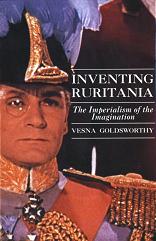
Inventing Ruritania
Vesna Goldsworthy
254 pages including index
published in 1998
What immediately came to mind when I picked up this book from the library was Edward Said’s cite>Orientalism. Where that book looked at how Europe created its image of the Middle East, Inventing Ruritania: The Imperialism of the Imagination looks at how the western idea of the Balkans has been shaped or even created by writers of popular fiction and travel literature. Goldsworthy focuses mainly on British literature, as for British writers “the Balkans are sufficiently close to remain in the field of vision, yet remote enough to be relatively free of the ‘traditional friendships’ and ‘historical alliances’ which frequently inspire the specific interests in the area of other European powers” while they are “too far away to be of consistent interest to American writers”. Historically, she limits her inquiries to relatively modern times, from the early nineteenth century up to now, as she argues that the Balkans as an area of interest only emerged as Ottoman supremacy in the area was broken. Before there can be stereotypical images of the Balkans, there first has to be a Balkans, obviously and until the Ottoman empire started to disintegrate there wasn’t.
A book like Inventing Ruritania, which wants to expose the cliches with which western thought has been riddled about the Balkans, can’t help but be political. This is more so when you consider when it was published, in 1998, barely a year before NATO would wage its first humanitarian war against Serbia, just after the wars in Bosnia and Croatia had ended. You could see Inventing Ruritania as a sort of metacritique of the sloppy thinking in Britain and elsewhere with which these events were explained and written about. One of Goldsworthy’s points in this book is indeed to lay bare the sort of racist stereotyping language about the Balkans that is still used thoughtlessly, often by people who would never dream about deescribing areas like Africa or India in similar terms… Yet Inventing Ruritania isn’t a polemic, not even to the extent Orientalism was.
Last Wednesday during the G-20 protests a man died while contained in one of the police’s infamous kettles. As I posted last week on Prog Gold, I thought then that his death was accidental, caused by a combination of being cooped up for hours in a police kettle and a bad heart. Back then the police were saying that it was the protestors who had helped cause Ian Tomlinson’s death, as they had allegedly attacked first aid workers coming to help him by throwing bottles at them. This was of course the usual police cant they come up with whenever something bad happens on their watch and was quickly denied by eyewitnesses like the ones in the video below, from Indymedia UK..
However, now it looks like the reason the Met came out with these accusations was more than a bad habit, but rather a deliberate attempt to shift blame for the death, as it seems it was a police assault that caused Tomlinson to collapse:
The man who died during last week’s G20 protests was “assaulted” by riot police shortly before he suffered a heart attack, according to witness statements received by the Independent Police Complaints Commission.
Investigators are examining a series of corroborative accounts that allege Ian Tomlinson, 47, was a victim of police violence in the moments before he collapsed near the Bank of England in the City of London last Wednesday evening. Three witnesses have told the Observer that Mr Tomlinson was attacked violently as he made his way home from work at a nearby newsagents. One claims he was struck on the head with a baton.
Photographer Anna Branthwaite said: “I can remember seeing Ian Tomlinson. He was rushed from behind by a riot officer with a helmet and shield two or three minutes before he collapsed.” Branthwaite, an experienced press photographer, has made a statement to the IPCC.
Another independent statement supports allegations of police violence. Amiri Howe, 24, recalled seeing Mr Tomlinson being hit “near the head” with a police baton. Howe took one of a sequence of photographs that show a clearly dazed Mr Tomlinson being helped by a bystander.
A female protester, who does not want to be named but has given her testimony to the IPCC, said she saw a man she later recognised as Tomlinson being pushed aggressively from behind by officers. “I saw a man violently propelled forward, as though he’d been flung by the arm, and fall forward on his head.
“He hit the top front area of his head on the pavement. I noticed his fall particularly because it struck me as a horrifically forceful push by a policeman and an especially hard fall; it made me wince.”
It’s typical of the Observer to put “assaulted” in scare quotes here, but never mind. The important thing is that yet again, the police has managed to murder somebody and yet again the Met is busy smearing and covering up.
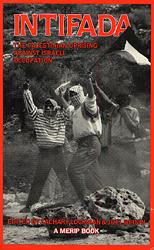
Intifada
Zachary Lockman & Joel Benin
423 pages including index
published in 1989
During Israel’s invasion of Gaza this January there was one of those stupid drummed up controversies that always happen whenever Israel’s engaging in warcrimes again and hence coming under foreign pressure. In this case it was Dutch Socialist Party member of parliament Harry van Bommel who got into trouble after his call for Intifada was twisted from being a call to resistance into not just a call for armed resistance but fullblown terrorism. Various zionist pressure groups were keen to pretend that intifada invariably meant terrorist attacks, including suicide bombings while ignoring that the first Intifada had been characterised by non-violent protests and most socalled Palestinian violence only happened in self defence against IDF aggression. Nobody honest can call boys throwing stones at tanks terrorists, but that didn’t stop our local zionists from pretending it was, helped by conflating the much more violent Second Intifada with the first.
Now I grew up in the eighties and I remember the first Intifada. I was barely in highschool when it started in 1987 and not very politically aware, but I did notice that by late 1988, early 1989 there were quite a lot older students wearing keffiyehs, usually as shawls, as a symbol of their support for the Palestinians; this at a not too leftwing Christian school. The Intifada had the same sort of stature as the ANC’s struggle to end Apartheid had because everybody could see how the Palestinians were being oppressed and how justified they were in their (largely non-violent) resistance despite IDF agression. It was therefore a blatant rewriting of history to equate Intifada with terrorism and to confirm this, I read this collection of essays on the Intifada.