 |
I am:
This inimitably unique storyteller created a future with so many deep layers of history that all the world we know is practically lost in it. |
Cordwainer Smith on Wikipedia; his daughter’s blog about him.
|
I am:
This inimitably unique storyteller created a future with so many deep layers of history that all the world we know is practically lost in it. |
Cordwainer Smith on Wikipedia; his daughter’s blog about him.
If you read this blog regularly you’ll probably be aware by now of Racefail 2009, the ongoing discussion/flamewar about cultural appropriation and racism, systemic and otherwise in the science fiction/fandom community. This discussion, long overdue, has been generating a lot of heat and little light (most of the latter can be found through the excellent services of Rydra Wong’s daily link list). One positive outcome of Racefail ’09 has been the founding of Verb Noire, a new publishing initiative aiming at providing greater diversity in science fiction:
The mission:
To celebrate the works of talented, underrepresented authors and deliver them to a readership that demands more.
What does that mean? That if you’re a talented writer with an awesome, original story about a POC girl/guy/transgendered character, there is a place for you. And that if you’re a sci-fi/fantasy fan who has grown tired of the constant whitewashing of these genres, there is a place for you, too.
Now that isn’t to say that we will accept ANY ol’ manuscript as long as it features a POC protagonist, because we will NOT. What we’re looking for is quality, soul and PASSION, something that will resonate with readers for years to come.
“Everyone has a story.” These words are the driving force behind this project, because we believe that EVERYONE has at least one good story in them, and that story demands to be shared with the world.
As start-up costs can be enormous, we’re relying on the generosity of strangers to help us launch. So far, you guys have been absolutely fabulous in donating your money, time and effort, and we hope you will continue to do so as we grow. Even if you can’t volunteer at this time, feel free to spread the word (and the widget) around.
So help them out will you:
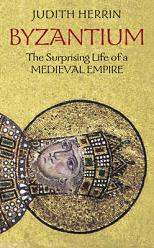
Byzantium
Judith Herrin
392 pages including index
published in 2008
In her introduction Judith Herrin explains she was inspired to write this book by a conversation she had with two workmen knocking on her office door. They had been doing repairs on the building in King’s College where she worked and noticed the sign on her office: “Professor of Byzantine History” and were interested enough to ask what this meant. As she puts it, she found herself “trying to explain briefly what Byzantine history is to two serious builders in hard hats and heavy boots”. From their suggestion that she should write a book explaining Byzantium to people like (or me, for that matter) who knew little if anything about the subject, this book arose. Byzantium — The Surprising Life of a Medieval Empire is an attempt to explain more than a thousand years of Byzantine history, as well as the many facets of this history.
It sounded like the perfect book to read, now that I had temporarily exhausted my library’s stock of interesting looking books on Roman history. Byzantium was after all a clear succesor to Rome, I knew little about it and Herrin’s book easily passed the page 37 test. She isn’t a historian I was aware of before, but with Byzantium she’s become one of the names I’ll pay attention to when looking for new books, no matter the subject. She manages to write a good introduction to a complex subject without talking down to the reader.
Via Caveat Lector we learn that physicists think that if it’s not online it isn’t worth reading:
In brief, the author asked a bunch of physicists and astronomers about how they prefer to access materials. No big surprise; they’d rather grab it online. What is curious is a connection drawn by some respondents between online accessibility and perceived quality. In my paraphrase: “if it’s not online, if nobody’s taken the trouble to scan it or throw it up somewhere, how important can it be?”
Whoa. Every single librarian reader I have just cringed. I admit that even I winced a little.
From personal experience, where I see this bias a lot is on Wikipedia. Subjects that have little to no online presence are much less well represented but worse, when the importance of an subject cannot be easily established online, they’re much more likely to be deleted as non-noticable. So you get a sort of systemic bias towards subjects that are so obviously important that you’ll also find them in the Encyclopedia Brittanica, or new enough to have a deep online presence or with enough of a following/interest in them for an active online community to spring up around it. Subjects that fail those requirements though, even if there are proper offline sources for them are much vulnerable to deletionism.
Lenny summarises a Home Office study on violence against women:
16% of people in England and Wales think it is acceptable for a man to beat his wife or girlfriend if she nags; 13% think it is acceptable for a man to beat his wife or girlfriend if she flirts with other men; 20% think it is acceptable for a man to beat his wife or girlfriend if she dresses in sexy or revealing clothing in public; 11% think it okay to beat if the wife or girlfriend doesn’t treat the man with respect; 8% think it okay to beat if she is caught cheating.
Further, 36% think a woman should be held co-responsible for being raped if she is drunk; 26% if she is wearing revealing or sexy clothing; 43% if she flirts heavily beforehand; 49% if she does not clearly say ‘no’; 42% if she is using drugs; 47% if she is a prostitute; 14% if she is out walking alone at night.
Daily Mail editor Paul Dacre in a speech to the society of editors:
The judge found for Max Mosley because he had not engaged in a “sick Nazi orgy” as the News of the World contested, though some of the participants were dressed in military-style uniform. Mosley was issuing commands in German while one prostitute pretended to pick lice from his hair, a second fellated him and a third caned his backside until blood was drawn.
Now most people would consider such activities to be perverted, depraved, the very abrogation of civilised behaviour of which the law is supposed to be the safeguard. Not Justice Eady. To him such behaviour was merely “unconventional”.
Nor in his mind was there anything wrong in a man of such wealth using his money to exploit women in this way. Would he feel the same way, I wonder, if one of those women had been his wife or daughter?
As Justin notes, dacre’s Daily Mail has no problems spicing up an article on degrading advertisments to women up with some of the advertisments in question, despite Dacre’s moralising…
Do you think the results found in this Home Office study are surprising, considering the combination of patriarchal morality as displayed by this prominent newspaper editor in his speech and the salaciousness of the newspaper he edits?