“Oddly passionless as well, and I don’t think this is entirely because this is a Canadian show”

James Nicoll reviews legendary bad sci-fi tv series Starlost.

Ben Bova famously wrote a fictional treatment of the disaster that was this series, Starcrossed, which I keep seeing in local secondhand bookstores. The series itself was based on a Harlan Ellison treatment, but in the end he was so infuriated with the way his ideas were treated, he took his name of it. Here’s what he wrote for Starcrossed‘s cover blurb:

It has been pointed out to me that Ben Bova’s vaguely hilarious novel is roughly patterned on events and characters involved in the short but loathsome existence of a TV series I had the misfortune to create, “The Starlost.” Nonsense! Just because my series had a studio executive as rapacious as a weasel, a producer who was a certified brain damage case, actors who should have been ditch-diggers and money grubbers who should have taken up residence at Dachau … and Bova’s novel has the same … is just lousy coincidence. Clearly it isn’t one-for-one: the writer in Bova’s book, Ron Gabriel, isn’t one-millionth as terrific and sexy as me! You’ll hear from my attorneys in the morning.

Should I get this novel?

Scans_daily shutdown: it’s the community stupid

So reading Mike yesterday I learned Scans_Daily has been shut down after Peter David complained about it to Marvel and they leaned on Livejournal. Or at least that is the version believed by most people, though denied by David himself. A kerfuffle quickly ensued, with little sane ommentary emerging out from amongst the people happily pissing on Scan_Daily’s ashes or wishing death on David.

Just more Internet Drama? Of course, but it is more important than that. For those who don’t know about this (probably all of you unless you’re heavily into online comix fandom yourself), Scans_Daily was a Livejournal community which started out as a place to post homesexual slash fantasies, but morphed into a highly popular community of comix fans, based around commenting on scans of interesting new and old comics. All illegal as hell of course, but it had some ground rules about posting (no more than half an issue) and was largely tolerated for some five years or so. After all, for those who want to get their comix fix online for free, there’s bittorrent and Usenet, where new releases are available the week they arrive in comic shops (or faster than they can cross the Atlantic, in my case), while a huge percentage of especially North American comics dating back to the 1930ties can also be found easily in a variety of formats. So going after Scans_Daily, a community that was remarkably friendly to newer comics readers and a great propaganda site for comics as a whole (as noted by Mightygodking) makes little sense. As does alienating a community of several thousand at a time when an individual title’s fortune is decided by shifts in readership smaller than that. But it was bound to happen sooner or later, as it takes only one complaint for a site like scans_Daily with its obvious copyright violations to be shut down.

The … discussion … that followed its demise unfortunately followed well worn tracks: the haters go for the “it’s illegal so don’t whine that you’ve been shutdown” tactic while the defenders attempt to make the case that what Scans_Daily did was a-okay, using clever and not so clever arguments. Both miss the larger point: Scans_Daily was a community, one with no real equivalent elsewhere in comix fandom and the takedown destroyed this community. To me, this is the real crime, rather than the copyright violations this community was based around. As Bruce Sterling noted as far back in 1991 in The Hacker Crackdown, there have always been online communities revolving around technically illegal activities and they’ve always reacted badly when the authorities come knocking. The original Usenet was illegal, existing on the sufferage of the organisations involved in DARPANET, the Internet’s predecessor and which was supposed to be used for serious research, not “Ho’od Win” threads on net.comics. So was the original Unix community for a large part, massively violating AT&T’s intellectual property but in the process creating a lot of the software we still use. Intellectual property has always been a battlefield, between corporate interests who’d like us to pay for every time we read a particular book or hear a particular song and the rest of us, who see no reason to do with our books, comics, songs what we do with everything else we buy: whatever we want.

It’s this loss of control that led to the Scans_Daily shutdown, as Peter David got pissed that an X-Factor issue of his got spoiled there, after which he complained to Marvel, who then complained to Livejournal and a flourishing community got shut down. For the moment, it’s backfiring on him as a lot of people are now mad at him, which in turn let to puzzled responses by outsiders and moralistic posts about “it’s piracy, so stfu”. But for those of us who were regulars there –and I was far from a hardcore member — we’ve lost a community of friends and likeminded people, which is by far the greater crime. And it’s this that explains the far from even tempered reactions to Peter David’s actions: when you attack a community, even an online based community based around a hobby though childish by the great unwashed, you attack people themselves. No matter how much in your right you are legally.

Books read February

Saturday — Ian McEwan
Sometimes you need to read a book knowing you’ll hate it, just to be able to be more informed in your hatred. Saturday is McEwan’s tedious emulation of James Joyce’s Ulysses taking place on 15th February 2003, the day of the worldwide anti-Iraq war demos, in which he shows how much richer the inner life of his middle class protagonist si than that of the confused muddle going on the London demo…

The Iron Wall — Avi Shlaim
Avi shlaim is one of that generation of revisionist Israeli historians who looked behind their country’s founding myths to record the truth. The Iron Wall examines the development of Israeli policy towards its Arab neighbours and the Palestinians, showing both the differences and the continuity in it.

Intifada — Zachary Lockman & Joel Beinin (editors)
A compilation of essays examing the first Intifada, published in 1989. During Israel’s War on Gaza an astoningly stupid controversy erupted here in Holland when one Dutch Socialist Party MP called for Intifada and this was equated with support for terrorist attacks by local Zionist propagandists. This anthology shows the reality.

The Great War for Civilisation — Robert Fisk
Robert Fisk is one of the best, if not the best journalist reporting on the Middle East. This is his magnus opus, part history, part autobiography, part journalism. Fisk is an engaging writer, but the history of the region does not make for nice reading: betrayal after betrayal, ethnic cleansing following genocide, one futile war after another.

Byzantium — Judith Herrin
On a much lighter note, Judith Herrin’s Byzantium is a sort of sampler course in Byzantine history, an attempt to explain to the curious why Byzantium is worth studying. I’ll certainly read more of her books.

Only Forward — Michael Marshall Smith
My girlfriend has been reading Michael Marshall’s thrillers, so when I saw this, his first science fiction in a secondhand bookshop I took a chance. It reminded me somewhat of Jonathan Lethem’s first novel, which had a similar if more pronounced absurdist feel to it.

The Deep Blue Good-by — John D. MacDonald
Another Travis McGee novel; the first in fact. Interesting to see the formula firmly established already this early.

Creatures of Light and Darkness — Roger Zelazny
My new Zelazny book for the year. He’s a writer I want to read sparingly, because you can only read a new Zelazny for the first time once and he’s obviously not producing anything new anymore…

Gather, Darkness! — Fritz Leiber
A reread of a novel I first read ages ago. In a future oppressed by a technocracy masquerading as a warped Christianity, the only hope for freedom lies with a rebellion based on witchraft…
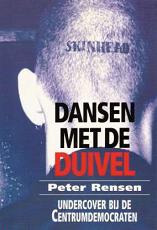
Dansen met de Duivel — Peter Rensen

Cover of Dansen met de Duivel


Dansen met de Duivel
Peter Rensen
167 pages
published in 1994

Geert Wilders is far from the first racial demagogue to appear in Dutch politics; he’s just more succesful than most. His most recent predecessor was Hans Janmaat, who at his best only managed to get three seats in parliament with his party, the socalled Centrumdemocraten. In constrast, Wilders managed to get nine seats in his first election and is currently polling anywhere from fifteen to twenty seats. Of course, Wilders is operating at a time when rightwing radicalism and Islamophobia have almost become respectable and opinions that would’ve gotten him ostracised twenty years ago are now applauded. But, as Dansen met de Duivel (“Dancing with the Devil”) shows, there are other reasons why the Centrumdemocraten never grew very far beyond the real hardcore racist vote of about two percent or so.

Dansen met de Duivel is the story of how its author, Peter Rensen, infiltrated the party and his experiences working for them. Inbetween his personal experiences he also sketches a quick history of Janmaat and his party. What comes across is a party that’s content to stay relatively small, doesn’t really want to move beyond the comfortable limits of the protest pary, as that might entail losing control. Janmaat himself was kicked out of the first racist group he was involved with and got elected for, the Centrumpartij, who remained first competitors and were more openly racists than Janmaat’s party. He wasn’t about to let that happen again.

Read more…

Philip José Farmer 1918-2009

Dammit.

Philip José Farmer was a writer who to me always promised slightly more than he delivered, the ideas around which he built his stories more interesting in conception than realisation. He started writing science fiction at a time when it was very much still a straightlaced pulp genre and immediately injected a proper dirty, perverse sexuality in it when other writers were still proud of describing a tomcat as a “ballbearing mousetrap”. Thoroughout his career his writing was oscillating between his fascination for pulp and his fascination with sex and perversity, often combining the two, as in A Feast Unknown, starring Doc Savage and Tarzan as two sexual deviants only able to get it on after they’ve killed.

His biggest commercial succes was probably the Riverworld series, starring Sir Richard Burton as he goes in search of the sources of the river alongside which he wakes up after his death, millions of years into the future, along with everybody else who ever lived. A great concept, portrayed with much verve and passion, but which unfortunately petered out a bit in the sequels.

My own personal favourites instead was his World of Tiers series, the first novel of which, The Maker of Universes was one of the first novels I ever bought in English. It starts with Robert Wolff, an almost retired professor of Greek, trapped in a somewhat loveless marriage, hearing a trumpet call out in the basement storage room of the newly built house he is thinking of buying. An impossibility obviously, as the closet is as bare as it could be, yet when he slides the door open again, he sees a portral to another world, where a bronzed youg man was holding a weirdly shaped trumpet in his hand and fighting of half a dozen of nightmarish, gorrila like creatures. Spying Wolff, the man tosses the horn to him and tells Wolff to look him, Kickaha up. Then the portal closes and Wolff is left with the horn…

An almost perfect adventure story, and the sequels kept up the high standard set, each one exploring a new, more bizarre world. Perfect fodder for a fourteen year but not one that prepared him for his more …mature… novels.

Farmer was a great writer who helped science fiction grow up, yet who kept an apprecation for its more immature, more innocent side. If he was right, he’ll be waking up somewhere right about now, stark naked next to an endless river, looking for material to make a pen, ink and paper out of…