Twenty years on

Twenty years ago I was still in the UK, having spent my vacation time with Sandra trying to stop the War on Iraq when the news came through that we had failed.
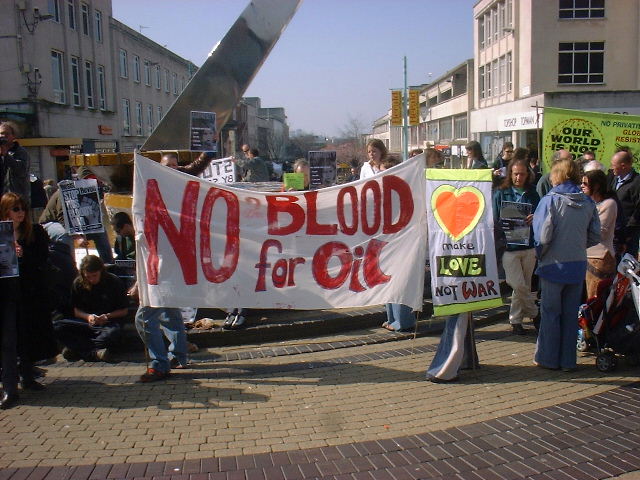
lunchtime protest in Plymouth

It had been clear from the start that the war was inevitable, that it was going to happen regardless of how many of us marched or protested against it. Bush and Blair had decided they wanted it and damn the consequences. If I had any illusions left at how politics worked in the “free west”, they were gone now. Nothing in the twenty years since have brought them back. Democracy only matters if you stay within the lines of what your rulers decide and any horribly destructive project they want can be realised by the simple expedient of lying your face off and smearing any opposition to it. The victims don’t matter, those are just statistics, the only things that matters is if you get your way.
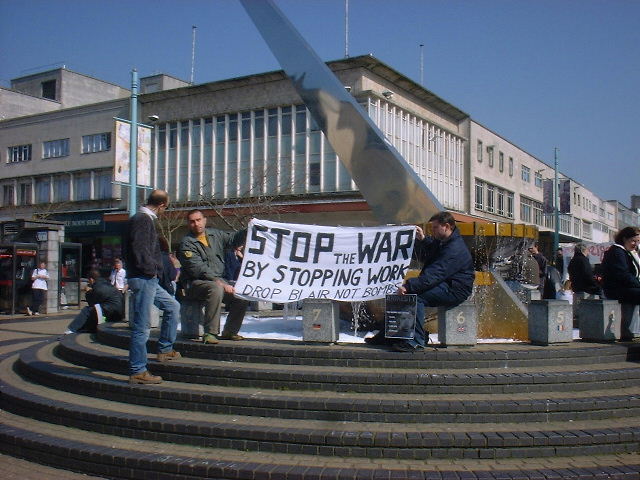
lunchtime protest in Plymouth. The banner reads: stop the war by stopping work. Drop Blair not Bombs.

At the time it still felt like we could achieve something, if not prevent the war, limit the damage. In hindsight Sandra was right when she remarked later that only if the big demonstration in London on the 15th February had marched straight to Parliament and seized power there and then the war could’ve been stopped.
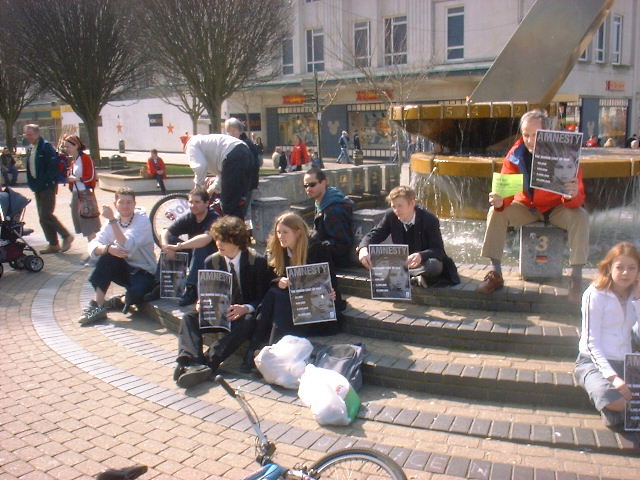
students protesting against the war

Nobody responsible for the war has had to account for it. Alistair Campbell gets to play the wizened political commentator on BBC television, Bush is rehabilitated as a kindly old grandpa making bad self portraits and even Blair is still seen as somebody to respect. For all the pious press coverage this deeply sad anniversary will get, any desire to dig for the truth behind the war will be limited. As with every disaster that followed it, the media and politicians, in the UK, US and elsewhere were equally guilty in making it into a reality. Everybody else who could see it coming?

Well, we don’t matter. We never have.
The cowardice of the BBC

This doesn’t mean what Jake Kanter here thinks it means:

This story is not what it first seems.

Wild Isles was *always* a five-part series.

The sixth film is a BBC acquisition for iPlayer. It was *never* going to be shown on telly.

The film stars Attenborough but was made for the RSPB and WWF, not the BBC.

Earlier this week The Guardian (link in linked tweet) reported that the sixth episode of David Attenborough’s new wildlife series, Wild Islands, would not be broadcast but only be available on the iPlayer, as the BBC feared a Tory backlash against it content. Because while the first five episodes showcased the natural beauty and wonders of the UK, the sixth one would focus on the environmental damage done to it and what should be done to fix it. Something the Tories, eager to let raw sewage flow into Britain’s rivers, were expected to be annoyed by. According to Jake’s Twitter thread this is wrong though. It wasn’t that the sixth episode was suddenly withdrawn because the BBC got cold feet, it was never intended to be broadcast at all! Thereby proving that The Guardian‘s story was nonsense.

Does it though?

Seems to me deciding from the start to treat this episode differently, pretending it’s not part of the series, just inspired by it, refusing to broadcast it, is actually worse. Attenborough’s wild life series have always had an environmental component to them, so why treat this one differently? Is it only fear of provoking the Tories or is it a cynical move made by the BBC leadership, now riddled with Tories themselves? it’s not just appeasement but complicity. The BBC is happy to suppress this sort of stuff because its management are Tories themselves.

This blog is old enough to drink in America

Its very first post was a rather pedestrian piece on a group of Dutch right wing population reduction enthusiasts, starting a long tradition of earnest mediocrity. At that point I had already run my booklog for more than a year but that stage it had been very much just a web page rather than an actual blog. Blogs themselves had slowly evolved from out of the primordial web ooze from the late nineties and thanks to certain things happening in September of the previous year, had suddenly become the Next Big Internet Thing. Me, I still thought of Usenet as the most important part of the internet, the space where I’d made my friends and life long connections.

It’s hard to remember in this post-blogging, everybody easily shove their thoughts in your face, social media world how weird and exciting blogging was. A bit scary too. I knew how to create web pages, had had Cloggie.org since 1999, a descendant of older, long gone student web sites, but those were all just basic HTML and CSS rigs, not using scary things like PHP or Javascript to make it all fancy. WordPress, which I’m currently using, didn’t exist yet. Blogger did but only allowed you to publish on their blogger.com site, if I remember correctly. There didn’t seem to exist any sort of lightweight, standalone blogging suite that I could plug into Cloggie.org easily.

Until Charlie Stross introduced me to Blosxom, when he launched his blog. That was ideal. Free, simple, easy to understand even for a dim bulb like me. The only thing you needed to do was write a post as a text file, HTMl and all, then drop it on your website using FTP. It was simple enough to finally get me started blogging, something I’d been itching to do ever since I’d started reading blogs myself. It lasted me a year or so, then I switched to phposxom, a similar concept but somewhat of an improvement, with slightly improved features. Ultimately that too would be too limited and I finally switched over to WordPress somewhere in 2008.

This blog is so old it’s older than Eschaton: Atrios only got started in April. It’s old enough to have covered the 50th, 60th and 70th anniversary of the Watersnoodramp. Old enough to have survived multiple blogging software updates and the demise of several, once critical blogging components. Remember Haloscan comments? Technorati rankings? Google Reader? it was a year old when the War on Iraq started and indeed the buildup to that war was a major reason I started it in the first place. It has swung from being a general interest to an intensely political blog and back again several times. It’s old enough to remember when Matt Yglesias was just a hack blogger and watch in horror while people like him used blogs as a step on the way to become even hackier pundits, still wrong on everything but on a much larger scale while those who got The War on Iraq right languished.

This is not a blog that is read much, not even when it had its popular phase. Most of the links in it don’t work anymore and sometimes even I don’t know anymore what I was talking about because it. There never were that many commenters, nor a real community like some of the larger blogs could establish. Many of the comments that were made where lost when Haloscan went under, again a chunk of its history and context lost. There is no real reason for it to exist, no grift attached, nothing to promote, no real audience it is chasing.

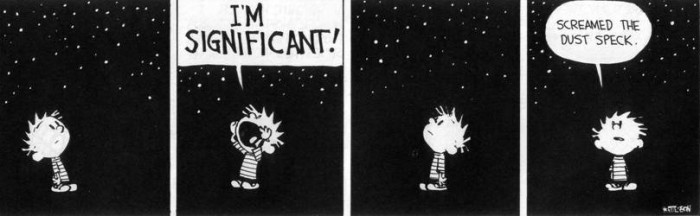
Calvin under a black starry sky: I'm significant. Said the dust speck.

If there is a reason for this blog to exist, it is to simply say: “I exist. This is what I find important. This happened. I matter.”

Why watch something you cannot understand?

Speaking of translating, as we were doing last Saturday, here’s an ancient fan rant about the sort of people who watch Very Japanese Anime:

It’s a show about Japanese references and Japanese wordplay. It’s not primarily a life sitcom or a slapstick act or anything “universal” like that. You could and should be watching something else – it’s not like we’re wanting for English sitcoms or sketch programs. If you’re watching it with English subs, or probably with any subs, you’re

  • Japanese, but interested in how one would translate if one had the time on his hands.
  • a pun-lover like me, but have made the inexplicable decision to look for your puns wedged forcefully into localizations of Japanese things instead of in one of the many well-crafted and legitimate sources of English puns.
  • full of shit, watching this because you like anime just for being anime, and because you want to go read a bunch of explanations later and then congratulate yourself/brag about what a smart Japanophile you are and how you definitely totally got all the jokes.

The show they’re talking about is Joshiraku, a 2012 slice of moe comedy series about a group of female rakugo performers. Rakugo is a Japanese storytelling art form with its roots in the Edo period and specialises in telling long, complicated mostly humorous stories, usually set in that period. The performer relies only on their storytelling technique, voicing each character themselves, using a small fan and cloth as props but apart from that relying only on their voice, mime and facial acting. The stories themselves are usually full of wordplay, puns and historical references so often hard to understand for non-Japanese. None of which matters for this series however, as the focus is instead on the four girls interacting with each other while they’re waiting to go on stage, or during the intervals or after having concluded a show. (The closest it comes to actual rakugo is at the start of the ending song. The problem is that their conversations, despite the anime’s emphasis that these are just “ordinary so that viewers can fully enjoy how cute the girls are”, they’re actually stuffed even more full of wordplay, puns and obscure references than the rakugo would’ve been. An impression of the difficulties this makes for translating and subtitling this mess can be found in the translator notes its fansubber left behind.

Nevertheless I did laugh. Even if ninetyfive percent of the jokes and references went over my head, I still laughed. To insist that you have to be either Japanese or fluent in the language enough to recognise the puns seems a bit harsh, as the original poster does acknowledge in their addendum. (A very Yankee mentality on display there, that confusion on why you’d want to watch something foreign instead of something more easily digestible and in English). To be honest, I didn’t go into Joshiraku with more on my mind than that it looked like a cute, funny series with a bit of a reputation of being ‘difficult’. That latter turned out to be exaggerated. Most of it was perfectly understandable even if many individual jokes or sight gags didn’t land for me. (Also a testament to its fansubber’s hard work!)

There’s another sort of pleasure to be had in this sort of dense, hyper layered material, the pleasure of getting to grips with it, seeing the patterns, understanding a certain reference or gag maybe only years or even decades later. Glimpsing a larger world through these half understood allusions. It’s very much the same thing as when I first started to read Marvel comics, similar to finding where an obscure sample in a rap song originally came from. It’s the sort of thing I’m always unconsciously looking out for in my entertainment. A nerdy sort of pleasure seeking, but a sincere one.

Translating means rewriting too — Martin’s increasingly petty translation rules

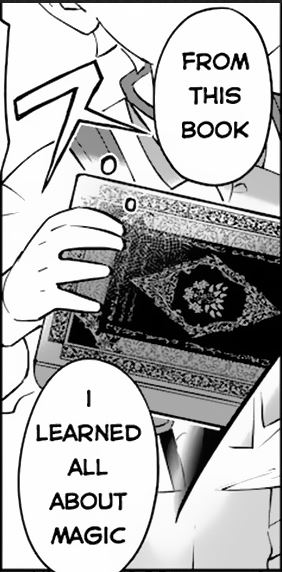
A manga panel showing text balloons with the text from this book I learned all about magic

You can feel it sometimes, can’t you? You’re reading a manga or a light novel and while the English seems fine and you can understand what’s being said, but it still feels off somehow? Especially if you’re being a bit naughty and reading a scanlation. It’s readable, but it doesn’t flow nicely. Like in that example to the left I came across today. That’s not the way we’d structure that sentence in English, is it? You’d normally say “I learned all about magic from this book”, not the other way around. But if you understand Japanese enough to follow the flow when watching subbed anime, you may have noticed that its sentence structure is different from English, often switched around from what you’d expect in English. In Japanese, that sentence makes sense; in English it’s still perfectly understandable but doesn’t flow.

Which is one of the most obvious, simplest reasons why you just cannot translate text like this and not rewrite it. Not to shame the person who did this translation, but this is very much a first draft attempt. What they should’ve done next is walk critically through the entire text and rewrite and remove any such awkwardness. Because while this manga might be readable, all these little errors and awkwardnesses make it harder to enjoy it. Not that I mind too much when it comes to amateur translators doing this as a hobby. It’s not as bad as e.g a supposedly professional translator not realising something is an idiom and translating it literally, just awkward. Not that I haven’t seen that same mistake done in scanlation, one time the translator had used the literal Korean saying, which made no sense in English, then had added the English equivalent in a translator note. At which point you’re being deliberately obtuse, but it touches upon one of the greater sins of scanlation. A misguided desire to keep the translation as close to the original as possible, even if it comes at the expense of readability, to make it seem as Japanese (or Korean…) as possible in English.

I understand that desire, really I do! You want to give people as close to the same experience as you, who can read Japanese. But it makes your translations suck. English awkwardly constructed to function as much as possible as Japanese suck. Endless repetitions of the unnatural “this child” when referring to somebody rather than using a proper pronoun or even their fucking name sucks. Not translating names or phrases when there are perfectly good English equivalents sucks. Yes, you shouldn’t translate onigiri as jelly donuts but rice balls gets the meaning across just as well. You can translate 水に流す (mizu ni nagasu) as “water flows”, but “It’s all water under the bridge” is better understood. (From.) Translating means rewriting, to make your prose flow better, read more easily and be more understandable to your audience. If you don’t, you’re only doing half your job.