Orientalism – Edward Said

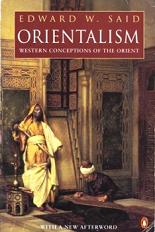
Cover of Orientalism


Orientalism
Edward Said
396 pages including index
published in 1978

There are some books that I’m sort of ashamed to review, not because the books themselves are so bad but just because I should’ve read them years ago. Orientalism is one such book. Both it and its author are so often namechecked by leftwing bloggers that I felt a slight twinge of embarassement for only reading it now. Also, I don’t know how it is with you, but I’m often wary to read such widely acclaimed books anyway, as there’s something so “Rik the people’s poet” about reading Said, or Chomsky for that matter. It can look poseurish and nobody wants to come over as that.

Nevertheless, Orientalism is a genuinely important book, even now, thirty years after its first publication. It’s main argument — that Asia in general and the Middle East in particular have long been misrepresented in the west as “the Orient”, an exotic world filled with prejudices and cliches in order to serve imperialist goals in the region — may look a bit obvious now, not as radical as it was at first publication, but this is in great part because Orientalism laid out this argument so convincingly first. In fact it had such an impact, that even thirty years onwards there are still people trying to cut it down to size, as a quick Google search shows. It touched a nerve, perhaps not in the least because Said was an outsider to the academic orientalist tradition he was criticising.

Read more…

BBC2’s White season: the trailer

Below’s the trailer I described earlier. Now am I right or wrong to see this as something that could’ve ended with the words “I’m Nick Griffin and I approve this message” as new to me blog The Soul of Man under Capitalism puts it.

Chris Bertram over at Crooked Timber meanwhile looks at the Decentist response to this series:

Given their leftist background, most “decents” have promoted either a class-based solidarity or an abstract universalism of citizenship in opposition to multiculturalism (which their blogs incessantly attack). But these pieces suggest something new. One possibility is that they are being drawn to the promotion of “my culture too!”, a resentment-driven demand for recognition within a multicultural system; another is that they are pushing the ethnos in the demos. Maybe they haven’t worked it out themselves yet. Either way, it gives me the creeps.

Wehrmacht – Wolfram Wette

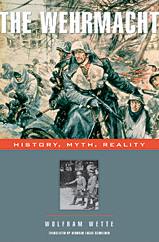
Cover of Wehrmacht


Wehrmacht: History, Myth, Reality
Wolfram Wette
372 pages including index
published in 2002

One of the enduring myths of World War 2 is the idea that the crimes committed by nazi Germany were the work of a relatively small number of villains with the vast majority of the German population either being their victims or just trying to make the best of a bad situation or to do their duty to their country. More specially this myth lives on in the idea that while the Waffen SS was a criminal organisation responsible for uncounted numbers of warcrimes, the Wehrmacht, Germany’s most important military organisation, had relatively clean hands. With tens of millions of German men having served in the Wehrmacht during World War 2 it is no surprise that this myth came into being. Far easier to believe you were the innocent dupe of Hitler than to acknowledge that you may just be a fellow criminal. What’s strange is that this idea is believed not just in Germany, but throughout Western Europe and America. If like me you’re interested in military history, you sooner or later come across military enthusiasts extolling the martial virtues of the Wehrmacht, without much consideration of the context in which they fought.

Wehrmacht: History, Myth, Reality was written to explode this myth and explain how and why it came into being. Its author, Wolfram Wette, is a German historian who’s made his speciality in researching Germany’s history of militarism. Until 1995 he worked for the official German institute for military history research, where he worked on Germany’s official history of World War 2, which should lend considerable weight to this book. This is no firebrand outsider courting controversy with a perhaps overstated sensationalist thesis (as with Daniel Goldhagen’s Hitler’s Willing Executioners), but a distinguished senior historian attempting to put an generally accepted truth before the general
public.

Read more…

Why did the anti-war movement fail?

With the disgraceful fifth anniversary of the War on Iraq rapidly approaching, it is a good time to examine why we all failed to stop this war when the vast majority of people in the UK, Europe and even the US was dead set against it. What happened that two million people could march in London on February 15th and yet the war started the very next month?

Which is why I set up an open thread over at Prog Gold, to discuss this question. If y’all would like to hop on over and give your opinion on this matter?

BNP or BBC?

Imagine the following trailer: the face of a white, bald man somewhere in his forties is shown in close up while Billy Bragg’s interpretation of Jerusalem plays. A hand moves in view and starts writing on the man’s skin in black paint, in a clearly non-western looking script. A second hand follows and writes in another script. More hands follows, until the man’s whole face is covered in black paint. He then closes his eyes and the text appears below: “is Britain’s white working class becoming invisible?” All hands shown look Black or Asian.

sounds like a BNP ad? You would think so, but if you’ve been watching the BBC this weekend you must’ve seen it come past, as a trailer for their coming season of programmes devoted to “the white working class”. According to the press release the BBC have put out about this, these programmes are meant to examine “why some sections of this community feel increasingly marginalised yoday” and why it is that “some white working class people to say they feel under siege and as if their very sense of self is being brought into question“.

Because until now the working class has largely featured on BBC2 as gormless chavs who need to be taught how to feed their children properly, it’s not hard to feel skeptical about the intentions behind this. The BBC has rarely cared about the working classes, white or otherwise, staunch bastion of middle class priviledge that it is. Why suddenly discover them now and sell this with images and a narrative that play straight into BNP scaremongering? A white man’s face that disappears under a layer of black paint; how obvious can you get?

This season could’ve been worthwhile if the BBC had made it working class season rather than white season because the issues it presents are issues that concern the whole working class, not just the white part of it. Britain in the last thirty years has been forcibly shifted from a manufacturing to a services orientated economy and that’s the reason the “white working class” feels “increasingly marginalised today”, because the jobs their fathers and grandfathers had for life have disappeared. It’s the economy, stupid.

Of course the programmes themselves may very well be much better than the trailer makes them out to be; the BBC has a long tradition of making shit trailers for good shows. These programmes might just examine the economic background to the plight of the English working class, -white, black, Asian and other–. For the moment however whatever the BBC thinks it’s doing, it’s mostly providing ammunition to the BNP and other bigots, as a Google search on “BBC white working class” makes clear. The first hit is to the St*rmfr*nt hate site.

The last word is for Theloonyfromcatford commenting on a similar article in the Guardian lamenting the loss of “white working class identity”:

I’m a white,working class man.

The idea that I’ve become invisible, maligned and need a hug/season of programmes from ex public schoolboys in order to feel better about myself is absurd.

Yes, the man who owns the local shop has brown skin. Yes,my work colleagues include Polish girls and black blokes.

So what?