Strawman environmentalists

Unlike Charlie Stross I was less than impressed with this article on The Top Ten Things Environmentalists Need to Learn. Perhaps that is because it reminded me too much of the sort of thing Jerry Pournelle used to write in his science columns for semi-obscure science fiction magazines back in the late seventies. It pays some lip service to the idea that “maintaining the environment is a critical issue” but then argues in bad faith, more interested in attacking environmentalists than in contributing to solutions. Take for example, the first thing “environmentalists need to learn”:

10. Go after pollution sources with the highest benefit/cost ratio, not those which are most noticeable – If you are attempting to make a difference in the world, you should start with the largest problems with the simplest solutions and the least cost in remedying.

For example, underground coal fires produce as much CO2 as all the light cars and trucks in North America and most of those in Europe. The cost of developing a method of fighting such fires and implementing it is likely very low compared to the benefit especially in the context of the amount of effort which has gone into reducing the pollution from cars and trucks.

Now that coal fire example makes me suspicious, as it’s just the kind of pat factiod that appeals to the inner contrarian in all of us. What’s stated here is that coal fires are as big a problem as CO2 emitted by cars, what’s implied is that those silly enivronmentalists are not doing anything about the former but are only concerned with the latter, hence they are hypocrites and can be ignored. Unspoken is the assumption that as long as these coal fires are going on, limiting CO2 emission from traffic is pointless.

But is it actually true that underground coal fires contribute as much CO2 as “all the light cars and trucks in North America and most of those in Europe”? No figures or references are given, which doesn’t strengthen the author’s case. The Encyclopedia of Earth article on
carbon dioxide says 24% of manmade CO2 emissions is attributable to transport worldwide, while its coal fires article says that “according to most recent estimations coal fires in China contribute about 0.1% to 0.2% of the annual human induced CO2 emissions globally”. There seems to be some sort of mismatch then, though of course the figure of 0.2% is only for China (the world’s largest coal user) while the 24% of transport worldwide needs to be broken down to “all the light cars and trucks in North America and most of those in Europe” to be able to truly compared the two figures. Nevertheless, a case can be made for the author having overstated the contribution of coal fires to manmade CO2 emissions…

But even if the figure was comparable, does this mean tackling underground coal fires is more cost effective than limiting the emissions put out by cars? Not necessarily. Underground coal fires are partially a natural phenomenon, with some having been burning for thousands of years,
while the most famous manmade fire, in Centralia, Pennsylvania, has been burning for some 45 years. By any measures they’re hard and costly to put out, requiring huge investments; according to an article in The Smithsonian putting out the fire in Centralia would’ve cost as much as 660 million dollars.

Producing more fuel-efficient cars suddenly looks a lot more affordable compared to those numbers, especially since a lot can be done without requiring new, exotic technology. Just switching from using inefficient types of car (the infamous Chelsea tractor, or SUV) to existing, more energy efficient cars would help. More and better public transport as an alternative to car use is another obvious measure to limit CO2 emissions. And of course, it’s perfectly possible to both invest in fighting underground coal fires, as is actually already happening (see the Smithonian article) and more fuel efficient cars.

So yeah, if the first bullet point in this essay is already this dishonest, I’m skeptical about the rest of the article, especially in the context of the rest of the blog, which seems largely dedicated to showing how silly and stupid environmentalists are.
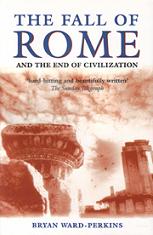
The Fall of Rome – Bryan Ward-Perkins

Cover of The Fall of Rome


The Fall of Rome
Bryan Ward-Perkins
239 pages including index
published in 2005

When I was googling for some background information on Peter Heather’s The Fall of the Roman Empire, Bryan Ward-Perkins’ The Fall of Rome was mentioned the most alongside it in reviews. In those reviews The Fall of Rome was described as a much more agressively counter-revisionist attack, compared to Heather’s book, much more scathing in its rejection of the view that the fall of Rome was not that big a deal. Therefore I thought it would be interesting to read, to see what the more traditional view of Rome’s collapse would look like.

It turns out however that Ward-Perkins’ rhetoric here is actually stronger than his actual disagreement. He’s scathing about those historians who go too far in arguing that the transition from Roman Empire to the post-Roman, Germanic west was a relatively gentle affair, but his own
view isn’t quite the Gibbonesque tragedy of traditional history either. He argues that the transition period was violent, that there was a decline in civilisation, that the death of the western Roman Empire was a tragedy, but that this was far from the end of civilisation. But because Ward-Perkins spent much of this book arguing against the more rose-tinted views currently in vogue of the transistion from a Roman to a post-Roman world, his disagreements may seem bigger than they actually are.

Read more…

Books read in January

Nine books read this month, of which five were rereads, all science fiction:

The End of Eternity, – Isaac Asimov.
The first Asimov novel I’ve read since at least 2001, an old favourite of mine, one of the first sf novels to introduce me to the idea of altering history.

The Big Time – Fritz Leiber.
Also an author I hadn’t read since at least 2001, another favourite and another time war novel. Brilliantly claustrophobic.

The Player of Games, Consider Phlebas and The Use of Weapons – Iain M. Banks.
The first three Culture novels, read in order from weakest to strongest. The first one was a breeze to read, I struggled a lot with Phlebas which felt a bit padded and Use of Weapons was not as amazing as the last time I’ve read it. Still incredibly good novels though, some of the best space opera ever written.

The Fall of Rome – Bryan Ward Perkins.
Short history of how the Roman empire ended, which spents much of its time argueing against the allegedly fashionably view that the Fall of Rome was highly exaggerated and in fact went almost unnoticed. However, though the author is very adamant in insisting this fall did happen and was a disaster, his own description does make clear the Gibbonian idea of civilisation collapsing with the end of the Roman Empire in the West is indeed wrong and the revisionists actually do have some grounds for their views. In short its rhetoric is much stronger than its disagreement.

The Diversity of Life – E. O. Wilson.
Very readable book explaining clearly how resilient and abundant life on Earth is, how ecosystems grow and evolve, how even large extinctions are repaired over time, only to break your heart in the end with the description of the human caused extinctions now going on. Especially after you realise that this was written sixteen years ago and things have only gotten worse…

Upheaval from the Abyss – David Lawrence.
enjoyable if sometimes slight history of the idea of continental drift and how it got accepted, as well as the mapping of the ocean floors and how this contributed to the acceptance of this theory.

The Celtic Empire – Peter Berresford Ellis.
Conventional but misleading general historic of the Celts up until the Roman conquest of Britain. Supposedly this is about the whole Celtic era from 1000 BC until 51 AD, but instead it largely focuses on the Roman wars against the various Celtic tribes. Lots of names and dates, not much attention to culture and all that good stuff. Not that I didn’t learn something, but it wasn’t quite the thing I was looking for.

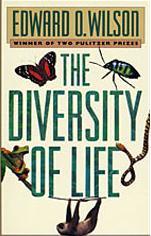
The Diversity of Life – E. O. Wilson

Cover of The Diversity of Life


The Diversity of Life
E. O. Wilson
424 pages
published in 1992

The Diversity of Life is the first E. O. Wilson book I’ve ever read and I finished it impressed. Writing science books aimed at a lay audience is not an easy job to do, having to explain difficult concepts to an audience of whom you can’t assume they have the background to understand them immediately. And you need to do this without boring your audience or telling too many lies-to-children. E. O. Wilson manages to do this with a concept as big and fuzzy as biological diversity, is a tribute to his writing.

Wilson is a biologist, who first rode to a certain amount of fame and infamity in the seventies, for popularising the concept of sociobiology. As a biologist he spent a large part of his career studying social insects, especially ants, from the study of which he also derived some of his ideas about sociobiology. For his research he spent quite some time in developing countries, seeing the ongoing destruction of wild habitats up close, so it’s no wonder that he became a passionate environmentalist.

Read more…

Over one million Iraqis killed, still

Back in September, British opinion pollsters ORB released a study showing over a million Iraqis had died in the war and occupation. Now they’ve released a follow-up study, which focussed on rural communities rather than urban areas like the previous one and guess what? the results confirm their earlier study:

Further survey work undertaken by ORB, in association with its research partner IIACSS, confirms our earlier estimate that over 1,000,000 Iraqi citizens have died as a result of the conflict which started in 2003.

Following responses to ORB’s earlier work, which was based on survey work undertaken in primarily urban locations, we have conducted almost 600 additional interviews in rural communities. By and large the results are in line with the ‘urban results’ and we now estimate that the death toll between March 2003 and August 2007 is likely to have been of the order of 1,033,000. If one takes into account the margin of error associated with survey data of this nature then the estimated range is between 946,000 and 1,120,000.

All of this is largely in line with the two Lancet studies, as well as the Iraqi Family Health Study (See Deltoid for more information). No doubt it will be hotly denied by the true believers, but the evidence is overwhelming that the invasion of Iraq continues to be a crime of gargantuan propertions. The solution remains the sme: troops out of Iraq.

Meanwhile, I would like to see similar surveys for Afghanistan, which isn’t looking good either.