Books read November

Not much this month, thanks to Sandra’s death. I just couldn’t concentrate. What I’ve read is below:

Deathworld — Harry Harrison
A nice classic sf adventure story that through the magic of Gutenberg.org I could read on my mobile phone.

Spirit — Gwyneth Jones
A standalone space opera novel of revenge, which at one points threatens to become The Count of Monte Cristo but then doesn’t. I enjoyed this much more than Bold as Love.

Europe After Rome — Julia M. H. Smith
An excellent overview of the cultural changes in Europe after the “fall” of the Roman Empire.

Indo Roman Trade — Roberta Tomber
A slim volume examining the archaeological evidence for trade between India and the Roman World, with some attempt to provide context as well. Recommended.

Austin-Healey — Graham Robson
Other than watching Top Gear I’m not that interested in cars, but I took a punt on this because it was short and cheap. This history of a classic British sports car marque is a volume in the Shire Library of social history books about Britain and the British way of life, I’ve bought quite a few of them for Sandra in the past two years. The format is a little bit like the much better known Osprey series of war books.

Crime at Guildford — Freeman Wills Crofts
One of the B or C-list writers of the Golden Age of detective novels. Entertaining, but you can see the author pulling the strings to get the mystery solved in a way you can’t with Agatha Christie for example.

No Present Like Time — Steph Swainston
The second part in the Castle series, I read this as this month’s entry in my Year of Reading Women project. Excellent novel.

The Victorian Soldier — David Nalson
Slim even for a Shire Library book, this is barely an overview of British soldering life in the 19th century. Didn’t tell me anything new, but lots of good pictures make it worthwhile.

The British Soldier of the Second World War — Peter Doyle
Another Shire volume, slightly more in depth than the previous one, but again just a quick sketch rather than the full story. Lots of pictures though. Each individual volume in the Shire library is obviously limited by its format, but there plenty more volumes on life during the Second World War and together they add up to a pretty complete picture.
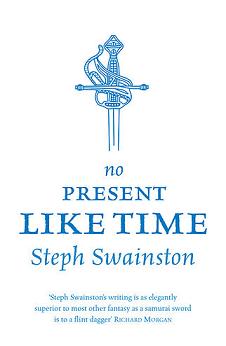
No Present Like Time — Steph Swainston

Cover of No Present Like Time


No Present Like Time
Steph Swainston
294 pages
published in 2005

I was quite taken by Steph Swainston’s debut novel, The Year of Our War, which I read from the library back in 2008. When I was looking over my bookshelves late last year to decide which books I was going to use for my Year of Reading Women project my eye fell on the omnibus edition of Swainston’s Castle series, of which The Year of Our War had been the first and I had the idea to save the second book, No Present Like Time for November as a treat. I knew I was going to like it which I wasn’t sure of with some of the other books I was going to read and I needed some incentive to keep me going.

Steph Swainston is one of the new breed of British science fiction and fantasy writers that rode to prominence under the ill fitting “New Weird” label in the first half of the noughties and one who got a lot of both commercial and critical succes. Unfortunately however she choose to stop writing to pursue her dream of becoming a chemistry teacher, which means that for the moment we’ll have to make do with the four novels she has written so far. A shame, as I quite liked both the novels of her i’ve read.

As said, No Present Like Time is the second novel in the Castle series, but this is not a proper fantasy trilogy and you can read this as a standalone; you’ll just miss a bit of context. It’s set a couple of years after the crisis of the first book, but moves into an entirely new direction. The Year of Our War had a fairly standard fantasy plot of the countries of the Fourlands being threatened by a unending horde of Insects which had already taken over the northern part of the Fourlands and which was only held in check by the powers of the immortal emperor San and his Circle of Immortal warriors only for political intrigue threatening their very existence. In No Present Like Time barely play a role, as a new, insect free island is discovered in the middle of the world ocean and the emperor sends out an expedition to persuade them to join his protection. Things quickly go wrong.

Read more…

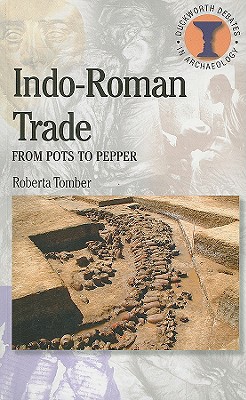
Indo-Roman Trade — Roberta Tomber

Indo-Roman Trade


Indo-Roman Trade
Roberta Tomber
216 pages including index
published in 2008

Indo-Roman Trade: From Pots to Pepper is less a history book than an overview of the state of archaeological evidence for trade between the Roman Empire and the Indian subcontinent. It’s short and very much a synopsis; I think for serious students of this subject much of the value lies in the extensive bibliography at the back. For me, it’s one of those books you take a punt on at the local library, which also leaves you wondering why it’s there, lost amongst a sea of pop history books.

I didn’t know much about Indo-Roman trade going into this book, other than vaguely knowing that the Roman Empire was aware to some extent of India as a country, if only through Alexander the Great’s campaigns there. What Roberta Tromper maked clear to me was how extensive the trade was, in both directions, with pepper from India becoming somewhat of a staple in the kitchens of well to do Romans, while Roman wine travelled the other way. It’s not just India Roman traders went to: they all along the Indian Ocean, from Ethiopia and Somalia to Sri Lanka and Arabia. This trade between at least the first century BCE and seventh century CE, though the Romans were of course not the first westerners to reach the Indian Ocean.

Read more…

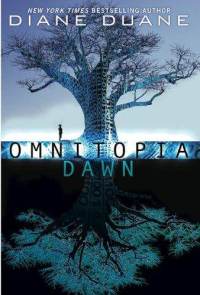
Omnitopia Dawn — Diane Duane

Cover of Omnitopia Dawn


Omnitopia Dawn
Diane Duane
360 pages
published in 2010

Omnitopia Dawn revolves around the upcoming launch of a new extension to the world’s most popular online RPG, Omnitopia, the deadline of which is just days away. Omnitopia is so popular because it’s not just one game, but it’s like something you’d get if you’d roll World and Warcraft, City of Heroes, Second Life and every other current online game into one gigantic universum, held together by the Ring, the one place where you can move from world to world directly. It’s the brainchild of Dev Logan, the CEO and principle inventor of Omnitopia and all around nice guy, who is more interested in creating wonderful new gaming experiences than the bottom line. Which is why he split up with his old buddy Phil Sorensen, who was more interested in making money than in endlessly fiddling with the game and who is now Logan’s most bitter rival and is doing his best to ruin him.

What this reminded me of were Arthur Hailey’s business novels, like Hotel, Airport and Wheels, all of which revolved around an iconic American business in crisis and its heroic executives trying to turn it around, as well as a cast of dozens of other characters going around their daily doings. Omnitopia Dawn has the exact same plot, only this being the twentyfirst century the business in crisis is the world largest and most popular online roleplaying game. It is barely science fiction, only set a couple of years in the future (2018 if I remember correctly), with the world still recognisably our own. A bit of technological improvement, but the most futuristic gadget on display is a bog standard virtual reality system. What instead gives it a sfnal flavour are the parts of the novel set in Omnitopia itself.

Read more…

Books read October

Ten books read this month, but almost all finished in the first two weeks. Because of everything that happened this month I didn’t seem to have enough energy to read much. Hence also the five undemanding mysteries…

Carthage Must Be Destroyed — Richard Miles
A history of Carthage that attempts to escape the biased view of it we have gotten from the Romans and their later admirers. Sadly Richard Miles does not escape having to put Carthage’s later history in Roman context, simply because that history was dominated by wars with the Roman Empire, which ultimately of course destroyed it. Because I knew this outcome, it was difficult to keep on reading…

Omnitopia Dawn — Diane Duane
This is the science fiction equivalent of an Arthur Hailey business novel, but since this is the twentyfirst century, this is set in and around a MMORPG rather than a hotel or car plant…

A Wreath for Rivera — Ngaoi Marsh
Also known as Swing Buddy Swing, the better title in my opinion, this is another competent mystery revolving around the murder of a jazz musician.

The Mysterious Affair of Styles — Agatha Christie
The first Hercule Poirot story. It has been literally decades since I last read any Agatha Christie murder mystery, but what with everything that happened this month and me cataloguing Sandra’s books, I thought I’d give them a try again.

Mrs McGinty’s Dead — Agatha Christie
A 1950ties Poirot story, which starts with him depressed about “modern times” but revitalised when an old acquaintance asks him to investigate the murder of an old woman. even though her lodger has already been condemned for it.

Snuff — Terry Pratchett
His latest Discworld novel, starring Sam Vines out of his element and depth, as he’s out of Ankh-Morpork and has to play the laird on his wife’s estate somewhere in the country. Quality as always, but not the best novel he has ever written.

Troy and Homer — Joachim Latacz
An attempt at determining how much of The Illiad is based in fact, whether Homer’s Troy was real and the city Schliemann found was indeed the same city.

The Murder of Roger Ackroyd — Agatha Christie
Another early Poirot, the first of many in which Poirot has gone into retirement and not liked it. Best remembered for a twist ending, somewhat cheating.

Hickory Dickory Dock — Agatha Christie
Poirot is asked to investigate an outbreak of petty thefts in the lodging house of his secretary’s sister, but this of course soon turns into a murder investigation…

Trouble and her Friends — Melissa Scott
It took me ages to read this book, which had more to do with me than the book. As a second generation cyberpunk novel (published in 1994) this is quite dated in its ideas about what cyberspace would look like, but is saved by its politics. It’s the only cyberpunk novel I’ve read so far that comes close to imagining the attractions and dangers cyberspace and hacker culture can have for women and LGBT people.