Get Nick Mamatas a hugo: All You Need is Kill

Nick “proven noticable” Mamatas is up for the Best Editor, Long Form Hugo for his work on the Haikasoru line of translated Japanese science fiction. James Nicoll has decided to campaign for him, by reviewing all Haikasoru books he can lay his hands on. He started with All You Need Is Kill, coincidently the only Haikasoru book I’ve read myself, so I thought to help out by reposting the review f it I did last year at my booklog:
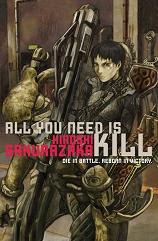
All You Need Is KILL


All You Need Is KILL
Hiroshi Sakurazaka & Alexander O. Smith (translator)
381 pages
published in 2004

James Nicoll was casting about for science fiction books to read one day last week and got pointed in the direction of Haikasoru Books, a newish line of translated Japanese science fiction, found something to his liking and posted about it, as well as a poll on which Haikasoru title to read next. All of which explains why I was pulled towards the cover of All You Need is Kill when I saw it in a local bookstore. Since James liked the Haikasoru that he got and I trust his taste, that was enough reason for me to take a chance on this. I wasn’t disappointed.

What I got with All You Need is KILL is a fast paced, short novel (only 200 pages) that takes two old, familiar science fiction concepts and mashes them up into something new: Starship Troopers meets Groundhog Day. Earth has been invaded by the alien Mimics, seemingly non-sapient but still with the ability to learn from their mistakes and most of the poorer part of the world has been overrun already. Keiji Kiriya is just one recruit given a short training, shoved into a battlesuit called a Jacket, sent out to defend Japan from the Mimics then dying in his first battle — only to wake up in his bunk the day before.
Read More

Books read April

Way too late with this post, but then April was not a good month for me. A combination of work, private troubles and other priorities meant I only managed to read three books this month. It didn’t help that I was way too ambitious chosing which books to read, as you’ll see. This time last year I read ten books, in 2009 thirteen.

The Inheritance of Rome — Chris Wickham
Recommended to me by Chris Y: it did not disappoint. An excellent book that traces the evolution of the Late Antiquity Roman Empire into the early Middle Ages, without getting hungup on “the Fall of Rome” or the political-military aspects of this history.

Three Victories and a Defeat — Brendan Simms
Readable if at times repetitive history of the Rise and Fall of the First British Empire, as the cover has it, in the context of the British quest for a Balance of Power in Europe in the eighteenth century as successive governments, both Tory and Whigs, sought to guarantee Britain’s safety. A very traditional novel, as the focus is solely on diplomancy, war and the internal politics of the British Empire, with a soupcon of economic history. It’s repetitive because Simms points out with great glee how each new government made the same old errors.

China Mountain Zhang — Maureen F. McHugh
Another book read for my Year of Reading Women project, this is McHugh’s debut novel and is that rare science fiction novel that doesn’t have the fate of the world or universe at stake. Instead it tells the story of a gay American Born Chinese construction worker with a Hispanic mother who was big in the revolution that made the US a socialist country and vassal state of China sometime in the late or early 22nd century. Zhang just tries to live his life in a world that on the whole is neither worse nor better than our own.

Early Medieval Settlements — Helena Hamerow

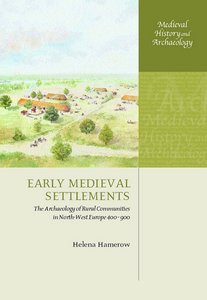
Cover of Early Medieval Settlements


Early Medieval Settlements
Helena Hamerow
225 pages including index
published in 2002

I wasn’t quite sure whether I should get this book — complete title: Early Medieval Settlements – The Archaeology of Rural Communities in North-West Europe 400-900 from the library. It looked as if much of what it covered I had already read about in Chris Wickham’s books Framing the Early Middle Ages and The Inheritance of Rome, only concentrating on the archaeological side of things rather than the history, which I’m more interested in. I also worried about whether it wouldn’t be too dry or technical, something I had problems with occasionally in the Wickham books. On the other hand, it was short, a quick scan didn’t make it look too boring and reading the introduction showed me it was meant as a general introduction to this subject, rather than an indepth analysis, all of which persuaded me into getting this.

The fact that I finished it means I made the right choice. Helena Hamerow writes well, knows her subject and also knows when to go into detail and when not to, making good use of footnotes. The end result is a good overview of the archaeology of everyday rural life around the North Sea coasts of the modern Netherlands, Germany and Denmark during the transition from Late Antiquity into the early Middle Ages and its relationship to the archaeology of Anglo-Saxon England in the same period. Hamerow, as she explains in the first chapter, meant this book both as a general introduction to this period and area and as a pointer for her (monolingual) UK colleagues working on Anglo-Saxon England to the work done on the continent in the same period. Each chapter therefore ends with a quick overview of the relevant English archaeology.

Read more…

Same as it ever was

So it turns out the 101st Flying Keyboard Division is off all times, as Joseph Addison could already satirise their breed in 1709:

…More hard than that of the soldiers, considering that they have taken more towns, and fought more battles. They have been upon parties and skirmishes, when our armies have lain still; and given the general assault to many a place, when the besiegers were quiet in their trenches. They have made us masters of several strong towns many weeks before our generals could do it; and completed victories, when our greatest captains have been glad to come off with a drawn battle… It is impossible for this ingenious sort of men to subsist after a peace: every one remembers the shifts they were taken to in the reign of King Charles the Second, when they could not furnish out a single paper of news, without lightening up a comet in Germany, or a fire in Moscow.

As quoted in Brendan Simms’ Three Victories and a Defeat: the Rise and Fall of the First British Empire, a military/political history of Hanovarian Britain from the ascent of George I up to the defeat in the American Revolution. A good read so far, very traditional in its narrative and focus which unfortunately does mean a lot of “Britain is propping up Austria to counter France and so keep the Balance of Power in Europe but oh no, now Austria is too powerful and Britain needs to swing behind Spain to counter Austria and so keep the Balance of Power”.

The Inheritance of Rome — Chris Wickham

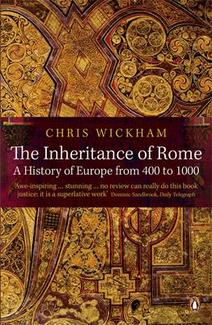
The Inheritance of Rome


The Inheritance of Rome 400-1000
Chris Wickham
651 pages including index
published in 2009

The way you learn about history as a kid, both in school and through pop culture is as discrete chunks. You got your prehistory, your Bronze Age, your Greeks and Romans, your Biblical Times if you’re in an Christian school, your Middle Ages and so on and so weiter. It’s comprehensible, makes history all very neat and tidy and of course completely wrong. This is not a new truth of course, but it was driven home for me once again by Chris Wickham in The Inheritance of Rome, which is all about showing the continuity the Early Middle Ages had with the Late Roman Empire, without being blind to the ways in which Europe evolved away from its Roman era roots during this period. There is no bright line you can draw that divides these two eras.

Nor is there a Dark Age. As Wickham puts it in his introduction, the centuries between the Fall of Rome and the Central Middle Ages, between 400 CE and 1000 CE, tend to fit it awkwardly with the traditionally whiggish view of history as one of inevitable progress leading from antiquity to modern times, where Classic Antiquity can be seen as a vanished Golden Age, with the Renaissance or Late Middle Ages as the starting point for that story of inevitable progress, the centuries inbetween banished to the awkward limbo of the Dark Ages. When these centuries were treated in traditional history it was because that’s when modern European nations like France or England got their first start. Neither view sits well with Wickham, who argues that these essentially teleogical views of this transitional period, judging them in the context of what came after them, give the wrong image. You have to look at this time on its own terms rather than trying to glean the beginnings of future developments in it.

Read more…