(12) – 2017 in numbers

In 2017 I watched or am watching no less than 138 series, with a dozen or so more on the to be watched list — this isn’t so much a brag as a cry for help.

all the important anime girls of winter 2017

I started watching seasonal anime with the fall season of 2015, making 2017 the second full year of doing so. Of the 136 series I’ve watched that came out this year:

  • 100 were 1 or 2 cour series, of which some 2 dozen are sequels
  • 13 were shorts
  • 4 were OVA series like the two Yuuka Yuuna series this season
  • 21 were 1 or 2 episode specials, usually spinoffs from an earlier series

That’s an unhealthy amount of anime by anyone’s measure, but it helps if you’re a bit antisocial. It’s not that I watched everything with the greatest amount of attention either. The more run of the mill series were usually consumed while doing other things, like farting about on Twitter. Nor did it stop me from watching older anime either; the great thing about watching seasonal anime is that each series only takes a twenty minutes or so out of your week. Yes, you still spent the same amount of total time watching a weekly series than if you binge watched it, but the motivation for finding 20 minutes to watch one episode of some middling series is much easier to find.
what are youw atching this season?

Nevertheless the one great criticism everybody lobs at seasonal watching is still true: you’re on a treadmill and have no option but to continue to consume mass quantities if you want to keep up. Especially if you’re plugged into anitwitter. Which means it’s harder to find the space to truly digest a series, even an excellent series like Little Witch Academia or Shouwa Genroku Rakugo Shinjuu, because everybody will have stopped talking about it in three months. For me personally, what I’ve also found, much more so than last year, is that the various series start to blend together. Anything that doesn’t have its own strong identity just becomes a mush of generic slice of moe, or sports, or shounen action anime. It becomes impossible to tell the difference between e.g. Schoolgirl Strikers and Battle Girl High School (There isn’t. Ed.)

And yet I am still addicted to that dopamine thrill of discovering what’s new, exciting or downright shitty each season, if only because there’s still so much good anime coming down the pipes every three months. It’s not healthy, no, but as long as I’m obsessed I’ll keep watching. I just hope I’ll get slightly more discerning in my tastes; I’ve wasted enough time on series that could only hope to strive for mediocrity.

This is the first post in this year’s twelve days of anime challenge. Tomorrow I hope to talk to you about 2017’s most important series, Little Witch Academia.)
A-1 throwing the sakuga around

A-1 Pictures throws down a challenge to Ufotable: this is how you do a proper Servant battle:

For most of the series Fate/Apocrypha had been pleasantly meandering towards the inevitable battle royal, one of those series that held my attention week to week but was never all that impressed with, the next permutation in the seemingly endless line of Fate spinoffs. This week’s episode though kicked things up a notch or two. The video above is just a small sample of what’s basically an episode long fight between various Servants, all epic distortion, dirty animation and blast effects. Everything is in motion and blurry, giving a sense of the enormous powers being thrown around.

It’s a different approach from that what we’re used to from Ufotable’s take on the Fate series, which is much more focused on providing clean, sleek action and the sensation of speed more than raw power. Personally I prefer A-1’s approach here. Much of what Ufotable did in Fate/Zero and Fate/Stay Night: Unlimited Blade Works felt glitzy and too sleek for its own good. The fights especially felt unmoored from physical reality and while the source material is good enough to overcome this in those series, if you look at some of Ufotable’s other work, like its various video game and pretty boys adaptations, they become all glitz and no substance. Technically the animation is brilliant, but there’s no soul to it.

The financial realities of going viral

One of Lucy Bellwood’s cartoons went viral a while ago, being shared by Boing Boing, Chris Hadfield, the Atlas Obscuria, George Takei and others. So what does this exposure mean in terms of cold, hard cash?

SO: To date, including the money I was paid to produce the artwork, I have made $1,761.50 from this image. Not bad! Notably: $814 of that came after Boing Boing decided to feature the art with a proper link pointing people to my shop. There are a bunch of factors to consider here.

[…]

But I also think it’s important to share these numbers as a reminder that just because you’ve seen someone’s work shared on a popular platform (or by a popular person), doesn’t mean they’re automatically set for life. It does, however, mean they might be making a couple hundred bucks more than they usually do in a given month, and when you’re trying to make it as a freelancer that makes all the difference in the world.

I’ve shared one of her sailing cartoons before, on Metafilter, but I’m not sure I’d buy a print myself, if only because it’s usually such a hassle to get that sort of stuff shipped from the US. Bellwood’s essay is a good reminder of the financial realities of “going viral” and what that means for an artist or cartoonist and why proper attribution is so important. Something I’m not always practising myself, I’ve realised. Not often we get such a honest, open look into what large scale exposure means for an independent artist like Bellwood.

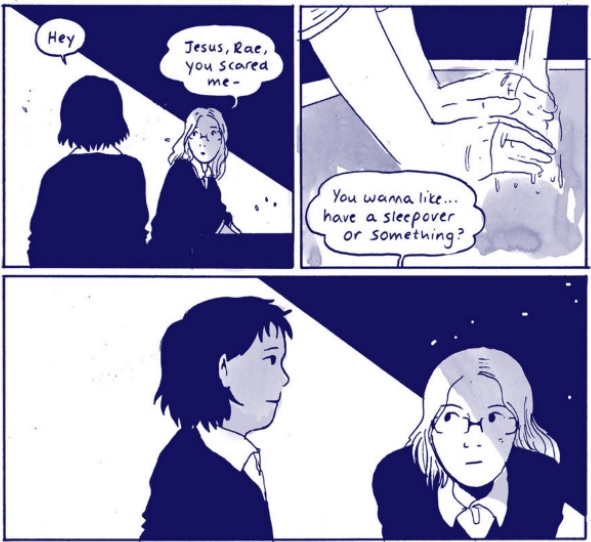
Tillie Walden’s Spinning — Friday Funnies

Spinning: growing up a lesbian ice skater

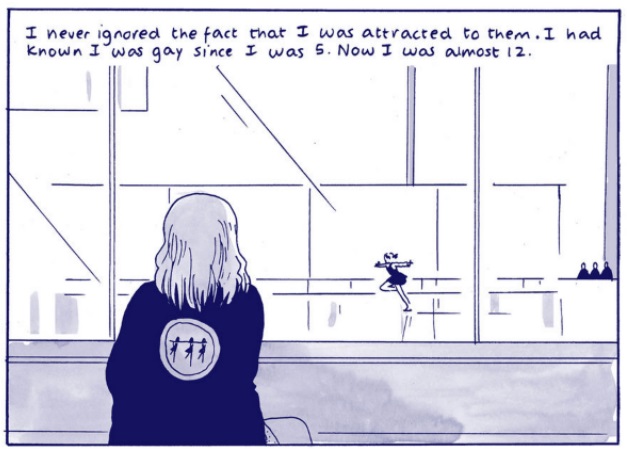
Spinning is Tillie Walden’s autobiographical story of growing up as a gay teenage ice skater in Texas. It’s told with remarkably little drama or fuzz, just a few years out of the life of a girl who has already known she’s gay for years before the story starts. Most of the conflict in the story is about Tillie’s growing disinterest in skating, even as she becomes more proficient in it. There’s no great rebellion, just Tillie continuing to skate because that’s what she’s used to doing, until finally one day she stops. And inbetween her skating we get glimpses of how she finds out she’s gay, her crushes, first love and coming out. It’s a very ordinary story, but that ordinariness is its strength.

Spinning: muted colour palette

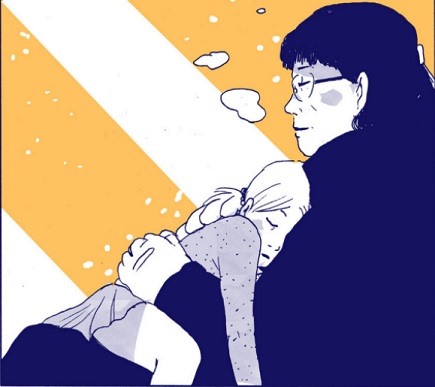
The art and colour scheme relentlessly reinforce that ordinariness. Everything is muted, mostly black and white, but with the occassional harsh yellow highlight. This palette fits the early morning grayness of Walden’s skate practise well. The occassional use of a slightly warmer colour, like above, helps to distinguish more important moments from the day to day drabness.

Spinning: subtle and understated

Walden’s art is understated here, she doesn’t use grand gestures because the story wouldn’t fit them. Instead, she relies on small, subtle gestures and meaningful looks. I like her faces especially, a nice mix of realism with just enough cartoonist exagerration. Her skating scenes fittingly verge on the mundane, as they’re mostly training scenes, but even the occasional competition skating is shown from the perspective of the skaters, for whom it’s all familiar rather than exciting.

Perhaps the most bizarre, shocking thing about this autobiography for an old fart like me is that Walden shows her younger self and her friends reading and talking about the Twilight novels, the first of which came out only in 2005. it shows how young Walden is; she most be in her mid-twenties at most. It’s rare to start an autobiography this young; usually you have more distance between the narrator and their younger self. Perhaps this is why there’s so little drama, so little attempt to fit her memories into a “proper story”. All of which I like in this undramatic story of coming out and stopping being an ice skater.

Just Because! it’s good

Just Because opens with a slice of mundanity. Taken from Kvin’s twitter post

This is the literal opening minute of Just Because!. Relentlessly mundane and slow, it sets the tone for the rest of the episode, which follows several characters through an average day at high school just before their last summer break. There’s not much of a plot, just setting up things for the series, like the new student transfering in and meeting up with a friend he last saw in middle school. There’s nothing here that you haven’t seen before in any high school anime, but it’s done so well, both in how it’s animated and how it’s written. All this mundane stuff would’ve been background fodder in another high school show, quick scenes inbetween the real content of cute girls arguing with each other or two people falling in love. Here, one character just sat around reading and being bored before she has to go to cram school. It feels real in the same way that Tsuki ga Kirei did. if it can keep this up this could be a very good anime.