Tales of Paranoia — Robert Crump — #ComicaDay (75)

The problem with Tales of Paranoia is that it isn’t “batshit crazy”, it’s just boring. You can find the same sort of rant on Facebook, but here it’s in a nine panel grid layout.
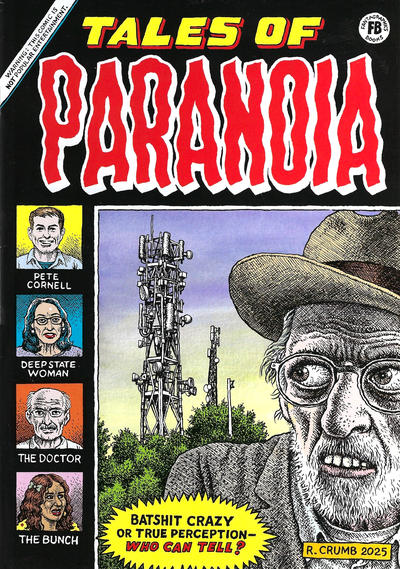
Tales of Paranoia

It’s a slog, that first story: “What is Paranoia/The Narrative” is 11 pages of nine panels with a small Robert Crumb almosted crowded out the panels by his own word balloons as he explains the paranoid worldview to you, followed by his thoughts on Covid. Which are honestly no different from that of the average Covid skeptic: the disease may have been engineered, vaccins are dangerous and it’s all a conspiracy to make us more pliable. His vaccine scepticism is returned to in the one pager “A Difficult Conundrum” where he wrestles with whether he should take “a new vaccine” (he doesn’t mention which one) before deciding to not do so.

This is followed by the two page “Conspiracy Theories”, almost all text but two portraits of people Crumb mentions and Crumb himself. The heart of the book, considering its place, explaining and expanding on everything else in it, but it’s barely readable. I tried to, but skipped it the first time one or two paragraphs in because it’s so much nonsense. All the usual blather of covid as a “planned conspiracy”, some vague notions about the Deep State and Big Business profiting from the crisis, people like Joe Rogan and R. F. Kennedy namechecked. There’s nothing interesting about this. We’ve all heard it hundreds of times already, sometimes from our own family or friends.

The problem here is that Crumb never was politically aware, apart from having a native (naive) libertarian streak in him. What he sees as the signs of some grand conspiracy are clearly just the ordinary workings of capitalism. He’s not wrong to call out Pfizer and others from profiting massively from the pandemic, but he gets his causes all mixed up so ends up in rightwing paranoia.

That paranoia is on full display in the back half of Tales of Paranoia in “Deep State Woman”, a portrait of Margaret Hamburg, whom he leaves anonymous in the story but not enough not to find online. He traces Hamburg’s career as a physician and public health administrator, largely faithfully. Objectively what you have is a fairly ordinary career of a Beltway bureaucrat, but in Crumb’s mind this proves something.

The concluding story (barring a few more one pages on the inside aback and back cover) “I’m Afraid” continues on from “Deep State Woman” with Crumb revealing his greates terror is not that of Covid, but THEM as he devotes half a page to headshots of what I assume are people similar to Hamburg. He then goes into his impressions of who those people are and what they have in common, laments about the naivety of his “well-educated, progressive” friends to still believe in “science and the bio-medical system”, ending with a page long listing of organisations he’s afraid of.

None of this makes for interesting reading. There’s nothing interesting in what he’s saying and nothing interesting in how he says it, with page after page of just Crumb talking in tiny, cramped panels. what saves this comic are two things. The first is “Kiss of Death”, a posthumous “collaboration” with Aline Kominsky-Crumb, far more personal and interesting than the rest of Tales of Paranoia, the two of them talking about how publishing Aline’s books has sunk more than one publisher…

The other is “The very Worst LSD Trip I Ever Had”, in which Crumb looks back at an LSD trip gone wrong in 1966, when he and his then wife Dana got together with his friend Pete Cornell, took acid and then something happened Crumb has been blocking himself from remembering ever since. That actually read like a proper Crumb comic, not some rant from your 5G obsessed uncle on Twitter. In all though, this made me sad rather than outraged, to see the state Crumb has sunk to.
Golden Age SF fanservice in The Ghost in the Shell

In case you never realised it, Shirow Masamune is an enormous science fiction nerd and he has put a lot of references to classic esseff in his stories, as seen in episode 4 of The Ghost in the Shell.
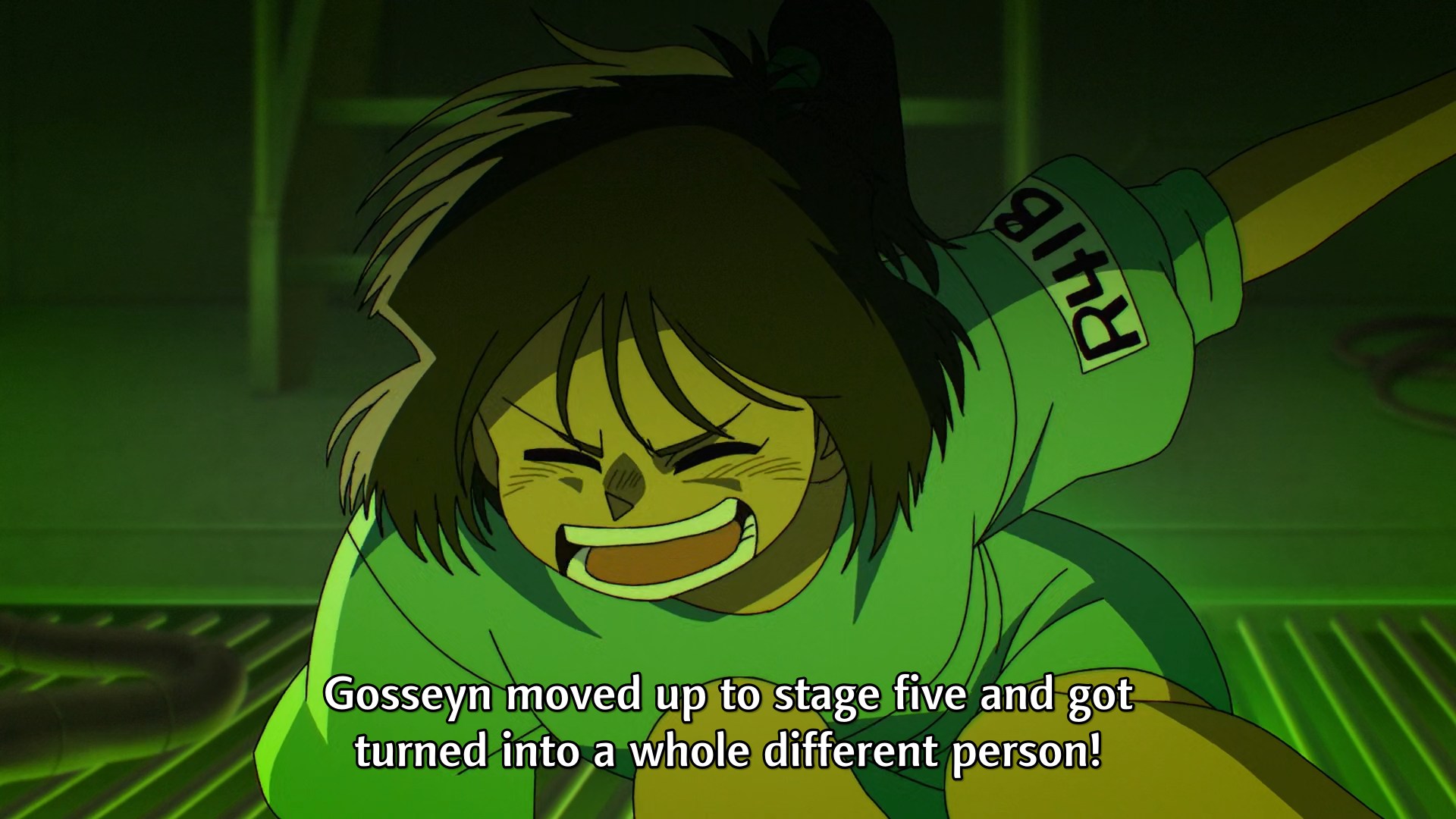
A young girl screaming that 'Gosseyn moved up to stage five and got turned into a whole different person!'

Gilbert Gosseyn is the hero of A. E. Van Vogt’s The World of Null-A (1948) and sequels. At the novel’s start he finds out his memories are false and he is not who he thought he is, then finds out his superior mutant brain allows him to teleport. He also dies repeatedly and is ressurrected into new bodies.The Gosseyn here is the child kidnapping victim who had his personality stolen and uploaded into robots, killing him in the process. This is called “ghost dubbing”, ghosts being slang for consciousness/the soul.

(The World of Null-A was one of my favourite sf novels as a child and influenced me so much that I still find myself saying “the map is not the land“, not to mention trying to “imprint” a section of nearby floor to try and teleport to.)

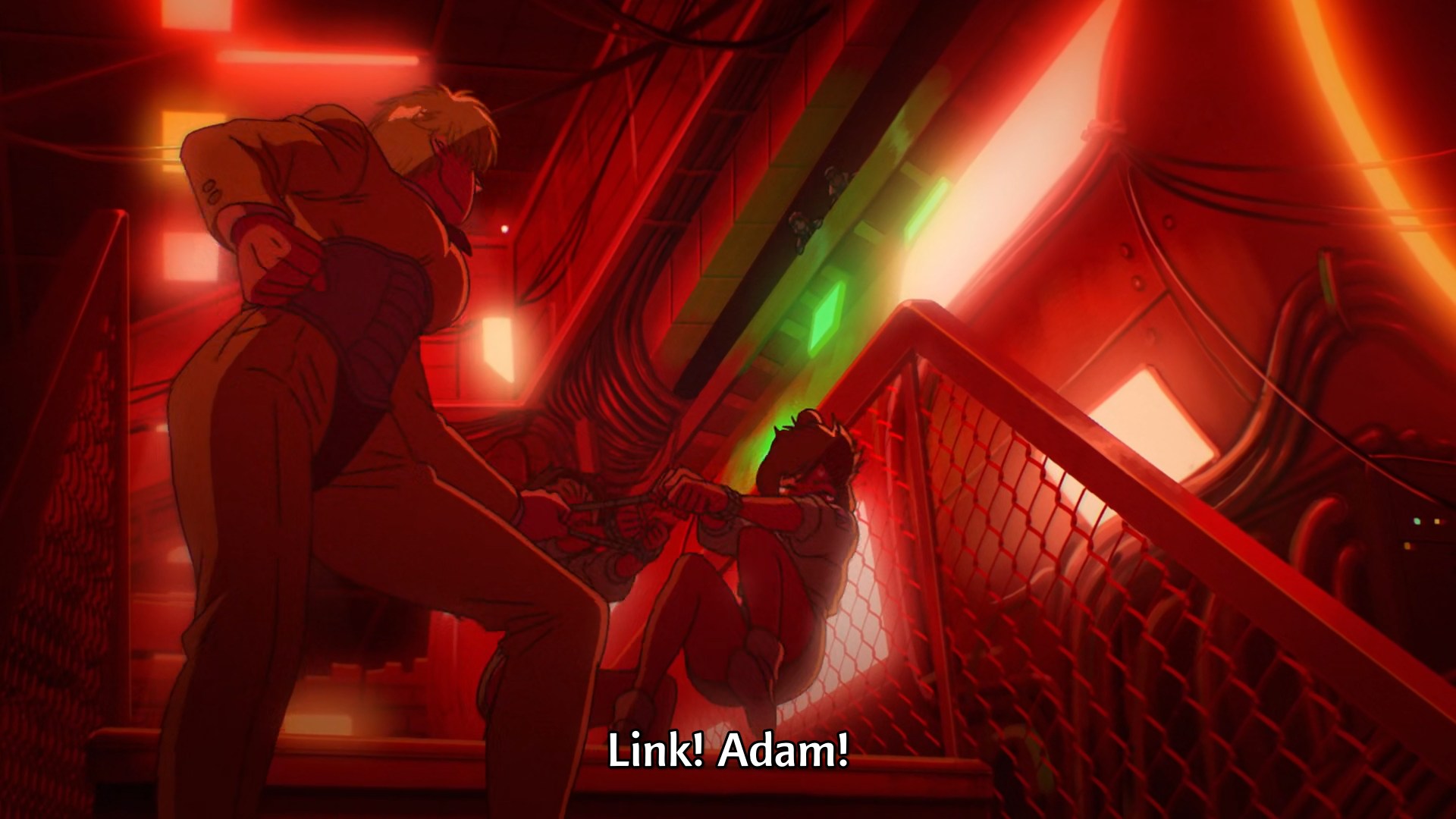
A big cyborg woman is dragging two young children with her through a factory floor. She calls them Link and Adam'

Adam Link is the robot protagonist of Eando Binder’s I, Robot (1939) and sequels. Eando Binder was the pen name for Earl and Otto Binder, the latter of whom also wrote for DC Comics as well as Fawcett. Link is an intelligent robot suspected of having murdered his creator, who actually died in an accident. He ends up defending himself in court for it. This was one of the first robot stories that treated it not as a menace to be destroyed. Here Link and Adam are two other kidnap victims and the ones who together with Gosseyn set the plot in motion that got Section Nine involved.

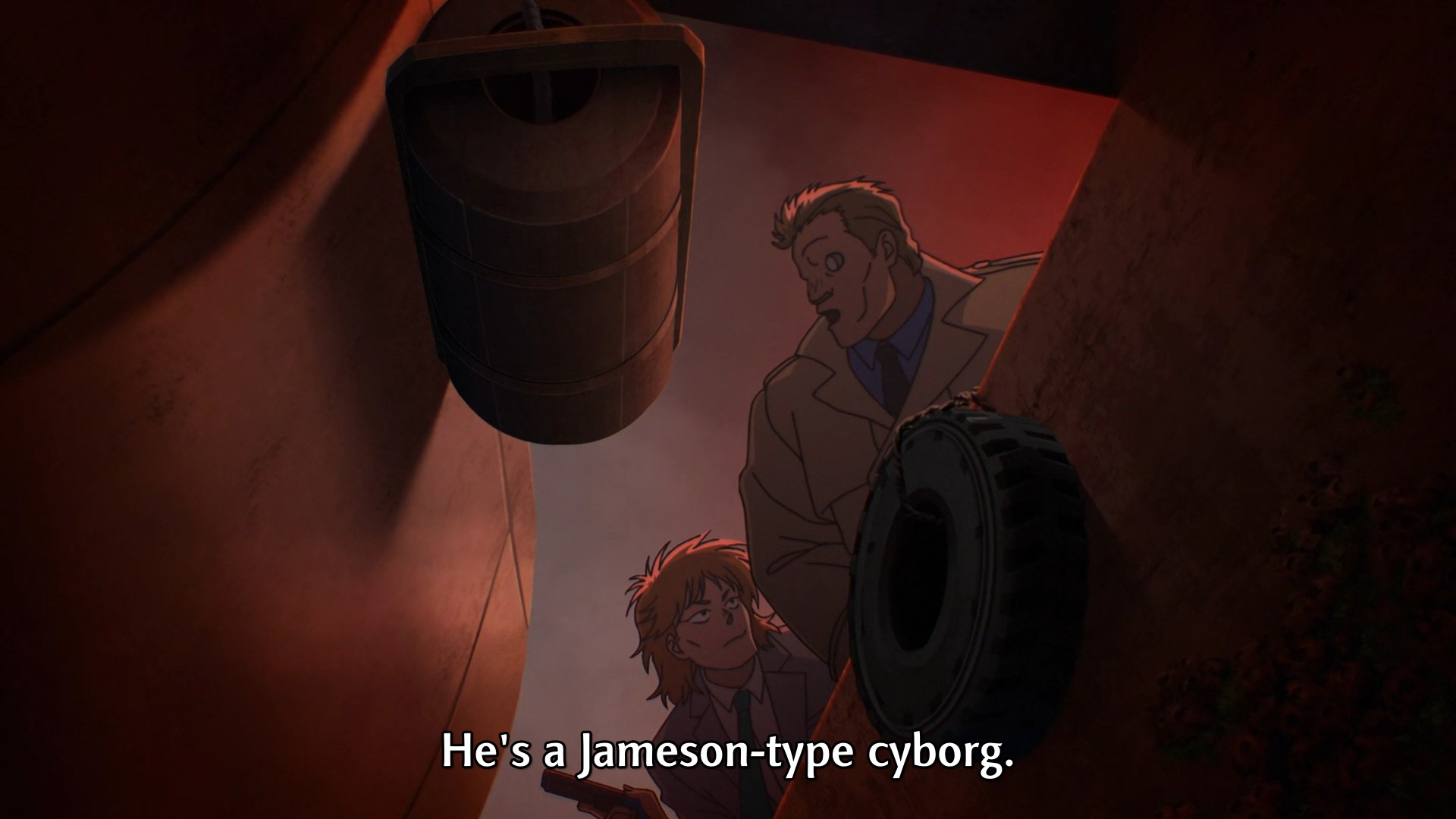
Batou to Togusa: 'he is a Jameson-type cyborg

Now this is an incredible deep cut. Professor Jameson is the hero of a series of pulp sf stories written by Neil. R. Jones in Amazing Stories from 1931, with the last, unpublished in his lifetime stories appearing only last year! Jameson has his body cryogenically frozen after his death and in the far future is resurrected by aliens and given a full cyborg body. In The Ghost in the Shell the company president who is responsible for the kidnapping and ghost dubbing of children for use in his robots. He is just a brain in a simple metal case, unlike most cyborgs in the series, who are as human looking as possible.

Seeing these references, some of which I only know from having read The Encyclopedia of Science Fiction religiously growing up, is amazing. Would be great if they lead to some interest in the original stories.

Yes, there was an anime backlash in the nineties

The latest controversy in Anisky was caused by this perfectly true Zero Utopia tweet which a lot of people took umbrage with for some reason:

Genuinely impossible to make people understand how much most the United States in the 90s hated and looked down on anime if they didn’t live through it.

A common reaction was yo say this couldn’t be true because anime became popular in the nineties, like Zack Davisson here

This is bullshit.

Dragonball, Sailor Moon, and Pokemon were ridiculously popular in the 90s.

There was never a time in the US when people “hated and looked down on anime.” At the most, there was a time when people were “unaware of anime.”

The other common response was to downplay it as just bullies being bullies as James Beckett e.g. argued


The U.S. didn’t “hate” anime in the 90s. People these days tend to conflate (or confuse) “broad teasing of foreign cultures and nerd hobbies” for “hatred.”

As for the nerds and bullies that may have gotten weird or douchey about it…I mean, what do you expect? That’s what nerds and bullies do.

What this misses is that bullies (as well as South Park mentioned later) take their cues from the larger culture they’re swimming in. And Japan was the number one target of American xenophobia for most of the twentieth century. The anime backlash of the nineties, when anime first truly went mainstream with Pokemon was very real and very much an offshoot of that much older xenophobia. Just like the slightly later backlash in the early 2000s against Japanese videogames, especially JRPGGs (the X-Box first being called “project Midway” frex).

Japan after all was America’s primary rival for supremacy in the Pacific and East Asia from roughly 1905 until its defeat in World War II. Japan was feared and mistrusted not just for its military strength and rapid climb from insular hermit state incapable of defending itself into a Great Power threatening the US’s position in China and elsewhere. A far greater fear was that Japan would infiltrate and subvert the country itself, by way of the many Japanese migrants who moved to the US in the late nineteenth and twentieth century. A fear so powerful even the great liberal president Roosevelt ended up putting American citizens in concentration camps for the duration of the war. (For a victim’s testimony of this awful proces, see Citizen 13660, a graphic novel written by a survivor in 1946).

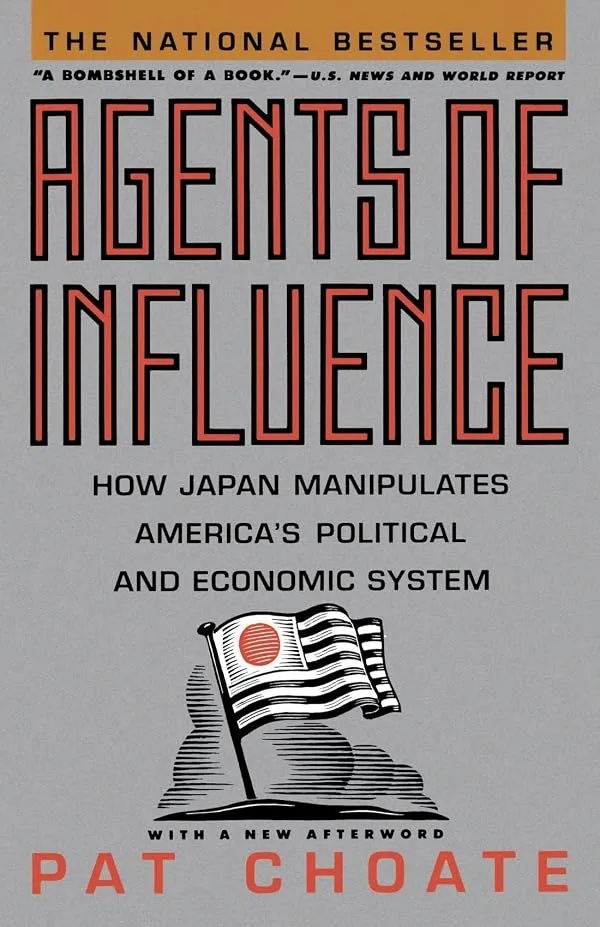
Agents of Influence: How Japan Manipulates America's Politicl and Economic System (1990) by Pat Choate. The cover shows an American flag with the rising sun replacing the stars ibn the corner.

Postwar, Japan subjugated and occupied this fear slowly disappeared, but the xenophobic attitude didn’t disappear. World War II and especially Pearl Harbour gave new reasons to mistrust Japan and a lot of americans would hold that grudge into the twentyfirst century. Meanwhile Japan’s economic resurgence from the sixties and America’s industrial decline from the early seventies on saw this xenophobia re-ignite again. Once again Japan was seen as infiltrating and taking over America, now using economic warfare.

By the eighties American economic anxiety was so great you got Chrysler CEO Lee Iacocca talking about Japan’s “teflon kimono” that needed taking off and books like this happily resurrecting pre-WWII infiltration conspiracies. Japan’s econmic stagnation since the mid-nineties has driven much of it underground again, with China replacing Japan as the new bogeyman, but it was still very much present in the nineties when anime broke through, slotting perfectly in with the preconcieved notions of Japan as weird and dangerous.

Zack is right that series like Dragonball and Pokemon were incredibly popular, but they were popular among kids (and maybe but not necessairly the older cohort of already existing anime fans). As Elvis Presley proved some fory years earlier, what’s popular with kids and teens may very well lead to a backlash under their parents and authority figures. So it went with anime too. Parents hated Pokemon, certain churches declared it “satanic” (like everything they didn’t understand) and even in nerd circles anime was tolerated at best. True acceptance of anime only happened this century.

It’s a Yuri Anime Summer!

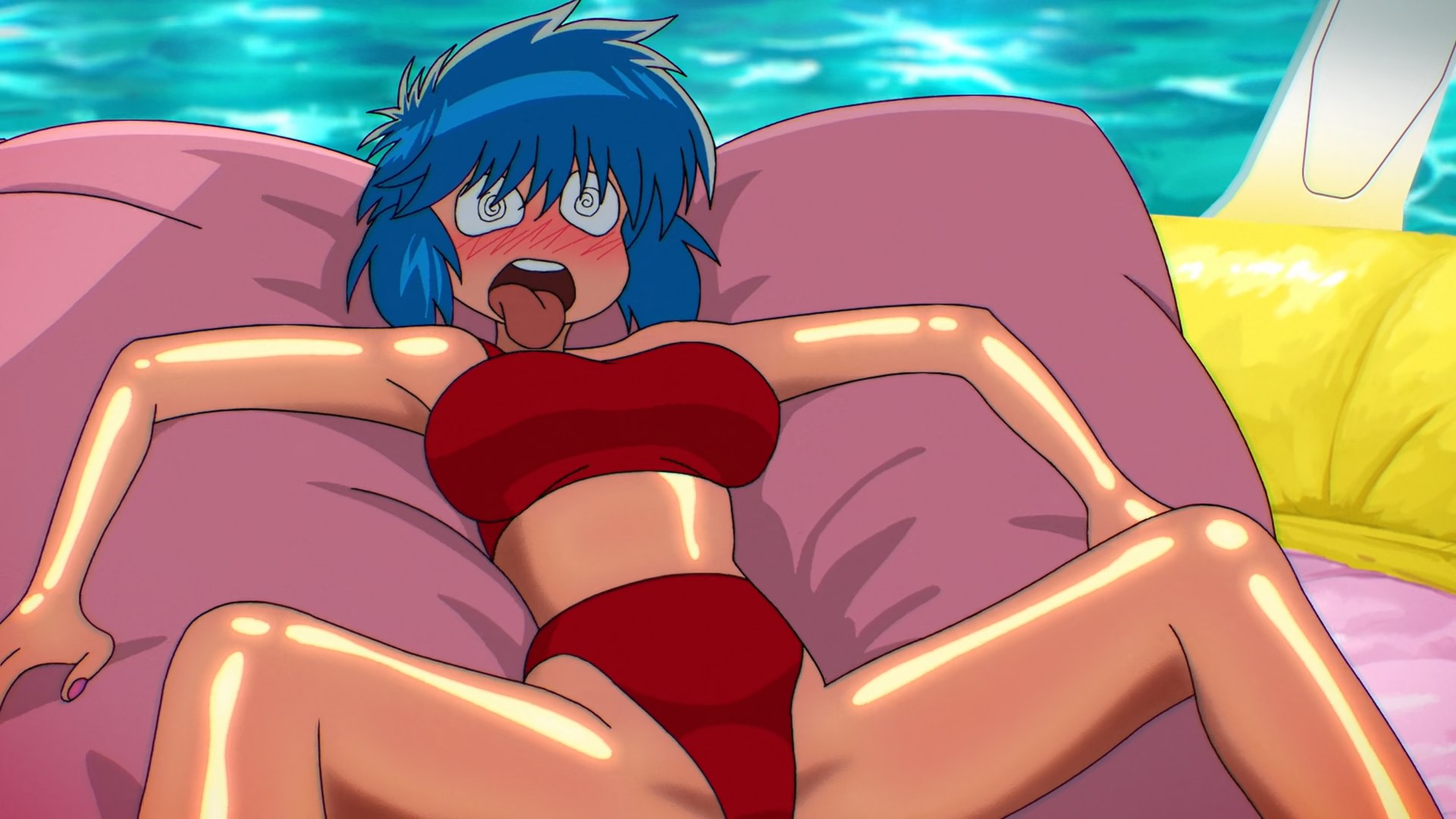
Nine series and one movie with yuri elements is enough to make anybody’s head spin. Right, Major?

The Major's head is spinning after her girlfriends teased her a bit too much

To be honest, nine out of sixtynine (nice) new series this season is not even fifteen percent yuri this season and not all series listed here will have actual yuri romance, but after years and years of maybe getting one or two Manga Time Kirara a year, I take what I can get. Series listed below are in under of their start date.

Heroine? Seijo? Iie, All Works Maid desu (Hokori)!
A genius girl reincarnates into the world of an otome game and instead of trying to be the hero or saintess, decides she’d rather skip all that and be a maid, like she dreamed of in her previous life. The opening and ending give away the likely heterosexual end game, but that doesn’t erase the romantic tension between her and her mistress.

Grow Up Show: Himawari no Circus-dan
Mizuka is the daughter of the world’s greatest trapeze artist. Unfortunately she hates both the circus and her father, especially after he ‘sells’ her to the Sunflower Circus, a dilapidated all-girls troupe. Nevertheless, years of dedicated training having giving her trapeze skills that make Ouka, the circus’ existing trapeze artist, immediately obsessed with her. So far this feels like an ensemble cast show focusing on the circus and its performers more than any possible romance between Mizuka and Ouka. But we can hope.

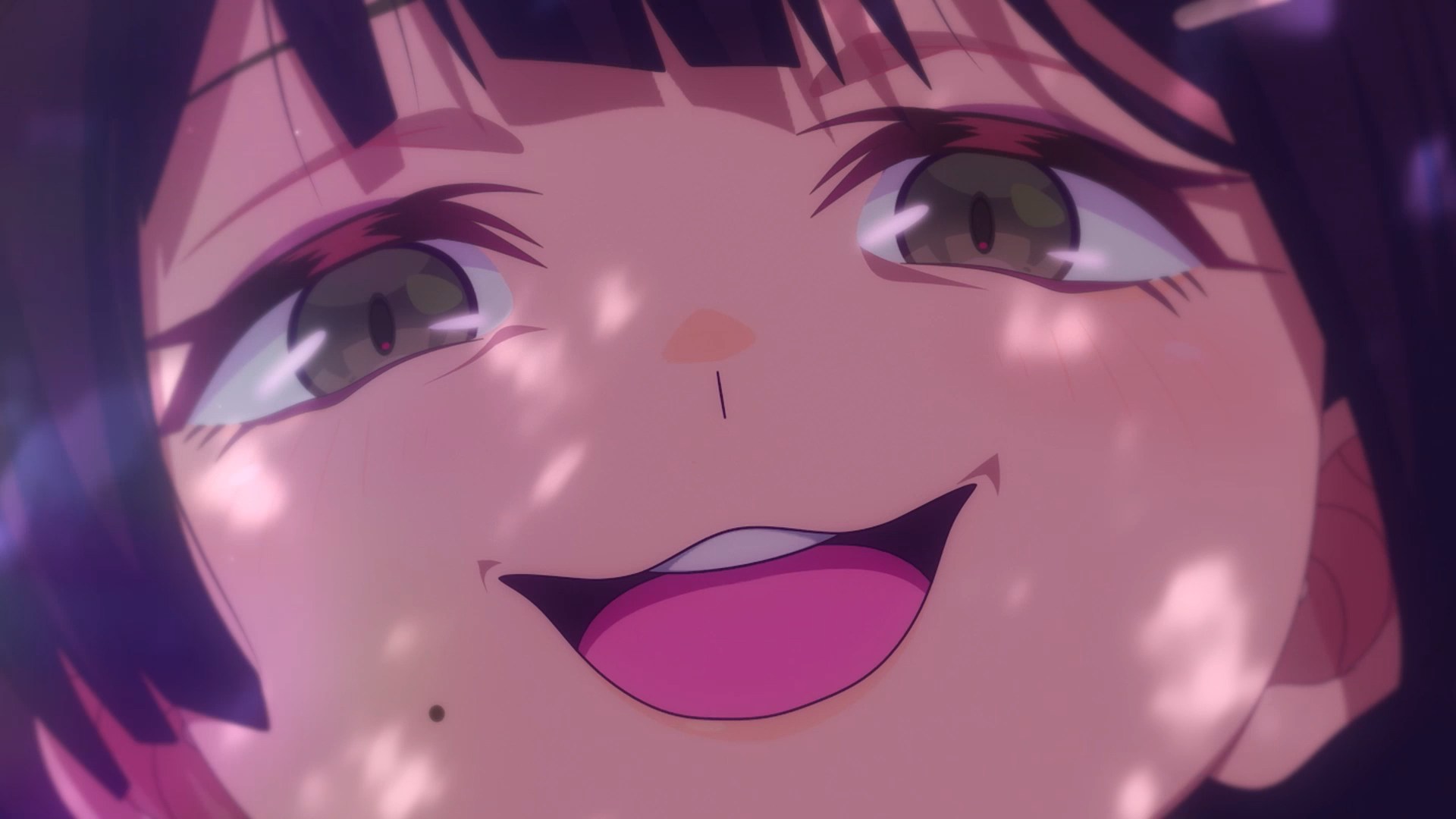
Viola' Yumenita's villain, looking particularly evil in close-up

BanG Dream! Yume∞Mita
After MyGo and Ave Mujica you might’ve thought Bang Dream would’ve run out of blorpos to torture, but nope, here’s a brand new batch and now they’re vtubers, thrown together to become a band. The main protagonist, Arale, has a Dark Past that left her traumatised and a childhood friend in a rival band who shared that past. Worse, that childhood friends shares the band with the main cause of Arale’s trauma, the very evil indeed for Bandori standards Viola. It all makes for a deliciously toxic if chaste yuri love triangle.

Mahou Shoujo Lyrical Nanoha EXCEEDS: Gun Blaze Vengeance
With the possible exception of Hibki & Miku, Nonoha and Fate are the reigning yuri couple of mahou shoujo series, having gone so far as to adopt a daughter together in a previous one. This may be set before that happened, but also opens with a loving pair of “sisters” living together before Nanoha even enters the picture.

Sayonara Lara
Episode one was a straight (no pun intended) retelling of the story of the Little Mermaid but ended with a meet cute between the two protagonists as Laura the mermaid fell out of the sky onto Mari the boixer, who immediately punched her lights out. And then she took Laura home to meet her family. Given that Laura was sent into the human world to search for true love by her evil (?) withc aunt to save her family from her own curse, odds are high that Mari might be just that.

In a recent interview the director said he didn’t want to make it “a ‘typical’ yuri anime” and that he wanted to “portray their relationship with strength and complexity. Depending on your cynicism this is either a good or a bad sign. Does not wanting to be a “typical” yuri anime mean that ti’ll be all about female friendship rather than proper romance, as more pessimistic fans think? Or will director Koide Takushi surprised us and deliver a strong, complex romance?

Honoo no Toukyuujo: Dodge Danko
A bunch of dumbass girls start a dodgeball club together. Based on the sequel to a nineties dodgeball manga, whose protagonist is this series’ protagonist’s dead father. The focus here is on dodgeball and the various antics the club members get up to, with any yuri being on the fanservice side of things. It’s all very much too what you might suspect from a modern sequel to a nineties series, not very subtle in its humour or fanservice.

The Ghost in the Shell
Such a faithful adaptation of Shirow Masamune;s original manga that it reinstituted the lesbian threesome scene in its fsecond episode that was removed with Shirow’s blessing from the manga reprints ever since the first publication. The Major was always portrayed as bisexual but it never actually mattered in previous Ghost in the Shell projects. Don’t expect much more lesbianism in future episodes either, to be honest. But at least she has proper emotions in this series!

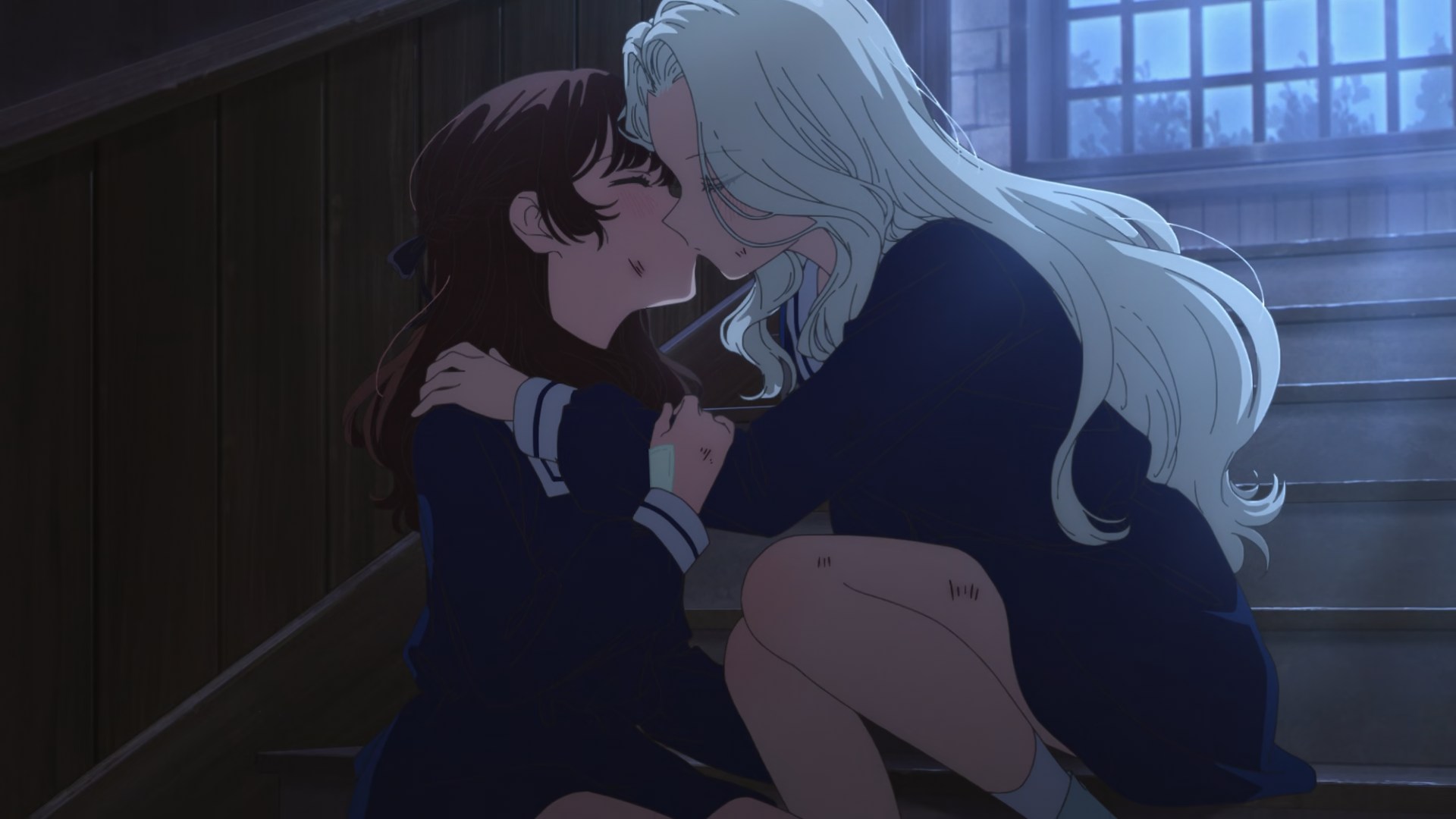
Two girls swapppign magical energy. With tongue.

Kimi ga Shinu made Koi wo Shitai
Sheena is the weakest pupil at the school for magical assassins the government put her in when she became orphaned. The night after her roommate died in battle, she couldn’t sleep and went for a walk only to meet a blood soaked girl she’d never seen before. Because she feeds the girl onigir, Mimi becomes obsessed with her to the point of becoming her new roommate and joining her class. Will this be the start of a truly toxic romance? The title, I Want to Love You Till Your Dying Day certainly promises as much. Encouraging is that while there are boys at the school, they have been non-entities and there’s actually at least one other yuri couple there. Also, by kissing somebody who is on the same wavelength as you, you can restore their health. Uh-huh.

Tai-Ari deshita. Ojousama wa Kakutou Game nante Shinai
Ojo-samas flirt by playing Street Fighter at each other. Aya used to play fighting games as a child until all her friends grew out of it. Despite her talents, she decided to quit to and join Kuromi Girls Academy to become a proper lady. Mio, also known as Shirayuki, “the white lily” already is that, the idol of all the other girls at school. And then Ayo catches Mio playing Street Fighter online in an unused classroom, something highly forbidden at Kuromi Academy… By the end of the first episode they’ve not only fought each other so hard their lips are bleeding from biting them, but they crashed through a plate glass window to escape when a custodian threatend to discover them…

I have high hopes.

Shibou Yuugi de Meshi wo Kuu. 44: Cloudy Beach
Young girls being made to fight their environment and each other in sadistic death games broadcast to an audience of perverts unable to stand the sight of blood, so it’s all transmuted into cotton, as if they’re just dolls being broken. The participants, desperate and badly adjusted to the real world, finding some sense of comfort in each other, even forming emotional ties with their female handlers responsible for sending them into these situations in the first place. Is there a more perfect platonic form of toxic yuri possible? This is a movie sequel to last season’s original series, promising more of the same twisted thrills.

Now with Definitive Article — The Ghost in the Shell — First Impressions

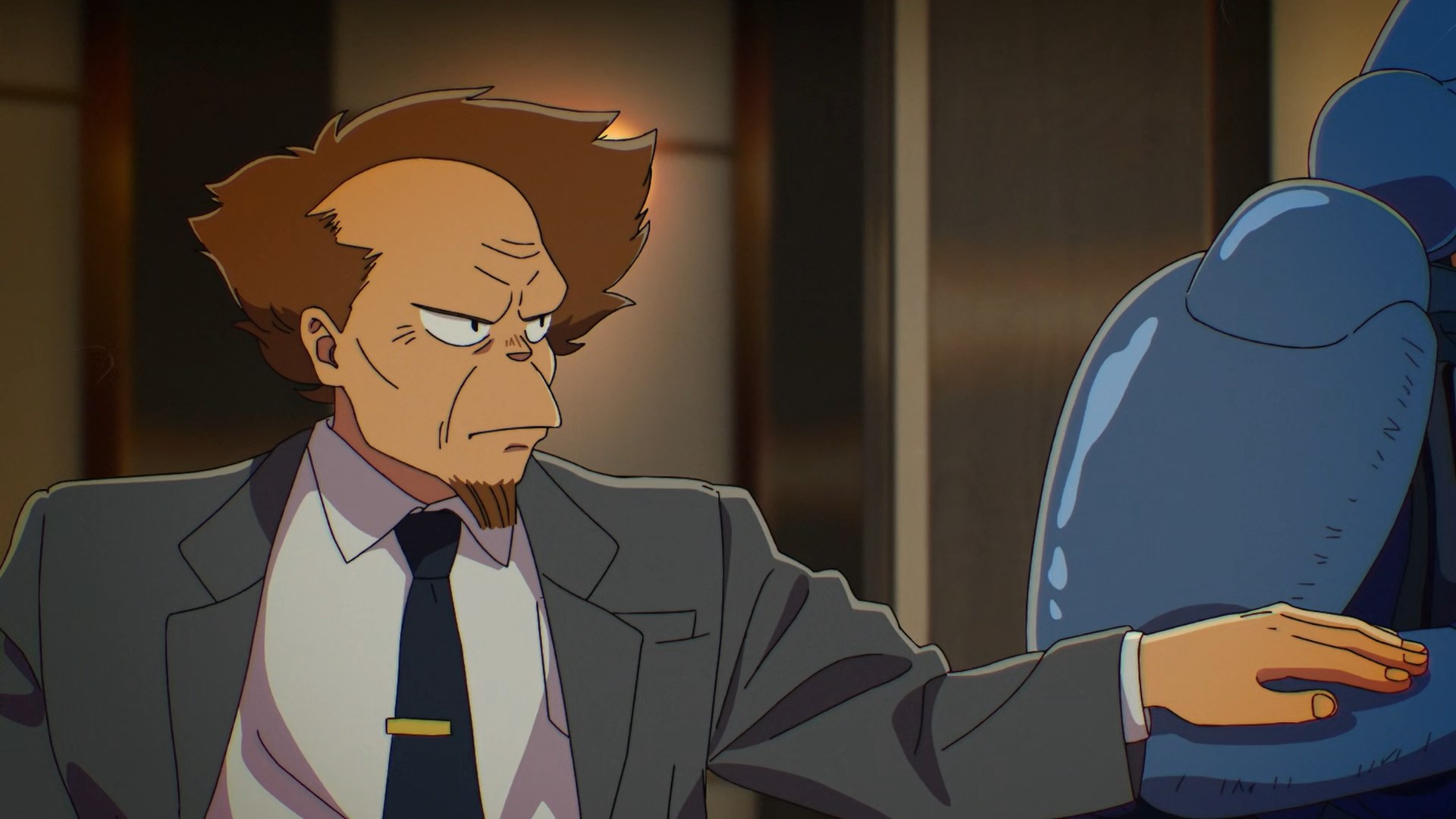
This may be the more faithful adaptation of Shirow’s manga but I can’t get over how much Aramaki looks like he escaped from The simpsons.

Aramaki in profile gesturing looking like he just came out of a meeting with Homer Simpson

My first encounter with any Ghost in the Shell media came through Wandue Project’s King of my Castle, which hit the top forty over here in 1998 or so, thanks to its music video basically being a Ghost in the Shell AMV. No idea how they got away with it, not just the wholesale copyright infringement but also showing the Major’s boobies on MTV. The 1995 movie the clip was taken from I would only see years later, having stopped watching anime when I left home to go study in Amsterdam. Whem I got back in anime both it and both seasons of Stand Alone Complex were some of the earliest anime I finished. I’ve also watched the second movie and Arise, the mid (in both sense of the word) 2010s re-imagination. This new version is nothing like those even as familiar bits and pieces pop up.

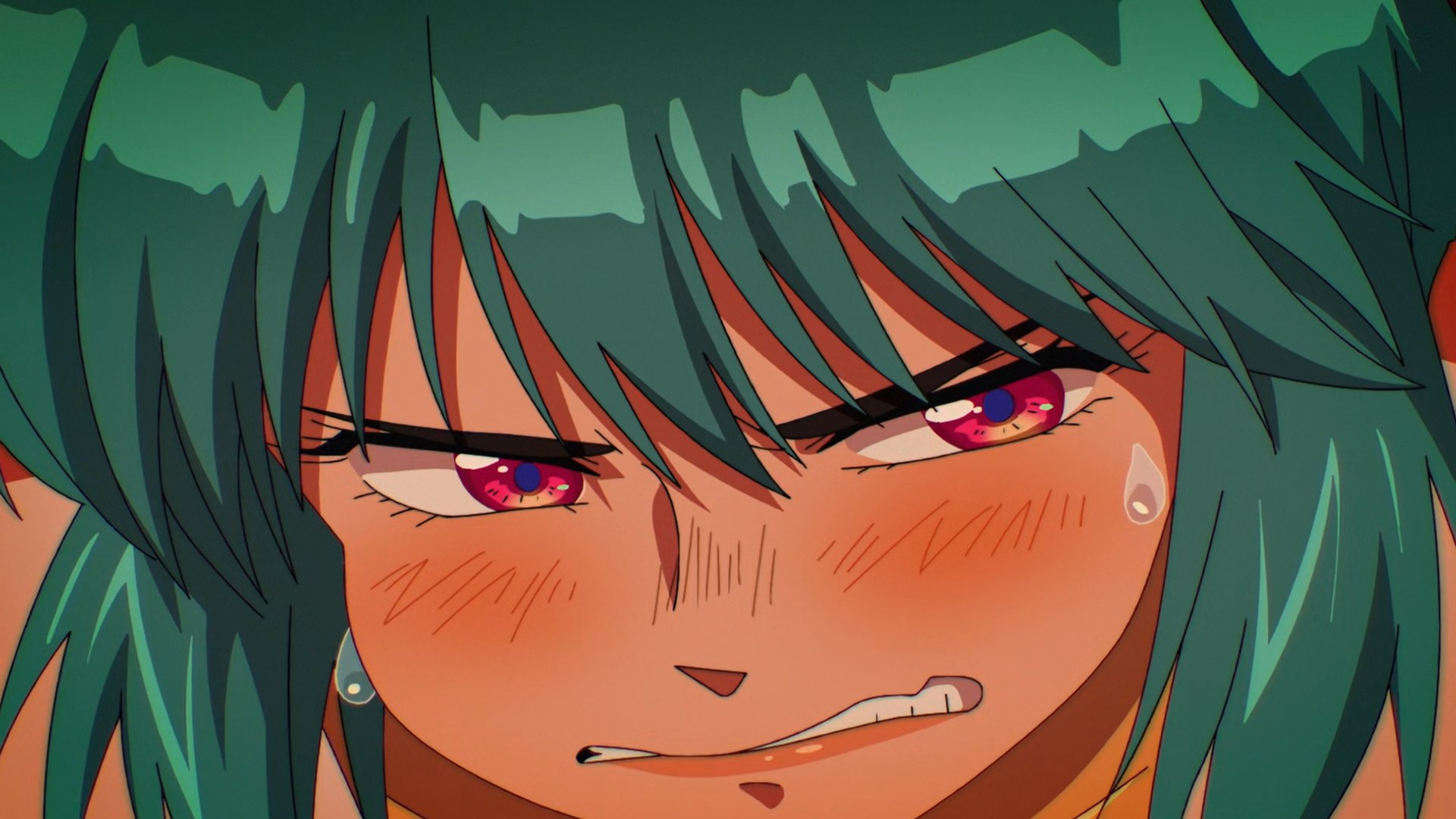
The Major, with green hair and a wide face, looking angry and blushing.

Because unlike every other incarnation of Ghost in the Shell this new version, The Ghost in the Shell attempts to stay faithful to Masamune Shirow’s original manga. which includes character designs, which explains why the Major above here has green hair and is actually blushing and showing emotion, while Aramaki really looks like a monkey now. In contrast every other version cleaned up the characters and made them more realistic. Similar for the plot and stories. Having bought the manga on the strength of this episode, I can see the way Mamoru Oshii took parts of it and sculpted them into one new, coherent story where the original was more episodical.

Having this new, more faithful adaptation is very much a “holy shit two cakes” situation. The original movies, Stand Alone Complex, even Arise were all good to great on their own merits. This new series is not just faithful but also looks stunning and so far holds up to its predecessors. Very much in my top five for this season, potentially the entire year. Sasuga Science Saru.