- The Millions : A Year in Reading: 2014 –
- Best Books of 2014 : NPR –
- Emic, Etic, and the depiction of Otherness in SFF | Safe – SFF writers depict aliens and fairies in loving detail, giving them whole histories and complex societies and yet casually dismiss the Others in their midst with stereotypes, tired tropes that do not stand up to even casual scrutiny. This recursive, ouroboros-type, self-perpetuating mythology makes it obvious that the writer has been watching TV as research.
- Top Ten Tips for Being a Vigilante On a Budget – My friends and I got into a discussion on vigilantes this past weekend, or, more specifically, what it would be like to be Batman on a budget. It was fun throwing ridiculous ideas into the air but I started to really think about it.
- Dawson’s Heights, East Dulwich: ‘an example of the almost-lost art of romantic townscape’ | Municipal Dreams – Kate Macintosh designed Dawson’s Heights back in the Sixties when she was just 26 years old. If she weren’t very much alive and kicking – and still fighting the cause of high quality social housing – I’d call it a worthy memorial. It remains much more than that in any case. Beloved by architectural groupies and a striking presence on the local skyline, most importantly it has provided a decent home to many.
- The Wire – Drexciya: Fear Of A Wet Planet –
Twentyfive years ago today
Geneviève Bergeron (b. 1968), civil engineering student.
Hélène Colgan (b. 1966), mechanical engineering student.
Nathalie Croteau (b. 1966), mechanical engineering student.
Barbara Daigneault (b. 1967), mechanical engineering student.
Anne-Marie Edward (b. 1968), chemical engineering student.
Maud Haviernick (b. 1960), materials engineering student.
Maryse Laganière (b. 1964), budget clerk in the École Polytechnique’s finance department.
Maryse Leclair (b. 1966), materials engineering student.
Anne-Marie Lemay (b. 1967), mechanical engineering student.
Sonia Pelletier (b. 1961), mechanical engineering student.
Michèle Richard (b. 1968), materials engineering student.
Annie St-Arneault (b. 1966), mechanical engineering student.
Annie Turcotte (b. 1969), materials engineering student.
Barbara Klucznik-Widajewicz (b. 1958), nursing student.
25 Invisible Benefits of Gaming While Male
Books read November
Nine books read this month, which began strongly but petered out a bit as a couple of tough books slowed me down.
Schitterende Wereld — Mel Hartman
A disappointing collection of sf short stories based on an interesting concept: twelve stories based on the work of six world famous scientists.
Broken Homes — Ben Aaronovitch
Fourth in a series about a hapless London police officer being caught up in its magical underworld.
Styx — Bavo Dhooge
A bent cop in Oostende returns from the death as a zombie to bring a serial killer to justice
Ter Ziele — Esther Scherpenisse
Sometimes Death has pity for a dying person and brings them to its palace….
A History of the Vandals — Torsten Cumberland Jacobsen
A decent introduction to the history of the Vandals, one of the few such actually available in English.
Captain Vorpatril’s Alliance — Lois McMaster Bujold
The latest so far in the Vorkosigan saga, now starring Miles cousin, that idiot Ivan.
Furies: War in Europe 1450-1700 — Lauro Martines
A distressing look at warfare in Early Modern Europe.
Who Fears Death — Nnedi Okorafor
Okorafor’s first adult novel, a harrowing coming of age tale & quest story.
Het Laatste Verhaal — Guido Eekhaut
In the near future republic of Flanders, two street outcasts team up with a Japanese woman from an alternate world who has a sword that can cut through time and space…
The Dark Colony — Richard Penn
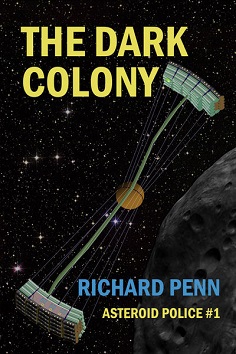
The Dark Colony
Richard Penn
327 pages
published in 2014
James Nicoll is a longtime science fan active on Usenet and Livejournal, who has been working as an internal reviewer for various publishers. As that work started to dry up earlier this year, he started doing sponsored reviews, where people (but not authors) can buy reviews of books they’re interested in, suspect James would like, or at least would have an enjoyable reaction to. I’ve known James for a long time and he’s one of the people I absolutely trust their taste in books of, so I pay attention when he says something he’s worth reading. Which is exactly what he did with Richard Penn’s The Dark Colony and since it was cheap on *m*z*n, I bought it.
Now there was a risk with this. At times James’ fondness for exactly the kind of setting The Dark Colony provides — near future, the real Solar System, no magical rocket propulsion to let people pootle around it in hours or even days, no cheating — can blind him to some of the other qualities (or lack thereof) of a book. Fortunately however, in this case, the book’s appeal exists beyond its setting. Basically, this is a police procedural: it starts with the discovery of a body floating around in the the giant free fall hangar of Terpsichore Station. What’s remarkable is that it’s the body of a stranger to the Terpsichore colony, which only has a few hundred people living in the station and the asteroid itself. It’s up to constable Lisa Johansen to find out where the stranger comes from and in the process she finds herself unravelling a huge conspiracy in the heart of her community and beyond. Yes, this is not just a police procedural, it’s a gloomy Scandinavian one…