Five comfort reads

Five comics I can always turn to when I’m feeling down or unwell.
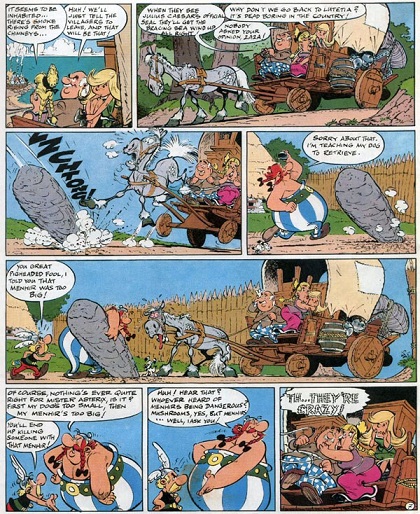
Asterix

1. Asterix. Humour, adventure, incredibly lame puns and it takes the side of the barbarian resistance against the empire. What’s not too like?
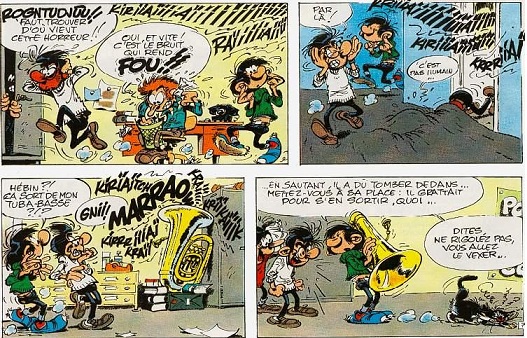
Gaston Lagaffe

2. Gaston Lagaffe. The world’s worst office boy, who spends his entire day avoiding work, experimenting with new, horrible recipes (sardines in apricot jam being one favourite) feeding his equally horrible seagull, inventing new Heath Robinsonesque machines to do things for him he’s too lazy to do himself, or playing battleship with Jules-from-Smith’s-across-the-street over the phone, when Jules is in New York with his boss…. It’s no wonder Gaston never made it in the US, a country where people keep working even if they’re no longer paid.
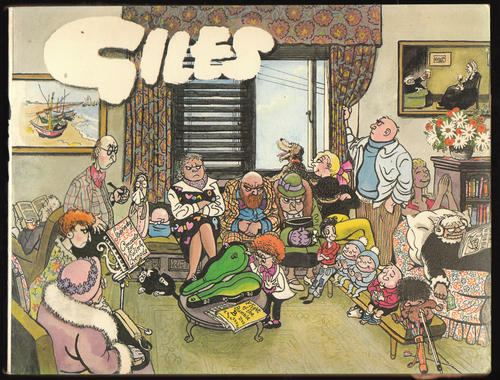
Giles

3. Giles annuals. A year’s worth of gentle satire about the issues of the day, as seen through an unforgettable cast of horrible grans, put-upon fathers, stoic mothers and way too clever kids, with walk-on parts for whichever celebrity that was in the news just then.
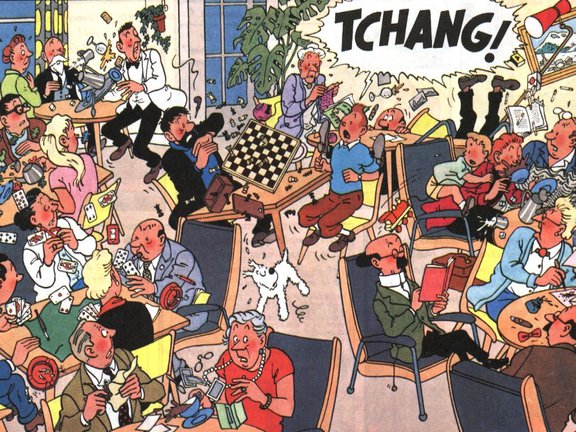
Tintin

4. Tintin. The world’s most viriginial boy reporter and his much more interesting friends going on adventures around the world. Tintin makes the world cozy and orderly.
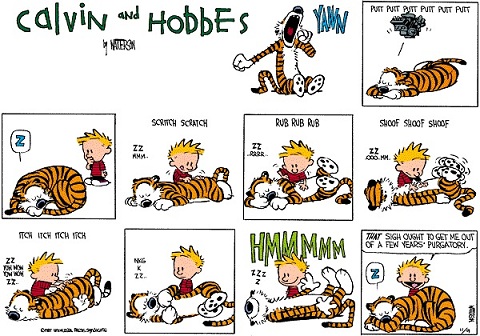
5. Calvin and Hobbes. It’s a magical world. Let’s go exploring.
Moebius


Jean “Moebius” Giraud died today, not entirely unexpected as he was seventytwo years old and was apparantly suffering from cancer, but it’s still a blow to anybody who likes comics. His influence on French comics cannot be underestimated. Together with Jean-Michel Charlier he first created arguably the best western comic ever, Blueberry, which spawned hordes of imitators and kept the western comic genre alive and relevant in Europe when it was dying in America. Then there was his science fiction work, both in comics and as a storyboard artist for various movies, including Alien. He was one of the people (together with Jean Claude Forest, Paul Gillon and of course Jean-Claude Mézières) that from the sixties onward has shaped our vision of what the future should look like.


It’s almost impossible to do proper homage to such a creative genius, so instead I’ve found some videos showing off his drawing skills, with bonus appearances by Joe Kubert and Neal Adams in the top one. All are — unsurprisingly — in French.


Pérez — accent on the first é


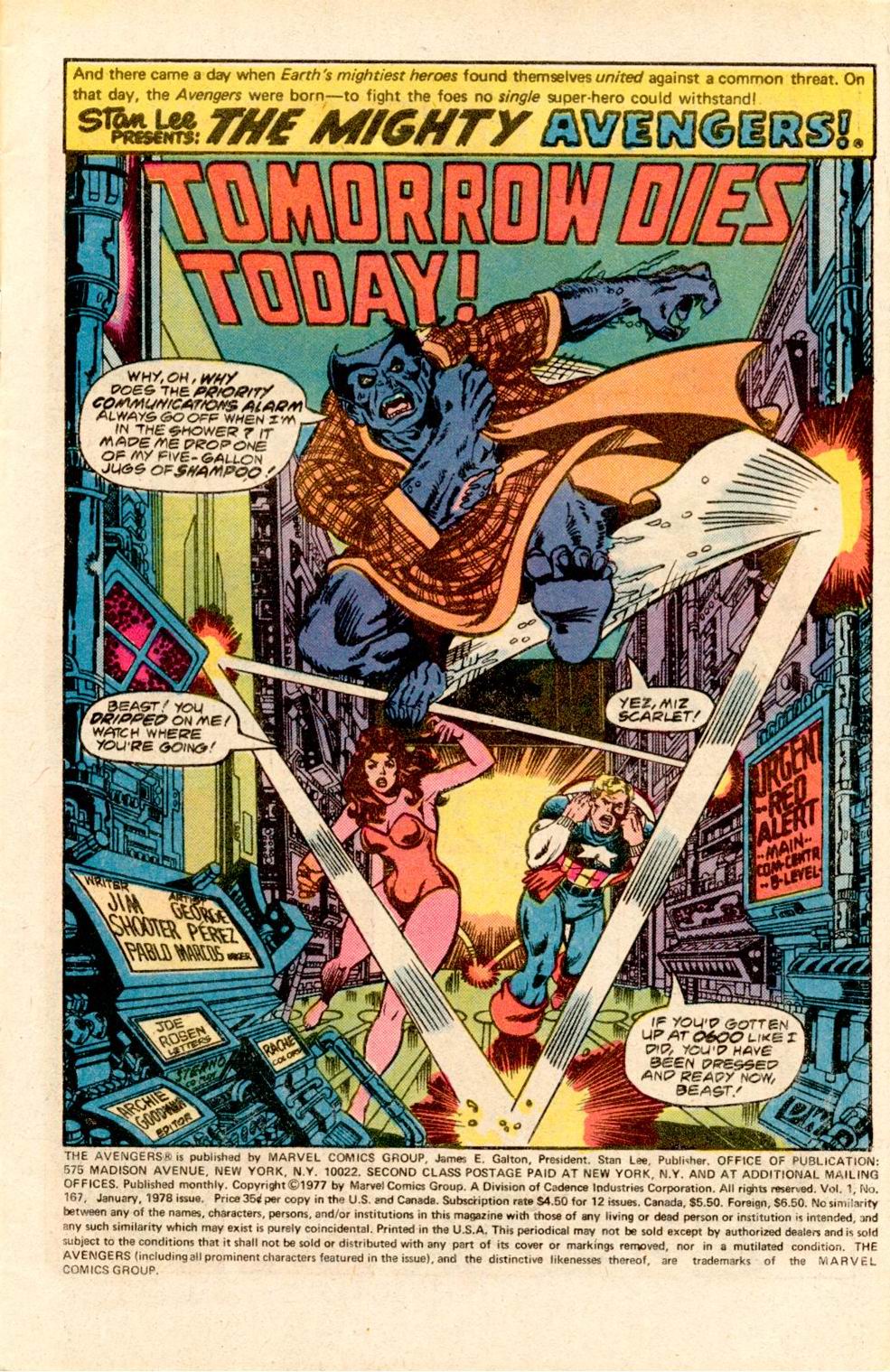
George Pérez splash page from Avengers 167

Tom Spurgeon linked to Diversions of the Groovy Kind‘s series of George Pérez Avengers splash pages (part 2, part 1), amongst which was the one shown above, for Avengers #167. The reason that one stood out for me was because that was the first ever George Pérez artwork I’d ever seen, the first Avengers comic I’d ever read and darn nearly the first superhero comic I’d ever read. For those without an encyclopedic knowledge of seventies Avengers stories, that issue started Jim Shooter’s Korvac Saga and even then Pérez must’ve been known for his willingness to draw huge crowd scenes, for apart from a dozen or so Avengers, it also starts the Guardians of the Galaxy, whose immense time traveling spaceship threatens to lodge the then SHIELD space station out of its orbit. Cue the Avengers, the inevitable misunderstanding/fight between superheroes as Beast is taken for a space monkey by two of the Guardians and the as inevitable flashbacks/shoutouts to earlier adventures as both sets of heroes tell each other what they know about them.

It is the quintessential Bronze Age superhero comic, published at a time and place when the Marvel Universe was still relatively young and not so difficult to comprehend that a few pages of recap couldn’t put readers straight. Continuity between titles had already grown almost as complex as any given titles own continuity, but was still manageable and gave a coherent feel to the Marvel Universe, something that’s summed up in a sequence in the next issue, as Starhawk goes after Korvac and their fight is felt by several of Marvel’s more psi-sensitive characters: Captain Marvel feels something through his cosmic awareness, the Surfer too, while Dr Strange’s meditiation is interrupted and Spider-Man’s spider sense is tingling. It’s only one page with no real impact on the story other than putting it in the context of a wider, shared universe.

That’s the sort of comic I grew up with and this was the comic that planted the seed for me to become a superhero fan. It also made me a Pérez fan, still to me the definitive superhero cartoonist.

Bearing false witness

cartoon about Sandra Fluke

It’s just a coincidence that on international women’s day Tom Spurgeon linked to two of the most horrible cartoons that have been published about Sandra Fluke. The cartoon above, by Gary McCoy, is one of them, while the second one puts some racist icing on the sexist shitcake by putting in a Huggy Bear style pimp.

Sandra Fluke was the woman who testified before Congress about having anticonception as part of health care insurance and how when it isn’t covered by such insurance it can be quite expensive to pay for, especially for oral contraceptives like the pill, which have to be taken regularly and which can vary widely in cost and effectiveness. Frustrating enough that such hearings need to be held in what calls itself a civilised country, but for the dimbulbs on the American right who oppose any sort of measure that can give women any sort of control over their own bodies and sex lives, this made Sandra Fluke a whore and a slut, as Rush Limbaugh called her.

It’s no surprise therefore to see some cartoonists pushing the same stupid, hateful lie, but is depressing. Unlike Tom Spurgeon, I don’t think anybody actually believes this bullshit, unless they’re very sheltered and ignorant about how the pill works, which is impossible but unlikely and in any case no excuse. It isn’t viagra, you don’t swallow it just before sex but actually need to take it on a fairly rigid schedule to get its benefits and apart from being an anticonceptive, it’s also used to help women with a host of medical problems. To believe it’s a sex pill and a woman taking it is a slut is so incredibly stupid that it cannot be done other than in malice.

The secondary features of these cartoons confirm this malice. Gary McCoy turns Fluke into a bloated monstrosity scribbling on the doors of a men’s lavatory, while Mike Lester silences here completely, while a stereotypical pimp figure tells the reader she’s a whore. These are nasty, vile cartoons and the people who made them should lose their jobs over them, just as Limbaugh in a just universe should lose his radio show.

Because what Limbaugh and these cartoonists, as well as all those good Christians chuckling over their jokes” are doing is bearing false witness, lying about and attempting to destroy one ordinary woman just because they see some transient political gain in it.