Grand Slam!

Welsh grand slam

I don’t quite know why I started watching the 2008 England v Wales Six Nations match that one Saturday, but I became hooked immediately. Since no decent person can root for England in any sport, I chose the Welsh to cheer on, which turned out to be a good choice as they won the Grand Slam that year, winning all five their matches, conceding only two tries. Since that high point Wales has been a bit disappointing until today, as they won another Grand Slam. It wasn’t as magnificent as 2008, but it has been incredibly tense these past weeks, as no Welsh win was won easily.

I’ve come to enjoying spectator sports only lately, partially as distraction from you know what and Six Nations rugby has always been good. It’s even better when your chosen team wins…
Ymere is pissing me off

For the priviledge of belonging to the mandatory owners association, I pay them about sixty euros a month, which I always pay at the end of the month, with all the other bills. The owners association is run by Ymere Beheer, who’ve just sent me a reminder that I haven’t paid my March dues yet, with another fifteen euros in “cost” for sending me this reminder. This is seriously pissing me off. Especially because for some reason best known to themselves, the fsckers are only available to be argued with from 8:30 to 11:00 AM on workdays which is when I, like most people with a job, am at work.

A while back on Unfogged, during yet another discussion about the stupid hoops American health care insurers have their clients jump through, somebody made the brilliant observation that any company big enough is able to send you a bill for some arbitrary amount and there’s little you can about it to fight it that it’s easier just to pay up. Insurers, public utilities and other big necessary evils are particularly able to do this, but I never thought this would happen to me…

Charlie Brooker takes on the scummy invisible Children campaign


That whole Invisible Children/Kony 2012 campaign is the worst case of “what these people need is a honky” style of activism. It’s overtly simplistic, revolves more about the activists’ egos than about the supposed cause they’re supporting and it all looks a lot like a scam to get money out of idealistic but gullible people. That the director of the video is an Evangelical Christian fits with the m.o.; Evangelical Christians are masters of the fake charity.

See also.

Watson & Oliver

It’s been a long time since I’ve been enjoying an old skool sketch show as much as I’ve been enjoying Watson & Oliver. I hadn’t heard of either Lorna Watson or Ingrid Oliver before, but they’ve obviously been around for some time, as they’re quite good and work well together.


A lot of their humour is observational and depending on repetition, as in both the sketch above and below. I’ve known co-workers/volunteers like her below, while the caf sketch is only mildly funny at first, but having been repeated in succesive shows has only become funnier.


They’re also good at getting in character, as seen here in the second of their Kate and Wills sketches.


All in all not a bad way of ending a Monday night.

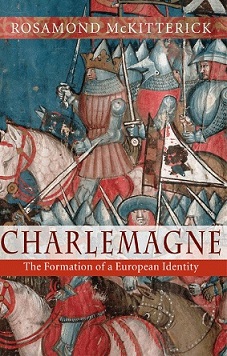
Charlemagne — Rosamond McKitterick

Cover of Charlemagne


Charlemagne: the Formation of a European Identity
Rosamond McKitterick
460 pages including index
published in 2008

I knew Rosamond McKitterick from the volume in the Short Oxford History of Europe series she edited, which is why I picked up Charlemagne: the Formation of a European Identity from the library. Charlemagne himself has only relatively recently picked my interest, mostly through having read Emperor of the West a few years back. Interest in Charlemagne in general has rather picked up in the past decade, as the search for a common pan-European identity has taken on obvious political significance, what with the EU and all.

Which is where this comes in, as Rosamond McKitterick attempts to get back to contemporary sources to re-evaluate Charlemagne and his reign, without the interpretations later historians have given them. Her goal is to in this way provide a new critical understanding of what these sources tell us about the development of the Carolingian empire, its political identity and how these changed during Charlemagne’s reign. It makes Charlemagne a heavily text orientated history, as McKitterick examines the narrative representations of Charlemagne produced during his lifetime and shortly after. To be honest, at times this made it heavy going, especially when I read most of it during the morning and afternoon commute.

Read more…