This year’s Clarke Award

The Clarke Award (founded by Arthur C. hisself) is given each year to the best science fiction novel first published in the UK the previous year. It’s a juried award, unlike both the Hugo and Nebula, for which any publisher can submit novels it thinks eligible. This year’s submissions longlist has just been made public at Torque Control; so farof the sixty entries, I’ve read exactly one of them, Charlie Stross’ Rule 34. Which I think is also the only sf or fantasy novel published in 2011 that I’ve actually read.

Which won’t stop me from entering Torque Control‘s guess the shortlist game however. Below are the six entries I think will be on it and why:

Embassytown, China Miéville. China is a multiple Clarke Award winner and this novel created quite a lot of buzz early last year, so I think this is a shoe-in.

The Islanders, Christopher Priest. Another easy guess, as Priest has also won the Award previously, while this novel is a return to his old Dream Archipelago series of stories.

Reamde, Neal Stephenson. The Clarke Awards in the past few years have had at least one American nominee in the shortlist and this is the obvious candidate; if we’re unlucky it will be one of the two Connie Willis novels instead.

Osama Lavie Tidhar, which I’m currently reading. This is the one I’m the least sure about, but it seems to have had a fairly large p.r. push (helped by Tidhar making the e-book edition free a while back, which is when I got it), it tackles a big, important theme and it’s somewhat on the literary side of the science fiction genre, which ticks all Clarke boxes for me.

Rule 34, Charles Stross. A good book, an important British sf writer, who has been nominated before.

The Fallen Blade Jon Courtenay Grimwood. He has been shortlisted a few times before, so is a likely candidate for this year as well.

An all male lineup, which would not be my preference so much as me looking at the list of nominees with no other information than what I already knew about the writers and books listed. We’ll see at the end of March how right I was.

The Cold Equations

Existence required order, and there was order; the laws of nature, irrevocable and immutable. Men could learn to use them, but men could not change them. The circumference of a circle was always pi times the diameter, and no science of man would ever make it otherwise. The combination of chemical A with chemical B under condition C invariably produced reaction D. The law of gravitation was a rigid equation, and it made no distinction between the fall of a leaf and the ponderous circling of a binary star system. The nuclear conversion process powered the cruisers that carried men to the stars; the same process in the form of a nova would destroy a world with equal efficiency. The laws were, and the universe moved in obedience to them. Along the frontier were arrayed all the forces of nature, and sometimes they destroyed those who were fighting their way outward from Earth.

That’s the message that “The Cold Equations“, Tom Godwin’s best known story (to be honest, the only story he really is known for) wants you to take away from it. It’s the melodramatic story of an emergency dispatch ship (EDS) pilot who discovers a stowaway on board and knows he has to immediately shove him out of the airlock, or otherwise he won’t have enough fuel to reach the colony he’s on his way to, his ship having just enough fuel to reach that. But then it turns out the stowaway is not some swarthy space bandit but *gasp* a young, innocent girl wanting to visit her brother in the colony. Our hero now has a moral dilemma, but the cold equations of space leave no other room than for the girl to sacrifice herself to save the ship.

For all its melodrama it’s an incredible effective story, if you don’t think too much about it, pitting a certain science fiction reader’s desire to be the kind of hard man who knows some sacrifices are unavoidable against the very same fan’s belief that there always is a solution. Even now, almost sixty years after its first publication it’s still a subject for debate as so many people want to deny its central message, that the laws of nature have no place for human values, that some deaths are unavoidable.

I’m one of them. Because the situation that “The Cold Equations” sketches is avoidable and as a result the story ends up not to be so much a parable for the cold, uncaring cruel laws of space as it is a demonstration of the necessity of good health and safety laws.

Lets start with basics: you have these huge space cruisers that fly between colonies which have a couple of EDS ships on board in case a colony not on the itenary needs urgent help. These EDS shuttles are sent out with the bare minimum of fuel needed to reach the colony. Even without the problem of stowaways, there are other situations in which a ship might need more fuel than the bare minimum to reach its goal; why skimp on this safety margin? But worse is that the story makes clear that there are no real safety measures to keep passengers on the cruiser to reach an EDS, or any real attempt to discover stowaways before the EDS leaves the cruiser. Sure, there’s a sign saying that the EDS is off limits to unauthorised personnel, but that’s hardly a real safety measure…

And this is not because the (fictional) company running these spaceships is sloppy and negligent, but because Tom Godwin, the author, needs this to setup the situation he wants of the innocent girl stowaway doomed to die because at that point the harsh laws of space permit no other outcome. But before this situation can be set up he therefore has to omit a lot of common sense safety measures that would’ve prevented it from arising in the first place.

And if you’re trying to prove a political point by arguing that the laws of physics make certain measures necessary, that killing some people is sadly necessary for the greater good, it behooves you to make sure that the situation you’ve chosen to illustrate this harsh fact is in fact not completely avoidable with some common sense precautions.

What she said

He died around midnight, just a couple days after his 33rd birthday and three years, almost to the day, after his diagnosis. In all, we were together 15 years. I have very few regrets about the time I spent with Scott.

That was the point when I lost it for a while. Until then I could read Betsy Megan’s incredible article on what it feels like losing your spouse (found via Metafilter) dispassionately, but that little paragraph, the matter of fact way in which she writes about his death and the conclusion just hit home. That was exactly what it feels like. All else being equal, I’d rather would’ve liked to be able to spent more time with Sandra, but the time we did have together was worth it. Just because we’ve reached terminus doesn’t make the journey worthless.

Hector and Sophie asleep on the sofa

I’d been thinking a lot about Sandra this week anyway, having been home sick from Wednesday, bringing thrown back inside my own head, sleeping a lot, not being able to concentrate much when awake, thinking about Sandra. Work and the distractions of various entertainments normally keep too much hurt at bay, but without them I had nowhere to hide. The cats weren’t much of a help either, as you can see, though it has been nice sleeping in a bed with them at night.

We decided to get married. Initially we had intended to wait until after we both finished engineering school, but I have never been too fond of weddings and it seemed to suit him well enough not to bother for the first 12 years we were together. It was no lack of commitment; we bought a house together and loved each other very much. Marrying him was part a practical decision—so that I could speak for him if he couldn’t, and so that inheritance sorts of things would be easier to sort out. But at this point, it was also to have some good news to tell people, to offset the bad news, as it were.

Sandra being congratulated by the wedding registrar

Again, this was more or less why we gotten married as well, two years ago when Sandra was scheduled for yet another very intense operation, to make sure that all the legal niceties were tied off just in case and as a sign of our love for each other. (Big thumbs up for the Amsterdam civil service btw for making that possible so quickly btw.) I still wear my wedding ring daily, as a reminder and symbol of our love. In my head I’m still married.

Beyond that, it is hard not to feel perhaps even selfish. Of course I miss him for himself, his sense of humor, and all the things I fell in love with him for. But I seem somehow to feel his loss most keenly for all the things he did for me that I can’t or don’t like doing: creating and maintaining an amazing home network that’s now gradually deteriorating in ways I don’t understand; cooking every other time we ran out of leftovers; doing nearly all the shopping (I dislike shopping); tackling the monthly bills; snuggling when I was feeling down; pushing me to keep trying; and even just telling me, gently, when I was being foolish. (It’s an ongoing quandary for me in social settings, too: explain to someone I just met that I’m a widow, which alarms and flusters people and is not a good introduction to the funny story I intend to tell, or go on referring to “my husband” in the past tense and just don’t mention why?)

This, so very much. I miss Sandra for her cooking and gardening, her erudition, for being able to talk with her about politics or books in ways I could do with nobody else, almost as much as for herself. But then those sort of things are also what makes somebody your partner, aren’t they?

And that dillemma of how to refer to Sandra, boy do I recognise it. Refering to her as my wife gives the wrong expectation and you don’t want to cause other people potential for embarassement, but to call her my late wife, or deceased wife, or to myself as a widower seems both a bit dramatic/attention seeking and often irrelevant in the context. Not to mention a bit heavy to lay on people.

I had originally planned to talk about this article about most common cooking/baking mistakes and what Sandra had taught me about cooking (first rule: clean as you go), but that’ll have to wait until another Sunday…

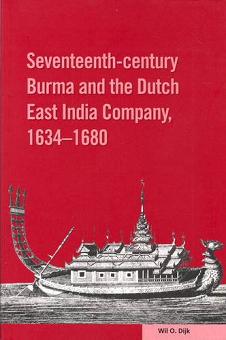
Seventeenth-century Burma and the Dutch East India Company — Wil O. Dijk

Cover of Seventeenth-century Burma and the Dutch East India Company


Seventeenth-century Burma and the Dutch East India Company 1634-1680
Wil O. Dijk
348 pages including index
published in 2006

I got this book out of the library soley on the strength of the author’s own story. Wil O. Dijk was born in Kobe, Japan in 1934, the daughter of a Dutch businessman and a Montenegrin-Burmese (!) mother. As a child she lived in Japan and Burma, with her brother got sent to Singapore when war broke out in 1941, became a prisoner of the Japanese there, like so many other children, while her mother fled to India and her father joined the British 14th army. They all survived war and after being reunited with their parents she and her brother spent some years at boarding school in Holland, before they returned east to Karachi when the Korean War broke out. There she stayed, met her husband, a Dutch foreign service employee, travelled with him from posting to posting all over the world, raising three daughters in the process, then came to stay in Holland permanently in the 1980ties. Wanting to reconnect with her Asian roots, she enrolled as a mature student at Leiden first to study Japanology, then to specialise in Burmese history, the end result of which is this book, written when she was well in her seventies!

Even without the author’s lifestory I would’ve gotten this book though. The focus in Dutch colonial history has understandably always been with Indonesia as well as with the colonies in the Americas, Surinam and the Dutch West Indies, as these were the most enduring, important and longest lived Dutch colonial ventures. With some exceptions (Nieuw Amsterdam obviously, South Africa), the rest of Dutch colonial history is mainly a concern for specialists. Which as Wil O. Dijk makes clear in her introduction, goes double for Dutch involvement with Burma, largely neglected even by specialists, yet no less important and interesting for it.

Read more…