‘A Poxy Little Motoring show’

The end of Top Gear / The Grand Tour after twentytwo years did hit me harder than I expected.

By far the most rightwing media I regularly enjoyed, knowning full well that Clarkson especially is a reactionary knobhead and despite having no interest whatsoever in cars, for years Top Gear was the highlight of Sunday night television viewing. It was one of the things that both Sandra and I liked, even if she had even less interest in motoring than I had. The Grand Tour was never quite the same but was good fun as well, though you could feel the end was near once they stopped doing regular shows. The specials were still good, but also without the leavings of the normal shows, a bit like eating only your pudding and not the meat.

Still, watching this last episode and especially the last scene it was a reminder of everything that made the Top Gear trio so great together. Despite everything I’ll miss it.

Blue Bulleteer — #aComicaDay (8)

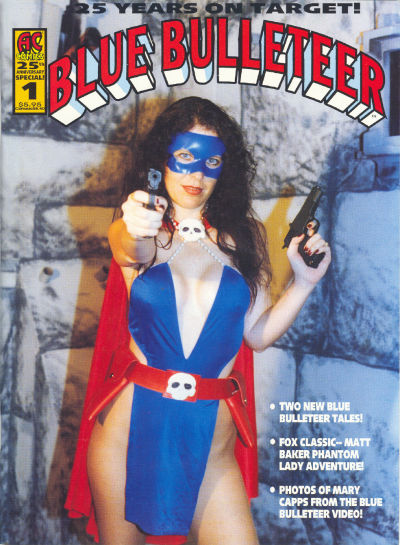
Proof positive that superhero costumes don’t actually work on real people.

Mary Capps modeling the Blue Bulleteer costume in a photo by Bill Black. She's wearing a blue plkastic mask covering her eyes, has two guns, one aimed at the reader. Her blue skirt has a lot of cleavage and leaves her thighs bare as well. Her cape is red and a skull badge is holding it closed as another skull badge holds her red belt in place

At least not with some serious alterations. What looks stylish in the comic just looks cheap and tacky on a real person and I can’t imagine how it would look in action in the video Bill Black announces in his editorial.

The Blue Bulleteer is AC Comics’ trademark friendly version of Golden Age superhero Phantom Lady, who was first published by Quality Comics in the forties. When they went out of business in 1956 DC Comics bought their assets including the rights to Phantom Lady and would eventually reintroduce her with a host of other Quality heroes in the 1970s Freedom Fighters series. However in the meantime another publisher, Fox Features had created its own version, having gotten the rights from Iger Studios who had created the Quality Comics version in the first place. It’s the Fox version that would became notorious, as one of the covers was used as an example of how perverted and deranged comics were in Wertham Seduction fo the Innocent… Blame the artist, Matt Baker, for being so good at drawing beautiful women as one of the best of the socalled good girl artists.

AC Comics had started off as Paragon Publications back in 1969 and still exists today. Its formula has remained unchanged over the decades, providing a mixture of reprints of public domain Golden Age series (and ciontinuations of same) with original superhero and other series focusing on “Good Girl Art”. Niche, but it works: their flagship title, Femforce has been in publication since 1985. Not even very many Big Two series can claim the same. Blue Bulleteer is also part of Femforce in her modern guise of Nightveil, relying om magic rather than guns. As the Blue Bulleteer she was active in the forties.

This special celebrates 25 years of her as a character and reprints various Bill Black stories about her. The highlight though is a reprint of one of the Matt Baker’s Phantom Lady stories. There’s also a John Beatty cameo in the Blue Bulleteer photo section at the end of the issue.

Gimme some Sugar (Jones)

Sometimes it’s not difficult to guess what part of a particular assignment interested the artist the most:

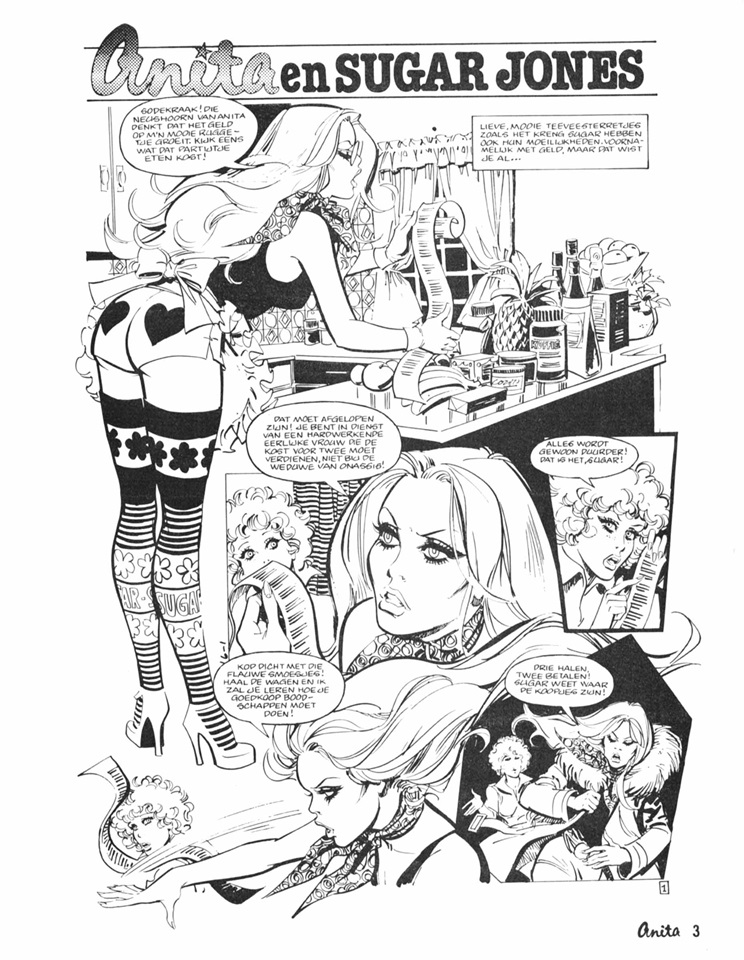
A comic page dominated by the woman at top left, standind bend over with her bottom towards the viewer, dressed in hot pants and long colour full stockings as well as a sleeveless top

Anita en Sugar Jones was the lead feature in seventies Dutch girl comics magazine Anita. It starred Anita, the magazine’s ‘face’ as the assistant to glamourous but vain and egocentrical pop star Sugar Jones. Each episode would have Sugar come up with some scheme to get rich or famous or both and have Anita deal with the fallout. As is immediately clear from this first page, the star of the show is Sugar: both in looks and character she’s far more interesting than the frizzled haired, slightly boring goody two shoes Anita.

Anita at that time never credited the people who worked on their comics, but I knew that these magazines were usually filled with reprints from British IPC series. The artwork meanwhile looks decidedly Spanish. As you may know, Spain in the sixties and seventies produced a huge number of very talented comics artists, whose talents were ‘wasted’ by having to draw rote formulaic features for IPC and other British publishers. Though there are obvious differences between the various artists, their style is always recognisably lusher than their British counterparts, somewhat sexier and looser than the usually stiffer British cartoonist working on these titles.

It turns out my instincts was right: the original British version, simply called Sugar Jones was created and drawn by Rafael Búsom. What’s more, if Claire Napier is right in her review of the Sugar Jones collection published by Rebellion is correct, its co-creator was none other than Pat Mills! (he denies it though.) Regardless, the underlying themes of “class warfare and worker status” that Napier identifies in her review are pure Mills. Her description of the typical Sugar Jones story certainly makes me want to buy the collection:

Every strip Sugar gets an idea, often or always about how she can gain—men, contracts, cache, cash—and Susie sets out a reason or two why pursuing that plan would be harmful to others. Sugar doesn’t care; Sugar goes for it. Susie, with a little help from whoever else is in the strip this week, thwarts it and all of the people poorer and more authentic than Sugar bask in the joy of collaboration, justice and geniality. These are extremely jaunty, momentary reads, perfect for a pause with a beverage or between naps in the sun. They’ve got conviction, tremendous aesthetic value, and no apparent hate in their heart.

A visual treat and with its heart in the right place if somewhat dated attitudes here and there, what’s not to like about Sugar Jones?

If I Should Fall From Grace With God

Peter Mitchell nails the appeal of the Pogues:

That hauntedness is probably the most important thing about the Pogues. If their best songs have the quality that all properly miraculous songs have, of having somehow always existed and simply been plucked from the air or heaved up from a collective unconscious, it’s worth remembering that they emerge from an obsessive engagement with a folk tradition and the histories that made it – all of which are histories, more or less, of defeat.

Coincidently, If I Should Fall From Grace With God was also my introduction to the Pogues.

Legacy 02 — #aComicaDay (7)

Imagine. You’re the designated successor to the world’s greatest superhero. But you’re a failure and just before he dies he holds a lottery granting powers to 1,000 random people. Now you have to deal with this Legacy.
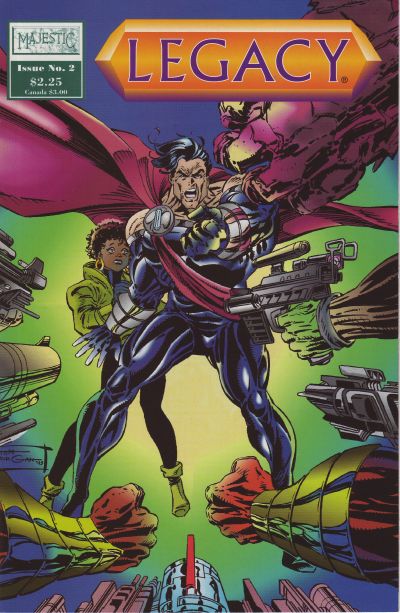
A Superman like hero in dark blue suit and purple cape is defending a Black girl from numerous threatening hands holding guns

It’s an interesting situation, having a Superman like figure die, leaving behind his disowned protege and a thousand people with newly acquired superpowers, some of which are usefiul, some of which not so much or downright horrifying. And because they were chosen at random, there’s no guarantee that any of them will use these powers for good. A setting which you can do a lot of interesting stories with, as governments and other powers scramble to adjust to this new world. Legacy meanwhile not just has to deal with fulfilling his mentor’s role, but also learning to do so without his guidance and while he is now also responsible for guiding dozens if not hundreds of neophyte heroes…

Certainly something that piqued my interest when I read about it in Comics Scene 39 back in 1993. Sadly, Legacy 02 was the only issue I ever found from this series, nor did I ever see any of the other promised titles that were to come from Majestic.

There’s a good reason for this: that this was published in 1994 is a clue. That was the year that everybody and their aunt was setting up a new superhero comics universe. After the success of first Valiant and then Image in breaking the Marvel/DC duopoly, other publishers tried to do the same. There was Malibu starting up the Ultraverse thanks to their Image publishing money, Dark Horse with Comics Greatest World and seemingly dozens of other, new publishers doing the same. It would all end in tears of course.

The market was too small for all of them, so within a few years most of these publishers had vanished again, the more established ones had scaled back and dozens if not hundreds of comic shops had gone bankrupt in the aftermath. Then Marvel decided to buy its own comics distributor, went almost bankrupt themselves and in the process screwed up the direct market for a good decade if not longer.

In that climate a small upstart publisher like Majestic was doomed to failure. Legacy 02 was actually the last issue they ever published; the only other title they managed to bring out, S.T.A.T lasted only one issue. It probably didn’t help that they launched Legacy with a zero issue brought out as a trading card set, chasing two crashing trends at the same time…

A pity, as this wasn’t a bad issue. The artwork is by Tom Morgan, who has done far worse for bigger publishers and Fred Schiller’s script is decent enough. The plot is run of the mill superhero fodder: Legacy and his friends end up fighting the S.T.A.T government team over a misunderstanding set up by a villain working behind the scenes, in a crossover with that title. The standard Bronze Age Marvel setup. This could’ve been a minor cult classic had it come out at a different time and had been marginally less cynical in its publishing scheme.