Defending the indefensible: the DC reboot

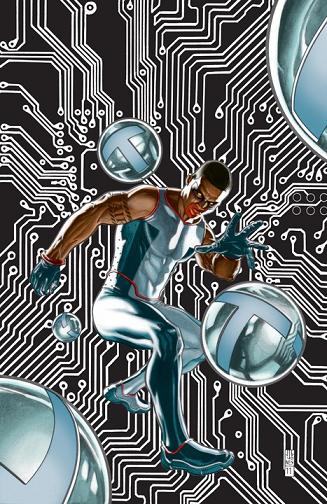
cover to Mr Terrific 1

On Twitter Hedi McDonald asked for essays to defend the
DC reboot in 400 words or less. Below is my attempt.

There’s an old joke about mules: before you can get them to do anything, you need to hit them with a 2 by 4, just to get their attention. That’s what the DC reboot is. In scale and audacity it’s the culmination of everything Dan Didio has been working on since he became Executive Editor. Having spent the past decade revamping and refurbishing its superhero line title by title, rebooting it completely is the logical end result of this ongoing process.

It is no surprise that fan reaction has been negative. After years of tinkering with continuity, soft and hard reboots anything that looks like more of the same is disliked. This is a mistake, as this reboot is not the start of more tinkering, but the end of it. By relaunching everything, DC has put a line under the endless succession of Crisises. Having everything restart with #1 means you can stop worrying about what came before.

What’s very clever is the way DC has tied the reboot in to its move to same day digital publishing. The need to get serious about digital publishing has been pressing for years, but it needed to be done without damaging the direct market. Comics retailers have been scared to death of seeing its sales cannibalized by the internet. The way DC has found of squaring this circle is through this reboot. New number ones always have a sales boost, providing at least a short term benefit to comics retailers. They also make it easier for new readers to jump aboard and the publicity the reboot is getting outside of the comics orientated media means more people now know about DC’s digital publishing efforts as well. DC needs to find new readers if it wants to remain viable and the only way to do this is to look outside the existing comics buying audience.

Piracy has made clear there is an online readership for comics, as long as they are easy to get. DC’s challenge is to do just that. If they succeed and can get their comics in front of potential readers than this reboot may just be the best thing that has happened to comics in years. It all depends on how well DC can sell its plans to retailers, fans and new readers alike. They got our attention, now they need to do something with it.

N.B. I don’t necessarily believe this.

Books read May

May saw a slight increase in books read, with less pressure from work and other interests. But with S. back in hospital again there was still less time and desire to read than usual.

Cowboy Feng’s Space Bar and Grille — Steven Brust
A strange book but that was just right for me when I read it, this quite cozy adventure set against a backdrop of succesive nuclear holocausts.

To Reign in Hell — Steven Brust
Brust does Paradise Lost. Another strange novel, but a good one.

Early Medieval Settlements — Helena Hamerow
A excellent archaeological/historical overview of settlements and their evolution in North-West Europe during Late Antiquity and the early Middle Ages. This is history on a much smaller scale than the books I have been reading about this period, but it complements them well.

Foreigner — C. J. Cherryh
The next novel I read in my Year of Reading Women project. The usual Cherryh story of a young man trust in a crisis beyond his control, with no power but a whole of responsibilities.

The Second Anglo-Dutch War — Gijs Rommelse
AKA the war in which we beat the English like a redheaded stepchild. A good overview, somewhat hampered by its origins as a ph.d thesis.

The Complaints — Ian Rankin
The first post-Rebus novel I’ve read of Rankin. The hero is younger, less cynical but the plot could’ve fitted a Rebus novel as well. This is not a complaint on my part, pun not intended.

“ten or twelve Roger Dean album covers with some sparse lettering across them”

I’ve been on an old comics kick lately – lots of bronze age stuff, some 80s and 90s books as well, maybe some stuff I’ll write about, maybe not – and it never ceases to amaze me how long it takes to read any average issue from 1985 or 1995 compared to almost any example from 2011. The change is easily explained: after Quesada and Jemas took over Marvel in 2000, they did away with thought balloons and third-person narrative captions. Not all at once, but slowly and more-or-less permanently. I still don’t know, and really have not seen a single compelling reason, why these changes were pushed through so thoroughly, but the more I think about it the more I am fully convinced that this shift was undeniably deleterious to the long-term quality of the line. It’s a question of economy: captions and thought balloons were an extremely efficient way of communicating a large amount of information in a surprisingly concise package. Back in 2000 $2.25 for 15 minutes of reading was a good deal. No amount of inflation will make $3 or $4 for 5 minutes a good deal for anyone.

In the course of reviewing Mighty Thor #2, Tim O’Neil says a lot of what I tried to say here, but does it better.

Rich Boomer turns rightwing, feels need to write book about it

David Mamet interviewed for the New York Times:

Years ago, you described “American Buffalo” as being about “how we excuse all sorts of great and small betrayals and ethical compromises called business.” In this book, you defend enormous payouts to C.E.O.’s working for failing corporations. You seem to have changed radically.
I have. Here’s the question: Is it absurd for a company to pay hundreds of millions of dollars to a C.E.O. if the company is failing? The answer is that it may or may not be absurd, but it’s none of our goddamned business. Because as Milton Friedman said, the question is not what are the decisions but who makes the decisions. Because when the government starts deciding what’s absurd, you’re on the road to serfdom.

Don’t you have to denounce your early, anticapitalistic work then?
Of course not. At that time in my life I didn’t have a penny, and I was glad to be working at entry-level jobs. Having lived for quite a while longer, I see life from a different perspective. What am I going to do, go on denouncing capitalism all my life?

Mamet first came out three years ago, in a screed for the Village Voice in which he explained that all you liberals are doodyheads and he never liked you anyway. Judging from the interview above he has swallowed the whole range of wingnut beliefs whole and as uncritically as he himself said he had believed his old liberal assumptions Which is a sad commentary on (arguably) America’s greatest living playwright but typical for a lot of those road to Damascus stories. All those people who move to the right when they’re middleaged and rich always have to make up a fairytale about how their eyes were suddenly opened to the evils of liberalism, yet their conversion stories never betray more than a superficial understanding of either their old or their new politics. Their vanity doesn’t allow people like Mamet to admit they switched for purely selfish reasons, hence that urge to write books about their completely unprecendented journey from unthinking liberal to still unthinking conservative.

The audience knows what it doesn’t want

Robot 6 puts together a couple of quotes of various comics professionals bitching about the superhero audience and its expectations. Mark Waid kicks off:

The audience doesn’t know what it wants. If it knew what it wanted, it wouldn’t be an audience. It just knows that it wants to be entertained somehow, and that’s a perfectly reasonable expectation. I wish we were better at it. The 50,000 hardcore fans of periodical print comics that we have left, the ones we haven’t and can’t drive away, seem to indicate with their buying patterns that they’re interested only in nostalgia, which is terrifying. And I understand why publishers cater to that; they’re kinda forced to, given that the print distribution system is targeted SOLELY TO THOSE 50,000.”

There’s the rub. Waid may or may not be right that the audience doesn’t know what it wants (though it’s certainly vocal about its preferences), but it does know what it doesn’t want. And what it has wanted less and less over the last two decades is superhero comics. Print runs that in the late eighties were reasons for cancellation were bestsellers in the mid nineties and by now are only reached by the top two-three titles in any given month, if at all. Waid talks about the fans “we haven’t and can’t drive away” and this is more true than he may like, because fuck me, DC and Marvel and their imitators have done their best to drive fans away. Pointless crossovers, cover gimmicks, an endless milking of hot characters, the deconstruction/reconstruction of Superman, Batman, Wonder Woman, Spider-Man, the sheer disdain for readers shown by letting issues be late for months or years, the sheer shit that has been published over the years, no wonder readership has been dropping steadily.

What has saved the superhero publishers, at least for some time, is the sheer loyalty fans have shown towards the characters. It’s the same sort of loyalty that people show towards their favourite sport teams; no Cubs fan will stop watching them just because they lose every game, just like a hardcore Spider-Man fan will stop reading his comics just because Marvel made him into a clone, or decided they didn’t like him married. But at the same time a team that always loses and doesn’t offer its fans anything worth being a fan for will not get many new ones, just like the long runs of mediocre Spider-Man titles will not have gotten him many new readers. They’d rather watch the movies or the cartoons, much cheaper too.

It always annoys me a bit when writers talk disdainfully about their readers, when somebody like Johanna Draper Carlson says “When did fans get the idea that they could dictate content to creators? If you aren’t enjoying something, stop buying/watching/reading it.” As if the only role fans get to play is to consume and cannot have any say about what happens to their favourite characters. Because certainly with superhero comics the readers are there for the characters, to see Spider-Man or Green Lantern in action, without necessarily caring or knowing the creators working on them. Fans have just as much if not more invested in their comics as the creators have. They deserve more than just the privilege of plunking down their three or four dollars each issue.