Joyce Brabner 1952 — 2024

Joyce Brabner, writer, activist and the widow of Harvey Pekar passed away on August 2 this year, after a long struggle against cancer. For The Comics Journal, Andrew Farago wrote an excellent retrospective on her life and career in comics. Particularly interesting I found evaluation of Our Cancer Year, the graphci novel she wrote together with Harvey Pekar about his first struggle with the disease and the impact it has had:

Misery enjoys company, however, and readers and creators connected with their memoir on a personal level. “Our Cancer Year was a seminal work of graphic medicine, a growing field of medical humanities combining comics and healthcare, before there really was such a thing,” says Brian Fies, whose autobiographical account of his mother’s illness, Mom’s Cancer, was serialized online in 2004 and published in a collected edition in 2006. “Along with a few other graphic novels such as Justin Green’s Binky Brown, it was a prototype for an outpouring of deeply personal, acutely revealing nonfiction comics centered on their authors’ experiences with illness and treatment. Graphic medicine is now taught in medical schools and discussed in academic conferences around the world, and Our Cancer Year was the soil in which it took root.”

Not everybody can say they helped create an entire new field of comics non-fiction! Our Cancer Year was coincidentally the first work of hers and Harvey I ever read, a few years after it first came out. A pity it no longer seems to be in print. This is also is the case for the most important non-Pekar projects she was involved in as an editor, the Real War Stories and Brought to Light antiwar comics she did for Eclipse, both of which are excellent as well.

As one of the artists that worked with her and Pekar puts it, it’s easy to think of her as simply “Joyce from American Splendor“, a trap Andrew Farago here neatly avoids. Even if you only knew her from American Splendor, Farago gives an excellent overview of how much she mattered as her own creator, not just a supporting actor in Pekar’s comics.

Notes from Glasgow I: overall impression

It’s been a week since the Glasgow 2024 Worldcon which means it’s about time to give my impressions of it. This was the first con I actually physically attended since Dublin in 2019. I had hoped to go to New Zealand the following year but as we all know Covid happened and physical cons were off the table for a while. There have been other (World)cons in between of course but none of which had tempted me. If not for Covid I might’ve gone to an Eastercon, but the risk never seemed worth it until now. The added hassle of going to the post-Brexit UK also doesn’t help. Nor do the expenses of going to a foreign con: hotel, even with the con’s discount was seven hundred quid or so for a week, the plane journey was another five hundred euros and various bits and bobs that needed replacement like suitcases etc also added to the cost.

I’m aware that this is a bit of a moan to open with, but that was my mood going into the convention: not actually looking forward to it all that much because of all the hassle it would involve. Especially worrying was the rise in the number of Covid infections you saw happening in the months and weeks before the con. Having stayed Covid free these past four years and whileI have been vaccinated and was going to wear masks, it still seemed a risk. And I was right to worry, considering the number of people who did get infected at Worldcon; fortunately I seemed to have gotten away with it myself even though I wasn’t always as strict to mask as I should. Mask wearers in general were in the minority at the con, though there were vastly more people doing so than in the general public; I only saw half dozen people masking coming through Schiphol e.g.

Speaking of which, despite being four hours early for my flight and therefore having handed in my luggage way in advance of the actual boarding, the KLM still managed to not send it to Glasgow on the same flight as I was on. I flew out on Wednesday, watched everybody else get their luggage and then was told by a very nice chap that they hadn’t bothered to put my stuff on board but it would arrive with the next flight. Ultimately I would only see it again on Thursday night. Never was I so glad as to have put an extra set of clothes in my hand luggage. The return journey went smoother, fortunately, save for the little matter of having bought so many books that my suitcase was over the weight limit: literally too heavy for the baggage handlers to be allowed to handle. So the nice woman at the counter just gave me a second suitcase — one of these small ones Easyjet passengers apparently abandon at the counter when it turns out they have to pay extra to bring it on as hand luggage — to put the overflow in.

A bad start to the convention trip, but at least I managed to get registered at the con on Wednesday so I could avoid the crowd on Thursday, when the queue almost reached the station next to the convention centre… Thursday was a bit of a loss because of the luggage worries, so I spent most of it volunteering at con ops, mainly herding people in queues and answering questions. This is always a fun thing to do at any con and usually gets you a ‘free’ t-shirt.

Also a good way to meet new people, though I found it more difficult this year to actually meet people, new or old. To be fair, I hadn’t made any plans to meet up in the first place, but the sort of spontaneous encounters I’d had at the 2014 London Worldcon or in 2019 in Dublin were rare to non-existent this time. Whether it was due to the way the convention was set up or just me not having the skills anymore after five years of not going to cons, it just didn’t work out for me this time. The one exception being that a few of my friends attending had remembered my birthday on Saturday and had spent most of the day trying to chase me down to celebrate. Which was appreciated even if it was somewhat embarassing to be serenated in the middle of the Dealers Room…. Thanks Jos!

The con as a whole was good, I managed to get to some excellent panels and buy some excellent books, or rather comics, as there was one dealer with a lot of interesting UK and US comics. The weather was nice too, hovering around 16 degrees centigrade, mostly cloudy with occassional spots of rain. I had prepared for Dublin style weather, so brought proper trousers and a sweater and raincoat just in case, but none of them were needed. Shorts and t-shirts were sufficient and the few times it did properly rain I had a brolly. The hotel I used in any case was less than fifty metres from Glasgow Central so no real need to get covered up anyway. On Sunday and Monday, as the con was winding down somewhat, I took full advantage of being in the centre of Glasgow and went for a bit of a shop and also in search of a proper dinner rather than depending on the overpriced con grub for a change.

The food on the whole at the con was better than in Dublin, but the prices were even steeper than they were then and six pound fifty for a pint of beer is not cheap; as with Dublin having a pint at the airport was markably cheaper…
What gets translated and what doesn’t — Martin’s increasingly petty rules about translation

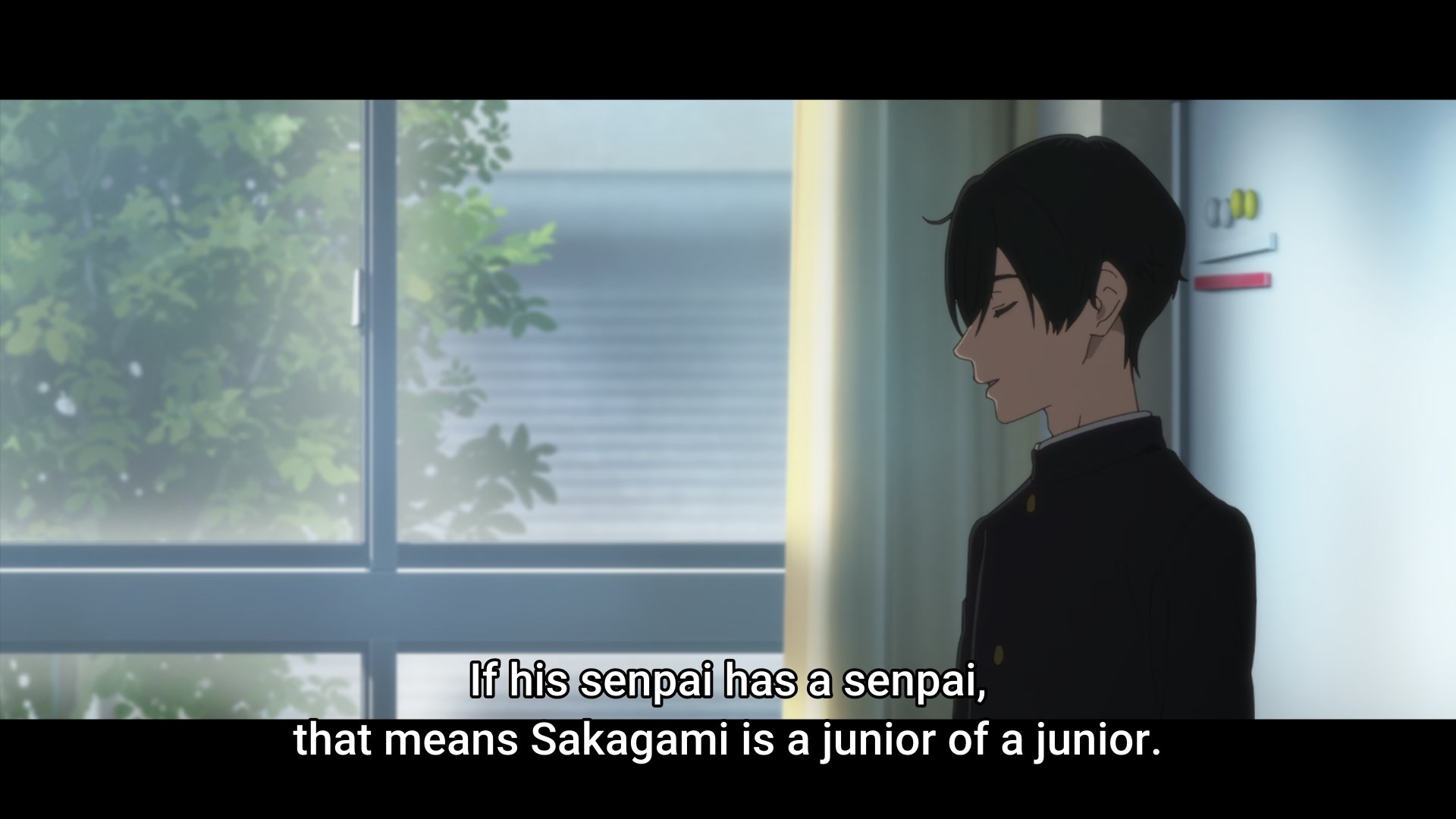
An interesting sentence from Shoushimin Series episode 4, at least from a translation point of view:

If his senpai has a senpai, that means Sakagami is a junior of a junior.

Why does senpai gets to be used untranslated, but kouhai gets translated to junior? You could make the case that it’s just that much less known than senpai that it still needs to, but for a series like this I’d expect the audience to already know it. This isn’t Pokemon after all, but a very dialogue heavy mystery show, one that’s not shy about using proper honorifics or the correct, Japanese name order either. A strange choice either way when you’d normally expect both terms to be translated or kept intact as a pair.

It raises the question of what you translate and what not, what the expectations are for things that English doesn’t really have an equivalent for, like the whole idea of senpai/kouhai, or the use of honorifics to refer to people. I was reminded of what writer/translator Zack Davisson said on the subject of food names two years ago:

One of my Translation Rules: Thou Shall not Translate Food Names. Food names, as a general language rule in the modern era, are kept in their native language. We collectively learned to say pho. We learned to say pasta primavera. We can say onigiri. Time to retire “rice balls.”

Onigiri and rice balls are in a sort of similar tension to senpai/kouhai and senior/junior in that the English terms are perfectly adequate translations for most uses, but don’t quite have the same meaning as the Japanese terms. Partially, as Zack goes into in his thread, it’s of course a question of familiarity: onigiri like senpai is well known enough on its own that it doesn’t need translation anymore in most cases. There is no one correct answer even if I prefer this sort of thing stays in Japanese.

Having an idea does not make you a creator

Roy Thomas wants to claim credit for the creation of Wolverine and it has upset quite a lot of people:

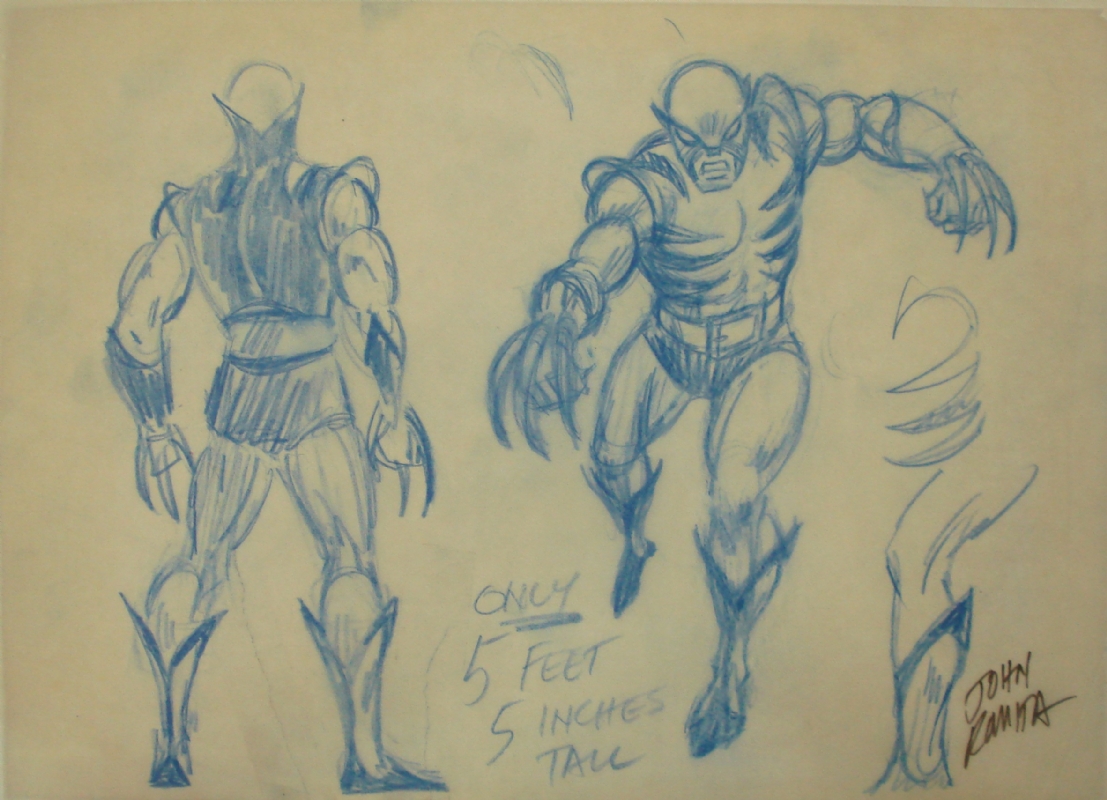
John Romita's original sketches for the Wolverine

But 2024 is not 1974 or 1994, and in the wake of more high-profile attention on the neglected past generations of comics creators, it has become increasingly de rigueur for writers and artists associated with comics-based movies and tv shows to see at least a nominal reward for their contributions. There is money at stake, to say nothing of glory, such as it is.
Which is why it managed to generate a fair amount of attention – and a fair number of raised eyebrows – when it came to light at the beginning of April that former Marvel editor Roy Thomas would be receiving credit as a co-creator of Wolverine in the credits for the upcoming Deadpool & Wolverine film, coinciding with the character’s 50th anniversary.

Apparently he’s doing so, according to the Zach Rabiroff article I’m quoting here based on the fact that he proposed the character originally, after which Len Wein and John Romita designed him together, with Wein and Herb Trimpe then using him in Incredible Hulk #180-181. Wolverine of course would only become popular a while later, when Wein included him in the roster of the new X-Men a year later and especially after Chris Claremont, John Byrne and Frank Miller got their hands on him. There was a hell of a lot of work done after that first appearance by at least a good half dozen creators, those mentioned above just the most prominent, before he became such a household character that Hollywood blockbusters could be made about him. But none of that, according to Thomas, matters as much as him having the idea for a having a little scrappy Canadian superhero guest star in those two issues:

Note that there are three points here to Thomas’s recollection about his role in Wolverine’s genesis. In his account, he proposed that there be: a) a Canadian character; b) named Wolverine; who was c) “a little like Wildcat or the Atom.”

Personally I think it’s bollocks. Even if this is the exact truth, having the idea for a character does not make you its creator. It’s Wein and Romita as the people who designed the character from that idea, together with Trimpe who first put him in action who deserve that credit far more. In a just world Roy Thomas’ name would be nowhere near it. Rabiroff’s article as a whole makes for fascinating reading, showing how complex establsihing creator credits can be for any character with a fifty year history even when obvious grifters are not trying to insert themselves in it.

Mayonaka Punch in the Feels — First Impressions

Mayonaka Punch, just like Na Nare Hana Nare, is another original series done by P.A. Works airing this season. Starring Masaki, a once popular streamer who fell from grace after she punched one of her co-hosts and friends live on air. The first episode saw her stumble across an actual vampire when she went back to the abandoned hospital where she and her friends had recorded their first viral video. Said vampire thought she was the woman of her dreams (having just literally woken up from a twenty year long erotic dream starring a girl that indeed looked a lot like Masaki) so agrees to help her get a million subscribers to her new channel if she can suck her blood afterwards. The first three episodes were mostly about Masaki and her desire to make a quick success of her new vampire friends, while we got to know them as well, but it’s the forth episode I want to talk about.

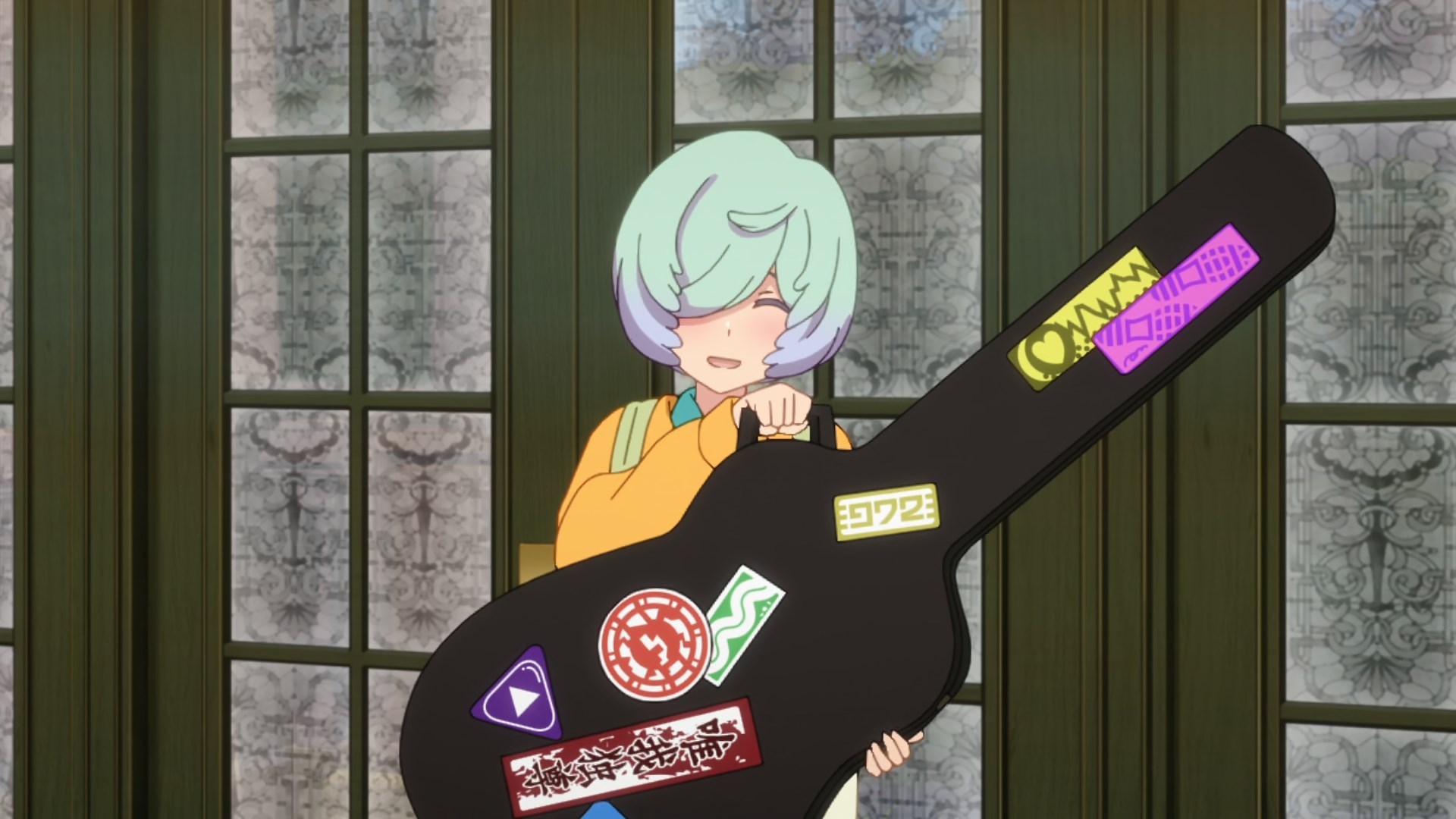
Fuu with the guitar case of her old friend Aya

This episode stars Fu, the shy, green haired vampire girl who hides behind her bangs. She had been in the background until this episode as the other four, much more manic vampires took the spotlight. Masaki, still desparate for a hook to establish her new channel on, discovers that Fuu is actually a good singer when she listens to a decades old cassette tape of her. When she tries to get Fuu to sing for her videos, Fuu refuses and gets angry, saying she doesn’t deserve to sing anymore. Through flashbacks at the start of the episode we know that she used to have a friend called Aya, with whom she would sing and record songs together. Aya wanted to go pro but of course Fuu being a vampire, this wasn’t possible for her. Once Masaki leanrs of this, she and the others attempt to track Aya down and learn that the last time she was seen was two years ago, in New York. Fuu immediately sets out there to find her, but as you may have guessed, the news is not good…

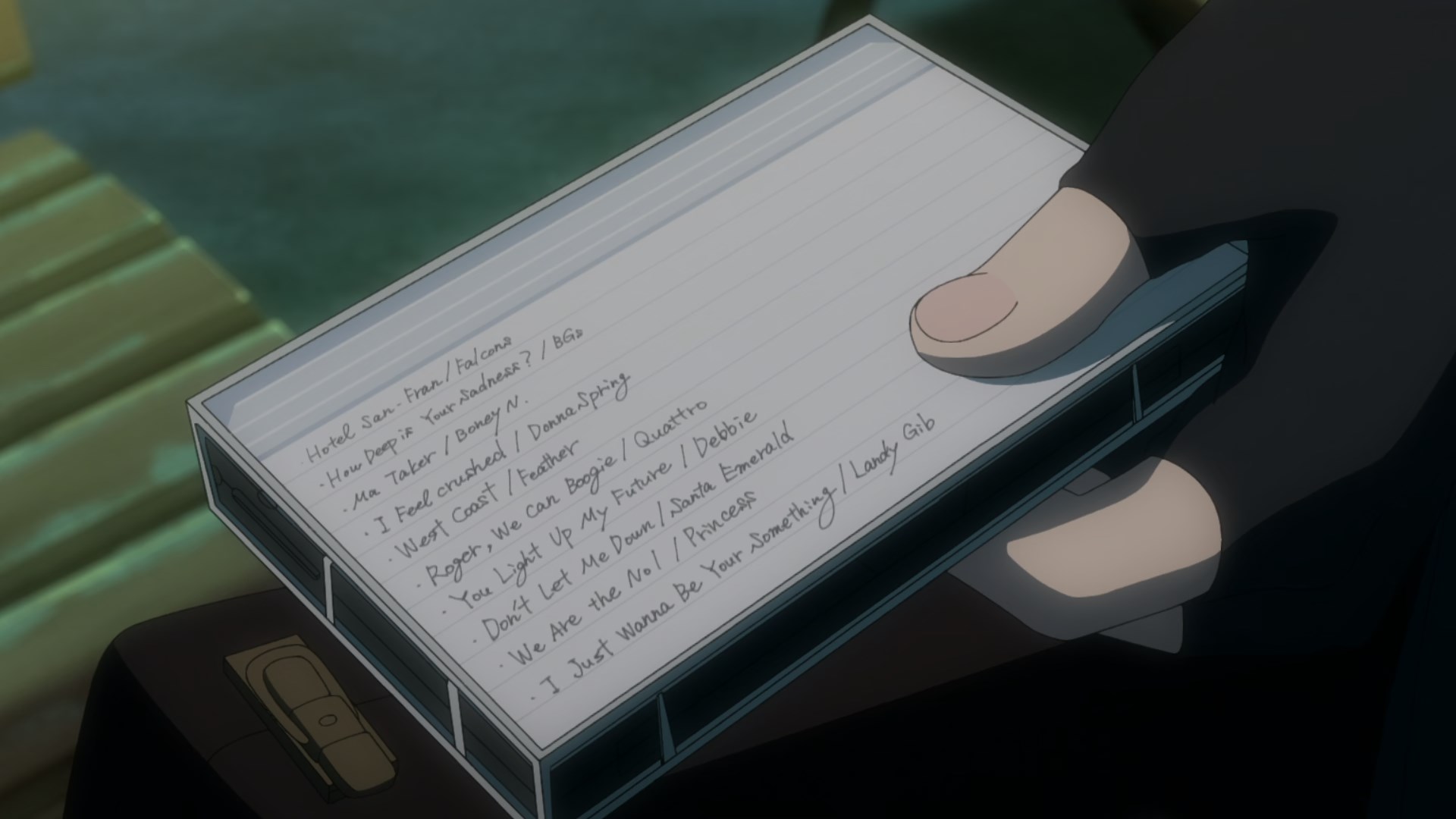
A mixtape with pastiche titles of clearly recognisable seventies hits

With the first three episodes having been firmly on the comedic side of things, with a large dose of slapstick thrown in, this far more serious episode hit like a brick. The pastiche titles on the mixtape Aya gave her at the start firmly show that the flashback took place somewhere in 1979 or 1980, so Aya being a teenager then meant she should be in her early sixties now. What exactly happened to her isn’t told, but this isn’t a case of the mortal friend of the immortal vampire just dying of old age. A real bittersweet episode as Fuu finds closure on the biggest regret of her life, enabling to move on and start singing again, but still with that knowledge that if only…