Two more years of cuts and the Olympics — what fun!

As predicted by BBC Newsnight bod Paul Mason:

The Coalition will fall. Not because of protest, not because of unpopularity but because everytime it tries to do something serious a bit falls off the machine. If they don’t get AV and Vince Cable does not get radical banking reform, then by the time the public sector job losses are eating into their popularity, around party conference time, the Libdems will call it a day. Even more audaciously I will predict the outcome: no election but a Second Coalition to be formed between the Conservatives, an inner core of Orange Book Libdem leaders and various Unionists, with a slim majority. One or two Labour rightwingers, disgruntled by Ed Miliband, may also be tempted to join. Cameron will face down the Conservative right and embrace Coalition government as a modus operandi until 2015. Labour, locked in a policy review process and possibly still reeling from (8) above, will avoid an election.

Jamie had some fun with the second part of that prediction, but I want to look at the first part. Protests, especially in the UK, do not have a particularly good track record in bringing governments down, or even get them to change their minds, but the ConDems are more vulnerable than most, largely due to the Dem part of it and its internal contradictions. Even then, it’s hard to imagine protests, even ones as big as the 2003 anti-war protests, will do much to disrupt the coalition, other than to accelerate the weakening of the machine as Mason puts it.

However, there is the potential for a huge, embarassing clusterfuck to happen smack dab in the middle of the ConDem’s reign. I’m talking of course about the 2012 London Olympics, enthusiasm for which never was that high in the first place, which will make the perfect opportunity for anybody fed up with the coalition’s policies to show their displeasure in front of the whole world. BBC London News today reported that a large part of the success of the Vancouver Winter Olympics was due to the large number of well trained, friendly volunteers at the games — image what could happen if thousands of disgruntled students, jobseekers and other victims of ConDem policies decide to take to the streets during the London games…

What struck me was the contrast between what will be everyday life in England after two years of budget cuts, slashed social services and a crumbling social infrastructure and the attempt to turn London in the world’s largest potemkin village as the Olympics come to visit. Normally the general public is not keen on anybody who politicises the Olympics, but when many members of it will be victims of ConDemmed policies themselves, how will that change?
2010 in books

When in doubt, steal from the best and Andrew Wheeler’s top 12 favourite books for 2010, one book for each month of the year, seemed like a neat device to copy, so here goes:

January saw me mostly recovering from surgery plus the added bonus of an opportunistic infection, so I read mainly not too challenging books. One book thta did challenge me, was Gwendolyn Leick’s Mesopotamia: the Invention of the City.

February wasn’t much better, with the standout book being Richard Morgan’s first published novel, Altered Carbon.

In March I read both Owen Heatherly’s Militant Modernism and Mark Fisher’s Capitalist Realism, both in their own way attacking the unexamined assumptions at the heart of contemporary society. But it was Fields of Conflict, an anthology of papers on battlefield archaeology that made me think the most.

April: World War Z gave me nightmares, but it was The Night Sessions and The Raw Shark Texts that impressed the most, with the latter recieving a slight nudge.

In May I read a lot of science fiction, including China Miéville’s latest, Kraken, but it was Richard Fortey’s Life, the story of well, life on Earth, that impressed me the most.

June was a slow month again, no doubt because of the Worldcup, but I did read The Reconstruction of Nations by Timothy Snyder, which attempted to show how nationalism and ethnical identity grew in Poland, Belarussia, Lithuania and the Ukraine, countries once united in the early modern state of the Polish–Lithuanian Commonwealth, where ethnicity and nationality was much less important than class.

July was mostly about bubblegum reading, things like three Ian Fleming novels that you can read in a n hour and still have fifteen minutes left to kill. One positive exception was William Hope Hodgson’s Carnacki the Ghost Finder. Back in Edwardian times, mashups between ghost and detective stories were quite popular and Carnacki was one of the better ghost detectives. Not at all scary, but despite their great age still quite enjoyable.

August saw more science fiction and more books on warfare. Mark Mazower’s Hitler’s Empire an indepth look at the economics of Nazi Germany and Europe, was the book of the month. The Battle of Kursk was good too.

In September, it was Hiroshi Sakurazaka’s All You Need Is KILL that made me sit up: a great short, mil-sf novel that was a cross between Groundhog Day and Starship Troopers (the novel, not the movie). Jo Walton’s Ha’Penny and Richard Morgan’s The Steel Remains were excellent too.

Moving on to October, the best book that month was a reread: Lois McMaster Bujold’s Komarr, where it turned out I had missed about eighty percent of the real action in the novel on my first read…

Then came November and I read some twenty books, largely due to a massive reread of all Bujold’s Vorkosigan saga novels. Diplomatic Immunity was a disappointment, Iain M. Banks’ latest Culture novel, Surface Detail was not.

And finally, December, in which N. K. Jeminisin’s first two books in her fantasy trilogy were the best books I read that month. These deserve proper, well thought through reviews, but suffice to say they’re essential reading for everybody interested in fantasy.

Hello comics my old friends…

If it hadn’t been for one little thing, 2010 would’ve been a good year for us. Work went well, was very rewarding both financially and in its own right and in turn this meant some of the low grade money problems we had been having ever since we first bought our house finally disappeared. A bit materialistic perhaps, but even Dickens knew happiness in a capitalist society depends on money in the bank. But of course there was that little thing of S. and her ongoing medical problems, having spent most of the year in hospital due to complications upon complications emerging from her kidney transplant. At the moment she’s still in hospital, recovering from a second operation done to repair some of the damage of the first (more or less). She’s on the mend, but not yet home and there have been many ups and downs on the way, perhaps more to come. At times it all was a bit too much for me, but luckily there was always an escape mechanism nearby to help lose myself for some time.

Comix.

Or did y’all think it was just a whim that made me pull a dumb stunt like reading fifty Marvel Essentials in fifty days?

Comix, especially fat compilations of not especially good seventies or sixties Marvel superhero comics, are very good fodder to suppress your emotions with. They require much less effort to read than even simple novels and as with every collection of serialised material, there’s enough repetition and recapping to get the gist of a story even when reading it next to a bed in the ICU waiting for your partner to finally wake up again…

It only occured to me a few days ago that this escapism is why I went back into comix in such a big way this year; I hadn’t really thought about it that way. Yet through all the years me and S. have been together, from when we first met back in December 2000 up until last year, I never cared much for comics, despite having been a serious collector for thirteen years before that. Not that I got a girlfriend and dropped comics, rather that I quit comics in disgust in June or July 2000, had just gotten sick of them, sick of wasting money, sick of the scene and dropped out completely, from one day on to the next, just stopped buying them. It’s only then that S. appeared — which may be coincidence, or it may not.

But it’s no coincidence that I started collecting again once she wasn’t around. Comics may or may not make you fat but they are a solitary hobby. Despite the camaradie of the comics shop, the conventions or the blogs, in the end you still end up reading them on your own, absorbed in the four colour wonders on offer. True, reading books is the same, but the difference between the two is that you can get through so much more of the former than you can get through the latter. So if you got the bug, you need to spent more time and money buying your fix, especially back when the primary delivery mechanism was the 32 page pamphlet. You’d go to the shop, get your pile of comics and spent a couple of hours plowing through them: the ideal hobby for a lonely by preference kid like me.

And now when the loneliness wasn’t by choice comix were there again…

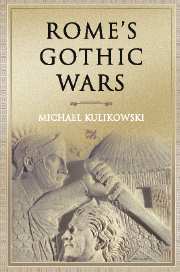
Rome’s Gothic Wars – Michael Kulikowski

Cover of Rome's Gothic Wars


Rome’s Gothic Wars
Michael Kulikowski
225 pages including notes and index
published in 2007

Rome’s Gothic Wars, written by new to me American historian Michael Kulikowski is meant as an entry level introduction to the Goths and their conflicts with the Roman Empire. As such it’s quite short, with the main text being only 184 pages long. As a history it only deals with the Goths as they first entered Roman consciousness, in the late third century CE, up until the sack of Rome by Alaric and his Goths in 410 CE. Kulikowski does deal with the Gothic “prehistory” in passing, but does not deal at all with their later history and evolution into separate Visogothic and Ostrogothic kingdoms. For Kulikowski, those first two centuries of Roman-Gothic interactions form a neatly completed story, one that turned “Goths” into the Goths.

As Kulikowski argues, wondering where the Goths came from before they are first mentioned in Roman histories is pointless, nor should too much attention be paid to the “deeply misleading” Getica of Jordanes, the sole Roman source for the supposed origins and migration of the Goths, as other modern historians still do, attempting to separate the wheat from the chaff. Instead, Kulikowski believes that the Goths were a product of the Roman Frontier, like the Franks and Alamanni, who appear at the same time. Roman military, economic and cultural interactions with the barbaric tribes along their frontiers created new political entities and the Goths were one of them. The Gothic origins lie in the exact same parts of the Roman frontier zones that they first appear in Roman history, north of the Danube and west of the Black Sea and he’s quite harsh on any modern historian who thinks otherwise.

Read more…

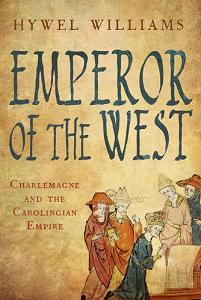
Emperor of the West – Hywel Williams

Cover of Emperor of the West


Emperor of the West
Hywel Williams
460 pages including notes and index
published in 2010

Emperor of the West: Charlemagne and the Carolingian Empire is a book I ran across when looking for other books in the Middelburg library, but which turned out to be exactly the book I needed to read after having spent most of December reading Peter Heather’s empires and Barbarians. Heather’s book was a comparative history of the first millennium CE, from the Late Roman Empire through to the Carolingian and Ottonian empires, of which the Carolingian was the first European empire with had its power base in north-west Europe, as opposed to the Mediterranean basin. Heather’s focus was on the interactions of these three empires with the various “barbarian invasions” each had to deal with and how these shaped what would become modern Europe, but what it made me want to read was more about the Carolingians themselves, which is where Emperor of the West came in handy.

Though not quite an introductionary level book — some familiarity with the various characters is expected — Emperor of the West turned out to be a good overview of Carolingian history. Williams’ main focus is on Charlemagne himself, but through him looks at wider Carolingian culture and history. He consistently puts Charlemagne in the context of the Western European recovery from the fall of the Roman Empire in which the awareness of imperial Rome and its history helped shape Charlemagne’s empire, in the same way that the Carolingian conviction that they were uniquely blessed by Christ also did. The Carolingians always looked back to the Roman past and consciously set out to restore it in their own image, but in the process created something new, the first European empire not to depend for its power on the Mediterranean Basin.

Read more…