Juan Cole on Pakistan

Juan Cole agrees with me on the American view of Pakistan:

What I see is a Washington that is uncomfortable with anything like democracy and civilian rule in Pakistan; which seems not to realize that the Pakistani Taliban are a small, poorly armed fringe of Pushtuns, who are a minority; and I suspect US policy-makers of secretly desiring to find some pretext for removing Pakistan’s nuclear capacity.

All the talk about the Pakistani government falling within 6 months, or of a Taliban takeover, flies in the face of everything we know about the character of Pakistani politics and institutions during the past two years.

Like I said Saturday, mistrust of democracy has always been a staple of US foreign policy. It’s not surprising that US government sources consistantly overstate the dangers of the Taliban in Pakistan or the importance of the campaign against it; for the US government, the presence of the Taliban in Pakistan is the most important security issue there as it impacts on American operations in Afghanistan.

What is surprising is how far the western news media have internalised this attitude. Not only do they agree with this and present news from Pakistan in the context of the war against the Taliban, but the idea that this war might just be less important to Pakistan itself, that the Taliban is to the Pakistani state as the ETA is to Spain, an important security problem but not a fundamental challenge is almost never mentioned. Pakistan is constantly judged on whether it achieves American goals and nobody thinks this strange. As if we’ve lost the ability to understand any other viewpoint but the American one.
A democratic Pakistan is a failed state

Manan Ahmed on the failed state rhetoric as used against Pakistan:

It was that under the rule of the military usurper Field Marshal Muhammad Ayub Khan that Pakistan was adopted as a Cold War ally and held up as a model “developing nation”. During Khan’s tenure, Pakistan was said to enjoy the benefits of a so-called “developmental dictatorship” – many dams were built and much cement was poured.

The US even helped Ayub Khan engineer an election victory in 1965. But shortly thereafter, he foolishly went to war with India; his popularity plummeted, and his flashy foreign minister, Zulfiqar Ali Bhutto, began a national campaign for a democracy based on socialist principles. Bhutto’s rise ran afoul of the “domino theory” intended to check the spread of Communism; it was in this context that Pakistan was first crowned a “failed state” – giving rise to decades worth of books and studies with titles like The Failure of Democracy in Pakistan (1962), The Failure of Parliamentary Politics in Pakistan, 1953-1958 (1967), Pakistan: Failure in National Integration (1968), Ethnic Conflict and the Failure of Political Integration in Pakistan (1973), Pakistan, Failure in Nation Building (1977) and Pakistan On the Brink (2004).

[…]

The monotonous drone of “failure” implies that the fragile democracy currently in place is not worth preserving. It encourages the marginalisation of the civilian government and boosts the claims of both the military and the militants. Pakistan’s salvation has never been and will never be in the military’s hands. The country’s future lies with the millions of Pakistanis who are working to sustain democracy – and what must be defended is their resilience and strength, to prevent the self-fulfilling prophecies of failure.

It’s an old constant in US foreign policy to prefer the familiarity of military dictatorships above the uncertainty of democratically elected governments. They’re easier to deal with and easier to manipulate. It’s never about what’s good for Pakistan, just what suits the US best. Having Obama in the White House doesn’t change this.

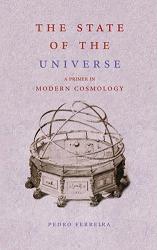
The State of the Universe – Pedro G. Ferreira

Cover of The State of the Universe


The State of the Universe
Pedro G. Ferreira
320 pages including index
published in 2006

I felt the need to reacquaint myself with modern astrophysics as it has been far too long since I’ve read anything about it. Sure, I do watch The History Channel’s Universe series whever I catch it, but that doesn’t tell me much I don’t know already, while following the vast array of astronomy blogs out there is no real substitute, as they do assume a certain familiarity with the current state of the art. Long live the public library therefore, for providing quick access to what looks like exactly the book I need: The State of the Universe: a Cosmic Primer. Written by Pedro Ferreira, a lecturer in Astrophysics at Oxford, it’s meant as a layperson’s introduction to what astrophysics thinks the universe looks like and what makes it tick.

The State of the Universe is built up logically from first principles. Ferreira starts with a short overview of classical Ptolemaic cosmology, with the Sun revolving around the Earth and how it was succeeded by the heliocentric cosmology of Copernicus and Gallileo. Over several chapters he then shows how our knowledge of the size and complexity of the universe expanded, from what was once thought to be no bigger than our Solar System, through an understanding of how big our Galaxy actually and finally to an appreciation of the idea that all those galaxy shaped nebulas are actually galaxies as well. Then he goes on to the other end of the scale and explains the physics of the universe: the fundamental forces that shape it (gravity, electromagnetism, the strong and weak force), a quick sketch of the whole zoo of the particles that make up the matter and energy in it and how it all sits together. From the classic Big Bang idea of the evolution of the universe he finally moves on to the cutting edge of current physics, where it all gets a lot less clear what’s real and what’s just clever theorising.

Read more…

Zionists crying wolf too often

Via Aaronovitch Watch (Incorporating “World of Decency”) comes Tony Greenstein’s account of the debate on anti-semitism between Aaronovitch (Zionist / warmonger) and Gilad Atzmon (jazz musician / somebody who if he isn’t anti-semitic, doesn’t do much to deny the charge). Aaronovitch himself was furious that in the choice between two evils, the audience took the side of the jazz musician, but as Greenstein says “the wars and blockades that Aaronovitch has supported in different parts of the world have killed upwards of 2 million people. Atzmon’s anti-Semitism has killed no one because, as far as I’m aware, death by boredom cannot be entered as a cause of death on a death certificate“.

His main point is made slightly later:

When you attack Palestinians and anti-Zionists, not least Jewish anti-Zionists, as being anti-Semitic, then what you do is let the real anti-Semites like Gilad Atzmon off the hook. When you deliberately confuse and conflate anti-Zionism with anti-Semitism it is not the anti-Zionists you hurt but the anti-Semites you help. The only reason Gilad Atzmon can pass himself off as an anti-Zionist, when he is politically at one with Zionism’s founding creed, that diaspora Jewry is a hideous thing and that being Jewish and Zionist is one and the same thing, is because anti-Zionists and anti-Semites are tarred by the Zionists with the same brush of anti-Semitism.

If you cry ‘wolf’ for long enough, don’t be surprised if people no longer believe or listen to you when the wolf makes an appearance. And that is the real contribution of David Aaronovitch and Zionism to the fight against racism and anti-Semitism.

I’m not sure how real this danger is; there have been various studies showing anti-semitism is on the rise in Europe (examples left as exercise for your googling skills) but many of those suffer from the same problem as Greenstein mentions, that they confuse criticism of Israel, anti-zionism and anti-semitism. Anecdotally there have been incidents here in the Netherlands where hotheaded demonstrators against Israel’s War on Gaza have shouted anti-semitic slogans, which have then been used to discredit legitamite attacks on Israel. It does make sense to assume that in a climate where anti-semitism as a charge has been devalued to the point that any criticism of Israel is anti-semitic by default, people will wory less about it as they see how ridiculous most charges are. It even makes sense that this will lead to more real anti-semitism.

From the point of view of the Israel boosters this may not even be so bad, as 1) it delegitamises genuine criticism and 2) it adds credibility to the idea that Israel is the sole defence Jews have against persecution and that therefore they should support it unconditionally. Which doesn’t mean this was a conscious goal of those that have made those accusations the most of course, just that it’s a not entirely unwanted side effect.

What’s it like to be in a police kettle

A bit late, but it was stuck in my mailbox’s spam queueueue: a firsthand account of what it’s like to be stuck in a police kettle.

And then twenty minutes in, we realised we couldn’t get out. We walked up to a couple of cordons and asked nicely. The police told us they weren’t allowed to let anyone out, wouldn’t say why and that we’d be released when the organisers declared the demo over, but they didn’t know when that was. We were directed to another cordon which would let us through. Which sent us straight into the middle of two cordons where we both had the personal privilege of being shoved by the police. I was starting to regret having Hannah with me. A, perhaps more honest, policeman told us that it was policy to send people seeking to leave to the next cordon, and the next, etc.

We wandered around fruitlessly looking for an exit. There were a lot of people like us and the police were having to explain over and over again that they weren’t allowed to let anyone out. Some people who were trying to get back to work, to doctor’s appointments, etc., got upset with the police, who responded in a very calm manner. Plods don’t get paid enough to do this shit.

[…]

Later on I went to the peaceful sounding Climate Camp up the road on Bishopsgate to detox. It was very relaxed, there was a communal kitchen and it was all good. Until the riot police penned everyone in. I lied my way through the cordon and managed to pull an office worker out with me.

I am still upset. I feel my right to peaceful protest has been abrogated. The whole thing was so bizarre and unnecessary. I go round and round in my head and I can’t make sense of the police tactics in detaining peaceful protesters for hours without food or water or toilet facilities.

From my perch I overheard a man saying to a police officer, “I wasn’t angry when I came here, but I am now.”