10 March 1926: Hugo Gernsback invents science fiction

Today it’s exactly 100 years ago Hugo Gernsback published the first science fiction, sorry scientifiction magazine.
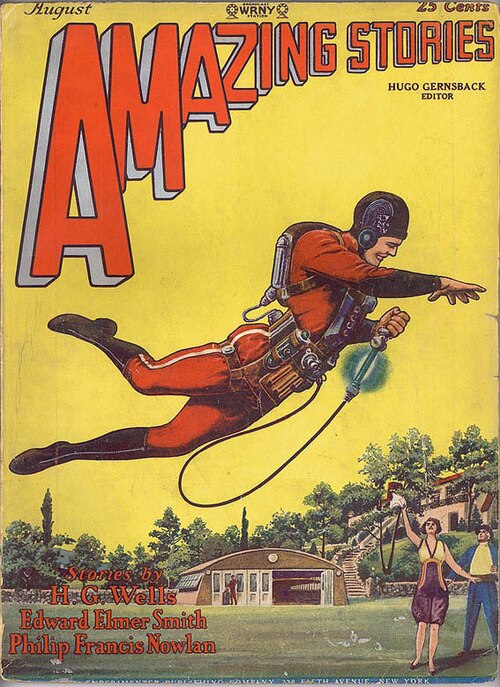
Amazing Stories August 1928 witht he first E. E. Doc Smith story, showing a man trying an antigravity device

Hugo Gernsback (August 16, 1884 – August 19, 1967) was a Luxembourgian immigrant to the United States, who became involved with the hottest technology of the 1910s and 20s: radio. He had his own radio station, was involved with some of the first television broadcasts in America (in 1928) and before that he helped establish amateur radio broadcasting, setting up the world’s first electronics magazine in 1909. As an inventor, entrepreneur and endless tech boaster he had an optimistic view of the coming age of high tech could save the world and to promote that vision he started writing stories set in that future. His serial Ralph 124C 41+ (One To Foresee For One) is dreadful but it has that manic energy of the true tech freak.

Tempting as it is to call him the Raoring Twenties’ version of Elon Musk that wouldn’t do him justice, Unlike Musk he did actually invent and create the things he took credit for. (But like Musk, he wasn’t particularly keen on paying his employees if he didn’t have to…)

The one problem is, without him we might not have had Elon Musk either. Because that strain of perverted techno utopianism that Musk deals in got its start with Gernsback.

Because Gernsback noticed that the scientifiction he published in his radio and electronics magazines was quite popular, so he thought a new magazine wholly devoted to it might sell as well…

Launched on 10 March 1926, this hunch proved correct. Even when only offering reprints at first, Amazing Stories was a hit, creating a new pulp genre out of nothing. Obviously, there had been science fiction stories before: Wells, Verne, Poe, Shelley and a host of other 19th and early 20th writers had written some. There were also earlier pulp magazines like Argosy or Weird Tales that published stories of that nature.

But it was Gernsback who codified and named it. And it was his evangelism that would shape the genre into something that had loftier intentions than just providing its readers with fifteen minutes of a good time. Gernsback intended science fiction to be educational, to provide a guideline to the future that would be build by men like him. That strain of science fiction would for decades be the dominant strain of English language sf, further refined by John Campbell Jr at Astounding Science Fiction and his stable of writers (Heinlein, Asimov, van Vogt etc).

Wunded but not quite killed off by the New Wave in the sixties, it survived long enough through editors and writers like Jim Baen and Niven/Pournelle that it was still around to infect people like Musk, whose visions of self driving cars and colonies on Mars are straight out of Amazing. Also baked into Gernsback vision of science fiction : a nascent fascism and fondness for genocide as the answer to all problems. That nice cover to the left is the first appearance of E. E. “Doc” Smith’s Skylark of Space series, in which our heroes start by committing genocide against one alien race and end up blowing up entire galaxies. Great fun.

So three slightly muted cheers for the invention of science fiction. Too bad the worst people in the world took all the wrong lessons from it.
The Teutonic ur-forest is a myth

Dense forests in Europe are a modern invention:

The study is based on a large synthesis of independent lines of evidence. The researchers reviewed paleoecological studies covering the last 23 million years and combined multiple scientific “proxies” that reveal past vegetation structure and ecological processes. These included pollen records, plant macrofossils, charcoal particles from ancient fires, stable-isotope analyses of herbivore teeth and bones, fossil insects and mammals, and ancient environmental DNA preserved in sediments.

“Each type of proxy offers its own perspective, but together they let us see whether the landscapes were covered by dense forests, open grasslands, or a mix of the two. By combining these datasets across time—from the Miocene to the pre-industrial era—we could trace long-term changes in vegetation and the role of large herbivores with much greater confidence than earlier studies that used only one method,” explains the study’s lead author, ECONOVO Ph.D. student Szymon Czyzewski of Aarhus University.

The conclusion is clear: across this long period, the typical landscape was a dynamic tree- and flower-rich mosaic, where large wild herbivores such as elephants, rhinoceroses, aurochs and bison kept vegetation semi-open and diverse—and this was the case in temperate climates similar to those prevalent in Europe today, as well as in warmer and in cooler climates.

I wonder how much of this idea of the ur-forest is due to all that romantic 18th and 19th century Germanic nationalism? On the practical side, having a dense forest is also much easier than trying to reintroduce large herbivores like rhinos into European landscapes…

She could’ve been somebody important

This week’s episode of Ikoku NikkiJournal with Witch hit where it hurts.

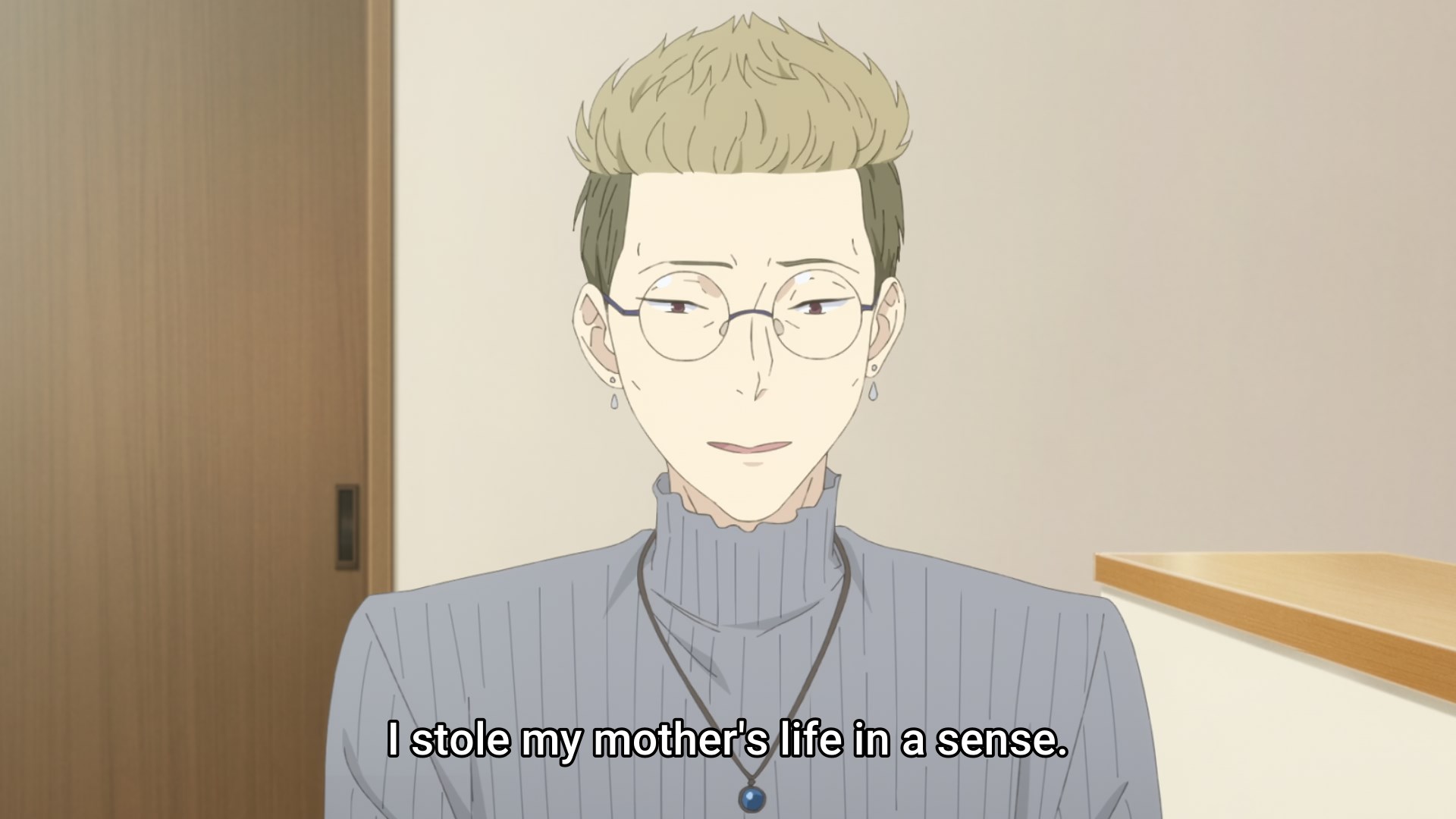
I stole my mother's life in a sense

I was born in 1974, which is long enough ago that my mother lost her job as a kindergarten teacher when she became pregnant. That’s how things worked back then in the Netherlands. If you became a mother you obviously could no longer work. You had to take care of your baby after all: that’s your job now. The father? He can’t help you, he has a real job. Believe it or not, this state of affairs was already an improvement on a decade earlier, when she would’ve lost her job on marriage. Progress!

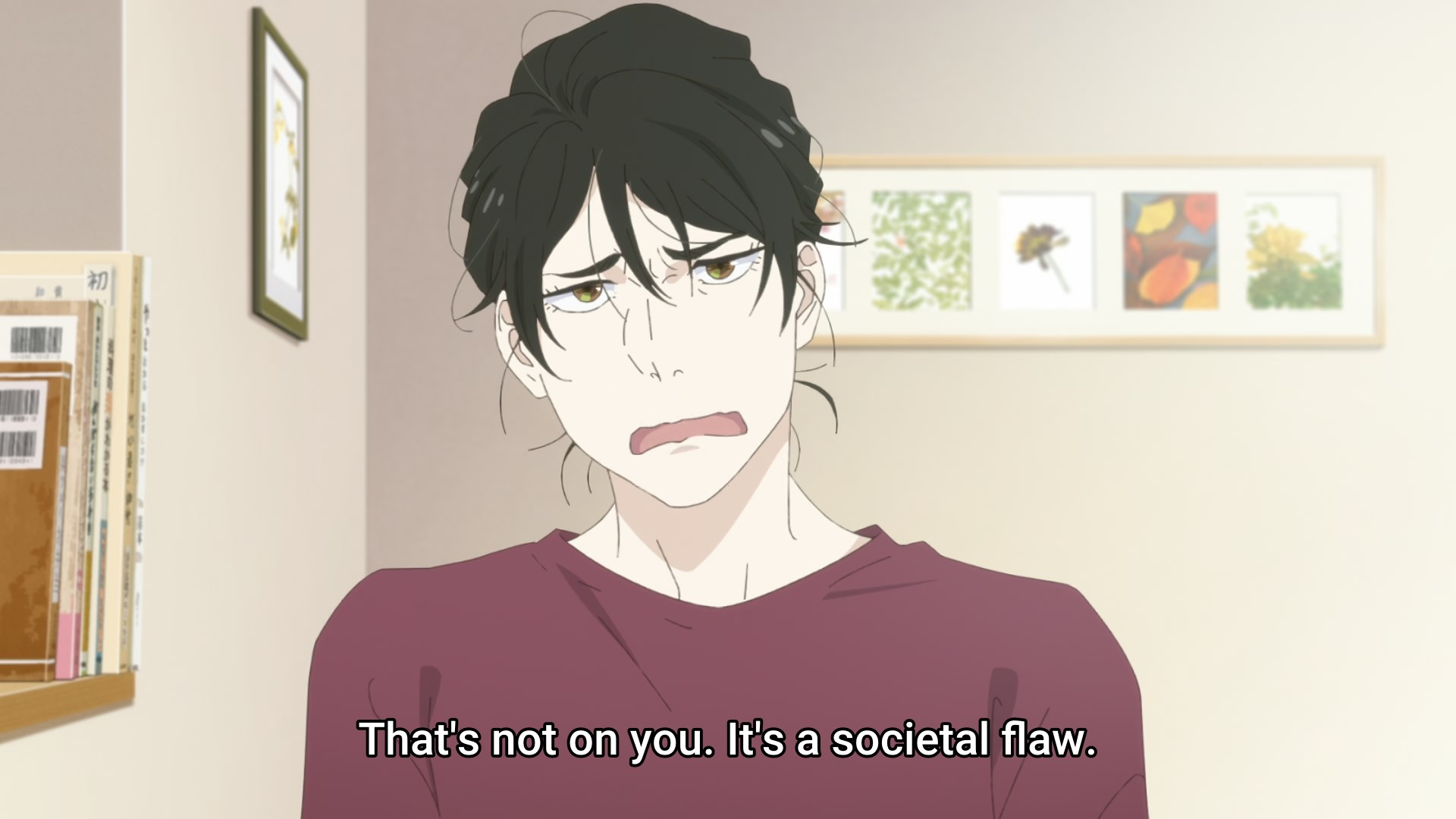
That's not on you, that's a societal flaw

Not that my mother didn’t want children or that she didn’t look forward to being a mother. It’s just that the option of “have children AND a career” wasn’t available for women then. So when Juno-san started talking about their mother, how she was a sharp woman and how had she not had her child or had been born a generation later, she could’ve been somebody important, that struck me. Especially coming in the middle of an episode that revolves around becoming who you want to be and discovering who that is. Even though Makio is right and society is to blame, I share Juno’s sense of guilt. It’s not that my mother has been generally unhappy with her life, but that there were choices that were made for her, that limited her opportunities. What if she could’ve stayed a teacher and my parents had split the work of raising children they way my sister and her partner do now? What would her life be like now?

An Uncanny Valley Version of Patlabor: The New Files

Ever started a sequel to a favourite series and found something …off with it?

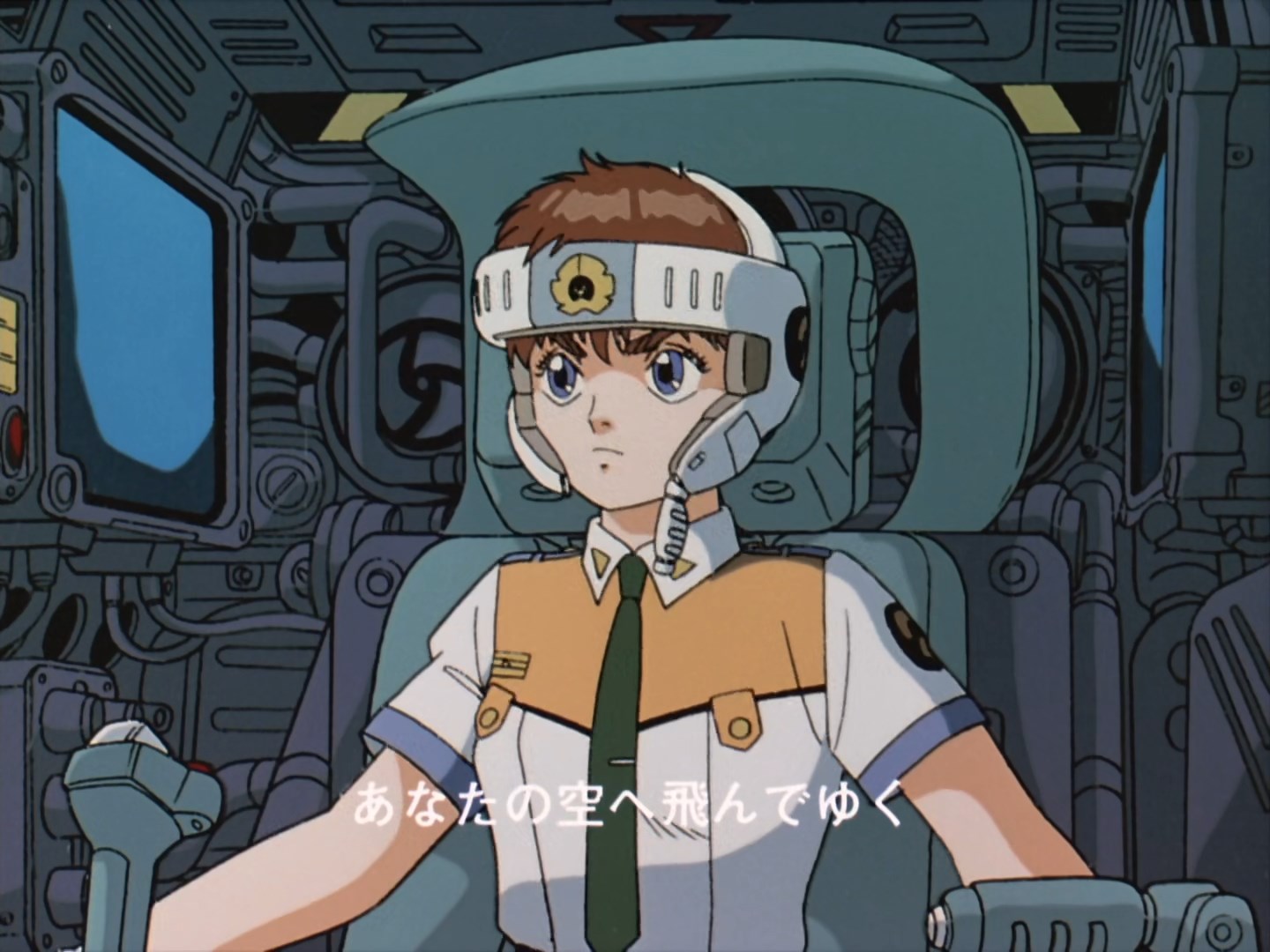
Noa in the cockpit of her mech, her face looking wider and off model

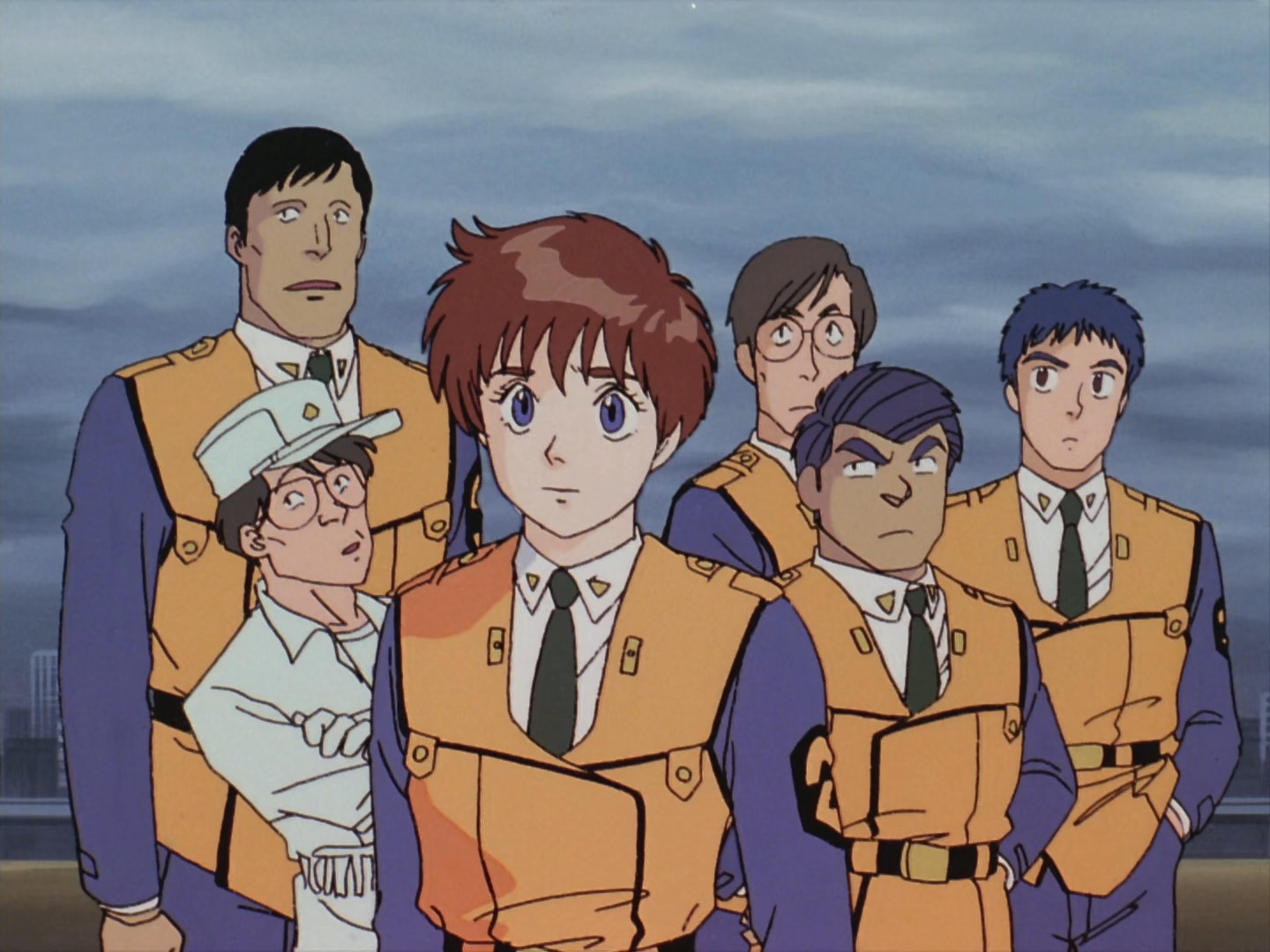
That’s what happened to me starting Patlabor: the New Files. As soon as I saw the shot above, from the series opening theme tune, it felt off. That wasn’t the Noa I remember from the original OVA series or the television show. Having now watched the first two episodes this feeling persists: none of the characters I remember look quite right while the animation itself feels slightly cheaper and stiffer too. To be fair, these are only minor defects and on its own it’s perfectly servicable, but it put me off nevertheless.

Most of the cast, off-model and stiff looking

Patlabor is important to me. Manga Entertainment brought out the first two movies in the early nineties and these were among the first anime I watched consciously as anime; I think I also watched at least some of the original OVA series. The television series as well as the rest of that original OVA I watched when I got back in anime in 2015-2017, leaving The New Files as the only major Patlabor series I still needed to watch. If you’re familiar with the franchise, you know there’s quite a tonal difference between the OVAs, the movies and the television show. The OVAs tend to be serious near future science fiction, while the television series is somewhat more goofy and more slice of life. The movies meanwhile are much more philosophical in nature, with the second one being a sort of Ghost in the Shell before Ghost in the Shell. The central concept of each is best summed up by the opening narration of The New Files:

“Labor” is the common name for robots developed for industrial use.
Their use became widespread in construction and civil engineering,
but Labor-related crimes skyrocketed as well.
To combat this, the Metro Police created a Patrol Labor unit:
The Special Vehicles, Section 2.
This was the origin of the Patlabors.

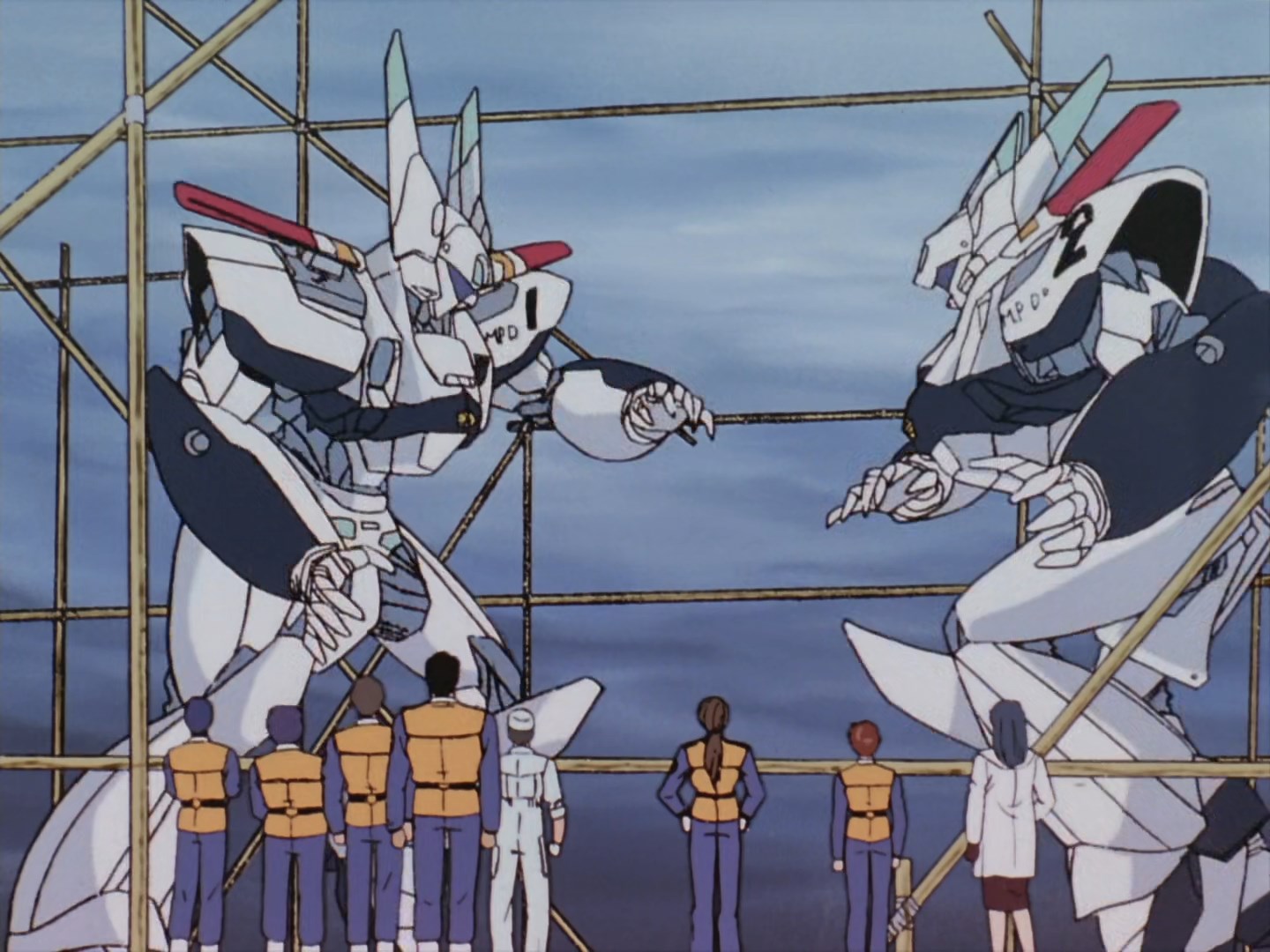
Two of the Patlabors fighting a mock duel

The New Files starts where Patlabor: the TV finishes, with a rematch with Griffin, a mysterious black Labor which fights the police as a sort of sales demonstration. Originally the first OVA was published just after the television series had ended, so this would’ve been fresh in the viewer’s memory still, but I finished watching it in 2017 and almost a decade later the details had somehow slipped my mind. It was fairly easy to get back in the swing of things nevertheless, but that feeling of unease remained. Part of that was that the cast just didn’t look like themselves, part of it was the awkward character animation. Characters are posed stiffly and while the animation on the whole is decent, at times it just doesn’t feel as fluid as I expected. It took me the best part of these two episodes to get used to it and actually enjoy the story. Even below average Patlabor is still a cut above most anime.

Dan Simmons RIP: another sf writer dies too late to salvage his rep

I have to admit at being a little bit triggered by this obituary by Eric Berger over at Ars Technica:

Dan Simmons, the author of more than three dozen books, including the famed Hyperion Cantos, has died from a stroke. He was 77.

Simmons, who worked in elementary education before becoming an author in the 1980s, produced a broad portfolio of writing that spanned several genres, including horror fiction, historical fiction, and science fiction. Often, his books included elements of all of these. This obituary will focus on what is generally considered his greatest work, and what I believe is possibly the greatest science fiction novel of all time, Hyperion.
[…]
In any case, fans of epic fiction have lost a giant, a great writer and epic storyteller with a gift for dark twists and colorful characters. We can only hope he has found a tree ship to take him to a celestial paradise rather than become infected with a cruciform.

To only talk about a science fiction writer’s most famous work in his obituary is an understandable choice, especially since it seems to have meant so much to Eric. But I wish he had paid some attention to another, more infamous text of Simmons too:

“I mean the Century War with Islam,” interrupted the Time Traveler. “Your future. Everyone’s.” He was no longer smiling. Without asking, or offering to pour me any, he stood, refilled his Scotch glass, and sat again. He said, “It was important to me to come back to this time early on in the struggle. Even if only to remind myself of how unspeakably blind you all were.”

“You mean the War on Terrorism,” I said.

“I mean the Long War with Islam,” he said. “The Century War. And it’s not over yet where I come from. Not close to being over.”

“You can’t have a war with Islam,” I said. “You can’t go to war against a religion. Radical Islam, maybe. Jihadism. Some extremists. But not a . . . the . . . religion itself. The vast majority of Muslims in the world are peaceloving people who wish us no harm. I mean . . . I mean . . . the very word ‘Islam’ means ‘Peace.’”

“So you kept telling yourselves,” said the Time Traveler. His voice was very low but there was a strange and almost frightening edge to it. “But the ‘peace’ in ‘Islam’ means ‘Submission.’ You’ll find that out soon enough”

Published in april 2006 on Dan Simmons’ own website, “the Time Traveler’s Tale” wasn’t fiction, but intended as a terrible warning of the grim future Simmons saw ahead of him. Yes, he had his brain fried by 9/11 and the ensuing War Against Terror. Just another dime a dozen islamophobe echoing the same tired rhetoric about Islam you saw on every other warblog at the time. For me, that completely ruined any enjoyment I could get out of Hyperion. Rereading it made clear that the vileness that fully erupted in that essay in 2006 was already present in Hyperion in 1989, just hidden better.