Famous Dutch director Dick Maas has two words of advice for anybody thinking of making movies in Holland: don’t.
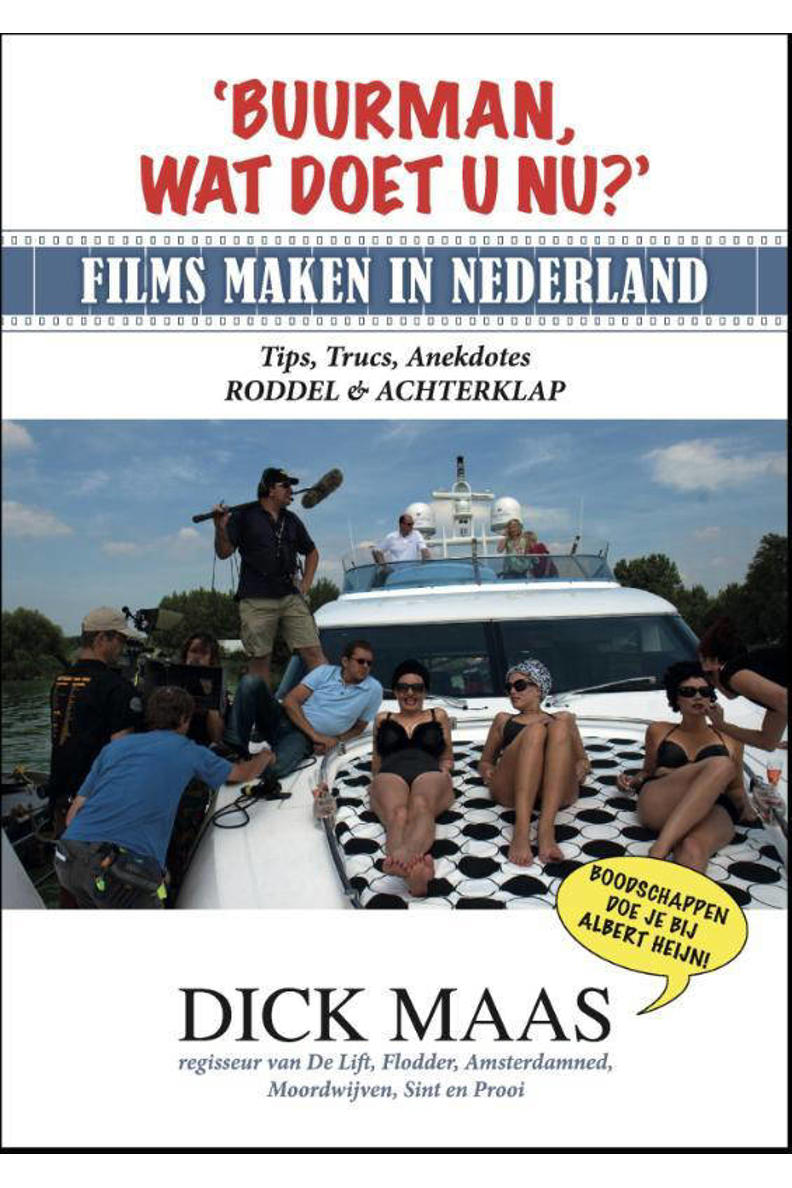
Buurman Wat Doet U Nu?
Films Maken in Nederland
Dick Maas
360 pages including index and notes
published in 2017
And Dick Maas should know. He has been making commercial movies since 1983, when he debuted with low budget horror classic De Lift, about a murderous elevator eating people. Another of his horro movies, Amsterdamned (1987) I first saw on a movie night at my high school, back in the days when that meant having a screen and projector set up in the main hall. That one gave me nightmares for a while, not so much because of the gruesome murders, but rather through the scene in which the murderer was revealed to be suffering from hexafluoride poisoning and looked like it. He’s made several horror movies since, the most famous one perhaps being Sint (2010), in which he took the beloved Dutch (original) version of Santa Claus and made him into a demon figure.
But his most successful films had nothing to do with horror, but were a fish out of water series of comedy movies: the Flodder series. In the first movie, an antisocial family is moved from the slum house they lived in to a posh suburb to the anger and horror of their new neighbours. Its succes spawned two sequels and a television series. Flodder is where the title of this book comes from, which loosely translates to “oh neighbour, what are you doing now”. In the movie it’s the line said by busty blonde Tatjana Simic as she’s being groped and stripped by the elderly neighbour, who will later be blackmailed for it by her brothers for a new car. It’s one of those lines everybody in the Netherlands of a certain age will recognise.
Apart from directing, Maas also has worked as a producer, writer and even composer and is therefore familiar with most aspects of making a movie. If your interest lies in cinematic theory however this is the wrong book for you. Buurman Wat Doet U Nu is extremely practical and pragmatic. It’s also somewhat cynical about the realities of making movies in the Netherlands, which is most strongly shown in the first chapter, which is about just that, but continues to pop up in later chapters. There just isn’t that much money to go round and to get what money is available you need to jump through a lot of hoops. Increasing bureaucracy also makes the process of movie making once you do have the money much harder, as e.g the chapter on location shooting shows.
Maas structures his book in a roughly chronological order of how a movie project is run and made. He starts with the scenario, then moves onto financing and assembling the crew, cast andplanned locations. He then takes a detour into discussing the decisions a director needs to make before looking at the pre-visualisation and planning needed to make the actual filming a success. That process he divides into four chapters: one general one about shooting a movie, one about shooting action scenes and the challenges they bring and one special effects, before finishing with a look at the montage process. The last chapter of the book is about what to expect and do once the movie is finished and ready for distribution.
All this is told in a very matter of fact, practical way. Reading this book won’t make you a movie maker but it gives you a good idea of the work and challenges involved. Because he garnishes it with a lot of gossip and examples from his own experience it’s also a very readable book, which I finished in two or three lazy afternoons reading in the garden.