A Christmas Carol — Charles Dickens

Cover of A Christmas Carol


A Christmas Carol
Charles Dickens
100 pages
published in 1843

Sandra always loved Dickens more than any other Victorean novelist and she always tried to convince me to try him but never succeeded. So I thought that it would be nice to try a couple of his novels next year in her honour and to warm up I thought I’d start with A Christmas Carol. It’s short, it’s the season and the story is so familiar to me from various adaptations that I could almost read it on autopilot. I actually read it in its entirety on the train journey to my parents when I was going home for Christmas.

Stories like A Christmas Carol, which are so popular and have been adapted so often that they’ve become part of the background cultural noise, are always interesting to go back to. With some of these stories the original is so different from what you expect that it’s actually a disappointment to read them, as you run into all the awkward bits that had been filed off through various retellings. This wasn’t the case with A Christmas Carol: it’s exactly as you’d expect it to be.

The plot is too familiar to recount here and there are only a few minor scenes that differ from what you expect if you only know the movies. What really makes the difference between the original and the various adaptations is Dickens’ writing voice. He is a bit loquacious, won’t use two words where five might do, but he does use his words well. It takes getting used to, but once you are used to his style his verbosity does help set the mood of the story.

As a story the original is even more sentimental than the adaptations of A Christmas Carol are, also helped by Dickens’ writing style. This is a real tearjerker, but than that’s allowed at Christmas. And with the sentimentality Dickens also delivers some harsh blows against those who would ignore the poor even at Christmas, by putting the Malthusian sentiments that justify this into the mouth of Scrooge, then refuting it through the visits of the three ghosts.

So yeah, as a teaser for Dickens’ more serious novels, this worked well.

The Crusades c. 1071 – c. 1291 — Jean Richard

The Crusades c. 1071 - c. 1291


The Crusades c. 1071 – c. 1291
Jean Richard
Jean Birrell
516 pages including index
published in 1999

The Crusades are not my favourite subject in Medieval history, as I tend to concentrate my reading on the early Middle Ages, but The Crusades c. 1071 – c. 1291 is part of the Cambridge Medieval Textbooks series which I have good experiences with. The volumes in this series I’ve read so far all have been good introductions to their subjects. Of course, much still depends on the writer and I didn’t know Jean Richard, but he turns out to be a French historian who is well known enough to have an entry on the English language Wikipedia; this book was first published as Histoire des Croisades. The translation is by Jean Birrell and is good enough that you don’t really notice it is a translation.

Because of the American shenanigans in the Middle East in the past decade, the Crusades have been used quite a lot as a metaphor for these adventures, as well as an example for internet jihadists and Keyboard Kommandos both of the War Between Christianity and Islam as an universal war. The crusaders themselves feature as either the heroic defenders of the free west or bloodthirsty invaders of the peaceloving Islamic world. Reading a history like this is the best anecdote to that sort of nonsense. Jean Richard is careful to show that the motivations on both sides were slightly more complex than “Christ v Allah”. Religion obviously played a key role in the Crusades and there were certainly fanatics on both sides, but the realities of the Crusades and life in the Holy Land were more complex than the Crusading myths make out. What Richards contineously emphasises is that the key motivation for the Crusades was not the idea of forcibly converting heathens to Christianity, but rather of safe guarding the Holy land for Christianity, making it safe for pelgrims to visit, keeping the holy places safe for Christian worship.

Fortunately for an already exhaustive history, Richards limits his focus to the Crusades to Palestinia/the Middle East and doesn’t take into account other crusades elsewhere, against heretics in already Christian countries in Europe, or the German campaigns against heathens at the Eastern borders of Christendom. These were different enough from the “real” crusades that it would’ve made this book incoherent. It’s complicated enough already as it is. The Crusades is a largely traditional chronological history, starting from just before the First Crusade to the end of Frankish rule in the Holy Land, some two centuries full of kings called Baldwin. His point of view lies largely with the crusaders and the Frankish lands, their Muslim opponents only discussed in the context of their dealings with the Franks.

Even with this omission Richards is basically writing two histories at once: that of the Crusades proper and that of the Frankish or Crusader states, founded after the success of the First Crusade and which managed to survive in increasingly hostile conditions for some twohundred years. Either of these is complex enough on its own already, treating them together does make for some difficult reading at times. That Richards manages to make a clear and concise narrative from these complex histories is quite an achievement, even if sometimes the flood of rulers with the same names becomes a bit too much.

The question of why the Crusades started when they did and what the motivations were of the crusaders is a complicated one as Richard shows. It had been some centuries since Islam had overrun the Holy Land after all, but while Christians living there and pilgrims visiting it had to endure some humiliations, there wasn’t a real proximate cause for the Crusades, other than the pressure the Byzantine Empire was under pressure from the Turks. Yet while the Pope might have called for a Crusade to relief that pressure (and also reforge ties with Eastern Christians), what it turned into was
the liberation of Palestine and the establishments of several Christian kingdoms there.

These Frankish states had to survive amidst their Islamic neighbours, but this didn’t mean they existed in a state of perpetual war, let alone Holy War. Instead for long stretches of time between crusades, the region was dominated by the same sort of power politics as any other region with various weaker and stronger powers, as states fought each other, became allies, traded or became vassals of stronger countries. For both Christian and Muslim rulers, realpolitics usually trumped religious convictions. It’s when they didn’t, when there was a Saladin determined to destroy the Frankish states that the Crusades resumed.

These Crusades were never succesful in the sense that they defeated the Muslim powers in the region for ever, but they did guarantee the continuing survival of the Frankish states for roughly two centuries. Each time these kingdoms were truly threatened, the arrival of crusaders from the west was able to restore the balance. It was only when the broader political situation in the Middle East had changed, with first the arrival of the Mongols and then the creation of the Mamluk dynasty in Egypt, combined with a loss of interest in the region in the west as other concerns preoccupied European powers, that the Frankish kingdoms were overrun.

The Crusades c. 1071 – c. 1291 is an excellent overview of this history, but was sometimes a bit of a slog to get through, due to the repetive nature of some of this history.
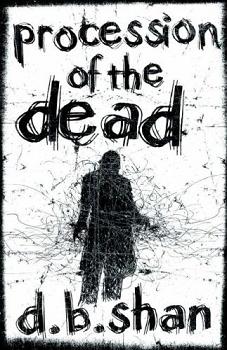
Procession of the Dead — D. B. Shan

Procession of the Dead


Procession of the Dead
D. B. Shan
312 pages
published in 2008

Never heard of D. B. Shan before I found this in the library, but the book looked interesting and that’s what libraries are for, aren’t they; discovering new authors. Judging from the back cover blurb this seemed to be a crime thriller with some fantastical elements and for once that’s what it turned out to be. It was interesting to for once go into a novel without preconceptions, without knowning anything about the author or the books he has written.

Procession of the Dead is a book about a young gangster called Capac Raimi, coming to the City to be an apprentice to his uncle, one of the small time crooks running part of the underworld. Capac has higher ambitions than that though, hoping to catch the eye of the Cardinal, the man who runs all of the underworld. The Cardinal is the City and the City is the Cardinal: “if the Cardinal pinched the cheeks of his arse, the walls of the city bruised”. And Capac does catch his eye, at the cost of his uncle’s life.

Whisked away to Party Central, the Cardinal’s headquarters, he is introduced to the man himself who takes him onboard for a glowing career in …insurance selling? Wannabe gangsters have to start somewhere and the Cardinal’s legal enterprises are just as big as his less than legal enterprises. Despite this lowly beginning, Capac is destined for greater things, being drawn in the Cardinal’s inner circle of confidants. But something’s wrong. Some of them disappear without trace and worse, nobody seems to remember them. Is that just a measure of the Cardinal’s power, or is there something more sinister behind this — and what does it have to do with Capac himself?

Procession of the Dead starts as a gangster story, turning fantastical as Capac finds out the truth about the Cardinal, his henchmen and himself. The combination of the two worlds is not entirely convincing, the gangster and fantasy elements clashing somewhat. One part of that is the setting. On the one hand there’s the City, carefully kept generic and symbolic, but there are occasional refences to real world things. It’s all a bit sloppy.

All in all this was entertaining enough, but nothing special. Interesting enough that I might read the sequel, if the library has it.

Spirit — Gwyneth Jones

Cover of Spirit


Spirit or The Princess of Bois Dormant
Gwyneth Jones
472 pages
published in 2008

So about halfway through Spirit, or The Princess of Bois Dormant, when the heroine is rotting away in prison on an alien world, forgotten by everybody, it looked like the novel was going to be a science fiction adaption of The Count of Monte Cristo. It wouldn’t have been the first; The Stars My Destination just being the most famous example of such an adaptation. But while the imprisonment of Bibi, Spirit‘s protagonist does consciously echo Dumas’ famous novel, including having an older mentor imprisoned with her who leaves her a fortune, it changes its mind almost instantly and doesn’t become a revenge story after all.

Which is for the best, as Bibi is no Edmond Dantès. Whereas the latter was unknowingly framed for a political crime for those he thought his friends, only discovering the truth years into his imprisonment, Bibi was just collatoral damage, not for the first time either. She had started live as Gwibiwr, the probable daughter of a (Welsh?) chieftan of the White Rock clans who’d long lived in rebellion against the one world government, a rebellion now crushed. Bibi herself is taken into the entourage of Lady Nef and becomes a minor servant, young enough to have lost most of her memories of before. She was therefore a victim of politics long before she was left ot rot in an alien prison for being part of a conspiracy against an emperor who hadn’t yet taken the throne when she had last been on Earth. And unlike Dantès, the people on which she could’ve had her revenge were mostly innocent bystanders as well.

I read my first Gwyneth Jones novel, Bold as Love back in February, as part of my Year of Reading Women project. It wasn’t a great success: the setting was dating, I had trouble getting used to Gwyneth Jones’ writing and I didn’t like the protagonists much. With Spirit I had much less trouble: less dated, better setting and a more likable if still somewhat passive heroine. Bibi mostly has no choice but to accept the circumstances she finds herself in and make the most of it, as she doesn’t have the power to do anything about it.

Once she escapes prison and finds the treasure her mentor set her up with and she re-emerges as the mysterious princess of Bois Dormant, she does have the power to change things should she want to, but by that time she’s content to remain in the background and manipulate events from the shadows. For the reader this means that it is sometimes unclear if she is responsible for some of the misfortune that happen to her enemies or whether these are just “coincidences”…

Like Bold as Love, Spirit starts slow, taking hundreds of pages to get Bibi into prison as we follow her from the time she was taken from the ruins of her clan’s cave fortresses in Wales, through her training as a servant to the Lady Nef and subsequent career as a civil servant, to the diplomatic mission she is part of which ends with her in prison. Until this point there doesn’t seem to be any plot going on, instead we just follow Bibi through her life and through her get a view of the society she lives in.

Which is somewhere in the far future with no obvious links to our time. Instead there are references to something called the Gender Wars, a first worldwide empire and a period in which the Earth was colonised by an alien race called the Aleutians, some hundreds of years previous and which has had the greatest impact in shaping contemporary society. What we see of it all seems vaguely Chinese though luckily not as orientalist as is the norm in science fiction. What impressed me as well was that Jones manages to make each of the major settings the story takes place in have their own distinguished cultures.

Spirit in the end is very much a book of two halves, the second half almost leaving Bibi behind in favour of other characters as she stays in the background manipulating events. As a whole it’s a bit unbalanced and as with Bold as Love I found it a bit meandering, but in the end I still enjoyed it.

Hellenistic and Roman Sparta — Paul Cartledge & Antony Spawforth

Hellenistic and Roman Sparta


Hellenistic and Roman Sparta
Paul Cartledge & Antony Spawforth
312 pages including index
published in 2002

When most people think of Sparta their first thought will probably be about that godawful movie based on that godawful Frank Miller comic 300: This! IS! Sparta! and all that. For all its faults, it does mirror the common view of Sparta as a warrior state, one of the superpowers of classical Greece, indomitable in its resistance to tyrannical Persia, if not quite a democracy itself. But there is more to Sparta’s history. There’s a tendency in pop history to look only at the classic Sparta, to lose interest once it has been overtaken by Thebe and lost its supremacy, just before the rise of Macedon under Philip and Alexander. What happened to the city once it became just another polis doesn’t interest us all that much, it seems.

We should therefore be grateful for books like this: Hellenistic and Roman Sparta: a Tale of Two Cities which does look at Sparta’s history after its fall from grace, first under Macedon rule, then under Rome. It was originally published in the early nineties, but updated for a second edition in 2002. More of a textbook than a pop history book, but I’ve struggled through much drier texts. At the very least it was an effective treatment of a part of Greek history I’m not that familiar with.

As the title indicates, this is a book of two halves. The first part treats Sparta as a Hellenistic city and is largely a chronological overview of its history from the end of the fourth century BCE when it lost its status as a great power to when it became part of the Roman Empire. The second part is much less chronologically arranged and gives more of a general overview of what the city looked like as just another provincial town in the empire, with the last few chapters looking at particular aspects of Spartan city live.

Part of this difference in approach is that historical sources are much more abundant for the first, Hellenistic period, when Sparta was still active in greater Greek politics, than they are for the Roman period, when its politics were largely local. For the later period then greater emphasis is laid on archaeological sources and what they can say about life in the city rather than on chronological history. To be honest, these later chapters were therefore off less interest to me.

What I took away from the book was that Sparta didn’t take its loss of great power status lying down and repeatedly attempted to restore its dominion, but just lacked the resources to do so. Under the Macedonian hegemony, an independent Sparta was only tolerated as long as it didn’t threaten the status quo, while its neighbours were more than happy to pull it down if it became too powerful again. Whether through internal reforms, using mercenaries financed through the foreign adventures of its kings or by gaining the support of greater powers, each of Sparta’s attempts to get back the land and possessions it had lost failed. Its resource base was too small and its local enemies too powerful to overcome, though not powerful enough to destroy the Spartan state completely.

Despite this Sparta entered Roman rule on better terms than many of the other Greek city states, having become a loyal if passive ally at exactly the right time to ensure that Sparta entered the empire as a free city. It helped a lot that Romans appreciated the traditional Spartan values of martian valour and sober, simple, clean living. Sparta made full use of its history to lure influential visitors to the city, including through various Olympic style games. This enabled the city’s elite to forge ties with notable Roman families, including those of a couple of emperors, making it more important than it really was as a smallish provincial town…