Omnitopia Dawn — Diane Duane

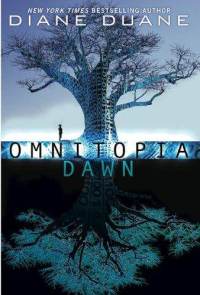
Cover of Omnitopia Dawn


Omnitopia Dawn
Diane Duane
360 pages
published in 2010

Omnitopia Dawn revolves around the upcoming launch of a new extension to the world’s most popular online RPG, Omnitopia, the deadline of which is just days away. Omnitopia is so popular because it’s not just one game, but it’s like something you’d get if you’d roll World and Warcraft, City of Heroes, Second Life and every other current online game into one gigantic universum, held together by the Ring, the one place where you can move from world to world directly. It’s the brainchild of Dev Logan, the CEO and principle inventor of Omnitopia and all around nice guy, who is more interested in creating wonderful new gaming experiences than the bottom line. Which is why he split up with his old buddy Phil Sorensen, who was more interested in making money than in endlessly fiddling with the game and who is now Logan’s most bitter rival and is doing his best to ruin him.

What this reminded me of were Arthur Hailey’s business novels, like Hotel, Airport and Wheels, all of which revolved around an iconic American business in crisis and its heroic executives trying to turn it around, as well as a cast of dozens of other characters going around their daily doings. Omnitopia Dawn has the exact same plot, only this being the twentyfirst century the business in crisis is the world largest and most popular online roleplaying game. It is barely science fiction, only set a couple of years in the future (2018 if I remember correctly), with the world still recognisably our own. A bit of technological improvement, but the most futuristic gadget on display is a bog standard virtual reality system. What instead gives it a sfnal flavour are the parts of the novel set in Omnitopia itself.

As per usual when a science fiction writer starts writing about virtual reality, online computer games and all that good stuff, it’s completely different from how those things actually work — and completely wrong, if you’re feeling uncharitable. For some reasons science fiction writers more than others are apt to take the metaphors of computing and cyberspace seriously as concrete realities. Take for example A Point of Honor in which the heroes actually go on a proper quest in their pseudo-medieval gamespace to track down the bad guys. In Omnitopia Dawn you see the same sort of thing, with Dev and his people fighting off a hacker invasion with hand to hand combat in virtual reality, shown in great detail by Duane. This is not how things really work, to put it mildly.

Even for futuretech this does not make sense. But it obeys the rule of Cool and is more exiting than reading scenes of guys typing really fast while watching status monitors. It just annoys me that twenty years after computers, cyberspace and the internet became mainstream we’re still saddled with the same sort of nonsense that writers used to imagine when 4 megabyte of hot ram was actually kind of impressive.

I’m a bit ashamed to have to confess that this was my first Diane Duane novel. As such it was a decent enough novel, but not something that would make me want to seek out more of the author’s work, had it not been for so many people I trust being huge Duane fans. Read this if you want something undemanding but marginally interesting.

Troy and Homer — Joachim Latacz

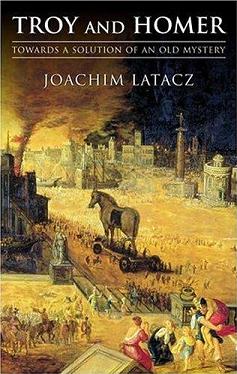
Cover of Troy and Homer


Troy and Homer
Joachim Latacz
Kevin Windle (translator)
342 pages including index
published in 2004

My first encounters with Troy, Homer and The Illiad came through one of those ubiquitous Time-Life books on Classical Greece and more memorably, through the serialisation of an adaptation of both the Illiad and the Odyssey in the Dutch Donald Duck weekly comic that ran in the early eighties. The story of how that Teutonic romantic Schliemann had found the remains of Troy and the city of Agamennon, Mycene where everybody had always thought these were just pleasant myths, was of course part of the mythology. The recieved wisdom at the time I first got to learn about all this was that though Schliemann had indeed found something where nobody had expected there to be anything, but that it would be wrong to think that this was indeed the Troy of Homer. The experts supposedly all agreed that at best, Homer had been inspired by half remembered stories of a golden age, that any attempt to answer the question of whether the Trojan War had “really happened” was pointless. That at least was the impression I got reading pop history books.

As Joachim Latacz makes clear in Troy and Homer: Towards a Solution of an Old Mystery that impression was wrong. It is not only possible to answer the question of whether Troy really had existed, whether the city Schliemann had discovered was the Troy of the Illiad and therefore whether this meant it too was based on historical fact, but these questions have been answered, and answered in the affirmative. The Troy Schliemann dug up was the Troy of legend, the Illiad is based on historical fact and there was in all likelyhood a Trojan War similar to the war Homer uses as the background to his epic poem.

As you’d expect from a German scholar, Latacz is very thorough in laying the foundations for these conclusions. He divides the problem into two parts. First, he attempts to establish the historical truth of Troy itself: was the city discovered at Hisarlik in Turkey really Troy and how can this be proved from historical sources other than Homer? The problem being that without independent confirmation, you can’t use the ruins at Hisarlik to prove that Homer was right, nor Homer to prove that these ruins were Troy. Fortunately, that independent confirmation exists, as Latacz shows, in the diplomatic texts found in Hititte archives. What’s more, not just the names of “Illios” and “Troy” as used by Homer can be traced back to historical records, so too can the names he used for Troy’s enemies, the Greeks. The conclusion Latacz therefore is able to reach is that the historical background to the Illiad was real.

The second problem he tackles goes into the opposite direction: given that this historical background to Homer’s poems existed, how much can we say about the historical truth of the Illiad itself? Was it still only just mythology inspired by ruins of a once great city still visible hundreds of years after its fall, visited by a particularly inventive bard? Or does it contain a kernel or more of historical truth transmitted through the ages until the time Homer put it to use, just when the reinvention of writing in Greece meant it was preserved in this form forever?

This is a question that for its answer depends on a lot of complicated, multidisciplinair historical research, hard to sum up in a book that’s intended as a synthesis accesible to a lay audience. Though Latacz does his best to illuminate this research with carefully chosen examples, you have to take a lot on trust as a reader, more so than in the first part of Troy and Homer. Despite this, the general outlines of how this question can be and is answered are made clear. Latacz starts with the discovery of the setting of Homer’s story, then looks back at the historical debate about the reality of the tale itself, before moving on to the new evidence having been discovered in the last two decades that ended the debate. He looks at the Tale of Troy as it can be found independent of Homer, as it can be found in other sources, at the question of when exactly the story was conceived and how it reached Homer, to reach the ultimate conclusion that there probably was a war over Troy.

It’s always difficult as a lay person to make up your mind about these sort of complicated questions based on having read just one book on the subject, no matter how convincing. I want to be convinced by Troy and Homer and am, if tentatively, but reserve the right to change my mind. Ultimately, as Trevor Bryce argued in The Trojans and their Neighbours, the question of how real the Homeric Troy was is an interesting question, but even a negative answer does not diminish the splendour of the historical city found at Hisarlik.

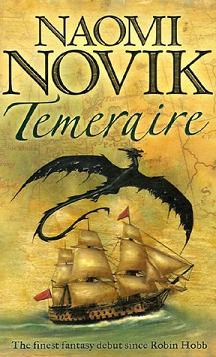
Naomi Novik — Temeraire

Cover of Temeraire


Temeraire
Naomi Novik
327 pages
published in 2006

So that’s why the Temeraire series is so popular. I had heard of it of course, the first novel in the series (called Her Majesty’s Dragon in the original American edition) having been the subject of much hype and enthusiastic reviews when it first came out, but I had been skeptical. It had all sounded too high concept to me: Horatio Hornblower with dragons? Interesting, but it all seemed a bit too slight to hang a novel on. As I quickly found out when I flipped through Temeraire in the library, I was wrong. Naomi Novik knows how to tell a story, to keep you turing the page until it’s finished and leave you wanting more.

Frigate captain William Laurence manages to capture a French blockade runner but is puzzled why it resisted so fiercly when it was clear it could not win the fight. His puzzlement ends when he discovers it’s transporting a dragon, one near to hatching to boot. Dragons are rare and valuable, both as status symbol and instrument of war. Because it’s clear that the egg will hatch before his ship will be back at base, Laurence knows it’s his duty to get the dragon to imprint on one of his men, to get it into service for England, notoriously weak on dragons. Imagine his surprise — if not the reader’s — when it turns out the dragon imprints on him. It means the end of his career in the navy and the start of a life in the country’s most despicable arm of service, the Aerial Corps.

Laurence, who’s very much the perfect Napoleonic Wars era gentleman, has a lot to learn in his new career. Not the least important of which is learning how to deal with his newfound companion. Temeraire, as he has called his dragon, turns out to be intelligent, very intelligent, much more than just an animal, but a person in his own right. It doesn’t take long for Laurence and Temeraire to become friends, companions. Naomi Novik takes her time to establish this relationship, developing it naturally.

This is a very leisurely book in general, as we follow Laurence and Temeraire to their training post in Scotland, where they meet other, more conventional dragon/rider couples and get introduced to the ways of the Aerial Corps. I always like that sort of thing, as I also mentioned in my review of Sheepfarmer’s Daughter. Novik does provide a proper plot and climax in the second half of the book however, as of course Temeraire and Laurence are instrumental in foiling a Napoleonic plot against England.

As should be obvious, Temeraire should not be taken too serious as alternate history. From the backstory given in the book, it’s clear dragons have always existed through recorded history, yet it developed along generally the same lines as in the real world. In fact, there’s even a mention of the Battle of Trafalgar that happened almost entirely the same way as in real life, save for the presence of dragons. This didn’t bother me too much, as it’s clear that Novik never intended this to be a “serious” alternate history, rather than a cool setting to have the adventures in she wanted to write about.

What did bother me a bit was the subplot about Laurence’s supposed betrothed, who he has to say farewell too as he becomes a dragon rider. It’s all done in pseudo Jane Austen language and doesn’t convince at all, but luckily Laurence gets better and less uptight in the later half of the novel. A minor flaw in an otherwise excellent adventure novel.

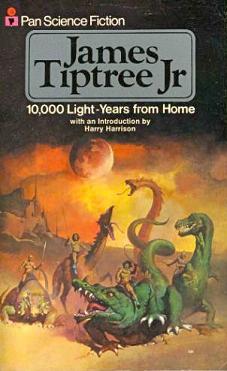
10,000 Light-Years from Home — James Tiptree, Jr.

Cover of 10,000 Light-Years from Home


10,000 Light-Years from Home
James Tiptree, Jr.
255 pages
published in 1973

Ther may have been something ineluctably masculine about James Tiptree Jr’s writing, as Robert Silverberg will never live down writing in his appreciation of Tiptree, but he’s still part of my Year of Reading Women project. Because as we all know now, but Silverberg didn’t, “James Tiptree Jr” was a pseudonym for Alice B. Sheldon. Sheldon’s reasons for chosing a male pseudonym were many and complex and if you want to know all about it, read Julie Phillips James Tiptree, Jr.: The Double Life of Alice B. Sheldon. Suffice to say that at the time of 10,000 Light-Years from Home, Tiptree’s first collection, the secret was not out yet, as is obvious from Harry Harrison’s introduction, full of what “he” did during the war. All of which was true by the way, just with the genders flipped.

James Tiptree, Jr. therefore was an obvious entry for my little project; the reason I chose this particular collection was just because this was the only one at hand. I’ve read quite a lot of Tiptree stories, as well as several under her other pseudonym, Raccoona Sheldon, but mostly through various anthologies rather than her own collections. Because 10,000 Light-Years from Home is such an early collection it misses most of Tiptree’s best stories. Worse, some of her better known early stories, like e.g. “The Last Flight of Dr. Ain” or “Your Haploid Heart” are also missing. Yet what remains is still a very good collection of short stories any writer could be proud of. What struck me is that some of the stories in this collection could’ve been published in Analog unaltered, which is not what you’d expect from Tiptree’s reputation as a “difficult”, too feminist, New Wave writer who helped ruined science fiction, as some of the troglodytes online would have it.

10,000 Light-Years from Home is a very strong collection, with only two below par stories. Unfortunately these two stories occur early in the collection, as the second and third story respectively, something you have to work through to get to the good stuff. On the other hand it does start on a high note, with a classic Tiptree story that embodies everything that you should associate with Tiptree. It takes something that lies at the heart of science fiction as a genre, a worldview and turns it on its head, not to mention reveals the sexual undercurrent running through it.

That first story is the most Tiptree of the collection, while some of the others as said could’ve been published in Analog or Galaxy, classic problem stories, very good but not quite what you expect. “Faithful to Thee, Terra, in Our Fashion”, ” I’ll Be Waiting for You When the Swimming Pool is Empty” and “Birth of a Salesman” all feature protagonist working through several problems thrown up by their day to day occupation, getting the better of them through their own cleverness, though in the second story it all gets a bit ironic.

This may not be the best Tiptree collection to start with and has anyway long since gone out of print, but most of the stories here are worth reading.

And I Awoke and Found Me Here on the Cold Hill’s Side • (1972)
Tiptree takes the classic science fictional longing for the stars and alien encounters and recognises it for what it is, the ultimate sexual thrill for a species that gets a kick out of the novel, the unknown, then shows how dangerous this is.

The Snows Are Melted, the Snows Are Gone • (1969)
The least interesting of the stories in this collection, as this never quite comes together. A girl with no arms and her wolf stalk and lure the big blond leader of a tribe of savages into a trap, for what turns out to be breeding purposes. More of a sketch than a story, with what power it has in its punchline.

The Peacefulness of Vivyan • (1971)
Vivyan is at peace with himself and whatever world he finds himself on. So why is it that everywhere he goes war and terror follow? A decent enough story, but made confusing by an unexpected switch in viewpoints leading to a long flashback.

Mamma Come Home • (1968)
When an alien ship lands on the Moon and three of the crew come to Earth, the world is astonished to see they are human, women even, but women much taller and bigger and powerful than anybody on Earth. They look charming and friendly but terrestial history knows how these first contacts work out for the inferior parties. This is Tiptree’s second published story, already having both the macho narrator and the feminist insights of her later stories, though here the narrator isn’t as clueless as in e.g. “The Women Men Don’t See” and the feminism is all about rape threats.

Help • (1968)
A more lighthearted sequel to the last story, with two alien races coming to visit, one which leaves three objects in orbit then bugger off, the second who look like very nice, friendly people, until they start doing to the whole world what the Spanish inquisition did to the Incas and Aztecs…

Painwise • (1972)
The most new wavish of the stories in this collection, about an astronaut scouting alien worlds whose pain receptors are rewired so his pain flows somewhere else so he’s impervious to torture, yet he can still suffer in his isolation and loneliness.

Faithful to Thee, Terra, in Our Fashion • (1969)
While this is the most Analog of the stories, almost something an Asimov could’ve written. We follow Peter Christmas, the human administrator of Raceworld, where all the intelligent species in the Galaxy come together to compete and gamble, through a day of problems encountered and solutions found, at the end of which we find out why it’s so important for humans to keep Raceworld going. This may actually have been the first ever Tiptree story I’d ever read, years and years ago in some forgotten anthology.

The Man Doors Said Hello To • (1970)
A cheerful fantasy story that could’ve been published in Analog‘s long gone sister publication Unknown, about a man who, well, doors said hello to and who has girls living in his pockets…

The Man Who Walked Home • (1972)
Caught in a time travel experiment gone wrong, John Delgado walks home from the unimaginably distant future. To him, it takes only seconds, but on Earth years, decades and centuries see him walk in reverse, appearing once a year at the same spot, myths, legends and religions growing up around him.

Forever to a Hudson Bay Blanket • (1972)
An ironic time travel story, with sex, of two timecrossed lovers and the trap they set themselves…

I’ll Be Waiting for You When the Swimming Pool is Empty • (1971)
A nice young Terran boy on his gap year stumbles on a very primitive planet and sets about, in his charmingly naive and bumbling way, to improve it, like a Peace Corp volunteer teaching basketball to a tribe of headhunters.

I’m Too Big but I Love to Play • (1970)
Another very New Wave sort of story, of an alien energy based intelligence attempting to imitate human life and never quite getting it right.

Birth of a Salesman • (1968)
You don’t know half the kind of headaches exporting even simple products to alien worlds can throw up, especially when your product has to reach its destination through several transfer points run by other alien races, all with their own very specific taboos and sensitivities. It’s the job of the Xeno-Cultural Gestalt Clearance people to make sure these headaches don’t happen

Mother in the Sky With Diamonds • (1971)
A Belter story that reads like a mixture of Larry Niven and Samuel Delany.

Beam Us Home • (1969)
A young boy thinks he’s an alien beamed down as an observer to Earth, stops believing this when he grows up, but of course turns out to be right. As acknowledged in the story’s title already, this is very much inspired by Star Trek.
The Wars of the Roses — Christine Carpenter

Cover of The Wars of the Roses


The Wars of the Roses
Christine Carpenter
293 pages including index
published in 1997

I’m not really that familiar with English history of the kings, queens and battles variety, neither having been taught it in school nor having had much interest in it during my own dabblings in history. So all I knew about the Wars of the Roses was that they were what got the Tudors their start. Most of my current historical interests lie in Late Antiquity and the Early Middle Ages, but that doesn’t mind I wouldn’t be interested in this particular period, if the right book comes along. Christine Carpenter’s The Wars of the Roses: Politics and the Constitution in England, c. 1437-1509 was that book.

Though this isn’t quite a history of the Wars of the Roses as such but rather, as the subtitle indicates, more of a look at how the politics and the constitution of England evolved during this period. Carpenter attempts to show how governance was supposed to work in the fifteenth century and how and why it went wrong, how it was put right again and what the effects of this restoration were. It’s in this context that Carpenter then discusses the wars themselves, having first build herself a firm theoretical foundation. This approach makes for some abstract and frankly dry reading at times, especially in the first chapters, with Carpenter even recommending that readers new to the period should start with chapter four.

I didn’t follow that advice however, so I got to struggle with the first chapter, an overview of the available sources on the Wars of the Roses and the historiography that has evolved around them. This is to bring the reader up to speed of how the thinking about the causes of the wars has shifted from the simplistic ideas about bad kingmanship as well as to show how understanding of these causes is still lacking. Carpenter follows this up with two chapters on how the governance of England worked during this period, the first chapter on kings, kingship and political society, the second on the nobility and gentry, and local governance. Together these three chapters from the heart of Carpenter’s thesis. The idea is that previous attempts to explain the wars had become too “privatised”, too focused on the personalities of the kings, their relationships to their noblemen, but had neglected the political structures, the body politic within which these relationships werew formed, what was and wasn’t expected of the monarch.

Which is why it is so important for Carpenter to get the realities of governance and politics in the fifteenth century right before she can even begin to examine the wars themselves. What she concludes and attempts to prove is that these wars ultimately arouse because of a vacuum at the heart of government, a crisis of kingship when Henry VI was incapable of ruling. Under the medieval political structure which England operated, the king was the person in which all power and legitamicy came together and came from. If that king went bad and alienated enough of the nobility and gentry he could be deposed, substituted with a more acceptable candidate. But if a king was just passive, like Henry VI, this consensus wasn’t there. Instead you had a small group of powerful nobles trying to work around the king’s limitations, but without his legitimacy; in the end this proved impossible not in the least because several of them had different ideas of what needed doing and who was to profit.

In the rest of the book Carpenter shows how the ideas she has worked out in the first three chapters influenced and guided the course of this crisis of legitimacy as it turned into a civil war, how the restoration of a proper king in Edward IV did a lot to restore the English political system, but still left seeds for the next conflict. It was the unfortunate accident of Edward’s death that made possible that conflict, which in the end led to the triumph of Henry Tudor and the final end of this crisis.

The Wars of the Roses at times is hard going, but worthwhile.