The Early Middle Ages — Rosamond McKitterick

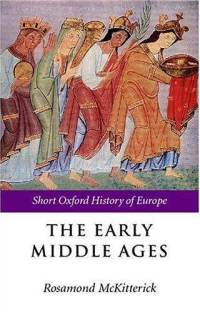
cover of The Early Middle Ages


The Early Middle Ages
Rosamond McKitterick
308 pages including index
published in 2001

I spotted this book at the local library and got it out because it contained a contribution by Chris Wickham, whose Framing the Early Middle Ages and The Inheritance of Rome impressed me quite a lot when I read them earlier this year. The Early Middle Ages is one of the entries in The Short Oxford History of Europe and intended as an introduction to this particular period, what the editor Rosamond McKitterick called “the Boeing 767 view of early medieval Europe”, quite a different sort of book from the two Wickham books. I therefore didn’t expect to learn much news from this, but rather wanted to read it as an introduction to the other historians involved, none of whom I’d read before.

The Early Middle Ages attempts to give a broad overview of the evolution of Medieval Europe between 400 CE and 1000 CE and tries to evaluate this period on its own terms, rather than as a transition period between the Roman Empire and the “real” Middle Ages. Doing this in less than 250 pages, or some 80,000 words is a real challenge and of course means that a lot of history is elided. Ironically, if you are already familiar with the period, it helps a lot to understand some of the developments that are sketched out here, at least to put them into a chronological context. I’m not sure how much I would’ve understood of some the chapters had I come to this book as a complete novice. This feeling was the strongest in Chris Wickham’s chapter, which felt as an extract of his two books mentioned above…
Read More

Lightborn — Tricia Sullivan

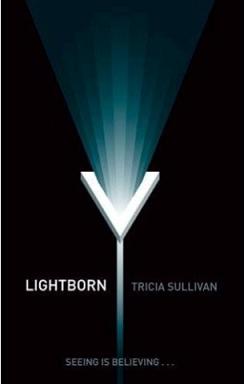
Lightborn


Lightborn
Tricia Sullivan
438 pages
published in 2010

Late last year Tricia Sullivan decried the fact that of the ten Clarke Award winners in the last decade, only one had been a woman, which in turned triggered a long discussion about women in sf in general much of it indexed at Torque Control. For me personally this discussion triggered a resolve to read more sf and fantasy written by women, as they had been woefully underrepresented until then. It was through the same discussions I learned about Tricia Sullivan herself, who as a writer had been completely unknown to me until then. Not only did she trigger the debate, her novel Maul ended second in the top ten Future Classics poll that Torque Control ran. So I kept an eye out for it at the local library, but they didn’t have it.

What they had instead was Lightborn, her latest novel. It’s a classic coming of age story, set in the city of Los Sombres in a somewhat alternate America, where instead of computers they have Feynmans and people use a special sort of light, Shine to program their own brains, as well as communicate with their version of the ‘net, the field, which is also inhabitated by the lightborn of the title, artificial intelligences, both benign and rogue. There are safeguards build/created in the field to keep the lightborn tame and Shine under control, but of course these fail at the start of the novel –otherwise there’d be no story after all. It leaves almost all the adults in Los Sombres permanently Shined and useless and kids like Roksana and Xavier, our heroes, scrabbling to survive in the aftermath.

Read More

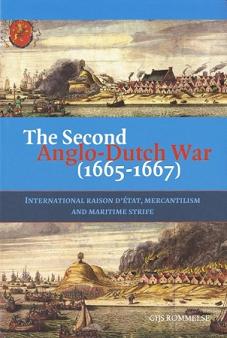
The Second Anglo-Dutch War — Gijs Rommelse

The Second Anglo-Dutch War


The Second Anglo-Dutch War
Gijs Rommelse
230 pages including index
published in 2006

I’m not sure if in these enlightened times they still do it, but if you ever come across a Dutch naval ship with a broom in the top of her mast and you want to know what’s that all about, read up about the Second Anglo-Dutch War and especially the Dutch raid on Medway, when the English fleet was “swept” from the sea. Yes, though these days the Dutch have been reduced to the butt of cheap racist jokes about dope smoking and homosexuality in the English consciousness, there once was a time when Holland was Britain’s greatest enemy and competitor, despite the common ground between the two countries. In fact, it was exactly this common ground that was the problem. England and Holland both were dependent on trade for their prosperity, both tried to monopolise the lucrative trade in e.g. spices and it was inevitable that they would fight for supremacy — it took four wars in total for England to get the upper hand. Of the four wars, the Second Anglo-Dutch War (1665–1667) was the one with the clearest Dutch victory.

Apart from that very general outline however, I knew little about this war, so I’m glad Gijs Rommelse decided to turn his thesis into a proper book. The Second Anglo-Dutch War‘s main interest lies in determining the causes of the war, how commercial, as well as both foreign and domestic political considerations on both sides drove the countries to war. In process Rommelse also delivers an overview of the war itself, giving short and to the point accounts of all aspects of the war, including the struggle in the Americans and the privatering both the English and the Dutch engaged in. This was after all as much as anything a war about trade.

Read More

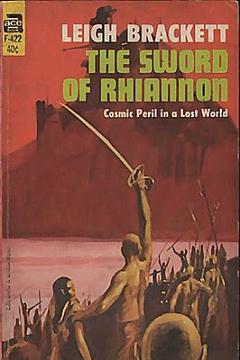
The Sword of Rhiannon — Leigh Brackett

Cover of The Sword of Rhiannon


The Sword of Rhiannon
Leigh Brackett
141 pages
published in 1953

You may think you don’t know Leigh Brackett or read any of her stories, but you’re wrong. If you think The Empire Strikes Back is the best of the real Star Wars movies, you have her to thank for it, as she wrote the original screenplay, just before she died. This is no fluke either, as her screen writing career is almost as old as her science fiction career. She started off on The Big Sleep together with William Faulkner and has worked on other well known movies like Rio Bravo and The Long Goodbye. And with her long She knew her way around a film script; combine that with her long experience writing science fantasy for pulp magazines like Planet Stories and you know why Empire is so much better than any of the other Star Wars movies.

If you liked Empire than the good news is that Leigh Brackett is even better when working on her own stories. Though she wrote other science fiction, she’s best known for writing planetary romances (or science fantasy) in the tradition of Edgar Rice Burroughs. Her best stories are set on the Mars of Burroughs and dozens of pulp imitators, a dying world turned into a worldwide desert as its seas dried up, with a highly evolved but degenerated civilisation clinging to life through an elaborate system of canals, now turned into a new version of the Western frontier as Terran adventurers and never do wells come to try their luck. Brackett’s Mars is more than just a pulp adventure setting though. Her best stories leave you with a sense of melancholy and loss, perhaps nowhere more so than in The Sword of Rhiannon, “a hymn to the lost past of a Mars that never was” as Nicola Griffith put it in her introduction to a recent reissue.

Read More

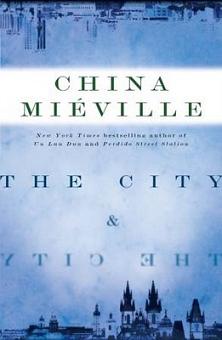
The City & The City — China Miéville

The City & The City


The City & The City
China Miéville
312 pages
published in 2009

Right. China Miéville is one my favourite writers, one of the few (together with Terry Pratchett, Iain M. Banks and Ken MacLeod) I’ll always buy in hardcover. I love the way in which he fuses science fiction and horror and fantasy together into what he himself has called New Weird, essentially a new genre that emphasises the grotesque and baroque sides of its parent genres. What I also admire in Miéville is that he keeps his imagination firmly grounded in a keen appreciation of political and economical realities, no doubt helped by his background as a proper socialist. That combination made Miéville’s creation of New Crobuzon one of the more fully realised cities in science fiction/fantasy. With Miéville there’s always the feeling that his heroes do have to work for a living, that the daily struggle for existence is just as important, if not more as whatever existentialist crisis they’re on the fringes of.

It’s this sense of realism that links The City & The City with Miéville’s earlier novels. Set on Earth in two fictional Eastern European cities with no fantastical or science fictional elements and written as a police procedural: The City & The City cannot be more different from its predecessors. Yet at the core of the novel are the same political and economical themes Miéville always write about. At its best the police procedural is a very political novel, just because policing itself is intensely political — just think about the decisions being made about which crimes to prosecute and which not, which investigations to support and which to starve of resources. There’s therefore a long tradition of writers using the police procedural as a vehicle for social criticsm and Miéville fits in well with this tradition. Of course Miéville being Miéville he does more than that but we’ll get to that.

Read More