Sci-fi Sunday: First Niall Harrison “Memorial” Edition

Oh god, can I just never see two men salute each other while fighting back the manly tears of manliness ever again? Catvalente.

As Martin Lewis said: Now that Niall Harrison has completed his multi-million pound international transfer from Vector to Strange Horizons, last Friday’s linkdump at Torque Control was probably the last. This leaves a gap in the market for an intelligent round-up of the best links from across the genre blogosphere. This probably isn’t that, but it’ll do until somebody starts something better.

The Wages of Destruction – Adam Tooze

Cover of The Wages of Destruction


The Wages of Destruction
Adam Tooze
800 pages including notes and index
published in 2006

When I read Hitler’s Empire back in August, I had actually wanted to read The Wages of Destruction, due to Alex Harrowell’s review when it came out. I couldn’t find it so Mark Mazower’s book was a more than acceptable substitute. Both books look at the economy of Nazi Germany and the empire it carved out, each in their own way. Whereas Mazower’s point of view is that of a historian turned economist, Tooze approached the subject from the other side: economicst first, historian second. And while Mazower primarily looked at the interaction and tensions between nazi ideology, economci reality and the demands of war, Tooze goes for the more fundamental question of how the fundamental constrains of the German economy influenced nazi decision making, argueing that seemingly irrational decisions made by Hitler and the nazi leadership, not the least the decision to invade Russia, made perfect sense when looking at the economic context.

Which is not to say, nor does Tooze, that Nazi ideology wasn’t not irrational or evil, but that if you take into account their worldview, that in this context their decisions were rational and clearheaded and clearly informed by the economic realities of Germany. To the Nazis, as to most intelligent observers between the wars, it was clear that Germany was doomed to be a second rate power, not big or rich enough to seriously challenge countries like England, with its vast colonial empire, let alone America or the USSR. Under the Weimar Republic, the best it could hope to achieve was to become a middling European power, growing rich on American coat tails. Nazism set out to change this, to conquer a larger living space for the German race by force and through pure willpower and technology transform the German economy into the equal or even the superior of the American. This struggle lies behind all strategic decisions the Nazi leadership made in the runup to the war and during it, each time putting their faith into another great leap forward, each time still finding themselves in the same box, in the end not having been able to overcome these fundamental limitations.

Read More

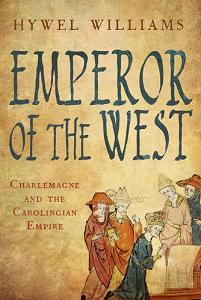
Emperor of the West – Hywel Williams

Cover of Emperor of the West


Emperor of the West
Hywel Williams
460 pages including notes and index
published in 2010

Emperor of the West: Charlemagne and the Carolingian Empire is a book I ran across when looking for other books in the Middelburg library, but which turned out to be exactly the book I needed to read after having spent most of December reading Peter Heather’s empires and Barbarians. Heather’s book was a comparative history of the first millennium CE, from the Late Roman Empire through to the Carolingian and Ottonian empires, of which the Carolingian was the first European empire with had its power base in north-west Europe, as opposed to the Mediterranean basin. Heather’s focus was on the interactions of these three empires with the various “barbarian invasions” each had to deal with and how these shaped what would become modern Europe, but what it made me want to read was more about the Carolingians themselves, which is where Emperor of the West came in handy.

Though not quite an introductionary level book — some familiarity with the various characters is expected — Emperor of the West turned out to be a good overview of Carolingian history. Williams’ main focus is on Charlemagne himself, but through him looks at wider Carolingian culture and history. He consistently puts Charlemagne in the context of the Western European recovery from the fall of the Roman Empire in which the awareness of imperial Rome and its history helped shape Charlemagne’s empire, in the same way that the Carolingian conviction that they were uniquely blessed by Christ also did. The Carolingians always looked back to the Roman past and consciously set out to restore it in their own image, but in the process created something new, the first European empire not to depend for its power on the Mediterranean Basin.

Read More

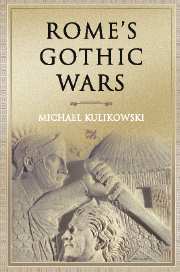
Rome’s Gothic Wars – Michael Kulikowski

Cover of Rome's Gothic Wars


Rome’s Gothic Wars
Michael Kulikowski
225 pages including notes and index
published in 2007

Rome’s Gothic Wars, written by new to me American historian Michael Kulikowski is meant as an entry level introduction to the Goths and their conflicts with the Roman Empire. As such it’s quite short, with the main text being only 184 pages long. As a history it only deals with the Goths as they first entered Roman consciousness, in the late third century CE, up until the sack of Rome by Alaric and his Goths in 410 CE. Kulikowski does deal with the Gothic “prehistory” in passing, but does not deal at all with their later history and evolution into separate Visogothic and Ostrogothic kingdoms. For Kulikowski, those first two centuries of Roman-Gothic interactions form a neatly completed story, one that turned “Goths” into the Goths.

As Kulikowski argues, wondering where the Goths came from before they are first mentioned in Roman histories is pointless, nor should too much attention be paid to the “deeply misleading” Getica of Jordanes, the sole Roman source for the supposed origins and migration of the Goths, as other modern historians still do, attempting to separate the wheat from the chaff. Instead, Kulikowski believes that the Goths were a product of the Roman Frontier, like the Franks and Alamanni, who appear at the same time. Roman military, economic and cultural interactions with the barbaric tribes along their frontiers created new political entities and the Goths were one of them. The Gothic origins lie in the exact same parts of the Roman frontier zones that they first appear in Roman history, north of the Danube and west of the Black Sea and he’s quite harsh on any modern historian who thinks otherwise.

Read More

Surface Detail – Iain M. Banks

Cover of Surface Detail


Surface Detail
Iain M. Banks
627 pages
published in 2010

The problem with any new Culture novel is that they’ll never be as good as the original three — Consider Phlebas, The Player of Games and Use of Weapons. Back in the late eighties when these books were first published there was literally nothing like them; now we know what the Culture is like, what to expect from Banks and there are whole generations of sf writers who have been influenced by him writing similar sort of novels. Yet everytime I still hope that the next Culture novel is as good as the first three, which is unfair — even if it is, it won’t have the same impact.

But Surface Detail comes close. From his first published book, The Wasp Factory, Banks has had a reputation for writing well crafted but often repulsive scenes of violence and torture and here he surpasses himself. Because in Surface Detail he gives us a horrifying but all too plausible idea: what if you could use virtual realities to create the hells your religion says sinners should be cast down into? What if civilisations routinely went through a stage in their development when their technology was good enough to create simulations of hell, but their morality still primitive enough to actually want to subject people to them? One of the first scenes in the book shows what that would look like from the inside and it’s not for the squeemish; it actually gave me some bad moments reading it just before I went to bed. No cuddly fantasy hell this; imagine whole creative output of an entire species devoted to making up ever more cruel tortures, without end.

Read More