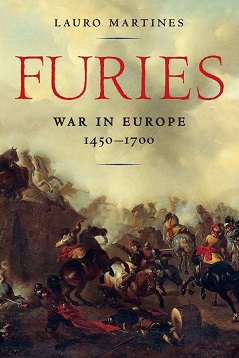
The Blue Place — Nicola Griffith

Cover of The Blue Place


The Blue Place
Nicola Griffith
308 pages
published in 1998

I can’t remember the last time I’ve been as frustrated with the ending to a novel as I am with The Blue Place. I had seen it building up from at least halfway through the story, hoping that its seeming inevitable conclusion would be subverted at the last minute, the same way Nicola Griffith did earlier in the novel, with another plot point that seemed to descent into hardboiled cliché until it didn’t. But the ending wasn’t subverted, was hardboiled cliché, did upset me and yet fitted perfectly with what is an incredibly smart, engaging novel by a writer who has never gone for the easy route in her stories. So what’s going here? To try and find out will take some effort and certainly some spoilers.

Let’s start with Nicola Griffith herself first. Yorkshire born, she moved to Seattle to live with her wife, the writer Kelley Eskridge. Her first fiction was published in the late eighties, her first novel in 1993. So far she’s written six novels, of which I have now read half. As you may have guessed, The Blue Place is a hardboiled detective novel, her third, the first two being Ammonite and Slow River, both science fiction. she would go on to write two sequels to the The Blue Place, while her latest novel, Hild, is a historical novel about 7th century CE saint Hilda. So far all her novels have had lesbian protagonists and The Blue Place is no exception.

Read more…

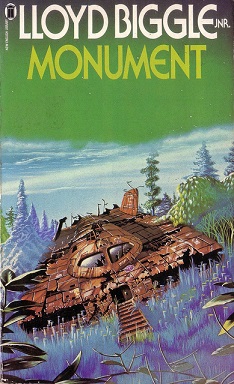
Monument — Lloyd Biggle

Cover of Monument


Monument
Lloyd Biggle
173 pages
published in 1974

It’s been a while since I’d read any of Lloyd Biggle’s novels; the last one had been The World Menders back in 2007. I’ve always liked his writing, quietly liberal and anti-colonialist in a way that few other science fiction authors of his generation were. His belief in the idea that “democracy imposed from without is the severest form of tyranny” seemed especially apt during the darkest days of War Against Terror triumphalism. He is however, not a writer much read these days, having done the bulk of his writing in the sixties and seventies. He died relatively recently, in 2002, after a long illnes, having written only some six novels since the seventies.

Science fiction is often an imperialist, colonialist genre, in which it’s taken as natural or even desirable for there to be a galactic imperium to which newly discovered worlds should be gently or firmly — depending on the author’s preference — be persuaded to join. Sometimes this is dressed up as the need to avoid interstellar wars and even in stories with a Galactic Federation rather than an empire the need for newly discovered worlds to be assimilated is rarely questioned. Not so with Lloyd Biggle; several of his books question this mentality and Monument is one of them. Taken its lead from what was happening in e.g. Polynesia at the time, it’s an sfnal attack on ill considered economic development imposed from the outside.

Read more…

Books read December

Ten books read in December brings the total for 2014 up to eightyeight in total, six up from 2013. I’d hoped to have more of an end spurt, but a short illness put paid to that. 2014 has been the most unbalanced reading year since I started keeping count in 2001: seventyfour fiction books, of which fortysix science fiction and twentysix fantasy, against only fourteen non-fiction.

There are a couple of reasons for this of course. Because I went to Worldcon this year I got to read the Hugo Voters Package, meaning July and August were spent reading through that, while I also got interested in Dutch language science fiction again, reading a lot more Dutch sf than I had in a long time. Nevertheless I want to read more non-fiction this year.

Genderwise I’m still trying to fix the balance in my reading, having calculated back in 2010 that less than ten percent of the books I read had been written by women. So of the fortysix science fiction books, thirtyone were by female writers as were eighteen of the twentysix fantasy books. Since the only crime novels I read were by Nicola Griffith, the total for my fiction reading was fiftyone books by female versus twentythree books by male writers. Non-fiction on the other hand was male dominated: four women versus ten men. Something to pay attention to this year.

Though to be honest I’m less bothered by this, then I am with keeping my science fiction and fantasy more balanced and diverse; those are the genres I like the best and read the most of. What I like to do in 2015 is to keep reading more books by women, but also start reading more stories by authors from outside the UK or US. There’s a wide world of fantasy and science fiction outside these two countries and I want to know more about it.

In any case the last books I read in 2014 were the following:

The Violent Century — Lavie Tidhard
What if, only a few years before WWII, one particular quantum physics experiment creates a probability wave that gives some people superpowers?

The Dark Colony — Richard Penn
A self published, hard science fiction police procedural set on an asteroid belt colony.

De Scrypturist — Paul Evanby
A great steampunkesque Dutch fantasy story by what I suspect is one of Holland’s best sf&f writers.

The Nemesis from Terra — Leigh Brackett
Another of Brackett’s tightly plotted Mars adventures.

Meeting the Sculptur — Floris M. Kleijne
A clever little time travel story.

The Martian — Andy Weir
One of the sleeper hits of the year, this hard science fiction novel of an astronaut stranded on Mars and how he’s saved through ingenuity, can do spirit and NASA led teamwork.

Falling Free — Lois McMaster Bujold
The last novel in Bujold’s Vorkosigan saga I hadn’t read yet, set 200 years before the main series and showing how the Quaddies got their freedom in a sort of eighties update of The Moon is a Harsh Mistress.

The Story of the Stone — Barry Hughart
The second in Hughart’s series of fantasies set in mystical China and the only one I hadn’t read yet.

High Wizardry — Diane Duane
The third in the Young Wizards series: great YA fantasy adventure.

Monument — Lloyd Biggle Jr
A classic anti-colonialist science fiction story.
Furies — Lauro Martines

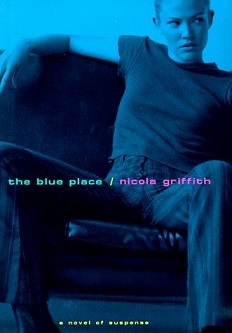
Cover of Furies


Furies: War in Europe 1450 – 1700
Lauro Martines
320 pages, including index
published in 2013

A lot of history books about war and warfare, even when they look at the impact war had on wider society, on the civilians and soldiers caught up in it, are remarkably clinical and dry about the violence it brings with it. Not so Furies: War in Europe 1450 – 1700. Before it’s good and well started, you get the first grizly massacre to process, no horrid detail spared, all the better to prepare you for the rest of the book. This is not an easy read, not your average military history wankfest, this is a book with a message and that message is that war in Early Modern/Renaissance Europe was hell, a total war where nobody cared if you lived or died.

That period from roughly 1450 to 1700 was one in which a military revolution took place, with Europe emerging from feudalism and war as a noble pursuit for knights and aristocrats giving way to mass warfare by any means necessary. It was a revolution brought about through the introduction of gundpower weapons making possible new ways of making war, as well as the growing strength of the emerging European nation-states. Add to that increasing religious schism and you have a recipe for warfare on an apocalyptic scale and Martines is not afraid to show what that meant on the ground, for the people caught up in the war.

Read more…

Books read November

Nine books read this month, which began strongly but petered out a bit as a couple of tough books slowed me down.

Schitterende Wereld — Mel Hartman
A disappointing collection of sf short stories based on an interesting concept: twelve stories based on the work of six world famous scientists.

Broken Homes — Ben Aaronovitch
Fourth in a series about a hapless London police officer being caught up in its magical underworld.

Styx — Bavo Dhooge
A bent cop in Oostende returns from the death as a zombie to bring a serial killer to justice

Ter Ziele — Esther Scherpenisse
Sometimes Death has pity for a dying person and brings them to its palace….

A History of the Vandals — Torsten Cumberland Jacobsen
A decent introduction to the history of the Vandals, one of the few such actually available in English.

Captain Vorpatril’s Alliance — Lois McMaster Bujold
The latest so far in the Vorkosigan saga, now starring Miles cousin, that idiot Ivan.

Furies: War in Europe 1450-1700 — Lauro Martines
A distressing look at warfare in Early Modern Europe.

Who Fears Death — Nnedi Okorafor
Okorafor’s first adult novel, a harrowing coming of age tale & quest story.

Het Laatste Verhaal — Guido Eekhaut
In the near future republic of Flanders, two street outcasts team up with a Japanese woman from an alternate world who has a sword that can cut through time and space…