Books read May

A much better month: eleven books read in May.

De Jaren Pep — Ger Apeldoorn
A great looking coffee table book about one of the most important Dutch comics magazines ever published.

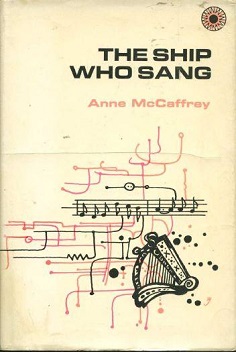
The Ship Who Sang — Anne McCaffrey
A reread of a childhood favourite. Not a success I’m afraid.

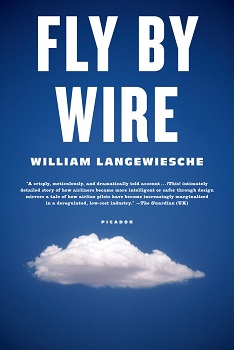
Fly by Wire — William Langewiesche
Recommended by Alex, this is the story of the airliner that landed on the Hudson back in 2009 and how it was able to do it.

Velveteen vs the Junior Super Patriots — Seanan McGuire
This is basically superhero fanfiction as done by a professional writer. Available for free online.

Undertow — Elizabeth Bear
Hard science fiction adventure in which luck plays a large, quantum mechanical role.

Velveteen vs the Multiverse — Seanan McGuire
The second book in this series takes a darker turn, as McGuire works out the consequences of the world she has build.

The Dark Griffin — K. J. Taylor
Interesting fantasy novel from a writer who takes her inspiration from “George R. R. Martin and Finnish metal”. May actually be slightly subversive.

An English Affair — Richard Davenport-Hines
A very readable account of the Profumo affair by somebody not hesitant to judge the various participants in it and who is somewhat sympathetic to the alleged villains of the affair.

The Blue Place — Nicola Griffith
Goddamn I hate the ending. A hardboiled detective, first in a series, starring an American-Norwegian-Brit “rangy six footer” lesbian ex-detective, this was a brilliant novel but that ending…

London Falling — Paul Cornell
Fast paced, very readable London urban fantasy.

Peace Keeper — Laura E. Reeve
More military science fiction.
Blood Price — Tanya Huff

Cover of Blood Price


Blood Price
Tanya Huff
272 pages
published in 1991

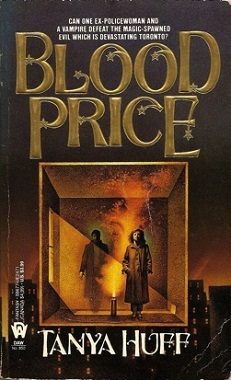
Tanya Huff has quickly has become one of my favourite authors, ever since I first read Valor’s Choice two years ago. Which is why when the local secondhand bookstore turned out to have her entire Blood… urban fantasy series, I bought them all. Urban fantasy is a subgenre I can take or leave, but Huff is one of those writers of who I’ll read anything she writes. So far her novels have always been at least entertaining; Blood Price is no exception.

Vicky “Victory” Nelson is, retired from the Toronto police for health reasons, now turned private eye, is taking the subway home one night when she hears a terrible scream coming from the other platform and sees a man slumbed to the floor, dead. Taking a gamble as a train arrives, she sprints over the track to the other side to see that he’s had his throat ripped out and a shadowy figure disappearing down the underground. What Vicky witnessed is the first in what would become known as the Toronto vampire murders, as in quick succession several more people are killed this way, throat slashed and drained of blood. Though interested in the murders out of old police instincts, Vicky knows it’s not her problem anymore, not until the lover of the first victim hires her to find the vampire, as the police “insist on looking for a man”.

Read more…

Fly by Wire — William Langewiesche

Cover of Fly by Wire


Fly by Wire
William Langewiesche
193 pages
published in 2009

I bought Fly by Wire because Alex raved about it a while back. It’s subtitle, “The Geese, The Glide, The ‘Miracle’ on the Hudson” might clue you in that it’s about that US Airways flight that had to crashland in the Hudson back in 2009, after having been hit by geese. Langewiesche is a reporter who has written several books about aviation and here he explains not just what happened that day, but also what made it possible for the pilot, Captain Sullenberger, to land it the way he did and how this fits in with a more general philosophical debate on airplane controls.

An interesting subject, but to be honest I was a bit disappointed with the book as I was expecting something more in-depth after Alex’s review. What it instead reminded me off was one of those interminable New Yorker articles which take a single incident to illuminate a larger social trend. Langewiesche tracks the accident as it evolves, then cuts away to explain one aspect, goes back to the accident, cuts away, ultimately ending when Sullenberger has set down the plane and the rescue boats have brought everybody to the shore. On the whole it was decently done and not nearly as annoying to read than if it had been spread out over ten pages in an online article, but it could’ve done with a bit more depth. Also footnotes.

Read more…

The Ship Who Sang — Anne McCaffrey

Cover of The Ship Who Sang


The Ship Who Sang
Anne McCaffrey
205 pages
published in 1969

Some writers you can only appreciate if you discover them in the golden age of science fiction — twelve — because at that age you’re less likely to notice the two dimensional characters, slipshod plotting or obnoxious politics you would’ve noticed as a more experienced reader. McCaffrey is such a writer for me. I loved her books when I was twelve and reading them from the local library, but trying my hand at some of her later works ended in disappointment. There’s also the danger of rereading cherished childhood classics and finding that in hindsight, they’re not so great after all. With McCaffrey’s early Dragonriders novels I already took that gamble and got lucky, now I’ve reread perhaps her best known novel outside that series and see if The Ship Who Sang was as much of a tearjerker as I remembered.

Sentiment is an underrated emotion in science fiction, something we’re a bit embarrassed about, but which plays a greater role than you’d expect in such a “rational” genre. Quite a few classics thrive on it — “Helen O’Loy”, “Green Hills of Earth”, “Faithful to Thee, Terra, in Our Fashion” all spring to mind — and as I remembered The Ship Who Sang, it positively wallowed in it, in this story of a severely disabled girl whose only hope for any sort of life was to become the “brain” of a spaceship, who then found love in the arms of her “brawn” partner only to lose him to cruel, cruel fate. The perfect sort of story for a sensitive twelve year old, but would it hold its appeal?

Sadly, no

Books read April

As I seem to be complaining each time I do these, I still read too little. This time it’s only been five books.

Blood Trail — Tanya Huff
The second Blood urban fantasy novel, where ex-policewoman Vicki Nelson is hired by a family of werewolves to find out who is killing them.

A Biography of No Place — Kate Brown
The 2oth century history of the historical borderlands between Poland and Russia, now in the heartlands of Ukraine and how they were shaped from multi-ethnic borderlands into largely Ukrainian lands.

Zero Sum Game — SL Huang
Debut novel of a blogger who kept saying sensible things on her blog, so I got this from Kobo Books; first ebook I’ve ever bought. This is a technothriller about a math savant whose math skills are so instinctive that they allow her to dodge bullets.

A Soldier’s Duty — Jean Johnson
Yes, I have a weakness for even dodgy mil-sf. I know literally nothing about this book or its author when I picked it up, but it looked interesting. A precog fifteen year old girl sees a future in which the entire galaxy is laid to waste and the only chance of humanity’s survival is if she becomes an interstellar marine.

Blood Lines — Tanya Huff
Third novel in the Blood series. After vampires and werewolves, what is more logical than to feature that other classic Universal monster, the Mummy?