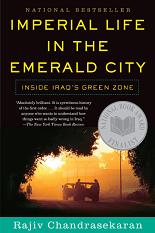
The Mercenary – Jerry Pournelle

Cover of The Mercenary


The Mercenary
Jerry Pournelle
223 pages
published in 1977

The Mercenary is one of those books in my collection I’m a bit ashamed of. Not because it’s so badly written, but because its politics are so embarrassing. Having it on my bookshelves is a bit like owning a collection of books about the nazis and the Second World War; you can be genuinely interested but it still looks bad to see a row of red and black bookspines with swastikas plastered all over them. Yet it’s precisely because of its politics that I kept it when I was purging my collection a few years back and why I reread it now. The Mercenary is a book that stands at the root of one of the more succesful –and distasteful– science fiction subgenres: mil-sf and in it can be found a lot of what makes the genre so awful so often.

Science fiction has always had a large conservative, rightwing streak running through it and Pournelle falls squarely in this tradition. This in itself is not a problem; some of science fiction’s best writers, like Poul Anderson, H. Beam Piper or Robert Heinlein were conservatives or had rightwing sympathies and you can still enjoy (most of) their stories without necessarily agreeing with their politics, even when they’ve made them explicit. What makes Pournelle different is that he goes beyond this. He’s not just a conservative, but a reactionary. His politics as shown in The Mercenary have fascist overtones, though I don’t believe he’s a fascist himself. No doubt if you asked him he would describe himself as an American conservative and believer in a strong democracy, though weary of the wisdom of the average voter, but what comes across here is his deep pessimism and mistrust of democracy and his yearning for a saviour to safe democracy from itself.

Read more…

Books read in August

Here are the books I’ve read last month.

Have His Carcase — Dorothy L. Sayers
The second Harriet Vane novel, which starts when she almost literally stumbles about a body on the beach, its throat cut by a razor. Vane and Wimsey team up to solve the case and see whether it was murder or suicide.

Postsingular — Rudy Rucker
Despite having several of his novels in my bookcases, this is the first of his I’ve read and I got it from the library… As the title gives away, this is a novel trying to deal with the socalled Singularity and succeeding reasonably well. A fair but not brilliant novel, that looks to be written for a young adult audience.

Reporting War — Stuart allan and Barbie Zelizer (editors)
A collection of essays about journalists in wartime, the dangers they face and the possibility of honest reporting as well as the limitations they work under.

Dresden — Frederick Taylor
The frontcover blurb compares this to Anthony Beevor’s Stalingrad, which for once is
a quite good comparison. Like Beevor’s book, Dresden takes an iconic episode of World War II and put it into context, clearing away some of the myths that have grown up around it.

The Mercenary — Jerry Pournelle
One of the novels that set the tone for the milsf subgenre, warts and all. It’s all here: the glorification of military men, the cod-toughness and distrust of democracy

Sand against the Wind — Barbara Tuchman
The usual competent Tuchman history, this time mixing a biography of “Sour” Joe Sitwell with the story of US intervention in China between the wars and during World War II, while America’s strategy for defeating Japan slowly changed.

What We Say Goes — Noam Chomsky
A collection of interviews with Chomsky, talking about current events and explaining their background. Not much new here if you follow the right blogs (ie. mine) but he does have the knack of explaining complex things clearly.

The White Rose — Glen Cook
The third book of the Black Company series of dark fantasy books. The Black Company has been leading the resistance against the Lady, the Evil Overlord ruling most of the north and now after years of waiting things come to a head. What sets this series apart from other fantasy “trilogies” is Cook’s nicely unsentimental attitude towards his characters.

Silencing the Past — Michel-Rolph Trouillot
Trouillot is an Haitian historian, so it’s unsurprising that he would want to investigate the ways in which certain parts of history are routinely silenced, as so much of his country’s history has been, despite its importance not just to Haiti but the wider world.

Shadow Games — Glen Cook
The fourth book of the Black Company, starting a new storyline in which the Company goes in search of its past and

The High Crusade — Poul Anderson
An alien ship lands in Medieval England. The local nobles, too brave or too unimaginative to know fear of the aliens and their weapons storm it, then intend to use it to invade France. Instead they end up at the other end of the galaxy and set about conquering the alien empire that send
the ship…

Tunnel in the Sky — Robert A. Heinlein
A group of students are sent by teleportationt unnel to a distant planet for their solo survival tests. It shouldn’t have take more than two weeks, but something goes wrong and the tunnel doesn’t reappear. Now they have to work together to survive. The hero is as per usual in a Heinlein juvenile brave, goodnatured and a little dim so that his more clever friends and kindly elderly authority figures can explain the ways of the world to him.

Farmer in the Sky — Robert A. Heinlein
A teeneage boy migrates to Gandymedes with his father and his new family and grows up to be a man. They get a bit of a raw deal on the new colony but as usual with Heinlein the solution lies in hard working and no complaining rather than any collective action.

Under an English Heaven — Donald E. Westlake
A lighthearted history of how Anguila was the only British colony ever to rebel against its rulers with the intention to remain a British colony, rather than become independent, and how this led to an invasion compared to which the American invasion of Grenada two decades later looked dangerous.

Reporting War — Stuart Allan and Barbie Zelizer

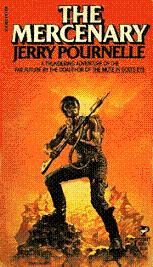
Cover of Reporting War


Reporting War
Stuart Allan & Barbie Zelizer (editors)
374 pages including index
published in 2004

Having kept a politically orientated weblog the past half decade or so I’ve become acutely aware of the limitations of journalism, particularly during wartime. The current war for South Ossetia provides a good example of these limitations, were we’re seeing live how difficult it is for journalists to even get to the combat zone, not to mention how dangerous, as the death of a Dutch camera man proved. Perhaps more worrying, as the conflict continued the reporting on it which started off fairly neutral has become more and more partisan, especially once the United States and the European Union got involved in its resolution, with Russia pictured as the agressor when in fact it was Georgia who started the war. Russian statements are treated with skepticism while quotes from approved official sources, like the Pentagon or NATO are quoted
verbatim. In general the war is treated through an American or European lens, rarely from the point of view of the Russians or Georgians, let alone the Ossetians…

All these problems are described in Reporting War, a collection of essays on the role of journalism in wartime, its difficulties and dillemas. Published a year after the American invasion of Iraq, a lot of attention is of course paid to the problems of that particular war. The book doesn’t just look at the role of the journalists themselves, but also how they are dealt with by armies and governments involved in war, with a specific focus on the US army’s management of journalist during the first and second Gulf War. What’s more, several essays look beyond the physical reaity of reporting wars to the role the media plays in general in covering wars. Not every conflict is covered equally after all.

Read more…

Books read in July

It’s August 1st, so time for a new list of books read. Lots of history at the start of the month, as I had just bought a pile of them in June. Also a lot of Sayers novels, as I’m in the process of rereading them in order. Little in the way of science fiction this time, as I just haven’t been in the mood
for it.

Europe: Privilege and Protest 1730-1789 — Olwen Hufton
A look at European history in the decades before the French revolution would decisively end the world of the Ancien Regime, showing how interlocking systems of privilege ruled this world, both priviledges enjoyed by the leite, but also by more humbler folk. A much more modern history of the same period as covered by Europe of the Ancien Regime 1715-1783 I read at the end of June.

The World Turned Upside Down — Christopher Hill
During the English civil war of parliament against king, there were people who wanted to go much further than parliament was willing to go, to revolutionise class relations in England. Diggers, Levelers and others for a few precious years created a glimpse of a more just, more equal society, a “World Turned Upside Down”.

Europe Between Revolutions 1815-1848 — Jacques Droz
After the French revolution had been finally repressed in 1815, a deliberate attempt was made to restore the stability of the Ancien Regime as well as the authority of the old ruling classes. Jacques Droz is excellent in making clear the stresses and contradictions between the ideal and reality that would ultimately lead to the failure of this.

The Unpleasantness at the Bellona Club — Dorothy L. Sayers
The fourth Wimsey novel, again a novel in which the detective story is used as a lens through which to look at contemporary British society. In this case it’s the impact the First World War had on the lives of an entire generation of veterans, coming to terms with their experiences as well as their difficulties adjusting to civilian life.

The Structures of Everyday Life — Fernand Braudel
The first installment in Braudel’s three part examination of the roots of capitalism, it’s a much easier read than his earlier books on the Mediterranean I read a few years ago. This part examines how ordinary people lived, how they interacted with the wider economy from the fifteenth to the eighteenth centuries, when our current capitalist societies were being formed.

Strong Poison — Dorothy L. Sayers
The novel that introduces Harriet Vane to the Lord Peter Wimsey series and Wimsey falls in love with her immediately. Some may think her somewhat of a Mary Sue, and there certainly may be hints of Mary Sueness here, but in the end she’s strong enough to be more than that. In the context of reading the entire Wimsey series in order, it’s clear this is a hinge point for it, where you can see the mood of the series shift.

Five Red Herrings — Dorothy L. Sayers
Reading this for the first time I liked it, but was still unfamiliar enough with Sayers to realise how much this not just a traditional detective novel of a kind Sayers never attempts anywhere else, but a critique of them. It’s quite jarring in tone with the rest of the series, not fitting in with either the pre or the post-Strong Poison novels. In fact, it reads like Sayers meant it as an example of how not to write a detective novel, with all its fuzzing about train tables and such.

Imperial Life in the Emerald City — Rajiv Chandrasekaran
A good but limited critique of the United States occupation of Iraq, which concentrates on the blunders made by the CPA, but which doesn’t question the fundamental right of America to actually be in the country.

New Skies — Patrick Nielsen Hayden (editor)
A collection of science fiction stories from the past two decades, aimed at younger readers new to science fiction. Some duds, but on the whole it does give a good oversight of what you can expect from the genre.

Last van de Oorlog — Stef Scaliola
A history thesis turned into a book, this looks at the ways in which the debate about the wars fought by the Netherlands to hold on to Indonesia in 1946-1949, in particular the warcrimes committed during it and how these have been covered up or revealed. Scaliola looks at the roles journalists, historians, politicians and the veterans themselves played in this process of remembrance.

Britain’s Gulag — Caroline Elkins
Incredibly depressing, this is the history of Britain’s attempt to quash the Kenyan struggle for independence, largely by emulating the way the nazis behaved in Poland. Pogroms, a massive concentration camp system in which almost the neitre Kikuyu population of Kenya was held as slave labour, roaming death squads and institutionalised torture of the worst kind were all part of this attempt to crush the Mau Mau rebellion and make the Kikuyu into obedient, loyal subjects of the white settler population. All this seven years after World War 2.

Eight O’Clock Ferry to the Windward Side — Clive Stafford Smith
Clive Stafford Smith is one of the volunteer lawyers respresenting the detainees in Guantanamo Bay. This is his personally informed account of America’s Gulag Archipelo and its absurdities. Remarkable funny in places.
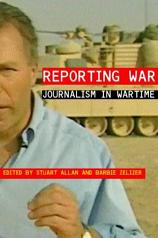
Imperial Life in the Emerald City — Rajiv Chandrasekaran

Cover of Imperial Life in the Emerald City


Imperial Life in the Emerald City
Rajiv Chandrasekaran
365 pages including index
published in 2006

The Emerald City was what its inhabitants called the Green Zone in Baghdad in 2003-2004: a pleasant bubble of transplanted America, cut off from the everyday reality of Iraq, the ultimate ivory tower where the Coalition Provisional Authority that was in power in that year made its plans for the future of Iraq, unhindered by much knowledge of the world outside their bubble. Imperial Life in the Emerald City is an eyewitness account of that first year of the American occupation of Iraq, as seen from inside the bubble. It’s a story of how wide eyed innocents and well intentioned ideologues came to Iraq to remake the country into a model of Jeffersonian freemarket democracy, with little more to recommend them for the job than their personal loyalty to Bush and the Republican party and how they were cruelly disappointed by the reality of post-war Iraq and its missed opportunities.

In short, this is a whitewash, though perhaps not a conscious whitewash. It’s true the New York Times quote on the back calls this a “A visceral –sometimes sickening– picture of how the administration and the handpicked crew bungled the first year in postwar Iraq” and that every other page or so has you slapping your face at yet another incredibly obvious stupidity, but in the end it’s still a whitewash. The clue is in that word bungled. As if the Bush administration and their lackeys in Iraq started the war and subsequent occupation with the best of intentions, but lacked the competence to fulfill them, or took the wrong decisions for Iraq not to further their own ends, but because they were a bit naive about the realities of the country. The book is steeped in the assumption that, while the people in charge may have made the wrong decisions, they had every right to attempt to make those decisions. It’s like reading a book on British rule in India that only tells of the problems the British had in establishing their rule and in the day to day running of their empire, without ever questioning the presence of
the British there.

Read more…