(02) Unexpected gems

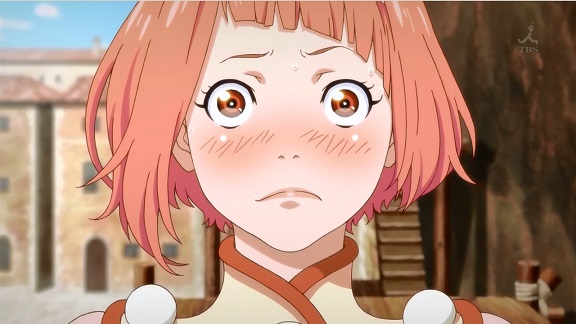
Yes, that title is indeed a pretty obvious reference to Houseki no Kuni: who knew that a CGI anime about genderless almost immortal gem people could be so good?
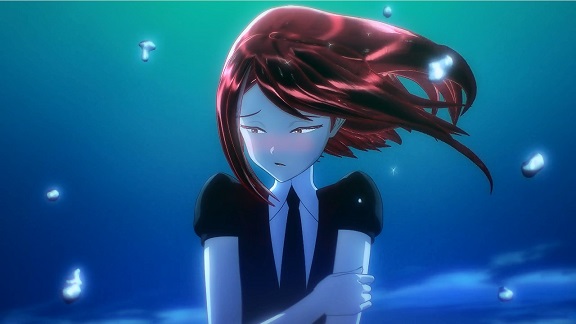
Houseki no Kuni: more Cinnebar blushes please

But that’s only one of several surprisingly good anime series that came out this year. Kemono Friends was the first and perhaps most surprising of these, a wonky looking CGI anime about cute animal girls that turned out to have not just excellent writing, but heart enough to melt the most cynical anime fan. A very pleasant surprise at a time when heart was something sorely needed in the real world. A heart warming experience right during the coldests, dreariest months of the year.

Two more series I had no expectations for whatsoever were Tsuki ga Kirei and Just Because, romance series which went for realism in their romance. Both had strong characters who weren’t tied to the usual romcom stereotypes, while the writing had the courage to go slow on the development of the romance. It made for a very different sort of anime romance story.
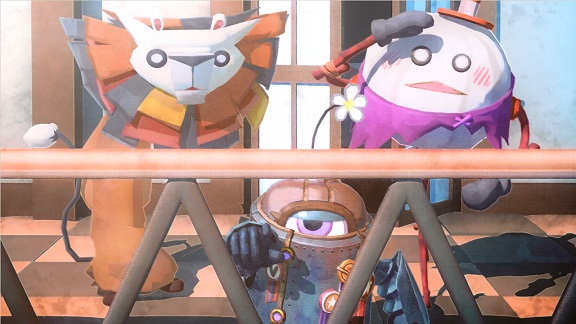
18if: Wizard of Oz

18 If was a series that was easy to overlook, but for me was one of the best series of the Summer season. The biggest problem with it was that the overall storyline, of a guy stuck in dreamland having to rescue girls from Sleeping Beauty syndrome, where they’re stuck in their own private dream worlds The strongest episodes were those where the nominal protagonist was barely present or only as observer, when the focus was on the girl’s own story. The series wasn’t afraid to change its anime style frequently to suit each story, so it’s easy to think of it as an anthology and not pay too much attention to the overall plot.
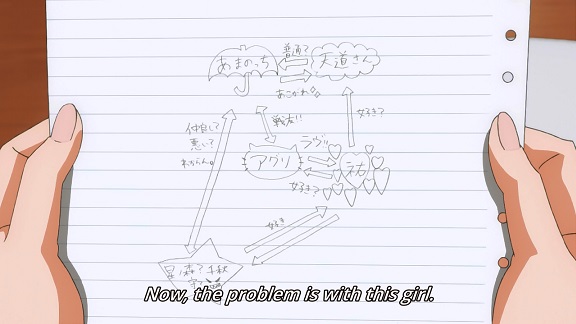
gamers: love polygon

Gamers was great because it looked like it would be a typical school club series, where the geeky loner protagonist is invited to the gaming club by the school’s beautiful idol, only for him to politely reject the offer. It then turns into one of the best cringe comedies I’ve seen in anime, as everybody misunderstands everybody and everybody thinks everybody else is in a relation with somebody other than they’re actually are. It gets so bad you have the characters themselves drawing up love diagrams to keep everything straight. It’s rare that a comedy anime makes me laugh each episode, but Gamers! did it.
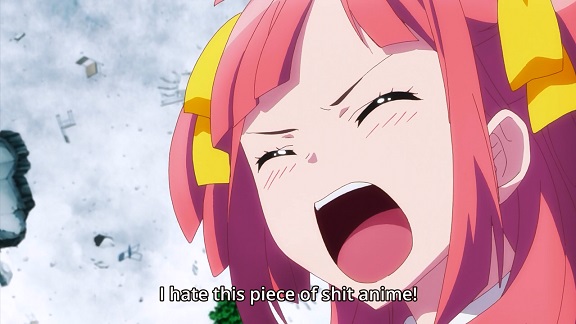
Animegataris: hating on itself

Animegataris also started out as a seemingly ordinary school club series, this time based around the love of anime and for about nine episodes we got that, before it all became one giant glorious meta mess as things became a bit too anime. Even before that transformation it was already delightful, in how positive a vision it had of anime, going beyond the usual consumerism of otaku baiting series and not neglecting international fandom either, by both introducing a Chinese fan as well as showing how the shared love for magical girls shows had made another character friends in the American high school she went to.

So while you think that it couldn’t happen anymore, what with online news and fansites dissecting all info coming out of Japan and simulcasting delivering shows as they’re aired there, but there were still plenty of shows that came out of the blue this year, not just for me, but for most anime fans. It can only be good if anime creators can still surprise us like that.

This is the eleventh post in this year’s twelve days of anime challenge. Tomorrow: looking forward to 2018.
(03) Disappointing sequels

This year saw a lot of even better sequels to already excellent series. KonoSuba 2 was even funnier than the original, Shouwa Genroku Rakugo Shinjuu moved back to the present and put everything we learned in the first into doubt again while Sangatso No Lion‘s new season is killing at the moment. But we won’t talk about those here. This is for the disappointing sequels.

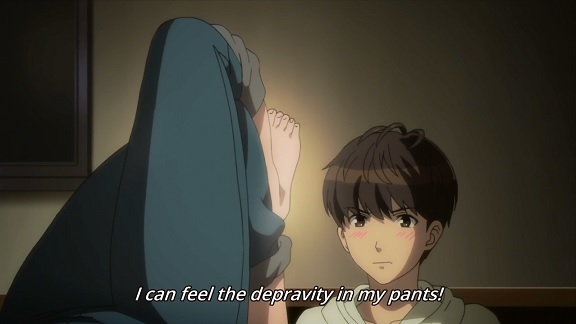
Seiren: depravity in my pants

And I don’t mean something like Rewrite S02: if the first season was a shit storm, why get disappointed in the second? Nor do I mean slightly under par follow-ups to classics like the latest Symphogear, which was decent enough but didn’t live up to the insanity factor of previous series. Since I’m probably the only person that hated the tournament arc in Boku no Hero Academia I won’t even mention that. Even Seiren, spiritual successor to Amagami, though disappointing, is not something I want to talk much about. Other than to note that put too much emphasis on reproducing the latter’s weird fetishes and not enough on the romances.

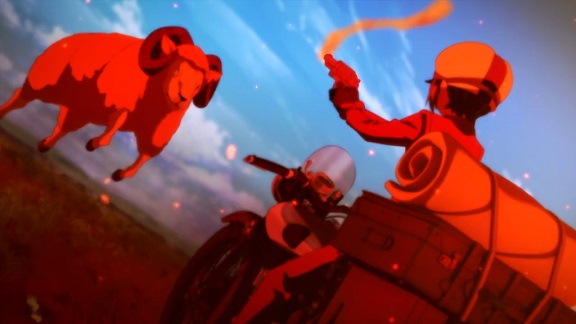
Kino killing fighting sheep in the final episode

No, what I mean with disappointing sequels is a series like Kino no Tabi, though technically a remake of the original 2003 series rather than a sequel. For this series they got the fans of the light novels to chose their favourite stories to adapt, which didn’t help with the coherence of the series and then adapted them in the blandest way possible. Most of the charm of Kino’s adventures was lost this way, while there were whole episodes without Kino even showing up other than in cameo. It wasn’t bad, it just wasn’t what I wanted or expected from a new Kino series.

Virgin Soul: Nina blushing was cute though

Worse though was Shingeki no Bahamut: Virgin Soul. The original Shingeki no Bahamut: Genesis was a cheerful fantasy adventure, which, because it was adapted from a mobile game, had low expectations hung on it when it first came out, but which turned out to be something special. It wasn’t perfect, as every time the series returned to its nominal plot rather than focus on the misadaventures of Favaro and Kaisar it became a bore. The new series, by focusing on a new protagonist just living her life in the capital, at first seemed to avoid that particular pitfall, but that only lasted four episodes, if that. From then on it’s all about the struggle against Lord Charioce, who plans to destroy both demons and angels to create a new world for humanity.

Both the plot as the villain I found boring and obnoxious, especially because the latter always won whatever his opponents threw at him. At every turn, he turned out to be one or two steps ahead, effortlessly dealing with the latest plan the heroes came up with. I got so bad I stopped watching from episode eighteen: I still got the last seven episodes to watch. The worst part of it is that Nina, our protagonist, has a crush on him, which doesn’t change once she knows of all his loathsome deeds and plans for genocide. I got the feeling the series was working towards his redemption, and I couldn’t deal with that.

This is the tenth post in this year’s twelve days of anime challenge. Tomorrow: unexpected gems.

(04) MMO Junkie is rape culture

Two guys stalk an ex-coworker in order to get a date from her.

MMO Junkie: joking about sexual assault is always hilarious

Really, wasn’t this supposed to be a relatable cringe comedy about a woman in her thirties quitting her job to become a NEET and play MMOs, perhaps with a bit of online gender swapped romance? How did it get to this?

MMO Junkie: meet uncute

In hindsight things had begone to go wrong since the second episode. In the first episode our protagonist Morioka Moriko, had started in a new MMO role playing as Hayashi, a male knight. She met up and quickly became best friends with Sakurai Yuta, a guy role playing as Lily, a female healer, though neither know of the other’s gender switch. In the second, after Hayashi and Lily had spent the whole night playing together, Morioka literally runs into Sakurai going to the convenience store. She passes out and wakes up with him having taken her to the hospital. When she texts him later to thank him for his help, he asks her out. Which seems a bit iffy: how often do you hit on women you’ve accidentally knocked unconscious?

MMO Junkie: stalking is fine

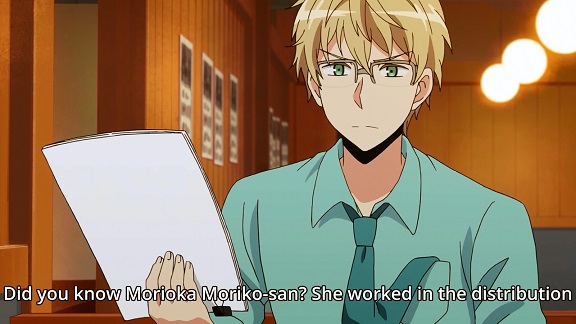
That could’ve been forgiven, but the third episode opens with Sakurai asking his co-worker about Morioka, as they had worked at the same company, having already stalk^w researched her enough to find this out and find the training manual she had written. Dodgy enough, but then the co-worker tells about the time he caught her crying on the phone, which, yeah. Remember that at this point Sakurai doesn’t know anything about Morioka, or that she’s Hayashi; she’s literally just a woman who he ran into in the streets, nothing more. Even his co-worker Koiwai calls him a stalker at this point, though as the next episode proves, he’s just as bad.

MMO Junkie: Kowai is aggressive

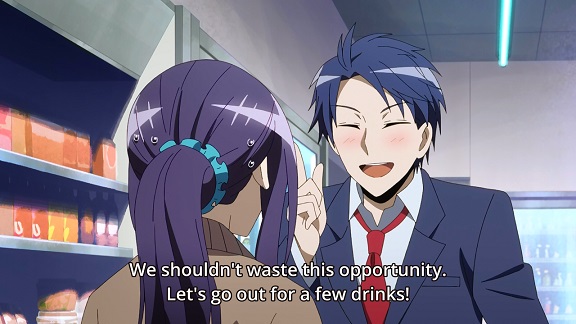
Or perhaps even worse, as he coincidently runs into Morioka at the supermarket, recognises her and talks her into a date. Koiwai is the most problematic character in the series: aggressive, manipulative and not above gaslighting Morioka if it gets results. That he does it for a noble cause, to get Morioka and Sakurai together is no excuse. The scene in this episode where he basically pressures Morioka in going for drinks together was painful to watch and not in a good cringe worthy way. It just came across as low level harassment rather than something romantic. He uses his past acquaintance with her and her admission that she’s jobless and a NEET to browbeat her into accepting, where she herself feels she has no right to refuse.

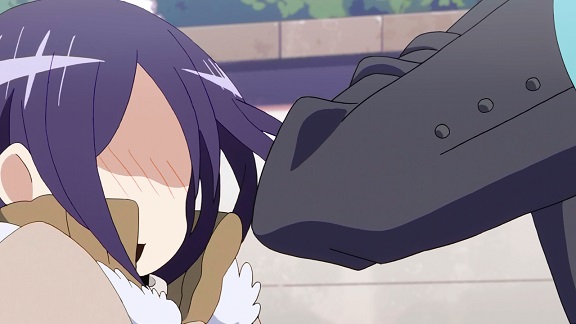
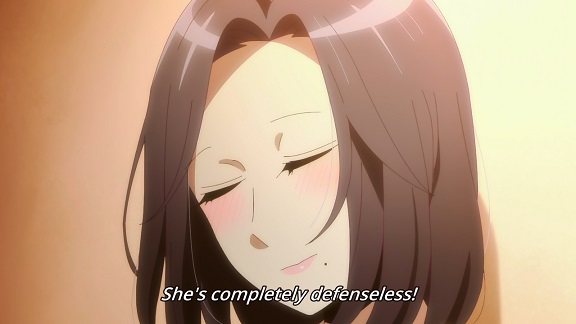
MMO Junkie: defenceless

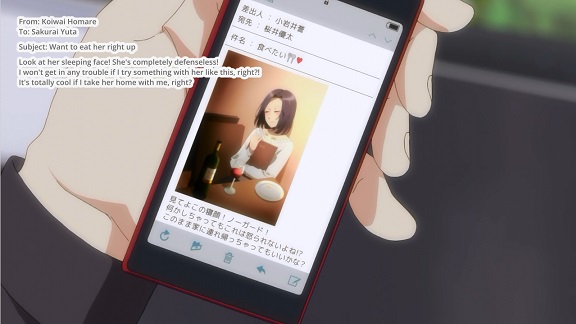
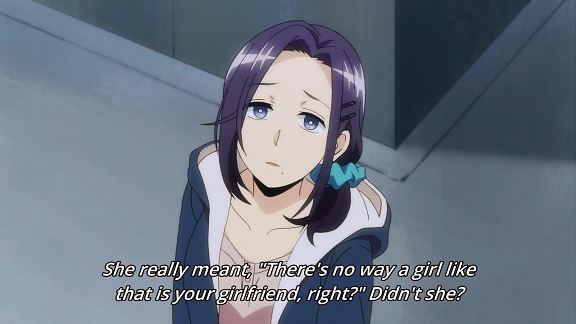
Episode five and six is where it all came to a head for me. In episode five Morioka prepares for her date with Koiwai, asking advice from Lily online, as Hayashi, with neither of them yet knowing who they are in real life. However, because of what Hayashi tells Lily about his date, the latter does begin to suspect he is Morioka. When she goes on her date and Kowai doesn’t show up, she thinks she has mistook the day it was supposed to take place. However, it’s strongly hinted that Koiwai had actually set her up. I got the impression his plan all along had been to skip out on his date, to give Sakurai a chance to “coincidently” run into her and go out with her instead. An impression reinforced by how much he talked Sakurai up when Koiwai went on his date with her the next day. Which lead to the sending of the text message and photo as shown at the top of the post. It was at this point I stopped watching the series, as the combination of Koiwai gaslighting Morioka and the rapey text he sent was just too much.

MMO Junkie: no self confidence

One other thing that bothered me about episode 4-5 needs mentioning too. The clerk at the supermarket Morioka shops at had noticed that she was always buying internet money for use in the MMO she played as Hayashi. He talks to her about it, learns who she is then reveals he’s actually her guild master. Which in itself is not a problem, but he then uses this to hassle her a bit about her on and offline life. All with the best of intentions, but still. This is a recurring theme in the middle episodes of the series: he, Koiwai, Sakurai all know more about Morioka than she does about them. Sakurai knows or suspected that she was Hayashi since episode five, but only tells the truth about himself at the end of episode eight. This information disparity means Morioka is continuously in the dark about their true motives. It doesn’t help that she’s already suffering from a low self esteem and has a lack of confidence in herself. You could imagine a Morioka in real life might’ve been devastated to find out that her online confidante was actually the man who was romantically pursuing her. There’s a trust issue here that’s never really resolved.

MMO Junkie: despite everything, a happy end

The series improves a lot from episode seven onwards. Sakurai struggles to match his attraction to Morioka with his knowledge that she is Hayashi, then learning in episode seven that she was also his best friend in a previous MMO. When he finally confesses the truth about him being Lily to Morioka in episode eight, things can finally move ahead and the last two episodes is where they finally and slowly start to develop their relationship, with some last minute meddling by Koiwai. This part was actually quite sweet but came a bit late for me after the unpleasantness of the middle episodes. I get the strong feeling that the writers just didn’t know how to get Morioka and Sakurai from being online friends without knowing the other in real life into a proper relationship, other than to use a hefty dollop of romcom coincidences and third party manipulation by Koiwai, who conveniently knew them both. It’s a pity, because there’s so much you could do with an online relationship moving beyond friendship into mutual attraction and something more, the slow discovery of the “real” person behind the MMO character. Both Morioka and Sakurai are perfectly sweet, innocent cinnamon buns, so it’s vexing that the series had to manipulate them this way to get them together.

This is the ninth post in this year’s twelve days of anime challenge. Tomorrow: disappointing sequels.

(05) A green and pleasant land

So yeah, anime has a lot of bad fantasy series that use western mythology or religion in about the same reverent way a certain Washington based football team uses Native American iconography, and usually it all takes place in Japan or some generic fantasyland setting anyway, but occasionally you do get a series set in a recognisable western country. This year we got two fantasy series set in Britain

LWA: straight outta Harry Potter

And what could be more British than Little Witch Academia: Harry Potter but with witches instead of magicians? As I argued before, it’s this familiarity that makes it so accessible for non-anime watching audiences. The boarding school setting is comfy and familiar while Akko’s goal of wanting to be the greatest witch in the world despite being manifestly unsuited for it is relatable. LWA‘s Britain is a bit of a cartoon whenever the series moves beyond Luna Nova and its grasp of British politics is especially suspect, but it all fits the mood of such a light hearted series.

Mahoutsukai no Yome: I want this cottage

Mahoutsukai no Yome is more ambitious, both in portraying England properly as a setting and in establishing its magical world, steeped in Celtic and British mythology. Early on in the first prequel OVA that came out last year, there was an establishing shot of London, complete with the London Eye, which worked very well in establishing that yes, this was London and present day London at that. Then, in the first episode of the regular series, there was the shot of the cottage, which was just a perfect cozy little home that could be anywhere in the West Country and I’d love to live in.

Mahoutsukai no Yome: Silkie is protective

Especially if it came with its own Silkie, the fairy landlady who feeds and protects Chise whenever a nasty priest comes to visit. She’s adorable, just bimbling along in the background, never speaking but a good friend to Chise. Silkie is revealed to be an ex-banshee in the original manga, so though she looks like a mute housekeeper, she’s actually a fairly powerful sort of magical creature. I like the matter of factness with which she’s presented.

Mahoutsukai no Yome: Titania arrives

On the mystical side of things, episode six brought a visit from Titania and Oberon, straight out of Celtic myth by way of Shakespeare, bringing the sublime in magic, a reminder that fairies and elves can be magical, wonderful creatures, but not ones you would want to anger. Titania is one example of how Mahoutsukai no Yome borrows and uses elements and characters from English & Celtic myth and legend and does so in a way that makes up a coherent world. What we see is only one part of a deeper cosmology, with its own rules and laws, that we’re only dipping a toe in.

This is the eight post in this year’s twelve days of anime challenge. Tomorrow: let’s look at why Net-juu no Susume is rape culture.

(06) Kemono Friends

How did the show with the lowest budget and the ugliest artwork and animation grow out to be the best series of winter 2017?


Kemono Friends: by the third episode you are hooked

Lots of heart.

Kemono Friends: serval sleeping

When Kemono Friends premièred in January, nobody thought anything about it. A spinoff to promote an already cancelled mobile game, created by a no name studio in CG, on barely any budget and a staff of at most a dozen people: why would you give it the time of day. Only because there are people who watch everything did it even got a small audience for its first episode, most of which dumped it immediately. But some kept watching and by episode three they were captured, as shown in the cartoon above that made the rounds of Japanese Twitter. And those viewers started spreading the gospel, first in Japan, then elsewhere as Kemono Friends became one of the very few anime series to become a runaway success purely through word of mouth.

Kemono Friends: please do not eat me

At its heart Kemono Friends iss a simple and utterly sincere story about friendship and kindness. It starts with our two protagonists meeting, as Serval, asleep in a tree on the savannah, spots Kaban walking nearby and decides to stalk her in a game of hunter and prey. One chase scene later and they’re friends. It turns out Kaban has no idea how she got there, doesn’t know who or what she is even; it’s Serval who actually names her Kaban, after the bag (kaban) on her back and who explains the realities of life in Japari Park, how there are all sorts of animal based Friends like her. Because Kaban doesn’t know what kind of animal she is, Serval decides to help her and they go on a quest to find out her identity and where in the park she lives. They’re a good pair, Serval being easy going and athletic, Kaban being a worrywart (especially about the possibility of being eaten) but good at solving problems.

Kemono Friends: I will not eat you

Serval and Kaban’s evolving friendship as they explore Japari Park and their encounters with other Friends is the heart of the story, but what really keeps up interest as the series progresses, is the mystery of Japari Park itself. Clearly something happened that put it in the half ruined, deserted state that it’s in when clearly it was meant as some sort of amusement park/zoo. What exactly happened is never made clear, but hints are dropped all through the series and putting them together is half the fun of the series. It’s here that the genius of the series lies, in that the way information is doled out is done brilliantly, just enough to keep it interesting without revealing the answer too quickly. It was this combination of an earnest story about friendship and kindness, at a time when we darn well needed it, with a well designed mysterious post-apocalyptic setting, that made Kemono Friends so popular through sheer word of mouth.

But of course capitalism can never leave anything alone. Thanks to studio Yaoyorozu and director Tatsuki, a low budget anime for a failed mobile game was transformed in a property that not only promised a second season, but also led to a new game being greenlit on the back of its succes. So no wonder that Kadokawa, the multimedia giant that was the lead in the Kemono Friends production committee fired Tatsuki and severed ties with the studio, because this sort of success must of course be punished. It immediately caused me to lose all interest in any possible sequel, if only not to reward companies who do things like this, but also because I have no trust that another studio could do as well with the series as Yaoyorozu.

This is the seventh post in this year’s twelve days of anime challenge. Tomorrow: a look at western fantasy in anime with Mahoutsukai no Yome & LWA.