Bring on the Jubilee

Banks sell debt for pennies on the dollar on a shadowy speculative market of debt buyers who then turn around and try to collect the full amount from debtors. The Rolling Jubilee intervenes by buying debt, keeping it out of the hands of collectors, and then abolishing it. We’re going into this market not to make a profit but to help each other out and highlight how the predatory debt system affects our families and communities. Think of it as a bailout of the 99% by the 99%.

[…]

For every $1 donated, we are able to buy and abolish $20 worth of debt.

The Rolling Jubilee project is one of the cleverest, simplest direct action ideas I’ve ever seen, a way to short circuit the toxic relationships between debt and poverty that the economic crisis has made worse (and made worse the economic crisis). I’ve blogged about idea of a Jubilee before, but never thought of doing it like this.

There are some caveats of course; buying up debt like this does help, in the long run, to prop up the whole rotten banking and lending system, but in my opinion this is cancelled out by the good it does now. Besides, the system is propped up already by the tax payer and the working classes anyway and this way we actually receive some benefit from it.

Pyramids — Terry Pratchett

Cover of Pyramids


Pyramids
Terry Pratchett
380 pages
published in 1989

A reader asks:

I’ve uh, never read any Pratchett before and have been wanting to tackle the Discworld novels for sometime but I’ve been intimidated by the reading order issue. It actually doesn’t help matters any that this is one of the most frequently asked questions, it all seems so confusing. Where to begin?

A good question. With a series that has almost forty novels, quite a few spinoff books and theatre, movie and television adaptations, the Discworld can look daunting to get into. Yet it’s not as bad as it looks. There are a couple of natural starting points: The Colour of Magic of course, but that’s not very representative for the rest of the series. A better starting point might be Guards! Guards! as that is the novel in which the whole Sam Vines/Night Watch/Ankh Morpork sub series was set up that has dominated the Discworld ever since. But of course since we’re discussing this question in a review of Pyramids, I’m going to make a case for it as the best starting point for getting into the Discworld.

Read more…

Noord isn’t quite Amsterdam

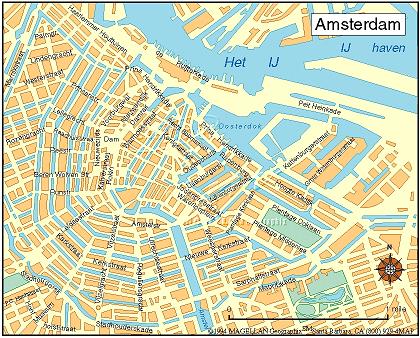
Lonely Planet have just called Amsterdam the second best city to visit in the world, but in Amsterdam, Amsterdam Noord is a bit of an ugly duckling, never really considered part of the city. It’s located over the IJ, the main riverway running through the city and therefore separated from the rest of it, historically consisted of various small villages that were almagated into Amsterdam and traditionally has been one of the city neighbourhoods more troublesome inhabitants had been banished to. Apart from that, it has always been dominated by heavy industry: the old Fokker aircraft factories used to stand not far from where I live, while the Shell factories have only be recently demolished to make room for houses. For most part, if you didn’t live in Noord, you had no reason to go there.

map of Amsterdam

This is all slowly changing though. In the past decade Noord has become somewhat desirable, as the usual gentrification subjects — students, hipsters, artists, upcoming yuppies — discovered that it had some of the last low priced but attractive neighbourhoods left in the city, while the municipal authories have been doing their best to get the socalled creative classes and industries to settle in what were once places of heavy industry. In all this they’ve been helped by the coming of the north-south metro line, which will make Noord that much more accessible from the city centre. In the neighbourhoods around the line there has been an influx of first time house buyers; in my own neighbourhood I’ve seen the older working class retirees, as well as the first and second generation Moroccan families slowly disappear to be replaced by a lot of young Surinam-Dutch families as well as *shudder* hipsters.

I quite like living here, in not quite Amsterdam, but still only ten-fifteen minutes by bike from the centre. Somewhat poorer perhaps than some of the other parts of town, fewer amenities — no neighbourhood pub! — but a good neighbourhood to live in and slowly getting better.