Support Gary Friedrich

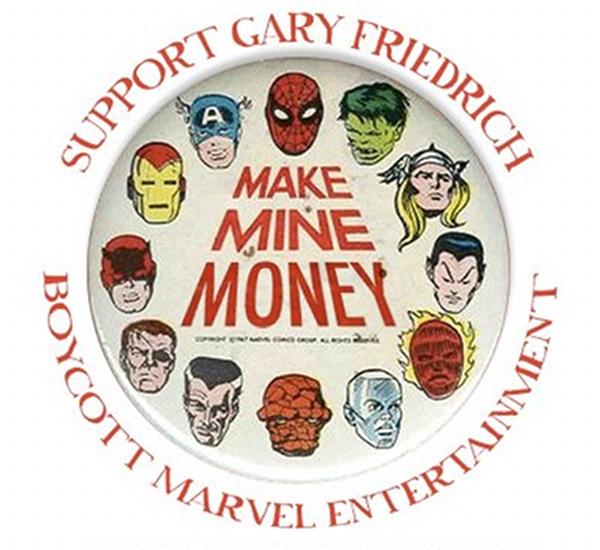
support Gary Friedrich

Capitalism is always exploitative, but the American comics industry has always been more aggressive and barefaced about exploiting their talent. The socalled Golden Age of the 1930ties to 1950ties was filled with mobbed-up distributors, shady businessmen and fly by night publishers and while after the fifties comics went respectable, the business methods remained. Sometimes it seems that just because comics are such penny ante operations compared to other media companies, that this explains the petty, spiteful and pennypinching ways in which publishers treat their workers. But then along comes Disney to show it takes a huge company to be truly spiteful.

Gary Friedrich is the creator of Ghostrider, which is a character that has been fairly succesful for Marvel/Disney, having had several series over the decades, as well as several movies in the last few years, the latest having just come out. Friedrich has not shared in this success as Marvel argues that he had signed over the rights to his creation when he signed the paycheck paying him for his writing work — the back of which had a rubberstamp agreement stating that signing it meant the loss of all rights. Friedrich obviously disagreed with this, opened a lawsuit against Marvel to claim his rights back and lost; leaving him having to recover the costs he made pursuing the case somehow. This wasn’t enough for Marvel however and they countersued him, claiming 17,000 dollars in damages for his “illegal” selling of Ghostrider merchandise — selling sketches at comics conventions. Oh, and they also want him to stop calling himself Ghostrider’s creator.

Petty, no? About the only way Friedrich (who can’t get any work for Marvel or another comics company) could make some money was by trading on his stature as the creator of Ghostrider and sell sketches and such of him, something that’s a longstanding perk for comics creators though theoretically is infringement on a Marvel or DC’s copyrights/trademarks. These companies have never sunk so low as to interfere with this trade, often the only way in which elder or retired comics artists can still make some money of their skills, but with Marvel now owned by Disney, a company never caring much for how it treats its workers, there obviously isn’t the same courtesy anymore.

This case should put the fear of god into any comics artists, because now the taboo has been broken, it may only be a matter of time before Marvel and DC go systemically after all “infringers”. Gary Friedrich therefore needs our support, not just out of ordinary human decency, but to stop this further landgrab in its tracks. If you want to help, you can donate a few bucks to him to help pay for his legal and other costs. As Tom Spurgeon put it:

It doesn’t really matter to me at this stage to come to some sort of merit-based appraisal of Gary Friedrich’s recent lawsuit against Marvel, let alone his entire professional life. I frankly never quite understood the former and I think engaging the latter invites madness and an appreciation of the trees when it’s the forest that’s maybe more important. Right now it just sounds to me like the guy could use a hand, and for whatever reason — justice, the timing of history, God’s will, stupidity, a lack of grace, boiling-cauldron evil, gremlins — the way that he was able to do his work in the comics industry was not rewarding to him in a way that would forestall such trouble. I’m willing to risk a few bucks in that I may be eventually proven wrong somehow in extending that very modest hand.


City of the Chasch — Jack Vance

Cover of City of the Chasch


City of the Chasch
Jack Vance
172 pages
published in 1968

When I first started to discover science fiction (longer ago than I care to recall) Jack Vance was one of the more popular writers to be translated into Dutch and the local library therefore had a shitload of his books. I therefore read quite a lot of his work, including the whole Planet of Adventure/Tschai, the Mad Planet (as it was called in Dutch) tetralogy, in one of those big omnibuses Meulenhof specialised in. There’s little I remember off it, to be honest, other than that it was a typical Vancean planetary romance.

Jack Vance is of course the master of this subgenre, effortlessly creating new worlds and societies for his stories, always exotic and strange yet believable and with their own logic. Sometimes the stories he sets in these worlds disappoint, as was the case for me when I reread Big Planet two years ago. For City of the Chasch I had less expectations, just because I remembered less about it, but I was still a bit disappointed with it. Like Big Planet, the worldbuilding here is more sketched in than fleshed out, not as rich and interesting as I had hoped it would be. I had planned to read the next books in the series immediately (I’m still missing the fourth) after I’d finished this one, but now I’ll think I’ll pass.

Read more…

Beer, glorious beer

Meanwhile, last weekend, I was busy drinking beer and watching the rugby. I took some pictures and would like to share them with y’all. All the cool middle aged blokes with beards and hats kids are beerblogging, so why not me?

Coopers Extra Stout

How often do you get the chance to drink an Australian stout? Not often, so I had to try it. Coopers Extra Stout, brewed in South Australia is perfectly drinkable, tastes just like any other stout but lacks a bit of oomph once you get through the initial taste. Decent, not spectacular, would drink again if in the vicinity of where it was brewed.

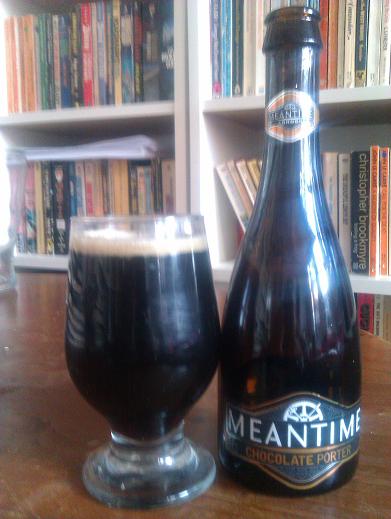
Meantime Chocolate Porter

Gorgeous. I’ve had a few chocolate stouts, but not yet a chocolate porter (if there’s any real difference between a modern stout and a modern porter that is). Unlike many attempts, Meantime‘s porter keeps it’s chocolate undertones throughout the glass, doesn’t overwhelm the beer with the chocolate or vice versa and will be gotten again this weekend if I can.

Alba Scots Pine Ale

The first of four different ales I drunk this weekend, this was the best. A pine ale, which I hadn’t heard of before, but which tasted very nice. According to the label, Alba is a “triple style ale, brewed to a traditional Highland recipe using the sprigs of spruce and pine collected every spring”. How traditional this is, is anybody’s guess as IIRC, the Scottish Highlands haven’t had their pine and spruce coverings all that long. Doesn’t matter for the taste, which is nice and beery going in, with a decided aftertaste of swiss roll (!), which sounds strange but works, especially after the slightly more bitter chocolate porter. Will get more from this one as well.

T.E.A. - Traditional English Ale

Hogsback‘s T.E.A., Traditional English Ale, was recommended by one of the Bierkoning‘s staff, but was a disappointment. A run of the mill ale, which started alright but whose flavour didn’t last; might have been better in a smaller bottle.

Double Dragon Welsh ale

The Welsh Double Dragon ale, which is the same strength as the T.E.A., 4.2%, I got for the Ireland v Wales Six Nations match and it worked, in so far as the Welsh won. Better than the previous ale, still a bit on the bland side for me. Decent enough, but nothing special. Will drink in Wales, will likely not go out of my way for it.

Sunburst Golden Ale

Darkstar’sSunburst on the other hand, a golden ale from Sussex is brilliant. This tasted like an English ale should, not too bitter, but with a slightly nutty aftertaste and which is sustained throughout my drinking it. Would like to drink more of it.

Nut Brown Ale

Speaking of nutty, the last beer of the weekend (actually drunk on a Monday evening) was very nutty, but then this is Samuel Smith‘s nut brown ale, coming all the way from Yorkshire and brewed at what they claim is the oldest brewery there. Lovely taste, eminently drinkable, not very damaging. Will get more of this too.

So in total: seven beers sampled, two or three disappointments, four beers I will shortly get again.

Wilders branches out into anti-Polish bigotry

wilders picking his nose

One of the more frustrating aspects of the rise and rise of Geert Wilders and his Freedom (sci) Party has been the general unwillingness of serious people in the media and politics to actually call them what they are: bigots and racists. That the average Dutch person was never as tolerant of foreigners as our reputation of a liberal, tolerant country would imply I long knew, but I assumed that at the very least his leftwing political opponents would have the courage to call him out on his bigotry, rather than hiding behind terms like “populist”. Yet with some honourable exceptions, Wilders and his ideas have been taken seriously by the political establishment, both on the right and the left, in so far as they are not rejected out of hand, but as viewpoints that can be debated and taken seriously into consideration, even if you disagree with them, as normal bits of political thought. Hence such foulness as the upcoming burqa ban, now in parliament, where the bullying of a minority group in Dutch society by forbidding its members their traditional clothing is sold as somehow feminist and serious people debate the merits of this.

But now Wilders may have gone too far. Not content with being an anti-Muslim bigot, where in the past decade he had the political climate with him, he has now branched out into more traditional territory for bigots, by starting hating on Eastern and Middle European migrants — and he doesn’t mean Austrians by that. Polish and other Eastern European migrants have been coming to the Netherlands in large numbers in the past ten years, ever since these countries became part of the EU and they gained the rights of all EU citizens, to work and live in any country in the union. These migrants fit the classical pattern of the labour migrant, first coming over for short term work Dutch workers are hard to find for, slowly branching out into more permanent work, finally bringing over their families and settling in the country for good. There’s the usual exploitation, as Dutch employers under pay or under report their Polish workers, landlords rent them awful flats and charge them a fortune for it, which in turn brings along the usual fallout of social problems any city with a huge influx of unexpected migrants has to deal with: lack of living space, lack of amenities for these people in their own language, culture clashes, heightened visibility of social conflict (petty crime, drunkenness et all) the more noticable because it’s done in a new language, and so on. Nothing new, but the same Wilders voter who dislikes Islam is more than likely not to find these Poles all that attractive either.

Which Wilders has now attempted to cash in on, by opening an online registry for complaints about those people, about how they took your job, they were criminal, they were violent, noisy neighbours, spoke filthy foreign languages, just are not properly Dutch. Classic racist dogwhistling, in other words. Surely now the fiction that Wilders is just a populist, a too strident critic of Islam and certain of its practises but not a bigot or a racist, oh no, can no longer be maintained. Or can it?

I hope I’m right and serious political commentators will finally have the courage to say what is plain to see, that he is a bigot and should be treated as such, but I’m not hopeful. If nobody twigged on three years ago, when he’d said he would like to deport millions of Jews Muslims from Europe, why will they now?